
e.PN Card: A Cheap Virtual Card With Real Counterparty Risk
 Available in US
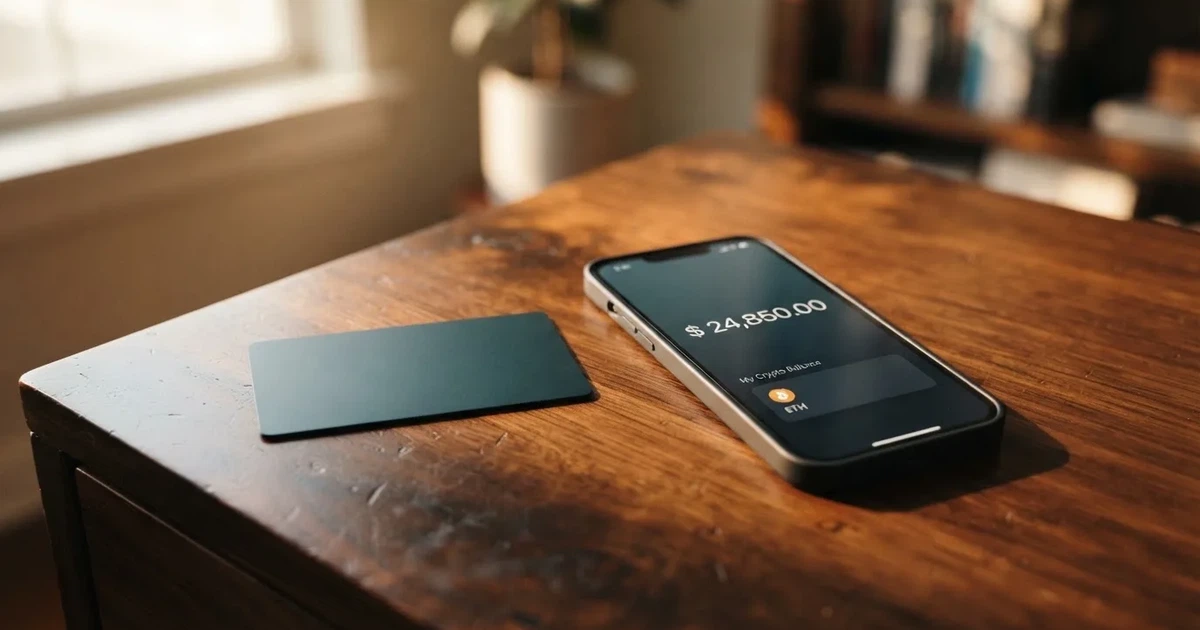
If you have ever been refused an ordinary bank card, or you spend your money on ad platforms and online subscriptions in countries where your own bank is unhelpful, the e.PN card is probably already on your shortlist. It is a virtual card that you fund with crypto, it costs a couple of dollars a month, and it will happily sit in Apple Pay. That is the pitch, and on paper it is a good one for a specific kind of user. It is also a virtual-only, intermediary-run product from a Seychelles company that says outright it holds no licences, and that combination deserves more than a glance before you load money into it.
Conditions are current as of October 28, 2026.
My score for the e.PN card is 4.6 out of 10. That is not a rounding of “bad” into “fine”; it is a product with a couple of genuinely strong points, weighed against a cost structure that is high, a support and reliability picture that users report badly, and a company structure that leaves you with very little recourse if something goes wrong. The details below are the conditions as of 2026-10-20.
Who the e.PN Card Suits, and Who It Does Not
The short answer: e.PN suits someone whose income arrives in crypto, who pays for online services — advertising platforms, subscriptions, software — and who does not need to withdraw cash or use an ATM. It does not suit someone who wants a bank account, someone who needs a physical card, or someone who keeps a large balance on the platform for more than a few days.
There is one audience the card is genuinely built for, and it is named on the platform itself: marketers paying for ad platforms and online services. That tells you something important about the whole product. It is optimised for a person who needs to pay a few hundred dollars a month to a handful of online merchants, in a currency that is not their local one, from a wallet that is already in stablecoins. It is not optimised for everyday domestic life, and the feature list confirms it rather than contradicts it: virtual only, no ATM, no physical card, payments abroad.
Let me give you the score breakdown, because a single number tells you nothing about where the strengths are.
| Criterion | Mark | Why |
|---|---|---|
| Who can get it | 8 / 10 | The site says services are provided outside Russia, and starting data described the card as available worldwide except Russia and the United States — though that exclusion list was not confirmed on the pages I could read. Eligibility itself is broad. |
| Cost | 2 / 10 | Issuance runs $2–$4 a month depending on grade, top-up is 3–6.7% by grade, and an international transaction costs $0.50 plus 1.2%, or 2–3%, or $0.70. |
| Top-up options | 5 / 10 | You top up in the account’s Top Up section and can set auto-top-up, but the FAQ does not name the coins or networks; starting data mentioned USDT and Bitcoin. |
| Reliability and complaints | 3 / 10 | Digital Waves LTD. in Seychelles acts as an intermediary between the client and banks, the bank is not named, the platform says it has no licences, and Trustpilot shows 3.0 from 88 reviews mentioning frozen accounts and held funds. |
| Everyday use | 5 / 10 | Virtual Visa or Visa/Mastercard only, Apple Pay and Google Pay supported on the “payment abroad” card, and no ATM access at all. |
Read the table twice. The two highest marks are access and nothing much else; the two lowest are cost and reliability, and reliability is the one that can hurt you badly rather than mildly.
Will They Give You the Card?
Yes, quite widely — but the site’s own wording is carefully limited, and you should know exactly what it says.
The site states that services are provided outside Russia, and that e.PN is not licensed or registered in Russia. That is a statement about the jurisdiction the platform operates in, not a promise about who gets approved. Starting data described the service as available “worldwide except Russia and United States”, but that exclusion list is not confirmed on the public pages I read, so treat it as a lead rather than a rule.
What the pages do not do is list the issuing countries. There is no country table on the pages I read, which means you cannot check eligibility before you sign up from the site’s own information. There is a Sanctions Compliance Statement linked, but I did not read it, and I would not assume its contents.
The distinction that trips people up: citizenship and residence are not stated as the same thing. The platform records both, and screening is applied to citizenship and country of birth as well as to your address — that is standard practice in this industry and is why a card issued in one country can still be refused to someone living in another. If your citizenship or your country of birth is on a list that the issuing bank applies, no amount of good documentation will fix it. Nobody will tell you that in advance.
So: broadly yes, with real exceptions you cannot see from the outside. If you are in a place the card does not serve, you will find out at verification, not at signup.
How to Get the Card
The process is short, and honestly the shortness is the easy part.
The steps the card describes are: register, pass verification, top up the account, and the card is issued at Standard grade. That is it — there is no application form, no credit check, no branch.
Verification is where the friction lives. The card requires “comprehensive KYC” for all clients, and access to the card is subject to KYC verification, sanctions screening and ongoing monitoring. The pages I read do not state which documents are required, what proof of address is accepted, or what the age rule is beyond the general expectation that prepaid cards go to adults. If you need to know exactly what to hand over, you will have to ask support — and support is reachable around the clock (more on that later).
Two things worth knowing up front:
- There is a single verification, not tiered levels. Once verified, you get unlimited card issuance and additional BINs, which matters if you need several cards for several purposes.
- The card is virtual only. There is no delivery to wait for, and therefore no delivery fee or delivery risk — but also no physical card in your wallet.
The minimum you need to start is $1.00 as a card issuance deposit. Account top-ups start at $50.
What It Really Costs: Fees and Everyday Payments
This is where the card is weakest, and where you need to read the numbers carefully because they vary by grade and by BIN.
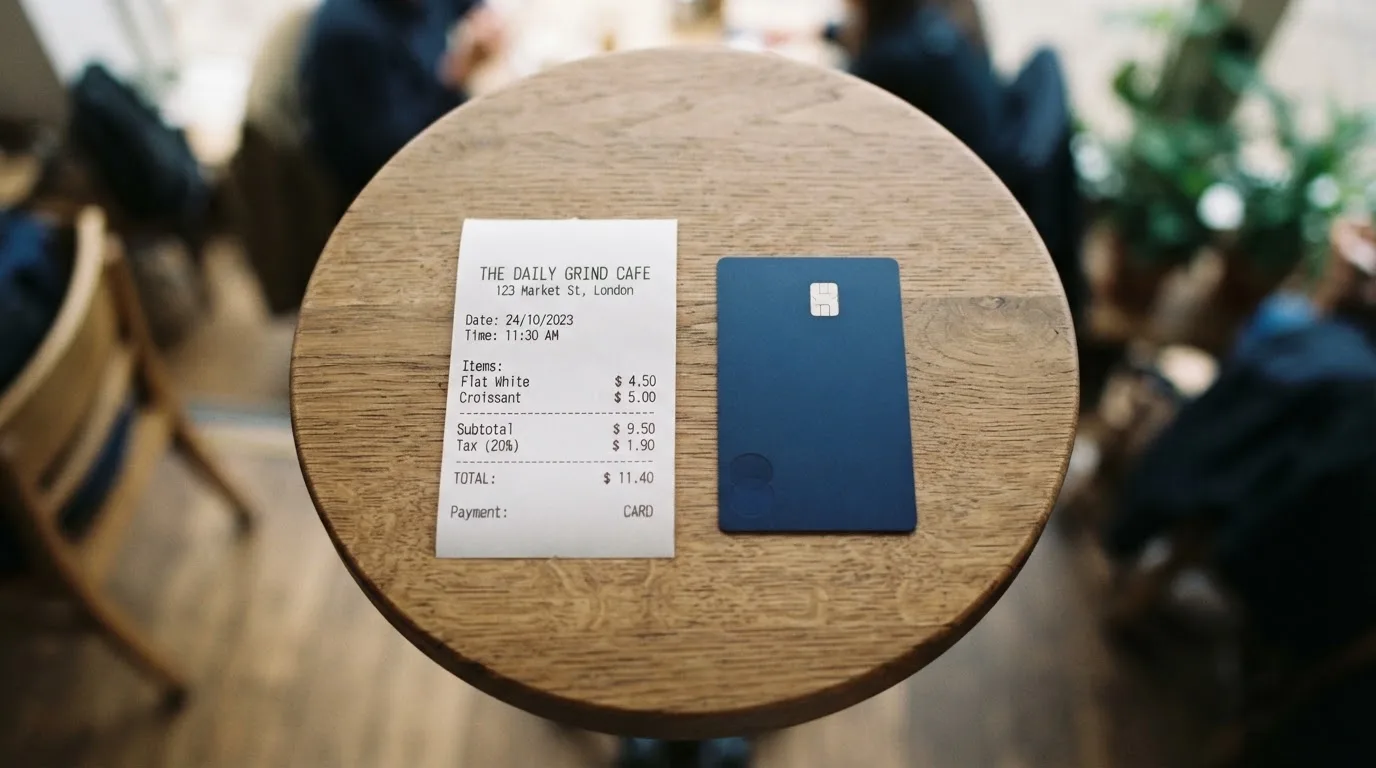
The headline is deceptively good: the card costs between $2 and $4 per month, and that is genuinely cheap compared with most physical cards. But the card is renewed every 1 month (30 days), with the renewal charged 3 days before expiry, so it is a monthly charge rather than an annual one. Then the top-up fee lands on top, and then the transaction fees. Here is the full picture as stated.
| Fee or limit | What the card states |
|---|---|
| Issuance / reissue | Standard $4, Silver $3.5, Gold $3, Platinum $2.5, Black $2 |
| Monthly cost | Between $2 and $4 per month depending on grade; renewed every 1 month (30 days), charged 3 days before expiry |
| Top-up fee | Standard 6.7%, Silver 6%, Gold 5%, Platinum 4%, Black 3% (the FAQ states “3–6,7% depending on your Grade”) |
| Bank processing, domestic | $0.20–$0.30 fixed |
| Bank processing, international | $0.50 + 1.2%, or 2%–3%, or $0.70 fixed, depending on BIN |
| Decline fee | $0.10–$0.30 domestic, $0.20–$0.40 international |
| Special BIN top-up surcharge | 13%, minimum $2.5 |
| ATM | Not available — the virtual card cannot be used to withdraw money from ATMs |
| Withdrawal commission | 5% of the amount, minimum withdrawal $100 |
| Minimum top-up | $50 account top-up; $1.00 minimum card issuance deposit (the supplement says minimum card replenishment starts at $1) |
| Limits | Not stated; the card declines when it exceeds available funds or “currently valid limits” |
Now let me run three ordinary payments through this, because a fee table on its own does not tell you what a month will cost.
A $20 subscription at a small online service. Say the merchant is domestic. You pay $20, and the bank processing adds $0.20–$0.30 fixed. The card costs you its monthly $2–$4. But to spend that $20 you had to top up, and at Standard grade the top-up fee is 6.7% — $1.34. If you top up in small amounts repeatedly to stay under the limits, that percentage is charged again every time. The fixed domestic processing fee also means small payments are proportionally expensive: a fixed fee of $0.20–$0.30 makes the effective cost of a small transaction much higher than a large one.
A $200 payment to an ad platform abroad. This is the card’s home turf, and here you see why the grade system exists. International processing costs $0.50 + 1.2%, or 2%–3%, or $0.70 fixed, depending on which BIN your card runs on — the card does not publish one number, so your actual rate is not knowable in advance. At the top end that is $0.50 plus 3%, or $6.50 on $200. Add a top-up at Gold or above and the top-up fee falls to 5% or below, but at Standard it is 6.7% — $13.40 on the same $200. The gap between Standard and Black on a $200 top-up is 6.7% against 3%, which is $7.40, and Black also halves your card price from $4 to $2. That is the whole argument for chasing grade.
A payment that gets declined. Declines are not free: $0.10–$0.30 domestic, $0.20–$0.40 international. This is the fee people notice least and feel most, because a decline usually means you retry immediately and the retry is another charge. If you are scripting payments against ad platforms, a burst of declines is a burst of fees.
One more thing that belongs in a cost section because it is a cost: the card says refunds and reversals from high-risk merchants may be held, and fees are reconciled up to 10 calendar days after processing. So a refunded payment does not come back to your balance instantly, and the fee may sit on your account in the meantime.
How to Top Up the Card
Top up through the “Top Up” section in your account, with a minimum account top-up of $50, and auto-top-up is available. That is the mechanism. The detail that should make you pause is what the card does not say.
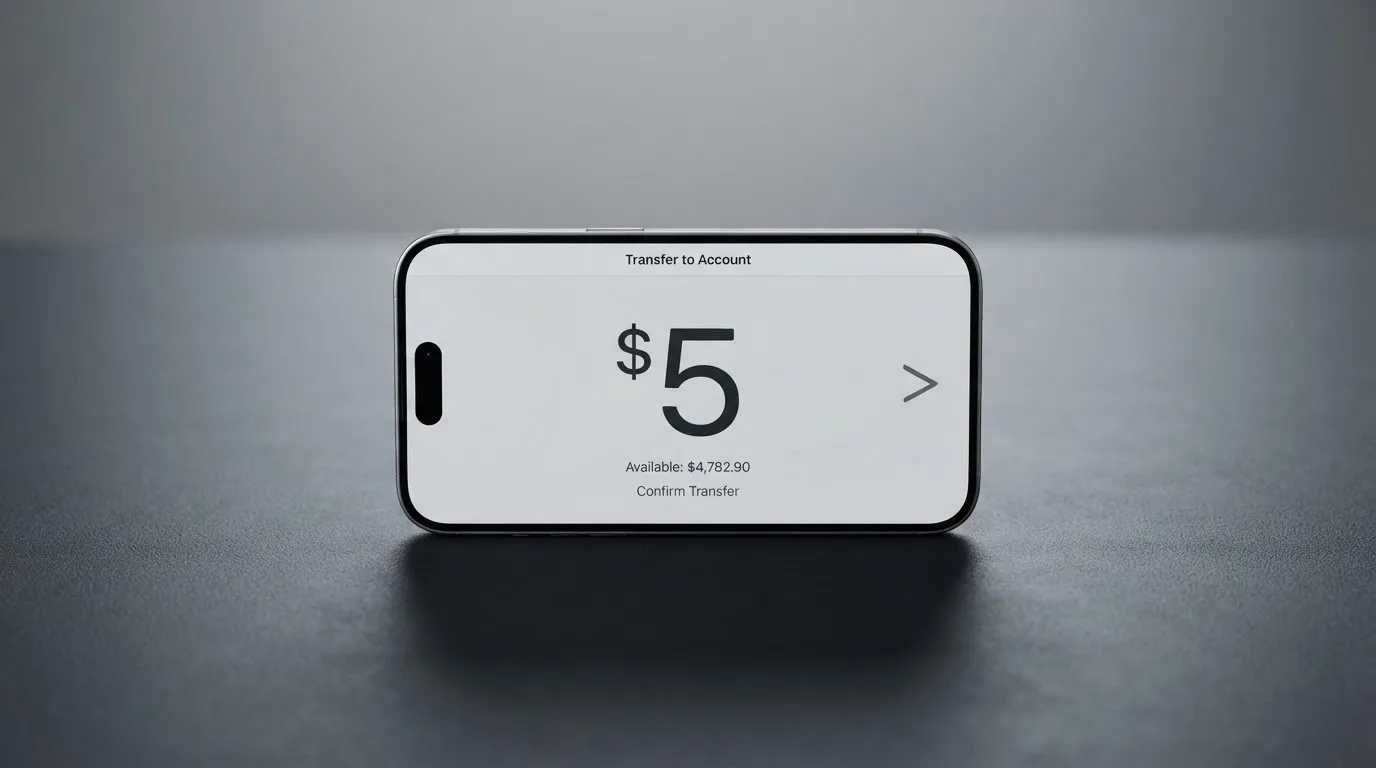
The coins and networks are not listed in the FAQ. Starting data mentioned crypto such as USDT and Bitcoin, but that is unofficial and not confirmed on the pages I read. Who pays the network fee for the deposit, and whether fiat top-up options exist, are also not stated. Blockchain network fees are charged by the network itself, not by the card provider, so on a deposit you will pay whatever the chain charges on top of the card’s top-up fee.
Here is why the missing network list is not a triviality. If you send a deposit on a network the provider does not support, or to an address belonging to a different network, the transfer can be lost or need manual recovery through support — and blockchain transfers are irreversible, so there is no guarantee. It is a support ticket, not a refund. Before you deposit anything, get the exact network from support in writing.
Withdrawal is the other side of the same coin. The commission is 5% of the amount with a minimum withdrawal of $100, and a deposit can be withdrawn within 30 days of being deposited. Moving funds from the card back to the Main Account is free but takes up to 30 days. On special BINs there is a “virtual card withdrawal” charge of $0.45. What happens to your balance if you close the account is not stated, which is worth asking about before you ever reach that decision.
The one genuinely useful thing about the grade system is here too: the top-up fee falls as you spend more. Spend thresholds over 30 days are Silver from $1,000, Gold from $10,000, Platinum from $50,000 and Black from $100,000. The trade-off is real in both directions — grade drops if you stop spending, so your fee goes back up exactly when you are using the card less.
Paying With It Every Day
The daily-use picture is narrower than the marketing suggests, and worth understanding before you plan around it.
The “payment abroad” card can be linked to Apple Pay and Google Pay, which is genuinely convenient — you add it once and then tap. Apps are available on the App Store, Google Play and AppGallery; I did not find ratings for them in a search on 2026-10-21, which is itself a small signal. The card currency is not stated, amounts are quoted in USD, the balance sits in “Virtual Items” denominated in supported currencies, and the online services card is described as supporting “any geo and currency” — but multi-currency balances are not stated, so treat “any currency” as a description of acceptance rather than a promise about what your balance is held in.
There is no cashback. A Referral Program document exists, but that is not a rewards rate. The network is Visa, or Visa/Mastercard for the universal card, and which one you get depends on the BIN.
What the card blocks is where daily use becomes frustrating:
- Transfers to companies in the USA, UK and EU-sanctioned countries
- Payment-system, brokerage and forex top-ups
- Crypto purchases
- Transfers to other banks’ cards
- Gambling and betting, dating and escort, weapons, narcotics, among others
- Named merchants blocked, including Chevron, Exxon, Starlink, Skrill.com and ZEN.COM
Some of these are industry-standard risk rules and you would find them on any card. Others — a major oil company, a satellite internet provider, a mainstream payment processor — will surprise you. If any part of your work or your subscriptions sits on that list, this is not your card, and no support chat will change it.
One more everyday-use fact with no clear home anywhere else: no dispute process is described. There is no documented route to contest a charge. Combined with the decline fees and the held refunds, that means your practical remedy for a bad transaction is the support chat.
What Can Go Wrong
This is the section I would want a friend to read twice, because the risks here are not hypothetical.
Your money sits with the provider, not with you. Funds are held in the e.PN account, not in self-custody. e.PN may block funds if banks demand it. That is the custodial model in its plainest form: you trust the provider completely, and the provider has a counterparty relationship with banks that can pressure it. Safeguarding arrangements are not stated.
The company behind it is an unlicensed intermediary in Seychelles. e.PN is a trading name of Digital Waves LTD., incorporated in Seychelles at 306 Victoria House, Victoria, Mahe. The card says it is an intermediary between customer and banks; the issuing bank is not named, because the “Banks” page was not read. And the platform states plainly that “EPN does not have any licenses and/or is not registered in Russia”. If you are outside the EU, there is no deposit guarantee scheme, no e-money safeguarding rule, and no ombudsman waiting for you.
Users report the two worst things that can happen to a custodial account. Trustpilot shows 3.0 out of 5 across 88 reviews, read 2026-10-21. The recurring themes in user reports are frozen or removed accounts with funds held; sudden KYC requirements from a partner bank in April–May 2026; funds stuck in April and October 2026; declines on ad and subscription platforms in March–April 2026; and a card blocked with weak support, August 2025 to April 2026. No official incidents were found, but absence of official incidents is not evidence of absence — it is a statement that nothing has been publicly established.
Legitimate accounts get caught mid-campaign. When a partner bank tightens, requests for documents land on people who did nothing wrong. The April–May 2026 KYC wave is the pattern to expect: you have a working card, you have been spending normally, and then you are asked for documents you may no longer have.
Programmes of this kind close. Visa terminated its global agreements with FTX on 13 November 2022 and the FTX US debit card was wound down. WaveCrest, a Visa issuer that supplied crypto card brands, was suspended by Visa in Europe in 2018 and all its Visa programmes closed. A 2026 closure reported by a secondary source had new loads ending 8 July 2026 and spending stopping 8 August 2026 — single source, unconfirmed, but the pattern is real. Closures typically mean a notice period, then loading and spending stop, then you are asked to withdraw what is left.
Support is 24/7, and it is also the only recourse. Online chat, Telegram, WhatsApp, WeChat, [email protected], with the promise that “we respond within a few minutes”. Availability is not the same as resolution: the user reports above include a card blocked with weak support. And if your funds are held, a fast reply that cannot move money is not much comfort. Two-factor authentication and in-app card freeze are not stated; the app does deliver 3-D Secure codes.
Terms move. The Terms of Service, Privacy Policy and Virtual Card supplement were updated on 2 June 2026. Rules like blocked merchants, fees and limits can change between revisions, and you would be reading the new ones.
What to Take Instead
The alternatives below are all in the same category, and each carries its own set of operational and financial risks. I have included my scores so you can see how they compare with e.PN’s 4.6.
| Alternative | Score | Card type | Stated cost and fees | Top-up |
|---|---|---|---|---|
| Cardex | 5.6 / 10 | Debit card on VERVE, Visa, Mastercard and UnionPay; virtual and physical; listing is Naira-focused | Issuance and fees not stated; real-time crypto-to-fiat conversion at the moment of payment with an “AI-Powered Conversion Rate”; no percentage published | USDT, USDC and BTC wallets; networks not stated |
| TakeCard | 5.5 / 10 | Virtual card immediately; physical card only for Bolivian users; Visa; issued in the United States; prepaid; USD at 1:1 | Virtual $5; physical in Bolivia $20 issuance plus $20 shipping (another article says $10 for physical — the sources conflict); 1% commission per purchase; other currencies at the official Visa rate of the day | Top up from the Takenos balance; coins not named in the article |
| OkiCard | 6.0 / 10 | Virtual card; a physical card is also mentioned without detail; network given only as “Visa/Mastercard”; USD/EUR pegged | Issuance $0, monthly $0, starting price $15 for a virtual card (the FAQ mentions a one-time issuance fee — pages disagree); load fee 3%; USD transaction fee 0%; “no hidden exchange spreads”; initial deposit 100 USDT | USDT on BSC (BEP-20), Ethereum (ERC-20), Tron (TRC-20) and Solana (SPL); USDC “soon” |
Two comparisons are worth drawing out, because they are the practical reasons to switch.
Networks are named, or they are not. OkiCard publishes four networks and their token standards. e.PN’s FAQ names none. For a card where the deposit is the irreversible step, a published network list is not a nice-to-have.
The fee structures differ in kind, not just in size. OkiCard states a 3% load fee and 0% on USD transactions, with no published exchange spread. TakeCard charges 1% per purchase with USD at 1:1. e.PN charges a top-up fee of 3–6.7% *and* a per-transaction bank processing fee that runs from $0.20–$0.30 domestic to a percentage-plus-fixed international rate. If you are spending steadily and mostly in dollars, the difference over a month is real money — and I am not going to sum it for you, because the correct answer depends on your mix of top-ups, transaction sizes and BIN.
Where the alternatives are weaker, honestly: Cardex’s eligibility claims are vaguer, not better (“200+ countries”, a Naira-focused listing); TakeCard’s physical card is Bolivia-only and its own help centre contradicts itself on price; OkiCard’s own pages disagree about whether issuance is free, and USDC is “soon” rather than available.
None of these is a regulated EU e-money issuer either. If your real requirement is a card that comes with deposit-style protection, the honest answer is that this whole category does not offer it, and you should look at a regulated e-money institution in your own jurisdiction instead.
Who I Would Recommend It To
I would recommend the e.PN card to exactly three kinds of person.
Someone already holding stablecoins who pays for advertising and online services monthly, who spends enough to reach Gold or better and therefore pays 5% or less on top-up, and who treats the balance as working capital that moves through the account rather than savings that sit in it. For that person the maths works and the friction is low.
Someone who has been declined by ordinary banks and needs a virtual card this week rather than after an appeal. The access is genuinely broad, the verification is a single step, and $1 gets a card issued.
Someone who has Apple Pay and Google Pay and nothing else — no ATM, no physical card, no interest, no statement, no branch. If that is all you need, this delivers it.
I would not recommend it to anyone keeping more than a working float on the platform, to anyone whose income depends on a handful of merchants, or to anyone who cannot afford to lose a month of funds if the partner bank tightens again. I would not recommend it to anyone planning to use an ATM, and I would not recommend it as a first crypto card if OkiCard’s published network list and 0% USD transaction fee matter to you more than e.PN’s slightly lower entry price at Black grade.
Before you commit, do three things: ask support in writing which networks the deposit must go on, ask which BIN your card will run on and therefore what your international processing rate actually is, and ask what happens to a balance if the account is closed. All three are things the public pages do not answer, and all three are things you would want answered before you send money.
Frequently asked questions
What is the e.PN card?
It is a virtual payment card issued by a platform that describes itself as an intermediary between customers and banks. You fund the account from crypto, the balance sits in the account rather than in your own wallet, and the card spends that balance. It is virtual only: Visa, or Visa/Mastercard for the universal card depending on the BIN, with no physical version and no ATM use.
How does the e.PN card work?
You register, pass KYC, top up the account, and a card is issued at Standard grade. When you pay, the platform converts or uses the loaded balance and the bank processes the transaction for a fee. Five grades exist — Standard, Silver, Gold, Platinum, Black — set by spending over 30 days, and a higher grade lowers both the top-up fee and the card price.
Is e.PN a bank?
No. e.PN is a trading name of Digital Waves LTD., incorporated in Seychelles at 306 Victoria House, Victoria, Mahe, and it says itself it is an intermediary between customer and banks. The issuing bank is not named on the pages I read. The platform also states that “EPN does not have any licenses and/or is not registered in Russia”.
Does e.PN require KYC?
Yes, “comprehensive KYC” for all clients, with card access subject to KYC verification, sanctions screening and monitoring. The public pages do not state which documents, what proof of address, or what age rule applies. There is a single verification rather than tiered levels, and verified accounts get unlimited card issuance and additional BINs.
How much does an e.PN card cost?
The card costs between $2 and $4 per month depending on grade — Standard $4 down to Black $2 — renewed every 1 month (30 days) and charged 3 days before expiry. Top-up fees run from 6.7% at Standard to 3% at Black, and processing is $0.20–$0.30 domestic or $0.50 plus 1.2%, or 2–3%, or $0.70 internationally depending on BIN.
How do I top up the e.PN card?
You top up from the Top Up section in your account, with a minimum account top-up of $50 and a minimum card issuance deposit of $1.00. Auto-top-up is available. The FAQ does not name the supported coins or networks, and starting data mentioned USDT and Bitcoin — unofficial and not confirmed on the pages I read. Get the network confirmed before sending anything.
Can I add the e.PN card to Apple Wallet?
Yes, the “payment abroad” card can be linked to Apple Pay and Google Pay, which is the most practical way to use it day to day given there is no physical card. Apple Pay stores a device-specific number rather than your card number, and each payment uses a one-time code. Note that the card may also be restricted for particular merchant types.
Is the e.PN card safe?
There is no safety guarantee, and the structure works against you: your funds sit with the provider rather than in self-custody, e.PN may block funds if banks demand it, safeguarding is not stated, and no dispute process is described. Trustpilot shows 3.0 from 88 reviews, with user reports of frozen accounts, held funds and sudden KYC demands in 2026. Two-factor authentication is not stated.
Where can I use the e.PN card?
Online, at merchants that accept the network — in practice this means ad platforms, subscriptions and online services, which is the audience the card is built for. Blocked are gambling, crypto purchases, forex and brokerage top-ups, transfers to other banks’ cards, and named merchants including Chevron, Exxon, Starlink, Skrill.com and ZEN.COM. There is no ATM and no physical card.
Can I withdraw money from e.PN?
Withdrawal commission is 5% of the amount with a minimum withdrawal of $100, and a deposit can be withdrawn within 30 days of being made. Moving funds from the card to the Main Account is free but can take up to 30 days, and special BINs carry a $0.45 virtual card withdrawal charge. What happens to a balance on account closure is not stated. There is no ATM withdrawal at all.
How virtual cards work – cryptocardsexplained.com
Content created by the «cryptocardsexplained.com» team