
A free crypto Visa that pays 0% in USD — but keeps its limits to itself
 Available in US
The Wayex card is a prepaid Visa Debit that spends a balance you fund from stablecoins or fiat. The digital card costs nothing, the account carries no monthly fee, and spending in USD is advertised at 0%. That is a genuinely attractive starting point for anyone who already holds dollars in stablecoins and wants an ordinary-looking card to spend them on. The catch is everything around the edges: the card’s public pages leave more blanks than they fill, from the physical card price to the foreign-exchange fee to the daily limits, and the terms point at a structure where the platform is not the bank. I scored it 7.5 out of 10 — high on cost and top-up options, middling on reliability, held back by how much it simply does not publish.
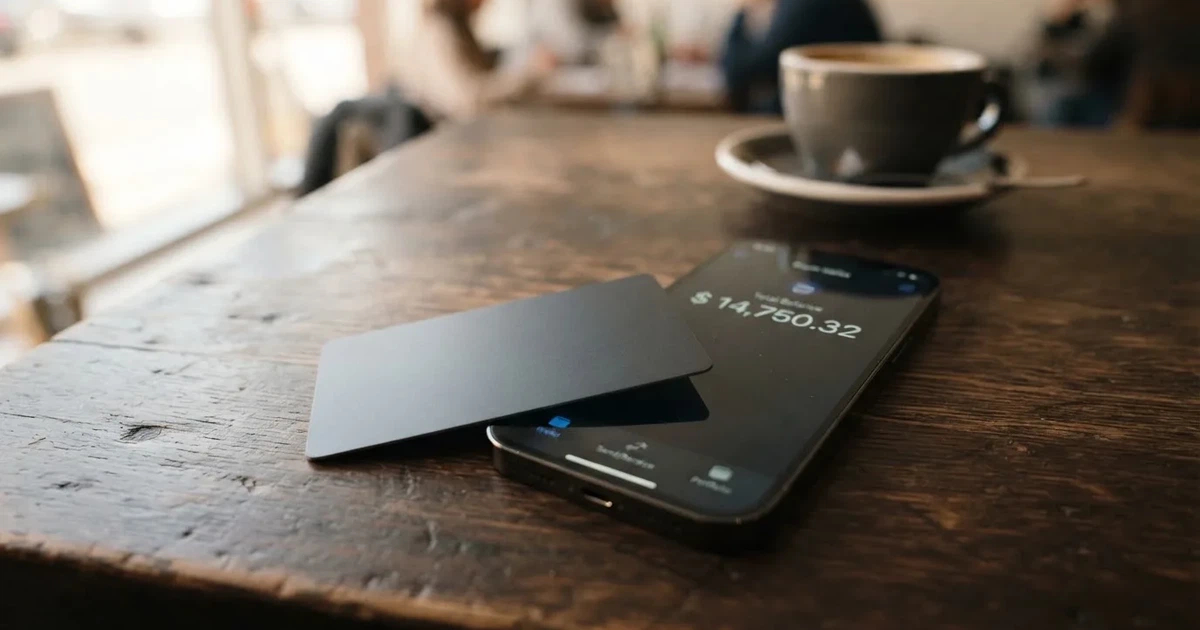
Conditions are current as of October 28, 2026
This review suits you if you want a free digital Visa, already sit on stablecoin balances, and are comfortable reading a help centre that answers some questions and skips others. It suits you less if you need a physical metal card, a stated FX rate, a defined limit, or a clear idea of who you are dealing with in a dispute.
| Criterion | Mark | Why |
|---|---|---|
| Who can get it | 5 / 10 | Live in 18+ regions today, expanding to 100+; the regions are not named, and citizens and residents of countries sanctioned by the UN, FATF, the EU or the US are excluded |
| Cost | 9 / 10 | Digital card free, account free to open, no monthly fees, “0% on USD spending”; the physical card price and the FX fee outside USD are not disclosed |
| Top-up options | 9 / 10 | Stablecoins DAI, USDT, USDC and PYUSD across “10+ blockchains”, plus fiat in USD, EUR and other currencies |
| Reliability and complaints | 7 / 10 | Issued by Lead Bank under Visa U.S.A. Inc. licensing, programme run by Bridge Ventures LLC; Trustpilot 3.9 out of 5 from 61 reviews, with complaints about verification blocks and slow payments |
| Everyday use | 8 / 10 | Digital Visa free, physical card “where supported”, Apple Pay and Google Pay; ATM availability for the global card not disclosed |
| Total | 7.5 / 10 | Strong on price and funding, held back by undisclosed terms and a middling complaint record |
Will They Give You the Card
The short answer is: probably, if you are in one of a set of regions the company does not bother to name.
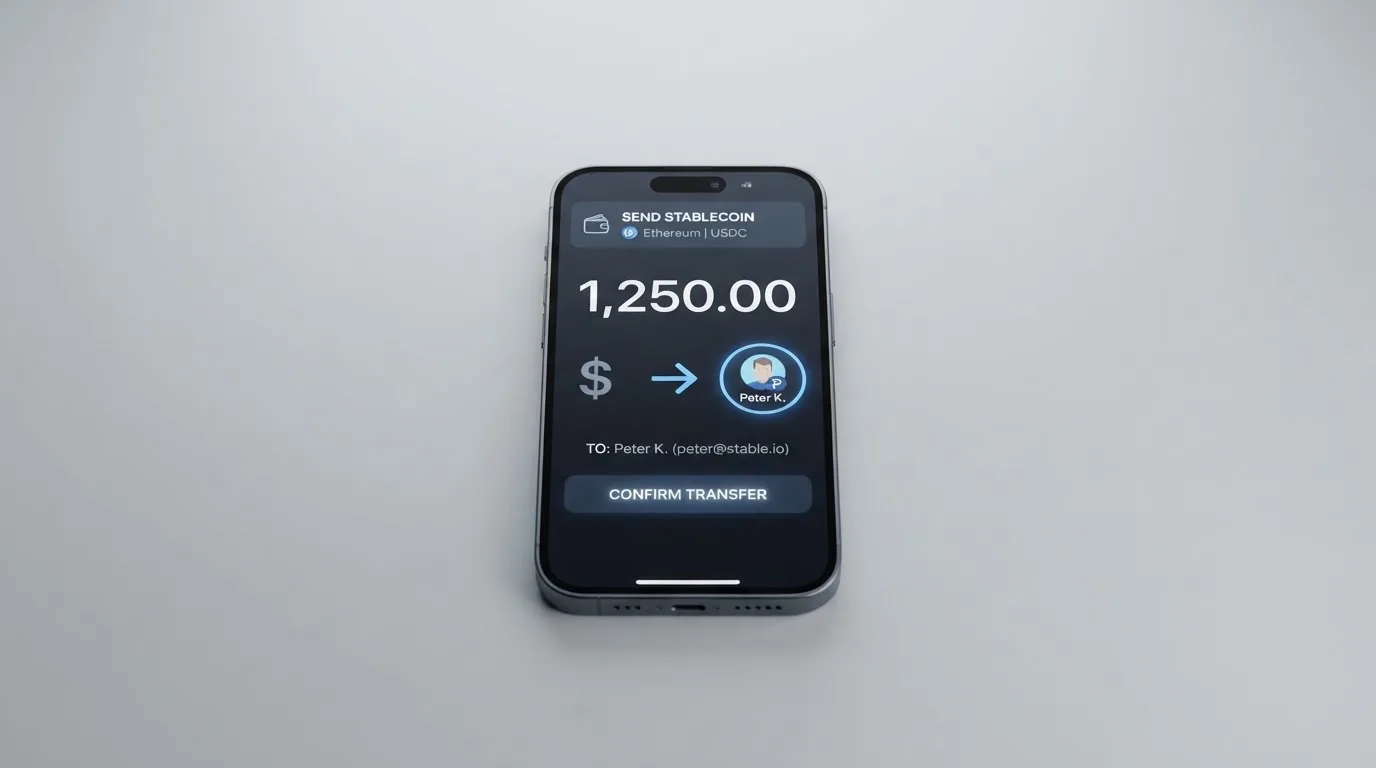
Wayex says the card is “live in 18+ regions today” and expanding to 100+. That figure is the whole of it. The 18 regions are not listed on the main site, and the route to the other 100 or so is not explained. If you are trying to work out whether your country is covered, you are being asked to guess — or to install the app and find out, which is a different kind of answer. A third-party site (CoinCodeCap, February 2026) describes the core product as Australia only, with the 160-country figure representing an early rollout rather than a live footprint. That reading is unofficial and I could not confirm it on Wayex’s own pages, but it fits the shape of the evidence: a help centre built around an Australian product, one AUD-denominated section, and a global card whose fine print is thin.
What is stated clearly is the exclusion rule. The terms bar you if you are located in, or are a citizen or resident of, a country sanctioned by the UN, FATF, the EU or the US (OFAC) — or if you are in a jurisdiction that bars crypto services outright. Note the three-part test. It is not just where you live; citizenship and residence are checked separately, because sanctions screening and issuer risk policy tend to run on citizenship and country of birth as well as address. If you hold a passport from a sanctioned state but live and bank elsewhere, that sentence is aimed at you.
The app is downloadable in 160+ countries. Being able to install an app is not the same as being able to open an account, and the gap between the two numbers is exactly where the uncertainty lives.
One practical note before you go further: rules like this change as sanctions lists change. A country that is open when you read this may not be open when you apply, and the card issuer applies its own risk policy on top of the published terms.
How to Get It
Wayex advertises that you can “complete KYC in as little as 2 minutes”. That is the pitch: an identity check fast enough to feel instant. The pages I read do not say which documents you need, describe no verification tiers, and list no reasons a check might fail. You must be 18 or over.
The application runs through the mobile app, available for iOS in the App Store and for Android in Google Play. Store ratings are not shown on the Wayex site, so you get no independent read on app quality before you install it.
What you end up with is a Visa Debit, prepaid. The digital card is free. The physical card exists “where supported”, and Wayex does not publish a delivery schedule or a list of supported countries for it on its main site. The help centre for the Australian product is more forthcoming: there, the physical card and its delivery cost AUD 14.99, and a lost, stolen or expired card is replaced free.
Your balance is held in USDB, pegged 1:1 to the US dollar. That is the unit you spend from, and it is worth understanding why before anything else: a “1:1 peg” is a promise about value, not a guarantee about the mechanics of getting in or out. If the peg slips, or if the route to your balance is interrupted, the number on the screen is not the same thing as dollars in a bank account.
Fees: What It Really Costs
The headline pricing is unusually good. The digital card is free, the account is “Free to open. No monthly fees.”, and spending in USD is advertised at “0% on USD spending”. There is a small line in the footer that says “Fees may apply”, which is the entire hedge.
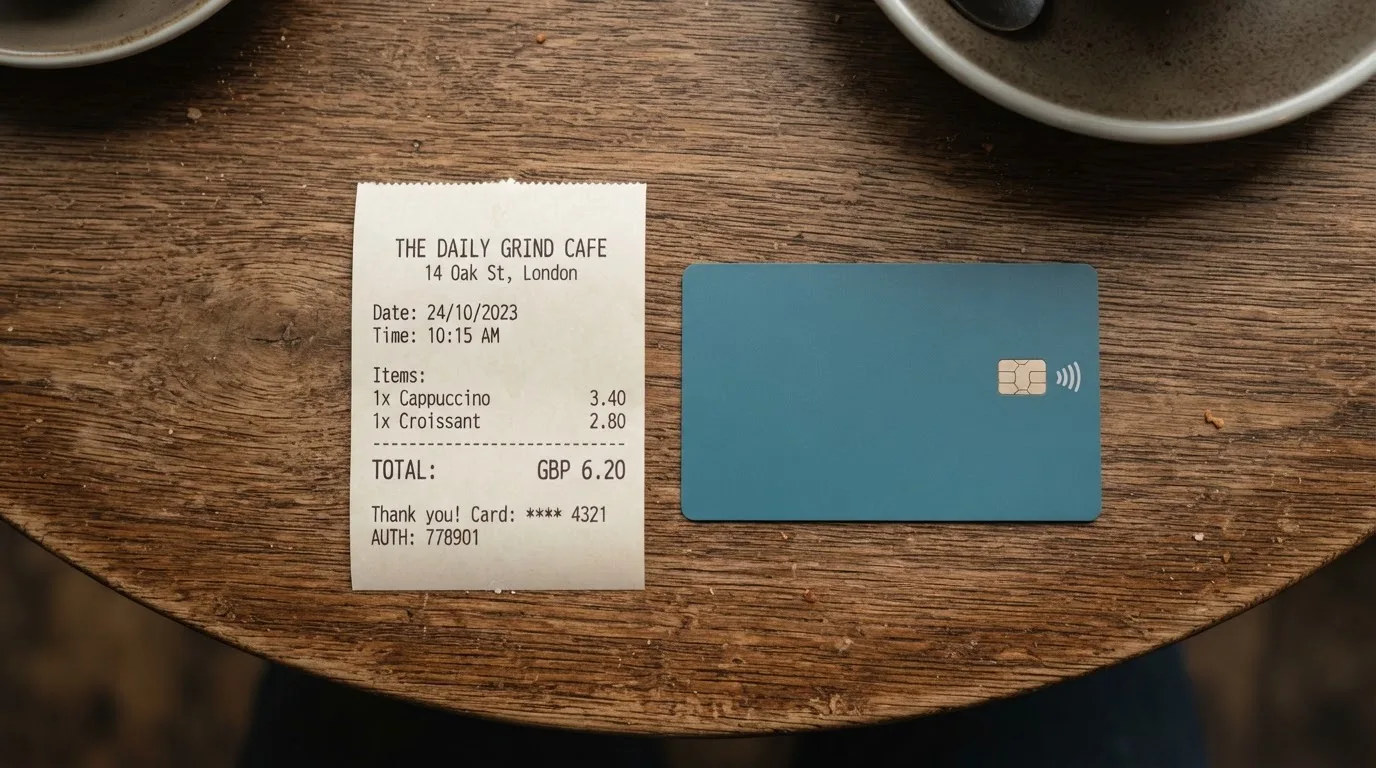
Here is what is disclosed and what is not:
| Fee or limit | What Wayex states |
|---|---|
| Digital card issuance | Free |
| Physical card price | Not stated on the main site; AUD 14.99 in the Australian help centre |
| Account opening | Free to open |
| Monthly fee | No monthly fees |
| USD spending | “0% on USD spending” |
| Crypto conversion fee | Not stated |
| FX fee outside USD | Not stated |
| ATM | Not stated for the global card; Australian product: withdrawals only in Australia, Wayex fee $0, operator fees apply, max AUD 1,000 per day |
| Card spend limit per transaction | Not stated globally; Australian product: max AUD 10,000 per transaction |
| Crypto buy/sell limit | Not stated globally; Australian product: AUD 100,000 per transaction and per day, min AUD 5 |
Three everyday payments, with what actually applies to each:
Coffee in New York, paid in dollars. This is the case the card is built for. The balance sits in USDB, spending is in USD, and the advertised conversion is 0%. Nothing else is stated to apply — so on the evidence published, this is the payment that costs you nothing to make.
A subscription billed in euros. Here the card stops telling you anything useful. The Australian help centre says “No foreign exchange fees on Wayex”, but that page is about an AUD-denominated domestic product. The fee on the global Visa card for spending outside USD is not stated. You are told “0% on USD spending” — which says nothing about the euro line, and the gap between those two statements is exactly where an undisclosed currency conversion lives. Treat this as unknown rather than free.
Anything bought with crypto. To buy goods with stablecoins, the balance has to be converted somewhere. The crypto conversion fee is not stated. The Australian help centre carries a separate “Trading Fee Tiers” article — conversion from 0.40% down to 0.00% depending on 30-day volume — but that is the Australian product, and it is not the number your card will charge. One unofficial review (CoinCodeCap, February 2026, updated April 2026) lists a $1,000 per-transaction limit and $150,000 lifetime card spend with a free replacement after; that directly contradicts the Australian help centre’s AUD 10,000 per transaction, which is a good reason to distrust both numbers until you see your own.
Also worth separating: interest or yield is not a fee but will be mistaken for one. Wayex advertises an “Everyday Yield” of up to 5% on liquid stablecoin balances, and Fixed-Term Deposits of up to 20% via Kasu, marked coming soon. Those are products sitting alongside the card, not rewards for using it. There is no card cashback stated.
How to Top It Up
Topping up is where this card earns its place. Wayex takes stablecoin deposits in DAI, USDT, USDC and PYUSD across “10+ blockchains”, plus fiat deposits in USD, EUR and other currencies. Fiat on/off ramps are listed as USD, EUR, GBP, MXN and BRL.
The “10+ blockchains” is the same kind of blank as the 18 regions — the networks are not named. That matters more here than it does for a region list, because sending a stablecoin on the wrong network is a specific, expensive mistake. Blockchain transfers are irreversible; a deposit sent on a network the provider does not support, or to an address belonging to a different network, can be lost or need manual recovery with no guarantee. Chain support also varies by token: USDC has been issued on a long list of networks, but Circle stopped supporting USDC on Tron in February 2024, so “USDC over TRC20” is not a native option. And on Ethereum, fees are paid in ETH, so a wallet holding USDT with no ETH in it cannot send anything.
On fees, the Australian help centre (page dated 12 August 2026) is clear: crypto deposits are free from Wayex’s side, but network and gas fees apply; AUD deposits carry a zero fee; and there is no limit on deposits. The minimum top-up for the global card is not stated.
Getting money back out matters just as much. Cash-out to fiat is offered “where supported” via PIX, SPEI, Faster Payments, SEPA, Wire and ACH, with ACH and Wire enabled. Fees and times are not stated on the main site. The Australian help centre gives more: crypto cash-out to a bank carries a 0.40% to 0.00% conversion by 30-day volume, AUD cash-out carries no fee, outbound crypto transfers cost only network fees, AUD cash-out is capped at AUD 100,000 per cash-out with a minimum of AUD 10.
One line in the terms deserves a second look: “We may withhold withdrawals pending further investigation”. That is a standard phrase, but it means the exit can be paused while questions are asked, and the pages do not say what happens to a balance if the account closes — whether you can withdraw it, and on what timeline.
Paying With It Every Day
The card works in the wallet you already use. Apple Pay and Google Pay are both supported. Which merchant categories are blocked is not stated, which means you do not know in advance whether a betting site, a crypto exchange, or an adult merchant will decline. Many issuers block particular merchant category codes on specific cards by policy rather than by law, and the list varies by issuer.
Two things about how crypto cards behave are worth keeping in mind at the checkout. First, a prepaid card draws on a stored balance, and most crypto cards behave exactly that way — the crypto is converted and loaded as a balance, so the card cannot overdraw, but it also cannot pay anything beyond what you loaded. Second, merchants can look up the issuing institution and country from the card number, and may apply extra scrutiny when the issuer country differs from your billing address. That is why a card issued in one country can look foreign to a shop in another, and why a decline at a large merchant is not automatically a fraud flag on your account.
There is a separate question about address verification. The service that compares the street number and postal code you type at checkout against issuer records is mainly offered in the US, Canada and the UK, and is generally unavailable for foreign-issued cards — which can cause declines on their own. Card payments also involve several parties: the network routes the messages and sets the rules, the issuer holds the programme, and the crypto brand is often only a programme manager or front-end. When something goes wrong at a shop, knowing which of those three is responsible is the difference between a five-minute fix and an open ticket.
If a payment does go wrong, the help pages are thin in a specific way. The FAQ has a heading, “What if I have a problem with a transaction”, with no answer under it. There is no chargeback timeframe published. What is stated: complaints are acknowledged within three business days and resolved within 30 business days, and disputes go to binding arbitration in Panama City, in English. That last point matters if you are anywhere else — a dispute framework in Panama City is not a consumer forum you would recognise from your own country.
On the day-to-day, there is also the App Store and Google Play app, plus live chat in the app or on the site, email at [email protected], and a help-centre page that says the support team is available 24/7. Community channels exist on Telegram, X, Discord and Reddit.
What Can Go Wrong
Verification blocks without explanation. The most common complaint theme, appearing in reviews from May to June 2026. Accounts frozen or verification stalled, with the card’s own rules silent on why.
Account closure that drags. One reviewer requested closure on 12 February 2026 and was still waiting on 26 May 2026.
Slow payments. A EUR 5 transfer reported as taking more than ten days, March 2026.
App sign-out bugs. Reported October 2025 — the app logging you out on its own.
The Trustpilot picture on 20 October 2026 was a TrustScore of 3.9 out of 5 across 61 reviews, with 74% five-star and 10% one-star; Trustpilot noted no recent invitations, meaning the figures move with whoever chooses to post. Praise is concentrated on support and on the absence of FX fees. One one-star review from February 2026 calls it a crypto scam and describes about $20 lost, with the company replying that the funds had arrived. Wayex replies to all negative reviews, usually pointing people to private channels — which is worth reading for what it is: a resolved issue, not an open public record.
The structural risk sits above the reviews. The card is issued by Lead Bank under licensing by Visa U.S.A. Inc., with Bridge Ventures LLC as programme manager; Wayex is the platform provider and states plainly that it is “not a bank”. Wayex’s own registration country is not stated. That arrangement is normal for this category and not in itself a warning sign — but it means the entity you open an account with is not the entity that issues the card, and in a problem you may be dealing with both. No dated licence events were found, and no official incident was found either.
On security, Wayex describes “transparent custody, and optional self-custody”, encryption, 24/7 monitoring and “instant controls & alerts” on the card. Two-factor authentication, card freeze mechanics and safeguarding arrangements are not stated on the pages I read — and instant controls depend on the app working, which is the same app that has a sign-out bug in its history. The custody choice itself is a real decision: with a custodial wallet the provider holds the credentials and you trust them completely, while a self-custody-linked card keeps your funds in your own wallet until the moment of payment but leaves you carrying the whole burden of key loss and address-swap malware. A seed phrase is typically 12 to 24 unencrypted words; anyone who obtains it can restore the wallet and spend the funds, and no network can freeze or return them.
Regulation is worth understanding as two separate layers. A card is a payment service, regulated under e-money and payments law, while the crypto side — custody, exchange, transfer — sits under crypto regulation. A card like this often depends on two licences in two places. In the EU, MiCA took legal effect in June 2023, its rules on e-money tokens applied from 30 June 2024 and the remaining provisions from 30 December 2024, with e-money tokens issuable only by a credit institution or an electronic money institution. The transitional period runs until 1 July 2026 or until a provider receives or is refused authorisation, whichever comes first — so in the period this review covers, providers are still settling into the new regime. In the US, FinCEN guidance treats administrators and exchangers of convertible virtual currency as money transmitters, while ordinary users buying goods are not.
Finally, one risk that is not about Wayex at all. Stablecoins can and do depeg: TerraUSD collapsed in May 2022, and USDC briefly lost its peg in March 2023 during the US banking crisis. Your balance is denominated in USDB, pegged to the dollar. The name is not the mechanism.
What to Take Instead
I looked at three alternatives with the same questions in mind. None of them is unambiguously better; they trade differently.
| Card | Score | Where it is available | Cost and funding | Rewards |
|---|---|---|---|---|
| Wayex | 7.5 / 10 | 18+ regions, unnamed; expanding to 100+ | Free digital card, no monthly fee, “0% on USD spending”; stablecoins DAI, USDT, USDC, PYUSD | No card cashback stated; up to 5% yield on stablecoin balances |
| Whop Cards | 5.2 / 10 | Consumers in 31 US states, businesses in 41; unsupported consumer countries include Belarus, China (Mainland), Cuba, Hong Kong, India, Iran, Iraq, Israel, Myanmar, Nepal, Nicaragua, North Korea, Russia, Syria, Turkey, Ukraine, Venezuela and Vietnam | “No extra fees”, but no amounts listed; spends from a Whop balance backed by stablecoin collateral; coins and networks not stated | 5% cashback at select merchants, currently Uber |
| Stella | 6.5 / 10 | Countries not stated on the official site; terms bar users under economic sanctions programmes and route US and European users through affiliates | Fees “described under this User Agreement and/or on the App”, amounts not stated; deposit crypto into the account, which auto-tops-up the card | No cashback stated on the card page |
| UniFi Card | 4.7 / 10 | Not confirmed from official pages; app routes to the Philippines, Mexico, eurozone, and release notes mention Colombia, Brazil and UK | “Fees may apply. See UniFi website”; a prepaid debit Visa issued by Lead Bank; funded by ACH, wire, SEPA, SPEI, or paid to a USDC wallet | Listing claims “3% rewards on balances” |
Reading across that table, a few honest observations. Wayex has the strongest published cost position — it is the only one of the four actually stating zero monthly fees and 0% USD spending. Whop is the most geographically legible, because it names 31 states and a full exclusion list, which is more than anyone else offers; but it is US-only, and its funding model is less straightforward, spending from a platform balance backed by stablecoin collateral from a linked wallet. Stella routes US and European users through affiliates, which is a structural complication worth asking about before you start. UniFi shares an issuer with Wayex — also Lead Bank — and has the least published information of the four.
If your problem is that you cannot get an ordinary bank card at all, the comparison is not only about cards. It is also about whether the thing you are paying with will be accepted: some merchants decline prepaid or foreign-issued card numbers because the lookup reveals the card type and issuer country.
Who I Would Recommend It To
I would recommend the Wayex card to someone in this position: you already hold dollars in stablecoins, you want a digital Visa that costs nothing to open and nothing to hold, you mostly spend in USD or in a country where a foreign-issued card is unremarkable, and you are the kind of person who will read a help centre closely enough to notice when it stops answering.
I would not push it at someone who needs to know the FX fee before booking a trip, who needs a physical card in the post within a stated timeframe, who plans to use ATMs abroad, or who needs a dispute forum they recognise. The information exists in fragments — mostly in an Australian help centre describing a different product — and joining those fragments to your own case is your job, not Wayex’s.
Three checks before you commit, in order of how much they matter. First, whether your region is actually live, because the 18-region figure is unenumerated and that is the single question that ends the evaluation. Second, what the limits are on your account, which you will only learn by trying. Third, the withdrawal route out, including what happens to a balance if the account is closed or frozen.
On tax, one last thing and not advice, only a flag: in the US the IRS treats digital assets as property, so exchanging them for goods, services or dollars generally produces a taxable gain or loss, measured in local fiat currency at the fair market value on the transaction date. Each card payment funded from crypto may therefore be a separate disposal. That is a question for a professional in your own jurisdiction, not for a card review.
Frequently asked questions
What is the Wayex card?
It is a prepaid Visa Debit that spends a balance you load yourself — from stablecoins such as DAI, USDT, USDC and PYUSD, or from fiat currency. The digital card is free, the account has no monthly fee, and spending in USD is advertised at 0%. Wayex is the platform provider and states it is not a bank; the card itself is issued by Lead Bank under Visa U.S.A. Inc. licensing.
Is Wayex a bank, and who owns it?
No — Wayex says so itself. It is the platform provider, with Bridge Ventures LLC named as programme manager and Lead Bank as the card issuer. That is a normal structure for a crypto card, but it means the company you open an account with is not the bank that issued your card, and Wayex’s own registration country is not stated on its pages.
Which countries can use the Wayex card?
The card is “live in 18+ regions today” and expanding to 100+, but Wayex does not name the 18. The app downloads in 160+ countries, which is not the same thing as being able to open an account. You cannot be located in, or be a citizen or resident of, a country sanctioned by the UN, FATF, the EU or the US, or of a jurisdiction that bars crypto services.
Does the Wayex card require KYC, and how long does it take?
Wayex advertises completing KYC “in as little as 2 minutes”, and you must be 18 or over. The pages I read do not say which documents are required, describe no verification tiers, and list no rejection reasons — so treat the two-minute figure as a best case rather than a schedule you can plan around.
Is the Wayex card free?
The digital card is free, accounts are free to open, and there are no monthly fees. That is genuinely rare. But the physical card price is not stated on the main site — the Australian help centre quotes AUD 14.99 including delivery — and the site carries a general “Fees may apply” footer, so the free card is the free part, not necessarily the whole bill.
How do I top up the Wayex card?
You deposit stablecoins in DAI, USDT, USDC or PYUSD across “10+ blockchains” — the networks are not named — or you deposit fiat in USD, EUR and other currencies, with ramps listed for USD, EUR, GBP, MXN and BRL. Deposits are free from Wayex’s side in the Australian product, though network and gas fees apply on crypto. Check the network before you send: transfers are irreversible.
How do I withdraw money from Wayex?
Cash-out to fiat is offered “where supported” through PIX, SPEI, Faster Payments, SEPA, Wire and ACH, with ACH and Wire enabled. Fees and times are not stated on the main site; the Australian help centre lists crypto cash-out conversion from 0.40% to 0.00% by volume and AUD cash-out with no fee. The terms also reserve the right to withhold withdrawals pending investigation.
Where can I use the Wayex card, and does it work in Apple Pay?
Visa Debit means it should work wherever Visa is accepted, and Apple Pay and Google Pay are both supported. But a merchant can look up the issuing institution and country from the card number and apply extra scrutiny when it differs from your billing address. Which merchant categories are blocked is not stated, so expect some declines you cannot predict.
Is the Wayex card safe?
The card is issued by a licensed issuer and Wayex describes encrypted infrastructure, 24/7 monitoring, transparent custody with optional self-custody, and instant card controls. Reviews on Trustpilot were mixed at 3.9 out of 5 from 61 reviews, with recurring complaints about verification blocks and slow payments. The honest summary: the structure is conventional for the category, the published detail is thin, and custody choice is a decision you have to make rather than a protection you get by default.
Is the Wayex card worth it?
For someone who already holds stablecoins, spends mainly in USD, and wants a free digital Visa with no monthly charge, the value proposition is strong and hard to match. For anyone who needs a physical card on a known schedule, a stated foreign-exchange fee, a published daily limit, or a familiar dispute forum, the missing information is the answer. Decide after you know which of those you need.
How app and neobank cards work – cryptocardsexplained.com
Content created by the «cryptocardsexplained.com» team