
Strong everyday card mechanics, weak transparency
 Available in US
Stella is a crypto payment card that behaves, on the surface, like an ordinary Visa: you spend from a crypto balance, you get a virtual card in the app, you can order a physical one, and both work with Google Pay, Alipay and WeChat Pay. On those mechanics alone it scores well. What holds it back is everything the card does not publish — its fee list, its issuing bank, its licensing, its country list. When I finished reading the official pages, the honest answer was not “this is a bad card” but “this is a card I cannot fully price or fully trust from the outside.” That balance of a genuinely useful product against genuinely missing disclosure is why the score lands where it does.
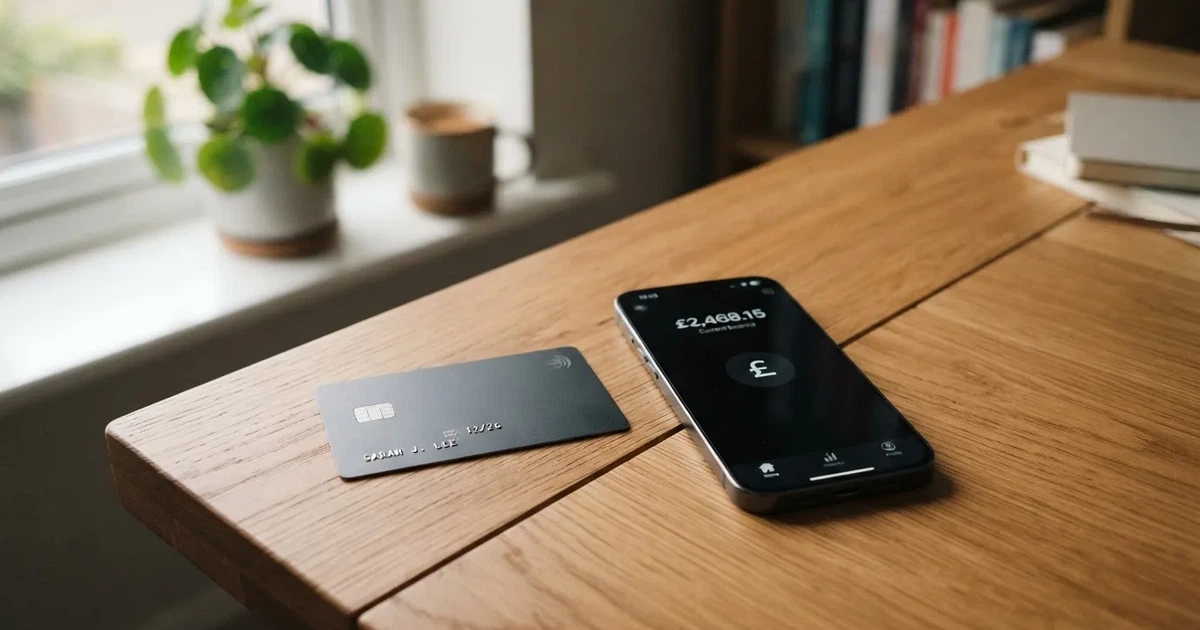
The conditions described here are current as of October 28, 2026.
The verdict: 6.5 out of 10
The card suits people who already hold crypto, want to spend it without converting by hand every time, and specifically want a Visa that still works at cash machines and inside Alipay — the usual Western crypto cards tend to give up on those two. It does not suit you if you need to see a fee schedule before you commit, if you need to know which bank stands behind the card, or if you intend to hold a meaningful balance on the platform for months. Those are not small requests; they are the requests that matter most when your money is involved.
Here is how each criterion broke down. The official and unofficial split runs through this table and through the rest of the review: where the card’s own pages say nothing, I have said so, and where a number comes from a third party rather than Stella, I have treated it as unconfirmed.
| Criterion | Mark | Why |
|---|---|---|
| Who can get it | 7 / 10 | Countries are not stated on the official site; unofficial sources say 57 countries, including the US, UK, Singapore and India, and restrictions in 49 |
| Cost | 5 / 10 | No fees are published officially; unofficial reports say no annual fee, 0% on crypto top-up apart from gas, but the virtual card fee appears only in-app |
| Top-up options | 9 / 10 | Unofficial sources list BTC, ETH, USDT and USDC across ERC-20, TRON, BNB Smart Chain, Polygon, Arbitrum One and Optimism; officially, a crypto deposit tops the card up automatically |
| Reliability and complaints | 4 / 10 | Stella Global Services Limited in the British Virgin Islands, the issuer unnamed, licences unnamed, complaints about frozen accounts and funds not returned; unofficial Trustpilot of 3.2 from a single rating |
| Everyday use | 9 / 10 | Virtual and physical Visa, ATMs, Google Pay, Alipay and WeChat Pay; unofficial reports add Apple Pay |
| Total | 6.5 / 10 | A strong everyday card with the transparency gap that keeps it out of the top tier |
The single audience this product is genuinely built for, in my reading, is a crypto holder who wants a Visa with ATM and Alipay support. That is a real gap in the market. But the card asks you to trust it in a way it does not then repay with disclosure.
Will they give you the card
Stella’s own site does not name the countries it serves. Its Terms do say that users under economic sanctions programmes are barred, and that US and European users are routed through affiliates — which is a hint about how it handles those two markets, not a promise about the rest. So the honest answer to “can I get it in my country?” is: check inside the app, because the public pages will not tell you.
Unofficial sources — third-party sites, not confirmed by Stella — report that the card is available in 57 countries, including the United States, the United Kingdom, Singapore and India, and restricted in 49, among them Russia, Belarus, Ukraine, Iran, Iraq, Syria, North Korea, Cuba, Venezuela and South Africa. That last-confirmed list is from Stella documents dated 6 September 2024, reported by a third party in August 2026. A two-year-old list is not a promise. Treat the country question as something you resolve by opening the app, not by reading this page.
What the official material does tell you is who the company is, and it is not a bank. Stella Global Services Limited is incorporated in the British Virgin Islands. The card itself is issued by an unnamed licensed “Partner Issuer,” and the Apple developer name shown at the starting data is Flashwire Inc. None of the licences are named. There is no deposit guarantee scheme in the picture here, because this is not a deposit account.
Two practical consequences follow. First, anyone who tells you this is “a bank account with a crypto card attached” is wrong. Second, if you keep a balance on the platform, you are exposed to a custodial counterparty in a small offshore jurisdiction, and the fact that the issuer behind the card is unnamed does not help you evaluate who that is.
How to get it
The application is a standard verification process, and Stella’s page promises “quick and easy verification process, with immediate card usage after approval.” What the User Agreement asks for is more specific: name, address, date of birth, tax ID, a government ID, bank details, and possibly biometric data. The minimum age is 18. That is a full identity file, not a light one — expect to hand over more personal information than you would to open an ordinary current account.
Unofficial sources describe it as full e-KYC, typically taking one to two business days, with many applications auto-approved in minutes. That is reassuring in the direction of speed and unhelpful in the direction of predictability: minutes is not a commitment, and if your details need manual review you are back to business days.
On delivery, the official pages are silent — not stated. Unofficial reports say the physical card is free after a USD 20,000 top-up and otherwise carries a delivery fee. That threshold is high enough that many people will never cross it, which is precisely why the delivery fee is the number that will actually apply to you. Again: the app is where the real figures live, which is exactly the sort of design that makes a card hard to plan a budget around. Whether verification is done once or in tiers is not stated officially either.
Fees: what this card actually costs you
This is the weakest part of the review, and it is weak because of the card, not because of me. Stella does not publish its fees. The User Agreement points you to the agreement and the app for them, and that is where they stay. Everything in this section marked unofficial comes from third-party reporting, not from Stella, and I have kept it labelled that way rather than blending it into what the card states.

The costs table, with every value below marked for its source:
| Item | What the card publishes | What third-party sources report |
|---|---|---|
| Annual fee | Not stated | No annual fee |
| Virtual card issuance | Not stated | Pay-as-you-go application fee shown in-app only; a user complaint cites USD 30 |
| Physical card | Not stated | Free after a USD 20,000 top-up, otherwise a delivery fee |
| Crypto top-up fee | Not stated | 0%, user pays only the blockchain gas |
| Conversion | Not stated | Shown in-app at interbank rates; the spread is not itemised |
| FX | Not stated | Not itemised |
| ATM withdrawal | “Withdraw cash from ATMs around the world”; Card works at ATMs accepting Visa; fee and allowance not stated | Daily limit USD 2,000, monthly USD 10,000, up to 3 withdrawals a day and 30 a month; fees in-app only |
| Daily spending limit | Can be set by risk preference; amounts not stated; Terms allow further limits under underwriting | USD 100,000 for regular accounts |
| Currency | Not stated | USD only as base currency |
Now three ordinary payments, walked through so you can feel which lines of that table bite.
A small coffee purchase in your own country. This is the case the card handles best. If you are spending from a stablecoin balance and the conversion happens at an interbank rate shown in-app, the visible cost is whatever spread sits between that rate and your token’s actual value. The card does not itemise it. So the coffee costs roughly the purchase amount plus an unnamed spread — small in absolute terms, impossible to predict precisely, and the kind of drip that adds up over a year of daily spending.
A holiday abroad, spending EUR 60 in a shop. Here the picture is dimmer. The base currency is USD, per unofficial sources, so a euro purchase needs a conversion, and both the conversion rate and any FX fee are visible only in the app and not itemised anywhere public. There is also a structural headwind that has nothing to do with Stella’s pricing: because the card looks like a foreign-issued card to many terminals, some shops will decline it or ask questions, because the issuer country on the card number is not the country you are standing in. That is true of nearly every card in this category, but it bites hardest when you are already paying a conversion margin.
Withdrawing USD 200 from an ATM. The card does say plainly that you can withdraw cash from ATMs around the world, from ATMs that accept Visa. What it does not say is what that costs. Unofficial sources give the allowance — up to USD 2,000 a day and USD 10,000 a month, three withdrawals a day and thirty a month — and say the fee appears only in the app. So the withdrawal itself is real and usable; the price of it is a number you find out after, not before.
The honest summary is that Stella looks cheap on the things it does not publish in detail and expensive on the things it does not publish at all. Before you commit, the only reliable way to know what you will pay is to open the app and read the fee screen yourself. I would not budget around the unofficial “no annual fee” line alone.
How to Top up the card
Topping up is the part of Stella that works the way you would hope. You deposit crypto into the account, and the card is topped up automatically — the money lands as fiat balance without you doing a second thing. There is no manual “load card” step to forget, which is the single most common reason crypto cards quietly go unused. The wallet in the app is custodial.
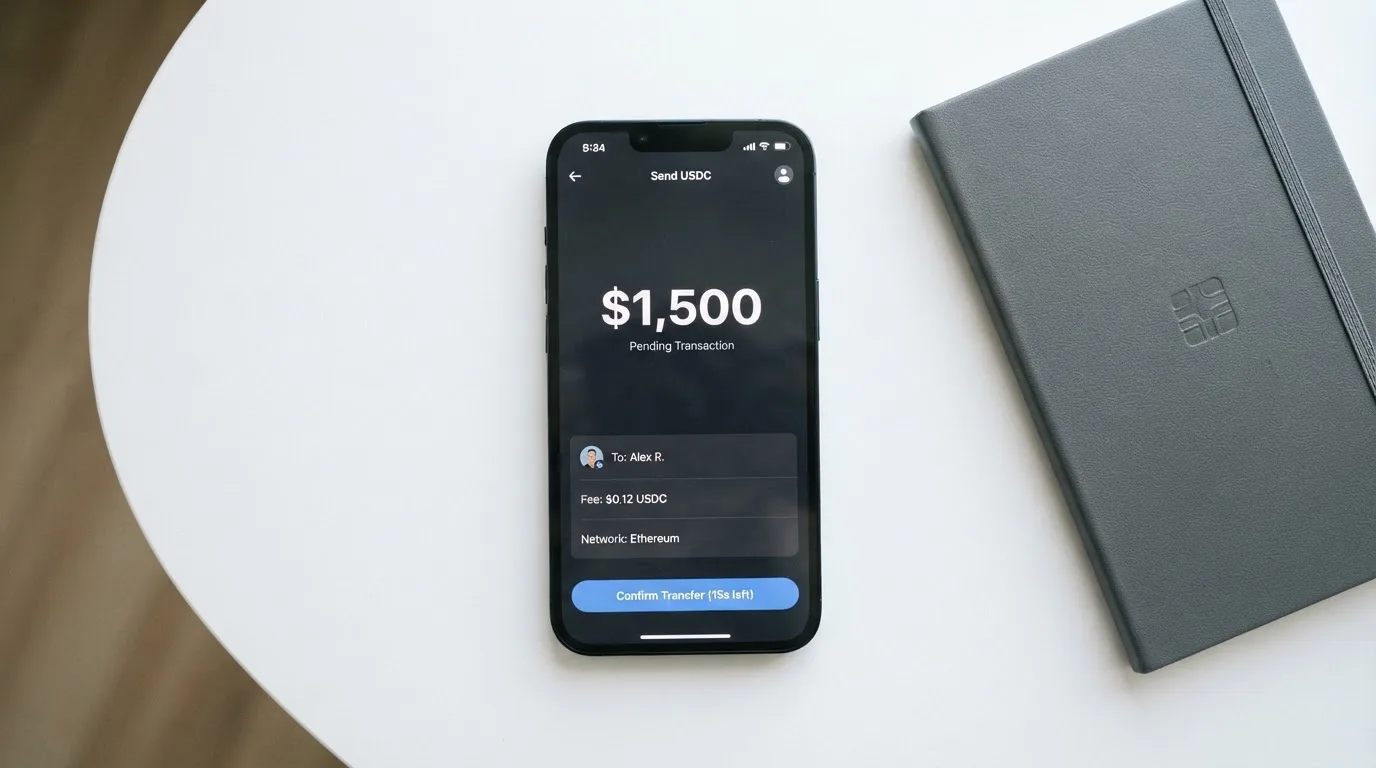
Unofficial sources put the supported assets at BTC, ETH, USDT and USDC, across the networks ERC-20, TRON, BNB Smart Chain, Polygon, Arbitrum One and Optimism. The deposit fee is reported as 0%, with only the blockchain gas charged — and that gas is charged by the network, not by the card, so it is the same small cost you would pay moving funds yourself.
Two things to be careful of here, and both are general to crypto transfers rather than Stella-specific. The first is network mismatch: send on a network the card does not support, or to an address belonging to a different network, and the money can be gone, because blockchain transfers do not reverse. ERC-20 tokens also need a little ETH in the wallet to pay gas, so a wallet holding USDT and nothing else cannot send. Second, on withdrawal out of the account: after closure you may transfer digital assets out within a reasonable period unless legally prohibited, after paying what you owe. Unofficial sources say crypto withdrawal fees start at USD 1, with exact amounts in-app.
Paying with it every day
On everyday use this is where Stella earns its score. Both the virtual and the physical card are Visa, and the card page says Visa works at “over 40 million VISA merchants globally” — which is, in fairness, Visa’s own global reach rather than a Stella promise. The virtual card is instant in the app; the physical one arrives when it arrives. Both link to Google Pay, Alipay and WeChat Pay. Unofficial sources add Apple Pay to that list. That trio of wallets is unusual in this category and is the most concrete reason to pick this card over a similar one without them.
The reward picture is thin, and it should not be part of your decision. The official card page states no cashback — there is an “Earn” product, but that is separate yield, not card rewards. Unofficial sources say no cashback on the main card and up to 40% of card fees back as a referral. A referral rate is not a reward rate.
The app exists and downloads, with a Google Play button on the cards page. Platforms and store ratings are not stated on the pages I read; unofficial sources list iOS, Android and a Telegram Mini App, and an App Store score of 5.0 from five ratings — a number too small to mean anything. The language selector on the support pages shows only English, no Russian, which is worth knowing before you commit.
Two practical points for daily use. Blocked spending categories are not stated, so do not assume gambling or similar categories are handled the way some issuers handle them. And if a payment goes wrong: unauthorised transactions and errors go to [email protected], disputes with a merchant are settled directly with the merchant, and disputes go to the courts of the Republic of Seychelles under Seychelles law. Time frames are not stated.
What can go wrong
The risk story for Stella has two halves: what is ordinary to the category, and what is specific to this card. The specific half is the one that moved the score down.
Start with the specific. There are no officially published incidents, and I want to be clear that an empty incident page is not a clean record — it is an empty page. There is, however, a user report from August 2026, relayed by a third party: a virtual card cost complaint, limited crypto support, occasional failed transactions, and an App Store complaint about an account freeze in which funds were not returned even after proof of transfer was provided. On Trustpilot, the unofficial figure is 3.2 out of 5 from a single rating — a single rating is too small a sample to judge anything, and I would not treat it as evidence in either direction, but it is also not nothing. The frozen-account-with-funds-not-returned theme is the kind of complaint that, when it appears, deserves your attention before you scale up your balance.
Then the company picture. Stella Global Services Limited, British Virgin Islands, issuer unnamed, licences unnamed. For a custodial wallet — and this one is custodial, with your assets described as “custodial assets held by us for your benefit,” pooled in omnibus accounts, title staying with you — that means your counterparty is an unnamed issuer behind an offshore programme manager. Funds in a custodial wallet carry hack risk and counterparty risk, and the history of the category is not encouraging: Mt. Gox, Coincheck and Ronin Network between them lost enormous sums. Security features: 2FA and instant freeze are not stated officially.
Support is a Help Center, a Contact Us page and a Telegram channel, with hours not stated; unofficial sources describe Zendesk tickets and no live chat. If you are reading this and considering holding real money on it, the two questions I would ask first are these: what is the issuer, and what are my withdrawal terms if it fails. Neither answer is public.
The category risks, for completeness. A card issued in one country can look foreign to a shop in another and get declined, because the card number identifies the issuer. Prepaid and foreign-issued cards get refused by some merchants for the same reason. And this is a payment method, not a bank account — if you are in the EU, e-money safeguarding rules put your funds in segregated accounts or insured, but that is not a bank deposit and not a deposit guarantee scheme; in the US, prepaid-card coverage varies and should not be assumed. If a card payment goes wrong, a chargeback is the mechanism, and under 3-D Secure liability for a fraudulent online payment can shift toward you, not away from you.
What to take instead
I compared Stella against three other crypto cards on the same basis. Here they are with their scores, so you can place it in context rather than take my word for it.
| Card | Score | Who it serves | What stands out |
|---|---|---|---|
| Stella | 6.5 / 10 | Crypto holders wanting Visa with ATM and Alipay support | Wallets and ATMs are its strength; fees and issuer are not published |
| Whop Cards | 5.2 / 10 | 31 US states for consumers, 41 for businesses | 5% cashback at select merchants, currently Uber; “no extra fees” claimed, none itemised |
| UniFi Card | 4.7 / 10 | Not confirmed from official pages; send-money routes to Philippines, Mexico, eurozone, Colombia, Brazil, UK | Prepaid Debit Visa issued by Lead Bank; USDC wallet payouts; fees simply not stated |
| Renegade | 4.1 / 10 | European Economic Area for the euro IBAN; no supported/excluded country list | Tiered pricing from 9.90 EUR a month; 1.6% crypto/fiat exchange fee; 3% rewards in RNG coin |
Read the Stella row against the others and the pattern is clear. Stella has the best everyday-mechanics story of the four — the only one of the group with ATM and Alipay support in the spec. It also has the thinnest disclosure, and one of its three peers — Renegade — publishes its monthly fees and exchange percentage on the page. That comparison is the most useful thing in this review: it shows that publishing prices is normal, and Stella’s silence is a choice.
If your priority is a published fee list and a euro-native account, Renegade is the one here that tells you what it charges. If your priority is a US address and merchant cashback, Whop publishes its reach — 31 states — which is something Stella will not. If you want a plainly named issuing bank, UniFi names Lead Bank. None of the three gives you Alipay and ATMs the way Stella does.
Who I would recommend it to
I would recommend Stella to a crypto holder who wants to spend from an existing balance, values having Alipay and ATM access on the same card, and is content to read the fee screen in the app themselves before they start. I would suggest starting small — a modest top-up, a few ordinary payments, and time to see how the account behaves — rather than loading a large balance and learning the withdrawal terms under pressure.
I would steer you away if any of these are true. You need a fee schedule you can read before committing. You need to know which bank stands behind the card and what licence it holds. You intend to hold a substantial balance on the platform for a long time. You are in a sanctioned or restricted jurisdiction and need certainty about eligibility. Or you are looking for cashback — there isn’t any on the main card.
My one-line version: Stella is a good card with a bad disclosure policy, and the disclosure is the thing you would have to accept.
Frequently asked questions
What is Stella card?
Stella is a custodial crypto payment card. You deposit crypto, it converts and loads a fiat balance, and you spend from that balance with a Visa. It offers a virtual card in the app and a physical one, and both link to Google Pay, Alipay and WeChat Pay. Stella Global Services Limited issues it from the British Virgin Islands, with the card itself issued by an unnamed licensed partner bank.
How does Stella card work?
You deposit crypto into the in-app custodial wallet, and the deposit automatically tops up the card. You then spend the resulting balance like any Visa — online, in stores, or at ATMs that accept Visa. Unlike a self-custody card, your crypto sits with Stella until you spend it, which is simpler but means you trust the provider with the funds in between.
Is Stella a bank?
No. Stella Global Services Limited is a company in the British Virgin Islands, and the card is issued by an unnamed licensed partner issuer. None of the licences are named publicly. So this is not a bank account with a card attached; it is a crypto platform with a payment card programme, and your funds are not a bank deposit.
Who owns Stella?
Stella Global Services Limited, incorporated in the British Virgin Islands, runs the service. The Apple developer name shown at the starting data is Flashwire Inc. The issuing bank behind the card is not named, and the licences are not named either — so if ownership matters to your decision, that is a question the public pages do not answer.
Is Stella card available in my country?
The official site does not state its countries. Unofficial sources say it is available in 57 countries, including the US, UK, Singapore and India, and restricted in 49, including Russia, Belarus, Ukraine, Iran, Iraq, Syria, North Korea, Cuba, Venezuela and South Africa. That list dates from September 2024, so the only reliable answer is whatever the app shows you when you sign up.
Does Stella card require KYC?
Yes. The User Agreement asks for name, address, date of birth, tax ID, government ID and bank details, with biometric data possible and a minimum age of 18. Stella calls it quick, with immediate use after approval; unofficial reports say most applications are auto-approved in minutes, others take one to two business days. Expect to hand over a full identity file.
How do I top up Stella card?
Deposit crypto into the in-app wallet and the card tops up automatically. Unofficial sources list BTC, ETH, USDT and USDC on ERC-20, TRON, BNB Smart Chain, Polygon, Arbitrum One and Optimism, with a 0% deposit fee — you pay only the blockchain gas. Make sure you send on a network the card supports, or the transfer can be lost.
What are Stella card’s fees?
Stella does not publish a fee list. The User Agreement points to the app. Unofficial sources say there is no annual fee, a 0% crypto deposit fee apart from gas, and interbank conversion rates shown in-app, but the virtual card fee, the physical card delivery fee and the ATM fee are all in-app only. Read the fee screen yourself before you top up.
Is Stella card safe?
Safely depends on what you mean. It is a custodial product, so you carry counterparty and hack risk, and your assets sit in pooled omnibus accounts with Stella. There is a user report of a frozen account with funds not returned, and no named issuer or licence. It is not unsafe in an obvious way — it is under-disclosed, which is a different problem.
Is Stella card worth it?
It is worth it if you want Alipay and ATM support on one Visa and already hold crypto. It is not worth it if you need published fees, a named issuing bank, or cashback — there is no cashback on the main card. My suggestion is a small first top-up, ordinary payments for a few weeks, and only then a larger balance.
How app and neobank cards work – cryptocardsexplained.com
Content created by the «cryptocardsexplained.com» team