
A dollar card with cashback in XPL, and several things the public pages still leave unsaid
 Available in US
Plasma One is a Visa card you spend from a crypto balance. It is aimed, in its own words, at people who want dollars in their account, a card they can add to a wallet “in minutes”, and cashback that arrives in the token of its own network rather than as a rebate on a statement. The pitch is coherent. The disclosure is thinner than the pitch. That combination — a clear product idea, a live card, and a public information layer that stops short of the numbers a reader actually needs to decide — is what this review runs through.
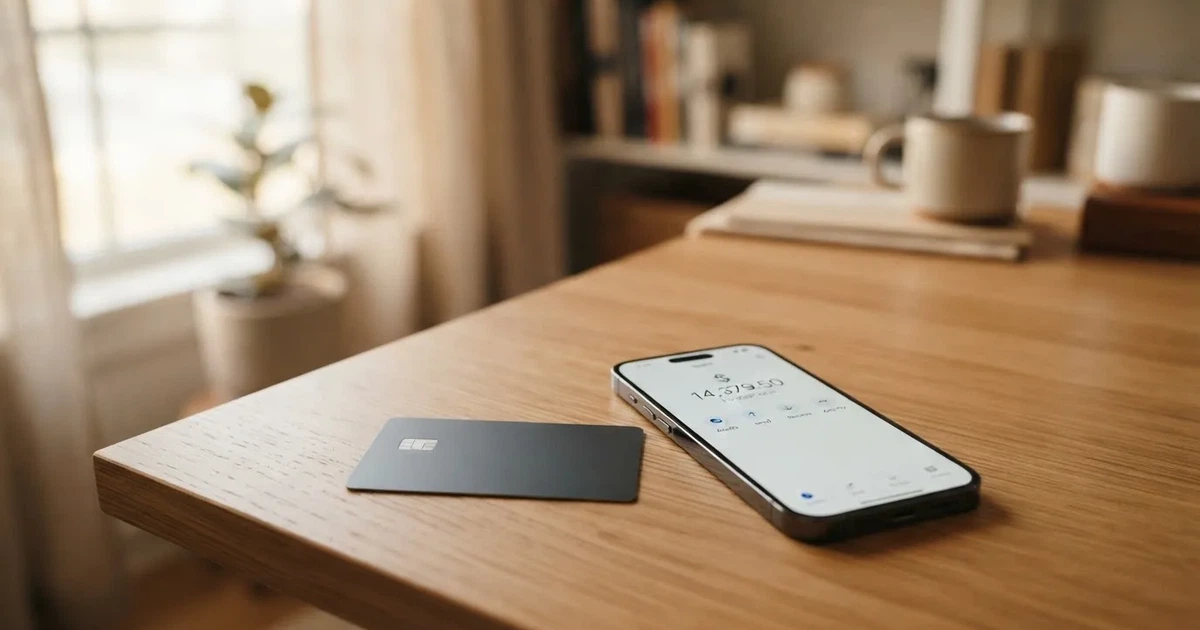
Conditions are current as of October 28, 2026.
The short answer: 7.1 out of 10
I scored the Plasma One 7.1 / 10. That is not a dismissal and not an endorsement. It is a card that does the thing it says it does, charges little for it, and leaves you to guess at more than it should. If you fall inside its eligibility rules, you add dollars to a US dollar account, spend it anywhere Visa is accepted, and earn a percentage back in XPL — the Lite tier’s fee for holding a card is $0. If you sit outside those rules, or you need to know exactly what a year will cost, or you want a card that arrives in the post in your country, you will find the answers thin or missing.
The audience the card fits best is narrow and worth stating plainly: dollar-account users who are comfortable with XPL as a reward and who want a spending balance rather than an investment product. The audience it does not fit is anyone who needs certainty — a published country list, published ATM terms, published spending caps, a physical card in a specific place, or a deposit protection scheme behind the balance.
| Criterion | Mark | Why |
|---|---|---|
| Who can get it | 7 / 10 | Residence decides it; the restricted list sits in an appendix to the terms and is explicitly not exhaustive |
| Cost | 8 / 10 | The Lite tier costs $0 and the card adds no fees of its own; Core and Platinum are paid or paid for in locked XPL |
| Top-up options | 7 / 10 | Local currency into dollars, plus unofficial stablecoin routes on listed networks and bank or wallet off-ramps |
| Reliability and complaints | 6 / 10 | The issuer is a Visa Principal Member and services run through Bridge, but Plasma is not a bank and user reviews are thin and mixed |
| Everyday use | 7 / 10 | Virtual and physical Visa, Apple Pay and Google Pay; unofficial sources say the physical card is Platinum-only and say nothing about ATMs |
| Total | 7.1 / 10 |
Read that table as five separate questions, not one verdict. A 7 on “everyday use” and a 6 on “reliability” describe different failures: the first is about what the card does at the till, the second about what happens when something goes wrong and you need someone to answer.
Will they give you the card?
Short answer: probably, if you live where the app lets you, and probably not if you are in a country listed in the terms’ appendix. The public pages do not publish a plain country list — that is not stated. What they do say is that “geographic, regulatory, and other eligibility limits apply, and are subject to change”, and that account services are residence-based: US residents, EEA residents and all other residents are served by different Bridge entities.
The list that does exist is in Appendix I to the Terms of Service, under restricted jurisdictions. The terms say a user “located in or ordinarily resident in” one of them may be restricted, and they say plainly that the list is not exhaustive. It names Afghanistan, Belarus, Bosnia and Herzegovina, Central African Republic, China (Mainland), DR Congo, Guinea, Guinea-Bissau, Haiti, India, Iraq, Israel, Libya, Mali, Myanmar, Nepal, Nicaragua, Russia, Somalia, South Sudan, Sudan, Syria, Turkey, Ukraine (outside the Crimea/Donetsk/Luhansk/Kherson/Zaporizhzhia carve-out), Venezuela, Vietnam, Yemen and Zimbabwe — plus Cuba, Iran and North Korea.
Two things follow, and they are the practical parts. First, the restriction language is about location and ordinary residence, not citizenship. Second, the International Card Terms contain a separate attestation: you confirm you are not a US citizen. So there are two distinct filters, and a US citizen living in a permitted country is in a different position from a US resident in the same place.
You will also see numbers floating around third-party sites, and I would weight them differently. Unofficial sources disagree sharply: one says available in 188 countries and restricted in 7; another lists only the United States; another says 150+ countries excluding the US; another mentions 31 US states. Some say access is invite-only. Some say countries including Belarus, China, India, Turkey, Vietnam and Nigeria may still qualify with proof of residence elsewhere. Three of those unofficial claims contradict the official appendix directly, because it lists Russia, Belarus and Turkey as restricted. Where the official terms and a third-party blog conflict, the terms win — and if you are in one of those countries, the only reliable answer is what the app says about your own address at sign-up.
If you are in the US specifically, note that the terms name you as a person who must attest something, while an unofficial source describes a state-level availability list and another lists the United States alone. That is three descriptions of the same question and no two of them agree.
How to get it
Short answer: the card’s own promise is speed and self-serve — “get a card you can add to your wallet in minutes” — but the card does not publish its verification levels, processing times or rejection reasons, and it does not describe how a physical card is delivered.
What is published is the sequence rather than the paperwork: complete identity verification, be 18 or older, hold one Card Account per person, and not be subject to US, UK or EU sanctions. The levels of verification, how long each takes and why an application might be refused are not stated on the public pages.
The card itself is both virtual and physical, a Visa “issued by Rain, a Visa Principal Member”, accepted in 180+ countries. The account is denominated in US dollars — the site puts it as “Add local currency. Get dollars.”
Delivery is the gap I would want filled before you commit anything. Whether the plastic arrives, where it ships, how long it takes, what it costs and what a replacement costs — none of that is described on the public pages. The terms do say cards are activated through the Plasma One app, and that a replacement card may carry a new number. Unofficial sources say the physical card is a Platinum-tier feature and that the Core physical card is not confirmed live; that is not confirmed by the card, and it conflicts with the general page showing virtual and physical alongside each other. Treat “will I get plastic, and when” as unanswered rather than as settled either way.
For the identity questions, an unofficial source describes the process as legal name, date of birth, government ID, residence and address, sometimes a liveness video, sometimes proof of address, with automated checks usually finishing quickly and human review on request. That is a third-party account of a process the card does not itself document. It is also the only detail available, which is why it is here — with that label attached.
Fees: what it really costs
Short answer: the headline cost is better than most cards in this category, and the detail is where it gets thin. The Lite tier costs $0 for the card, and the card states that “Plasma One does not charge any additional fees”. Conversion, currency and ATM costs are where your money actually leaves you, and two of those three are not published.

| Fee or limit | What the card says | What unofficial sources add |
|---|---|---|
| Card issuance | Lite $0 card cost | Core $199/year or a 20,000 XPL lock for 12 months; Platinum a 100,000 XPL lock for 12 months, help centre says launch rate rising to 150,000 XPL |
| Monthly or annual fee | Not stated beyond the Lite $0 card cost; tiers Lite, Core, Platinum with standard, reduced and no-added-fee levels | Sources differ on the Core price |
| Conversion fee | “Does not charge any additional fees”; partner fees for some conversions shown in the app before you confirm | Plasma FX markup Lite 1%, Core 0.5%, Platinum 0%; a Visa network FX fee of about 1% may apply |
| Foreign exchange | Up to 1% on non-USD, 0% cross-border, 0% APR on purchases; Platinum covers the Visa FX fee | One source puts the FX fee at about 2% on non-USD spend |
| ATM | Not stated; ATM withdrawals earn no Rewards and Spending Credit cannot be applied to them | ATM fees, allowances and limits unpublished for every tier; one source says the virtual-only Lite card cannot be used at ATMs |
| Stablecoin transfers | Zero-fee USDT transfers, though third-party fees may apply | USDT and USDG deposits free; USDC free up to $30,000 per transaction |
| Fiat rails | Partner fees shown in the app before confirming; Cash Out “may carry processing fees and minimums” | USD ACH deposit $1.00/$0.50/$0.50 by tier, wire $15/$15/$10; USD ACH off-ramp 0.75%/0.35%/0.10% plus an ACH fee |
| Spending limits | Set by Plasma based on collateral and changeable, including down to $0, at any time; no dollar maximums stated; cash-like transactions may be restricted | Daily limits adjustable in the app, effective in about a minute; no universal maximum published |
Now the three payments people actually make, and which of the above touches each.
Buying something priced in your own currency, in your own country, with the card loaded in dollars. Here the row that matters is foreign exchange: up to 1% on non-USD, and 0% cross-border. On the Lite tier you carry the whole burden; unofficial tier figures suggest Core halves the markup and Platinum removes it and covers the Visa FX fee. The cross-border 0% is the number that makes the card interesting if you receive in dollars and spend abroad.
Paying a foreign merchant in a currency the card does not hold. Here conversion applies: no additional fee from Plasma itself, but the partner fee is shown in the app before you confirm, and the unofficial figures add a Visa network fee of about 1%. Realistically, budget around 1% on a non-USD purchase at Lite and less as you move up — as an unofficial reading of these figures, not as a card statement.
Withdrawing cash. This is where I would stop and not sign up on the strength of the page. ATM fees, withdrawal allowances and ATM limits are not stated in the terms at all. The one thing you can rely on is negative: cash withdrawals earn no rewards and Spending Credit cannot be applied to them. If cash is a regular part of your life, treat this card as not yet proven for that.
Two structural points about the tiers, because they cost real money. Core is unlocked either by an annual USD subscription or by locking XPL for twelve months; Platinum only by an XPL lock. The amounts are in the Help Center rather than on the public pages. Locked XPL cannot be unlocked early, and the account cannot be closed while a lock is running. That is not a fee, but it is a twelve-month commitment with an exit that has been welded shut — and if you are buying a card to spend dollars, you are now partly buying a token position too.
Top up: how the money gets in
Short answer: you add local currency and receive dollars, and you can get money back out to a bank or a wallet through in-app off-ramps where they exist. The stablecoin route is described only by third-party sources.
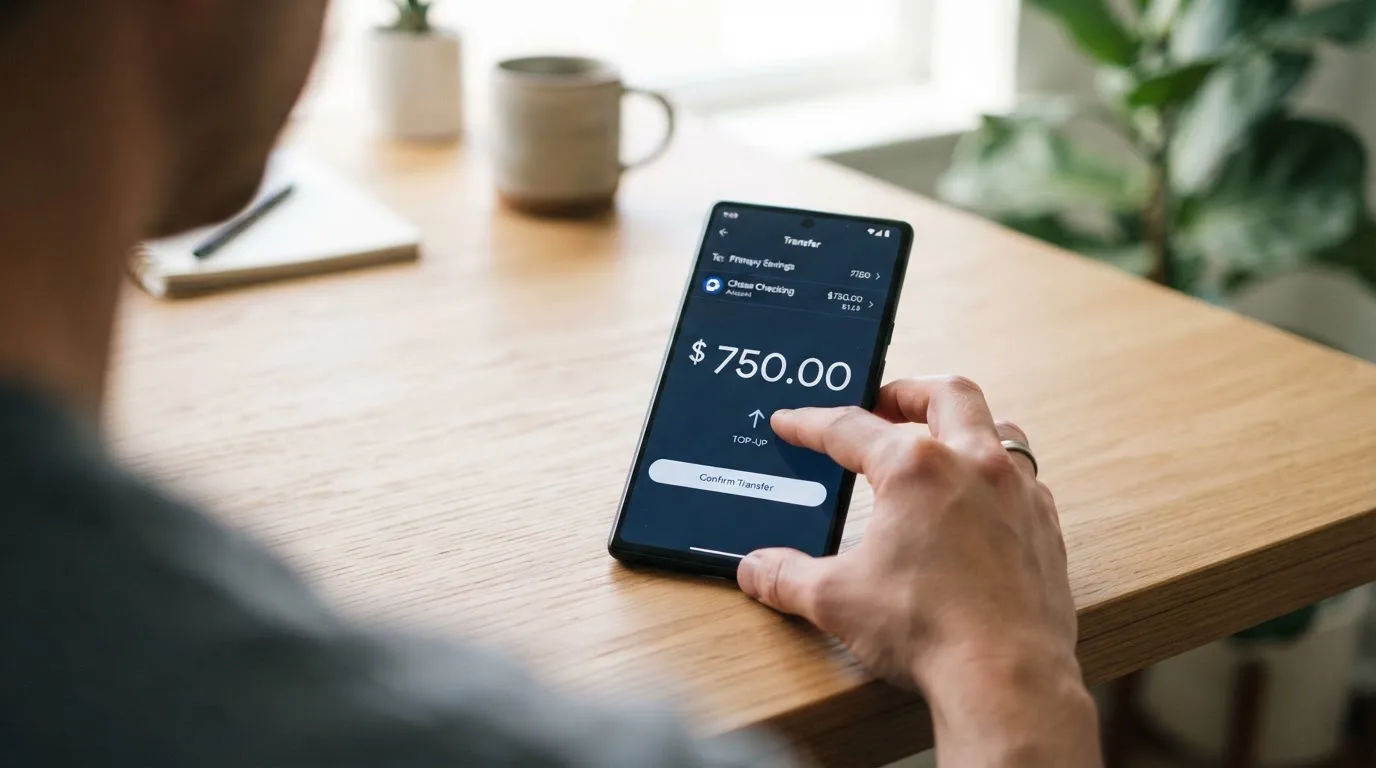
The official line is “Withdraw your money to a bank or wallet anytime”, with the off-ramp rails depending on your region. USDT is mentioned for transfers. The networks themselves are not stated. Top-up fees and minimums are not stated either, beyond the two things we do have: the card adds no additional fees, and partner fees on some foreign-exchange and bank-withdrawal transactions appear in the app before you confirm.
The unofficial picture is richer and should be read as a map rather than a specification. It describes USDT, USDC and USDG deposits on listed networks, usually landing quickly. It describes fiat virtual accounts in USD, EUR, GBP, MXN, BRL and COP that convert to USDT. It also flags a hard edge: New York residents cannot use the fiat rails. If you are in New York, that is the single most consequential thing in this section, and it comes from a third party rather than the terms.
Two practical warnings apply to any stablecoin top-up, and they apply to every card in this category, not just this one. Transfers on a blockchain are irreversible: send on a network the provider does not support, or to an address belonging to a different network, and the money can be gone or need manual support recovery with no guarantee. And match the network the deposit screen names. The single most expensive mistake available with this card is a USDT transfer to the wrong chain.
Getting out is worth planning before you get in. The issuer may suspend or cancel at any time. Withdrawing your collateral does not extinguish obligations that are already outstanding. And Spending Credit is not cash — if the account closes, it is forfeited. So the exit path is: off-ramp to a bank account, in a region where off-ramps exist, before you need it.
Paying with it every day
Short answer: it is a Visa, so “where can I use it” has the ordinary answer, and the daily-use features that matter — the phone wallets, the cashback — work, with one structural caveat about the currency you hold.
The account is in US dollars. That is the design: “Add local currency. Get dollars.” The trade-off is that if you are paid in euros or pounds or reais, every purchase crosses the 1% non-USD line at Lite unless you hold Core or Platinum. If you think in dollars already, this is a feature.
Apple Pay on iPhone and Google Pay on Android are supported, with availability depending on region. The blocked merchant categories are not stated — and that is not a minor point. Card issuers block whole industries by policy, and the list varies by issuer: gambling, for instance, sits under its own merchant category code and is commonly blocked on crypto-adjacent cards. You cannot find out from the public pages which categories this one blocks, so find out in the app before you assume a purchase will work.
Rewards are cashback in XPL, and this is the card’s distinguishing feature and its main trap. Lite pays 2% base. Core pays 3% base and 5% on what the card calls AI spending. Platinum pays 4% base and 10% AI, plus up to USD 600 a year in flight cashback. Rates vary by tier and may change. So your reward is not money — it is a token whose price you are exposed to, and you will need to sell it, on your own chain, at a cost the card does not quote, before it becomes spendable. Price a 4% return that arrives as a volatile token differently from a 4% statement credit.
The app is on iOS and Android. Store ratings and the number of ratings are not stated on the site and were not found when I looked, so I cannot tell you what users rate it.
Disputes are handled by a team that helps you challenge an unauthorized charge and issues a replacement card, with one hard deadline: report a disputed charge within 60 days after it posts to your statement. That window is short. Set a calendar reminder, because missing it is the difference between a charge being reversed and it standing.
What can go wrong
Short answer: the card works, but you are trusting a fintech that says outright it is not a bank, and the assets under the card are not the kind of assets a deposit guarantee scheme covers.
Start with the structure, because it explains most of the rest. Plasma describes itself as a financial technology company and “not a regulated financial institution, bank”. Account services are powered by Bridge. The card is issued by Rain, a Visa Principal Member. So there are three parties and only one of them is a bank. The card is a collateral-backed account: you put assets up, you spend against them, and if you do not pay, the collateral can be liquidated. That is the model, stated plainly.
The security claims are worth separating from the structural risk. Self-custody is asserted in the FAQ — the phrasing is “You do” custody, and Plasma says it does not custody assets. You can freeze the card instantly in the app and lock the account. There is a PCI DSS v4.0.1 Level 1 Service Provider – SAQ D attestation. All fine. But stablecoin balances are not bank deposits and are not covered by FSCS or FDIC. Your protection here is the card issuer’s, not a deposit guarantee scheme’s. Do not treat “self-custody” as a claim about your balance being risk-free: self-custody describes who holds the keys, not what happens when the collateral is liquidated or the account is suspended.
That last scenario is the one the one critical user review talks about. Trustpilot shows Plasma at roughly 3.4–3.5 out of 5 — from two reviews, on a company that has not invited reviews, which is the least statistically meaningful rating surface in existence. One of those two is critical and says the terms and the arbitration body changed after the reviewer flagged issues, and that advertised Platinum benefits are not in the current published tier. The other, from July 2026, is positive: it praises the cashback and low fees and the virtual card, but notes there was no physical card yet and that access was through a private beta with a key. No Reddit threads and no store-rating data were found. No official incidents were found either, which is worth something, though it is also what you would expect from a young product.
There is a timeline detail behind the reviewer’s complaint, and it is the kind of thing that changes how you read a terms page. The terms carry an effective date of 26 February 2026, and they name Third National in the defined terms with Rain in a footnote — meaning the issuing entity named in the paper and the one named in the footnote are not the same name. The same terms point to arbitration under the LCIA. Terms can change, and this issuer’s paper is young enough that you should assume it will.
The programme-closure risk is category-wide, not specific. Card programmes do get wound down — Visa terminated its global agreements with FTX on 13 November 2022, and WaveCrest, which supplied crypto card brands, was suspended by Visa in Europe in 2018, closing every WaveCrest-issued Visa programme. Closures typically mean a notice period, then loading and spending stop, then you are asked to withdraw what is left. A secondary source has one 2026 closure ending new loads on 8 July 2026 and spending on 8 August 2026 — single source, unconfirmed, but the shape of it is what to watch for.
Two more things that will bite specific people. First, Spending Credit is not cash and evaporates if the account closes. Second, the card can be declined for reasons that have nothing to do with you: a declined authorisation can leave a hold on your funds for several days, typically up to seven. A card that spends a dollar-account balance is still a card, and it can still be declined.
Support is described as available 24/7, at [email protected], with the level depending on tier — standard, priority or VIP. One small but telling detail: the site’s language selector shows English only.
What to take instead
Short answer: if the specific gaps in this card’s disclosure are what stops you, the three alternatives I looked at have the same gaps in different places, and one has genuinely better answers on cost.
| Plasma One | BloFin Wallet Card | Decaf | SafePal | |
|---|---|---|---|---|
| Score | 7.1 / 10 | 6.9 / 10 | 6.2 / 10 | 6.2 / 10 |
| Card | Visa, virtual and physical | Visa Platinum, virtual/physical not stated | Visa, virtual or physical with tracked delivery | Virtual Mastercard debit |
| Cost | Lite $0 card cost; other tiers paid or XPL-locked | Activation, annual, issuance and dormancy fees all $0.00 | Virtual $5 worldwide, physical $10 US or $90 rest of world; no annual fee | No account or management fees; issuance fee not stated |
| Spend fee | None added; FX up to 1% non-USD unofficial | 1% or lower by VIP tier, from 1.00% at VIP 0 to 0.00% at VIP 5 | Decaf adds no FX fee; Visa’s rate applies | Mastercard non-USD settlement 1% FX fee |
| Rewards | Cashback in XPL, 2% to 10% | No cashback — a lower spend rate instead | Not stated | No cashback; tier privileges tied to deposits |
| Top-up | Local currency to dollars; unofficial USDT, USDC, USDG | USDT and USDC on Arbitrum and Base | Card, bank transfer or USDC; coins and networks for top-up not stated | Crypto from 40+ blockchains, converted to USDC or fiat |
| Who can get it | Terms appendix restricts a long list; country list not stated | Not published | Long restricted-country list | Supported regions only |
Where the alternatives win: BloFin publishes real numbers where this card publishes none — $0.00 across four fee lines and a six-step spend-fee ladder from 1.00% down to 0.00%. If your objection to Plasma One is that you cannot see what things cost, BloFin lets you. Decaf publishes the most complete restricted list of the four and is the only one that states outright that it adds no FX fee and uses Visa’s rate. SafePal names its blockchain count and its networks, and publishes a 0% standard top-up fee.
Where they lose: all three are worse on rewards, because none of them pays cashback in a token that might appreciate, and two of them pay nothing at all. None of them resolves the physical-card question as clearly as you would like either — Decaf is the only one that specifies physical delivery and its price, steeply, at $90 outside the US. And SafePal’s own region list was empty when fetched, which is a more direct version of Plasma One’s unpublished country list: at least Plasma One’s restricted list exists, even if it is 26 countries long.
Who I would recommend it to
I would recommend it to you if three things are true at once. You already think in US dollars, or you receive in them. You are comfortable with the balance sitting on a chain rather than in a bank account, and with your reward arriving as XPL that you will have to sell yourself. And you live somewhere the app says is fine — the terms’ restricted list, not a blog’s country count, is the version that counts.
Under those conditions it is a genuinely good everyday card at the Lite tier: no added fees from the provider, 0% cross-border, up to 1% on non-USD, and 2% back in a token that has been rising. As a spending instrument funded by dollars you already hold, the value proposition is hard to argue with.
I would not recommend it to you if any of these apply. You need cash often — the ATM terms are not published, so you would be guessing. You need a physical card in a specific country, because delivery is not described and unofficial sources restrict the plastic to Platinum. You are in Belarus, China, India, Israel, Russia, Turkey, Ukraine or Vietnam, or in Cuba, Iran or North Korea, because the terms restrict you and the third-party claims that contradict this are weaker than the paper. You are a US citizen abroad, because the International Card Terms require you to attest you are not one. You cannot afford a twelve-month lock, because locked XPL cannot be released early and the account cannot be closed while it runs. Or you want your money covered by a deposit guarantee scheme, because stablecoin balances on this card are not bank deposits and are not covered by FSCS or FDIC.
If you are in that second group, read the Cost and Top up sections again and treat every unofficial number in them as a question to ask [email protected] before you commit. What I would put to them, in this order: is my country supported today; can I get the physical card and what does it cost; what are my ATM fees and limits; what is my daily spending ceiling; and what happens to my XPL lock if I close the account.
Frequently asked questions
What is the Plasma One card?
Plasma One is a Visa payment card that spends from a crypto-backed dollar balance. You add local currency and receive dollars in the account, and the card draws on that balance rather than on a bank account. It is issued by Rain, a Visa Principal Member, and account services run through Bridge. The card itself states it is offered in virtual and physical form.
Is Plasma One a bank?
No. Plasma describes itself as a financial technology company and “not a regulated financial institution, bank”. Three separate parties are involved: Plasma as the brand, Bridge powering account services, and Rain as the issuing bank. That structure matters because your balance is not a bank deposit, so it is not covered by FSCS or FDIC.
Who can get a Plasma One card?
Eligibility follows residence, not citizenship: US residents, EEA residents and other residents are served by different Bridge entities. Appendix I to the Terms restricts users located in or ordinarily resident in a long list including Belarus, China, India, Israel, Russia, Turkey, Ukraine and Vietnam, plus Cuba, Iran and North Korea, and says the list is not exhaustive. A plain country list is not stated.
How much does the Plasma One card cost?
The Lite tier costs $0 for the card and includes 2% base cashback, one free virtual card and standard support. Core and Platinum are paid, either by annual USD subscription or by locking XPL for twelve months — Core by either route, Platinum only by a lock. Unofficial sources put Core at $199 a year or a 20,000 XPL lock, and Platinum at a 100,000 XPL lock.
Does the Plasma One card require KYC?
Identity verification is required, and you must be 18 or older, hold one Card Account per person, and not fall under US, UK or EU sanctions. The card does not state its verification levels, how long they take, or why an application might be refused. An unofficial source describes name, date of birth, government ID, address and sometimes a liveness video.
How do I top up the Plasma One card?
Officially you add local currency and receive dollars, and withdrawals to a bank or wallet go through in-app off-ramps where available. Unofficial sources add USDT, USDC and USDG deposits on listed networks and fiat virtual accounts in USD, EUR, GBP, MXN, BRL and COP. The networks themselves are not stated by the card, and blockchain transfers are irreversible if you pick the wrong one.
Is Plasma One safe to use?
The card makes reasonable claims — self-custody rather than custody by Plasma, instant card freeze, account lock, and a PCI DSS v4.0.1 Level 1 Service Provider – SAQ D attestation. But the balance is not a bank deposit, the card is collateral-backed and that collateral can be liquidated after non-payment, and the issuer may suspend or cancel at any time. Self-custody describes who holds the keys, not what protects your balance.
Can I use Plasma One in my country?
If your country is in the Terms appendix restricted list, assume not until the app says otherwise. Otherwise, the card is a Visa accepted in 180+ countries, so the constraint is opening the account rather than spending it. The account is in US dollars, so expect up to 1% on non-USD purchases and 0% cross-border, with a partner conversion fee shown in the app before you confirm.
Does the Plasma One card pay cashback?
Yes, in XPL rather than as statement credit: Lite 2% base, Core 3% base and 5% on AI spending, Platinum 4% base and 10% on AI spending plus up to USD 600 a year in flight cashback. Rates vary by tier and may change. The trade-off is that your reward is a token you must sell yourself before spending it.
How do I withdraw money from Plasma One?
Through in-app off-ramps to a bank or wallet, with the rails depending on your region, and you can do it anytime. Two cautions: withdrawing collateral does not clear obligations already outstanding, and Spending Credit is not cash — it is forfeited if the account closes. Cash out before you need to, not during a problem.
How wallet cards work – cryptocardsexplained.com
Content created by the «cryptocardsexplained.com» team