
A no-KYC Telegram Visa funded only by USDT on Tron
 Available in US
Tegro is a virtual Visa payment card that lives inside a Telegram bot. You open the bot, order a card, send USDT on the Tron network to a one-time address, and the bot returns a card number, expiry and CVV inside the chat. There is no mobile app, no plastic card, and no bank account in the background that you can see. The whole product is a chat window, a stablecoin transfer, and a Visa number.
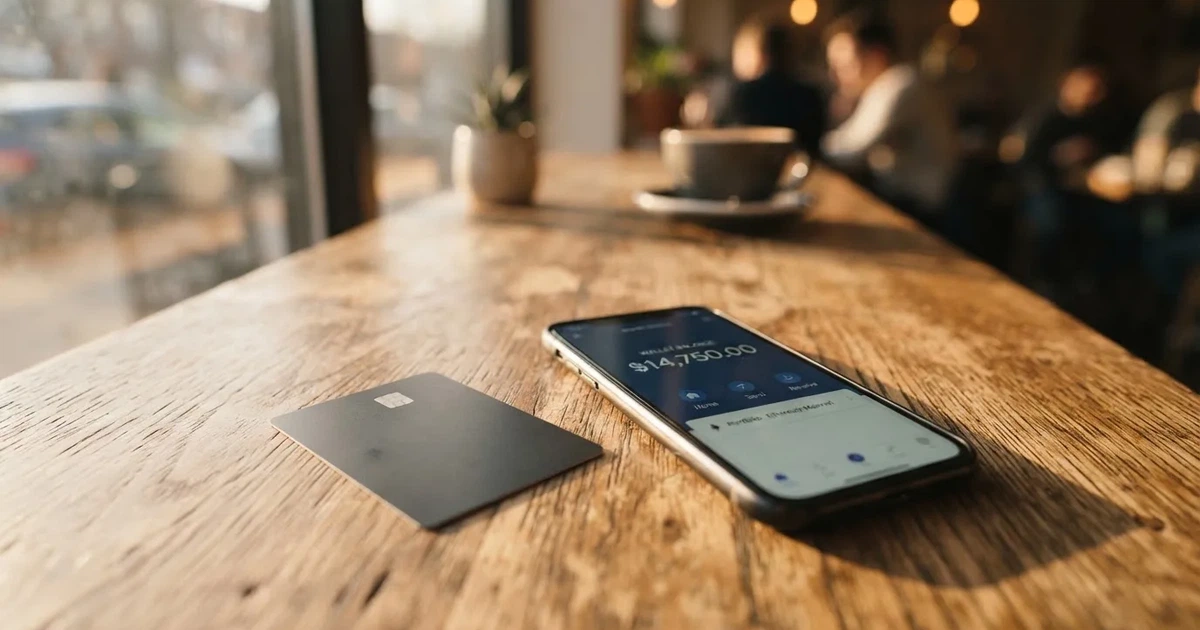
I have spent time going through Tegro’s public pages, the bot’s flow, the fee schedule and the surrounding paperwork, and I want to walk you through what I found. The headline is that Tegro is cheap to issue, simple to set up and genuinely useful in a narrow situation: you already hold USDT on Tron, you cannot or do not want to do a full KYC check with a regulated card issuer, and you want a Visa number you can add to Apple Pay or Google Pay. Outside that situation the constraints stack up quickly, and they are the reason the card scores 4.7 out of 10 in my review.
The conditions described here are current as of October 28, 2026.
Verdict
Tegro earns 4.7 out of 10. It solves a real problem for a real audience, but the audience is small and the product is built on a stack of unstated or unclear things that I cannot ignore. The card is best understood as a single-purpose tool, not as a general payment account.
Here is the breakdown, criterion by criterion. The numbers come straight from my scoring sheet and the reasons are my own words.
| Criterion | Mark | Reason |
|---|---|---|
| Who can get it | 7 / 10 | Card works wherever Visa is accepted, no country list published, residents of sanctioned countries are excluded |
| Cost | 3 / 10 | $13 issue fee, no monthly fee, but a 4% top-up fee makes a $50 card cost $65 in real money |
| Top-up options | 4 / 10 | USDT on Tron only; any other network has to be swapped to TRC-20 before deposit |
| Reliability and complaints | 4 / 10 | Issuing bank not named, operator is Libermall LLC, licences not disclosed, no complaints found but the public footprint is thin |
| Everyday use | 5 / 10 | Virtual Visa only, Apple Pay and Google Pay work, no plastic, no ATM |
| Total | 4.7 / 10 | A narrow but real fit for a specific reader |
The reader Tegro is built for is someone who already holds USDT on Tron, has no practical way to open a bank-issued crypto card, and wants a Visa number to bind to a mobile wallet for online and in-store tap payments. If that is you, the card is worth a serious look. If you want a card you can top up from a bank account, withdraw cash from an ATM, or get as a piece of plastic in the post, this is the wrong product.
Who Tegro will give the card to
The eligibility rules are short. Tegro’s terms say you have to be at least 18 and you must not be “in a country under international sanctions”. The service is unavailable to people on sanctions lists and to people resident in sanctioned countries. Beyond that, there is no list. The card is sold to anyone who can use Telegram, regardless of where they live or what citizenship they hold, and it works “wherever Visa is accepted”.
That last phrase is doing a lot of work. Tegro has not published a country list, so there is no way to check from the public pages whether, say, residents of a particular European country, a Gulf state or a South American nation can apply. The only firm exclusion is the sanctions clause, which is standard for any product that touches the Visa network. If you are uncertain whether your country is affected, the support channel is the only place to ask, and I will come back to support later in this review.
The Tegro bot also requires an account on Telegram, and Telegram itself is restricted or blocked in some countries. If you cannot reliably reach Telegram, this card is not reachable either. That is a separate point from the card’s own eligibility rules, but in practice it narrows who can actually use the product.
A second point worth raising here, because it will come up again, is that “who can get it” and “who is the card issued to” are two different questions. Tegro is the interface. The card itself is issued by a “Visa partner bank” that is not named on the public pages. The terms page is titled “Libermall Card” and names Libermall LLC as the operator. None of the licences behind either side are disclosed. This is not a regulatory problem on its own — many crypto card brands operate this way — but it is part of the picture when you weigh up the card.
How to get it
Sign-up is the part of Tegro that is genuinely easy, and I want to walk you through it the way I went through it, because the simplicity is the product.
You open the Telegram bot @TegroCardbot. The bot handles the order, the top-up and the support in one chat. There is no separate mobile app to download, no web portal to register with, and no document upload at this stage. Tegro calls this “zero KYC”: a Telegram account is enough, and “no documents” are required to get a card.
From the bot, you order a card. The bot then gives you a deposit address on the Tron network and a unique amount to send. You send USDT TRC-20 to that address from any wallet you control — a self-custody wallet, an exchange wallet, a hardware wallet, anything that can send on Tron. When the transfer is confirmed, the bot credits the balance and issues the card details, the 16-digit number, the expiry and the CVV, in the same chat. You can then add those details to Apple Pay or Google Pay, or type them into an online checkout.
There is no physical card and no delivery. The phrase on the Tegro pages is “no plastic”, and that is literal. Everything is the virtual number plus the mobile wallet binding.
KYC does exist as a possibility, but not on the standard path. Tegro says that some products with extended features require a name, date of birth, citizenship, address, an ID and a selfie, but the basic virtual card does not. The terms also reserve the right to ask for more information if the system flags unusual activity, and they do not list the reasons a card might be rejected, so there is no checklist you can self-verify against before you start.
The minimum first load is $50, and the issue fee is $13, so the first deposit has to cover both. I will unpack the cost side of this in the next section, because it is where most of the friction in the sign-up really lives.
Fees: what it really costs
The headline numbers look friendly: a $13 one-time issue fee, no monthly fee, no subscription. Tegro is explicit that there are no recurring charges (“no subscriptions”). The first card costs $13 to issue plus whatever you load onto it, and that is the cost of getting in.

The catch is on the way money comes in. Tegro charges a 4% fee on every top-up. The example used on Tegro’s own pages is the clearest way to see the impact: a $50 card costs you $65 in real money, because you pay $50 for the balance and $13 for the card, and the deposit itself carries a 4% fee on top of the load. If you load $100, you pay $13 for the card and roughly $4 for the deposit fee, so $117 goes out of your wallet to put $100 on the card.
Once the money is on the card, the published fee schedule runs out. There is no stated fee for paying in a currency other than USD, no stated conversion spread, no stated ATM fee, no stated inactivity fee, and no published daily or monthly spend limit. The terms only say that “limits depend on card type and may change”, which is not the same as a number you can plan around.
I want to put the everyday cost picture in a costs table, because the published numbers are sparse and a table makes the gaps obvious. The values are exactly as Tegro publishes them; the “not stated” rows are genuinely missing from the public pages.
| Fee or limit | Amount |
|---|---|
| Card issuance | $13, one-time |
| Monthly / subscription fee | None |
| Minimum first card balance | $50 |
| Card limit at start | $1,000 |
| Top-up fee | 4% of the amount |
| Conversion / FX fee | Not stated |
| ATM withdrawal | Not stated (no physical card, no ATM mentioned) |
| Daily spend limit | Not stated |
| Monthly spend limit | Not stated |
To make this concrete, here is what three everyday situations look like with the published numbers.
A $50 online subscription paid in USD from the Tegro card: the cost is the 4% top-up fee that loaded the card in the first place, so the subscription itself does not add a fee on top. The pain was paid when the card was funded.
A €40 payment at a European merchant, with the card denominated in USD: Tegro has not published a fee for paying in a non-USD currency. In practice a Visa card pays in the merchant’s currency, your issuer converts it, and the rate plus any conversion spread is what you pay. Tegro does not tell you what that spread is, so you cannot compare it to a bank card before you spend. This is one of the more important gaps in the published information, and I would treat it as an open cost until you see it on a real statement.
A $100 cash withdrawal: not possible. Tegro is virtual only, with no plastic, so there is no card to insert at an ATM. The terms do not mention cash at all, and there is no cashback or rewards programme to soften the picture.
The big-picture cost verdict is that Tegro is cheap to keep and expensive to feed. The 4% top-up fee is the line item you will feel, and it is the main reason the cost criterion scores 3/10 in my review.
How to top up Tegro
Top-up is the part of the product that is both the simplest and the most restrictive, and it is worth slowing down on, because a wrong move here means lost money.
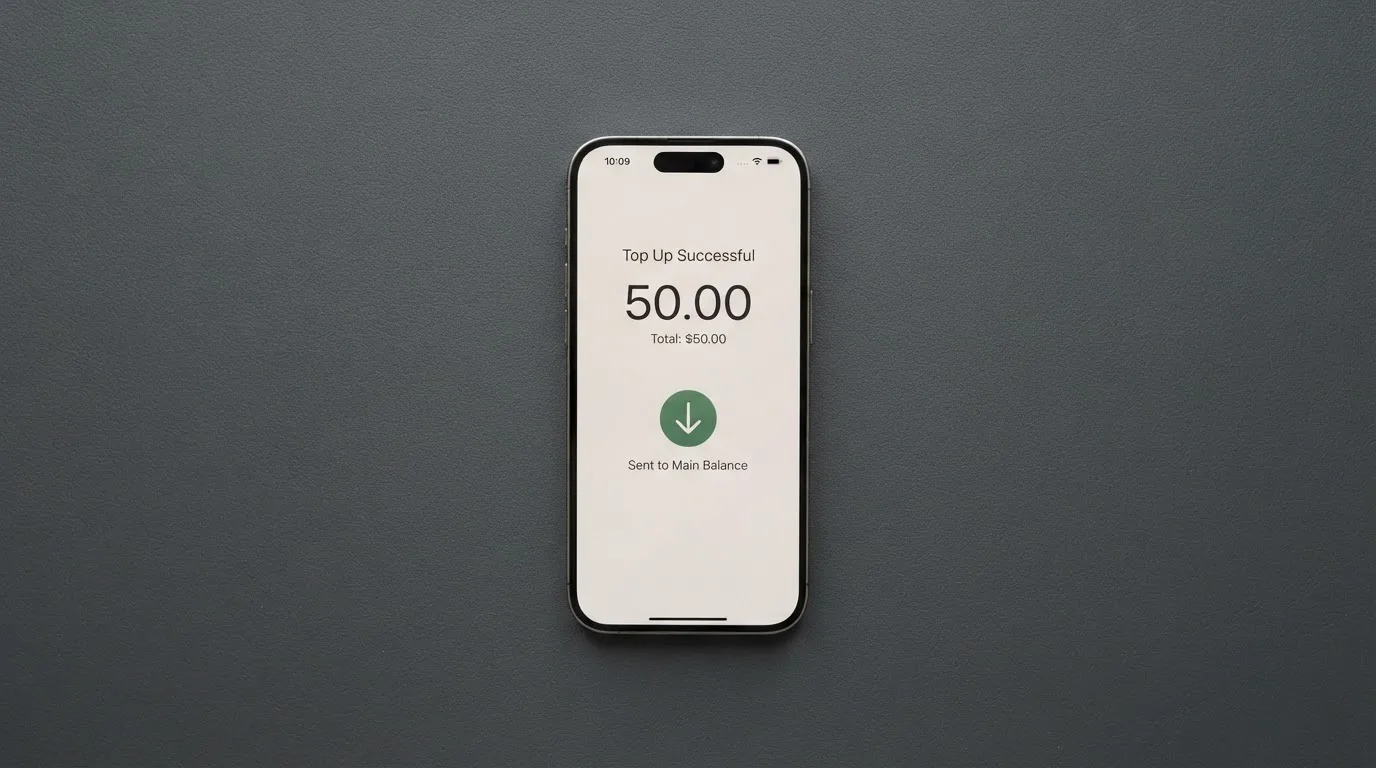
Tegro accepts USDT on the Tron network, which is the TRC-20 version of the token, and nothing else. The bot issues a one-time deposit address and a unique amount, and the deposit is credited automatically once the transfer is confirmed on Tron. There is no option to top up from a bank card, a bank transfer, a PayPal balance, Apple Pay cash, a different stablecoin, or a different network. If you hold USDT on Ethereum, on Solana, on Polygon, on Arbitrum or anywhere else, you have to swap it to USDT on Tron first, then send it. That swap will cost you the gas and spread on whatever venue you use.
The Tron network itself has very low fees, so the on-chain cost of a top-up is small in normal conditions. Tegro does not say who pays the Tron network fee — in practice the sender pays it from their Tron wallet, and it is usually a fraction of a cent. The 4% Tegro fee is separate from the network fee and is charged by Tegro on the amount loaded.
A few practical questions are worth raising here, because they are the kind a person would ask.
What if I send USDT on the wrong network? The deposit will not credit. Tegro only watches the TRC-20 address, and a transfer on, say, Ethereum (ERC-20) is on a different chain entirely. Blockchain transfers are irreversible, so a token sent to the wrong network is, in most cases, lost or recoverable only through manual support work with no guarantee of return. The terms are explicit on this: “cryptocurrency transfers are irreversible”.
What if I send less than $50? The minimum card balance is $50, so anything below that is either refused by the bot or held in a balance that cannot be spent until it crosses the threshold. Tegro does not spell out the exact behaviour, so I would treat $50 as the floor you should plan around.
What if I want to take money off the card? The terms do not describe a withdrawal flow at all. There is no published way to move a balance back out to a bank account, and there is no “cash out” button in the bot that I could confirm. The closest the terms come to describing an end-of-life is that “users may stop using the service at any time” and that the operator may suspend or terminate access for legal reasons or fraud prevention, with no statement on what happens to any remaining balance. I would not load money I am not prepared to spend.
Paying with it every day
In the wallet, Tegro behaves like any other Visa prepaid card. You add the card to Apple Pay or Google Pay, and you tap to pay at any contactless terminal that takes Visa. Online, you type the number, expiry and CVV into the checkout. Tegro’s pages highlight that both mobile wallets are supported, and the fact that the card number is the standard Visa format means it should work anywhere a Visa debit or prepaid card is taken.
There is no separate app. The whole experience is the Telegram bot. That is a deliberate choice rather than a missing feature, and it has consequences both ways. On the upside, there is nothing to install, nothing to update, and no second login to forget. On the downside, you cannot freeze the card from a dedicated app, there is no app-based 2FA on top of Telegram’s own login security, and the support channel is the same bot you ordered from.
Tegro does not publish a list of blocked merchant categories. Some crypto cards block gambling (MCC 7995), adult content, or specific high-risk categories, and the issuer behind Tegro may do the same, but neither Tegro nor the unnamed partner bank publishes a list. If a particular category matters to you, the only safe assumption is that you may find a decline at the till.
There is no cashback, no rewards programme and no sign-up bonus mentioned. The terms do not refer to one. If you are choosing between cards, the comparison will be on the cost side rather than on the rewards side, because Tegro does not play in the rewards game.
Disputes and refunds go through the standard Visa rails. Tegro’s terms say that “refunds and disputes are processed in accordance with the rules of payment systems and the timelines of our partners”, and the advice is to try the merchant first and then contact support. There are no time frames published, and the governing law is Wyoming, USA, which is the only firm legal anchor in the terms. That is a real point: if you have a chargeback fight, the legal seat is in the United States, and the supporting operator is an LLC with no public licence information.
What can go wrong
This is the section I think matters most, because most of Tegro’s downsides are not visible in the marketing pages. I will group them into the things I could verify and the things that are simply not stated.
The structural risks. Tegro is a virtual card issued by an unnamed “Visa partner bank”, with Libermall LLC as the operator of the bot and the site. Neither side publishes a banking licence, an e-money licence or a crypto-asset service registration. The terms do not name the issuing bank, the regulator, or the jurisdiction of the licence. For a card product, that is more opacity than I would usually accept, and it is worth weighing against the simplicity of the no-KYC sign-up.
The platform risks. Tegro is custodial in the sense that the card is held at the partner bank and the operator controls the bot, so you are trusting the Libermall side with your card details, your Telegram identity, and the history of your transactions. The terms do not describe two-factor authentication, an in-app freeze, or any insurance on the balance. Standard advice still applies: never share the PAN and CVV, do not store the card unencrypted, and treat the Telegram account itself as the master key.
The network and address risks. Tegro only accepts TRC-20 USDT. If you send USDT on any other network, or send a different token to the Tegro address, the funds are in blockchain limbo. Tether’s USDT has been issued on Ethereum, Tron, Solana, Polygon, Avalanche and others, and a wallet that holds ERC-20 USDT cannot send it to a TRC-20 address without a bridge or a swap. I have not seen Tegro describe a recovery process for mis-sent deposits, and the terms are clear that crypto transfers are irreversible.
The regulatory risks. The terms exclude people from sanctioned countries and on sanctions lists, but do not publish a country list, so the only way to test eligibility is to start the bot and read the small print. Sanctions screening can change, and a card that is available today may not be tomorrow. Separately, Tether has frozen USDT tied to sanctioned addresses, so even holding USDT carries a small operational risk that a wallet on a sanctions list can have its funds disabled at the protocol level.
The complaint picture. Public complaint threads about Tegro are thin. The one public Trustpilot-style review I found, dated June 2026, is a five-star note that calls the card simple and adds that support and clear limits and fees “will be important”. The link is on a related domain (tegro.cash) that is not confirmed as the same product. A second hunting-style listing has zero upvotes and a single comment with no user feedback. No Reddit threads of substance turned up in my check on 2026-10-20.
The verdict on risk is that nothing in the public footprint points to a current problem, but the lack of a public complaint record is partly a function of how small the user base appears to be, and the lack of a published issuer or licence is a real reason to keep the balance low.
What to take instead
Tegro is a narrow product, and three alternatives cover different parts of the same problem. I have scored them the same way I scored Tegro, and the table is the quickest way to see the trade.
| Card | Score | Form | Funding | KYC | Best for |
|---|---|---|---|---|---|
| Tegro | 4.7 / 10 | Virtual Visa | USDT TRC-20 only | No KYC on the basic card | Telegram-first USDT-on-Tron holders |
| Ape Wallet | 5.5 / 10 | Virtual Visa (service card and Apple/Google Pay card) | USDT wallet balance | Russian-style KYC with passport for the full product | Users with a USDT balance |
| MaxSwap | 5.2 / 10 | Virtual Mastercard | 24+ cryptocurrencies, no network list | Not stated | Users who want to spend a wide mix of coins |
| AnoCard | 5.9 / 10 | Virtual cards from several BINs, reloadable and one-time | Crypto via Telegram bot or web dashboard, route depends on asset | Not stated on the page | Users who need a card picked for a specific merchant category |
Ape Wallet is a similar Telegram-adjacent product with a Russian focus, an SBP-friendly flow and a passport-based KYC for the full feature set. The published fee schedule is thin (“fee and total are shown before confirming any operation”), but it accepts Apple Pay and Google Pay and has a two-level referral programme. If you are in the same audience as Tegro and you can do the KYC, it scores higher because of the broader wallet.
MaxSwap is a virtual Mastercard with a published 4.5% + $1 top-up fee, a 0.25 USD + 0.4% transaction fee, and a much longer list of accepted cryptocurrencies (ADA, ALGO, AVAX, BCH, BNB, BTC, DOT, ETH, HBAR, HT, KRRX, LINK, LTC, MATIC, NEAR, SHIB, SUSHI, TON, TRX, UNI, USDC, USDT, XLM, XRP). The trade-off is a heavier fee on each load and a network list that is not published, so you have to find your coin in the bot to know whether it is supported. The first card is $50 with a $25 first deposit.
AnoCard is a different shape again: virtual cards from several BINs, with reloadable and one-time products chosen with filters in a web dashboard. The page I read does not publish a fee schedule, and the site was intermittently down during my research, so I would not treat the score as final. The interesting feature is the BIN filter, which lets you pick a card that matches a specific merchant or country assumption.
If your main use case is “I have USDT on Tron and I want a Visa number today, without sending Tegro’s 4%”, none of these alternatives is a perfect drop-in. The closest match on shape is Ape Wallet, the closest on coin flexibility is MaxSwap, and AnoCard is the one to watch if the BIN filter is what you need.
Who I would recommend it to
I would recommend Tegro, with the caveats above, to a specific reader. If you hold USDT on Tron, you do not have an easy path to a regulated crypto card, and you mainly need a Visa number for online checkout and contactless tap payments through Apple Pay or Google Pay, Tegro does the job at a low entry cost. The 4% top-up fee is the trade you accept for the no-KYC sign-up, and that trade is reasonable if you would otherwise leave the USDT on an exchange and pay the exchange’s own fees.
I would not recommend Tegro to a reader who is looking for a primary payment account. There is no app, no plastic, no ATM, no published FX policy, no cashback, no card freeze, no second-factor login, and no named issuing bank. The product is also single-network, single-token, and the 4% top-up fee is high for anyone who plans to load and reload often. For those readers, an EMI-issued card in the EU or a regulated US-issued card is a better fit, even if it means doing the KYC.
I would also be cautious about the legal posture. The operator is Libermall LLC, the issuer is unnamed, the licences are not published, and the governing law is Wyoming. None of that makes Tegro a scam, but it means the only recourse if something goes wrong is the support channel, and I would not load more than I am prepared to lose.
If the only thing stopping you from getting a regulated crypto card is a paperwork problem, my honest advice is to fix the paperwork. Cards from larger programmes have named issuers, named regulators, segregation of customer funds, and a published complaints procedure. Tegro has none of those, and that is the price of the no-KYC path.
Frequently asked questions
What is the Tegro card?
Tegro is a virtual Visa payment card you order inside a Telegram bot. There is no plastic and no mobile app; the card number, expiry and CVV are delivered in the chat, and you can add the card to Apple Pay or Google Pay to pay in stores or online. The card is funded with USDT on the Tron network only.
How does the Tegro card work?
You open the @TegroCardbot, order a card, and send USDT on Tron to the one-time address the bot gives you. The bot credits the balance and returns the card details. After that the card behaves like any other Visa prepaid card: you can spend up to the loaded balance wherever Visa is accepted, including through Apple Pay and Google Pay. There is no overdraft and no credit.
Is Tegro a bank?
No. Tegro is the front-end brand. The card is issued by an unnamed “Visa partner bank”, and the bot and site are run by Libermall LLC. Neither side publishes a banking or e-money licence. If you need a regulated banking relationship, this is not it.
Who owns Tegro?
The public terms name Libermall LLC as the operator of the service, and refer to the card product as the “Libermall Card”. The issuing bank behind the Visa programme is not named. There is no parent company, group structure or licensing body disclosed in the public documents I read.
Is the Tegro card available in my country?
Tegro does not publish a country list. The terms exclude people in countries under international sanctions and people on sanctions lists. Beyond that, the rule is that the card works “wherever Visa is accepted”, and the practical gate is whether you can reach the Telegram bot. If your country blocks Telegram, the card is unreachable.
How do I get a Tegro card?
Open the @TegroCardbot in Telegram, choose the order option, and follow the steps to receive a TRC-20 deposit address. Send at least $50 in USDT to that address, pay the $13 issue fee plus the 4% top-up fee, and the bot will return the card details. There is no document upload at this stage.
Does the Tegro card require KYC?
The basic virtual card does not. Tegro calls it “zero KYC”, and the only requirement is a Telegram account. Some extended products do require a name, date of birth, citizenship, address, an ID and a selfie, and the system can ask for more information if it sees unusual activity. The terms do not list the rejection reasons.
How do I top up my Tegro card?
Send USDT on the Tron network (TRC-20) to the address and unique amount the bot gives you. The deposit credits automatically. You cannot top up from a bank account, a bank card, a different stablecoin, or USDT on a different network; those have to be swapped to TRC-20 USDT first. The minimum load is $50, and there is a 4% fee on every top-up.
Is the Tegro card free?
There is no monthly fee or subscription. The card costs $13 to issue, and every top-up carries a 4% fee. A $50 card therefore costs $65 in real money. Other costs (FX, conversion, declines) are not published, so treat them as unknown until you see a real statement.
Is the Tegro card safe?
It is safe in the sense that it uses standard Visa rails and a standard Telegram login. It is not safe in the sense of having a named, regulated issuer, a published licence, an in-app freeze, or insurance on the balance. The 4% top-up fee is the main cost to watch. If you can do a KYC check with a regulated card issuer, that card will usually be the safer choice.
How virtual cards work – cryptocardsexplained.com
Content created by the «cryptocardsexplained.com» team