
I read the fee tables, the tier ladder and the region list so you can decide if this card is built for you
 Available in US
If you have ever tried to get an ordinary bank card and could not — because of where you live, what documents you hold, or what your bank thinks of you — then a card like this one is not a lifestyle purchase. It is a workaround. That framing matters, because it changes what you should be looking for. You are not shopping for the highest cashback percentage in the market. You are looking for a card that will actually be issued to you, that you can load money into, and that will not quietly charge you in the three places most card reviews forget to mention: the currency conversion, the ATM, and the closure.
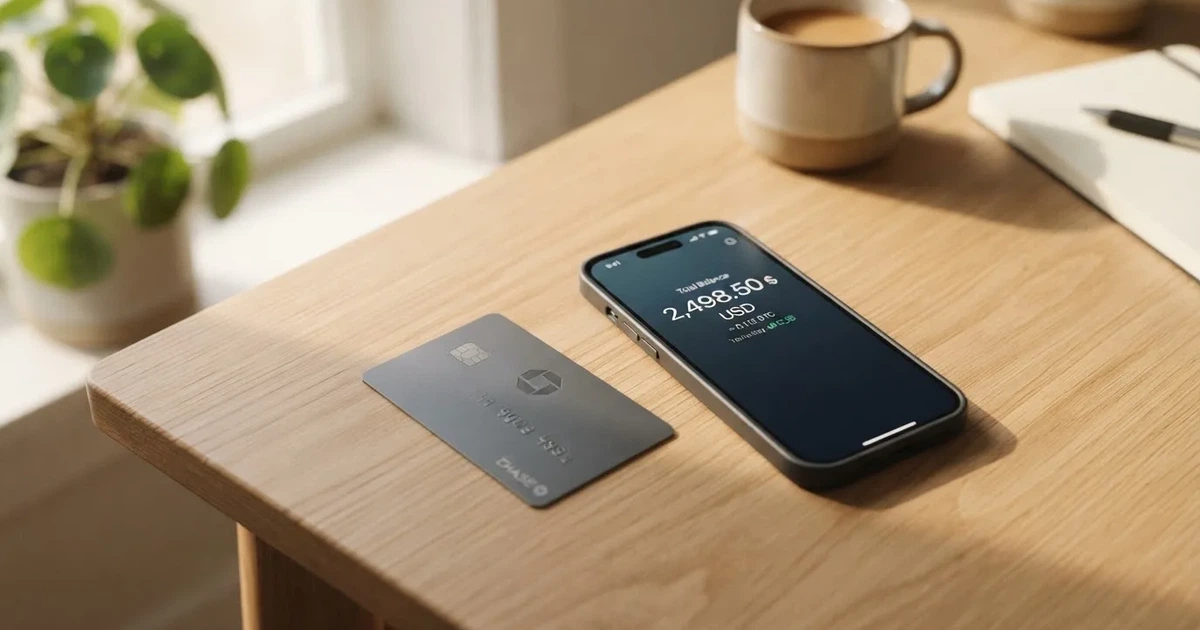
I went through the Crypto.com card material line by line: the region list, the identity notice, the tier ladder, the fee articles for Europe, the ATM allowances, the rewards table, and the support channels. What follows is what I found, in the order you would hit it if you tried this card tomorrow.
The conditions described here are current as of October 28, 2026.
The verdict: 7.0 out of 10
The Crypto.com card scores 7.0 out of 10. It is a genuinely good everyday payment card for a specific person, and genuinely wrong for almost everyone else. If you live in Europe or Singapore, hold some CRO, and want a card that pays you back in crypto on ordinary spending, this is one of the better options available. If you are anywhere the card is not issued, or you want a normal bank card with normal deposit protection, the structure works against you before you ever tap it.
Let me be honest about the shape of that score. The 7 is not a rounding of a 10. It is a card that gets the day-to-day mechanics right and the administrative edges wrong, and the administrative edges are where people get hurt.
| Criterion | Mark | Why |
|---|---|---|
| Who can get it | 8 / 10 | Issued across the US, Europe (31 countries), Singapore, Canada, Australia, the UK and Brazil (a USD card for use outside Brazil) |
| Cost | 6 / 10 | Tiered subscriptions: Free, 4.99 USD a month, 29.99 USD a month; in Europe: 4.99 EUR to issue the physical card, 1% to top up by card, 2% above the ATM allowance, 0.2% FX in the EU and the UK but 2.0% outside, and a plain 5 EUR a month |
| Top-up options | 6 / 10 | You can load from the Crypto Wallet, the Cash Account or another card, but crypto has to be converted first and cannot be loaded onto the card directly |
| Reliability and complaints | 6 / 10 | The issuer changes by region — Foris MT Limited, Community Federal Savings Bank, ForisGFS UK and other names; Trustpilot 2.0/5 across 9,493 reviews, mostly about the app and the exchange, with 72% one-star |
| Everyday use | 9 / 10 | A prepaid Visa, with a free ATM allowance of 200 EUR at the Midnight tier; unofficially, a virtual card straight away plus Apple Pay, Google Pay and Samsung Pay |
Two things in that table deserve a second look, because they are where your day actually happens.
The 9 for everyday use is the highest mark on the card, and it is not generosity on my part. A prepaid Visa with a free monthly ATM allowance and crypto cashback on everyday spend is simply pleasant to use, and the mobile wallets work. But note that the wallet support is marked unofficially in what I read — third-party sources describe Apple Pay, Google Pay and Samsung Pay with availability varying by region. The card pages themselves do not confirm it. So I am telling you it is very likely fine, not that I read the card promising it.
The 8 for who can get it is a genuinely broad map. Thirty-one European countries plus Singapore, Canada, Australia, the UK and the US is a lot of ground. But read the fine print on that 8 carefully, because it is an 8 for the issuer’s reach, not for you. The rule is by residential address, not citizenship, and there is a restricted list. Which brings us to the question you actually came here with.
Who will they give you the card
The short answer: if you have a residential address in a supported region and can complete identity verification, there is a reasonable chance. If you do not, there is no workaround, and I am not going to pretend otherwise.
The issuer is not the same company everywhere. In the US it is Community Federal Savings Bank. In Europe it is Foris MT Limited. In Singapore, Foris Asia. In Canada, Digital Commerce Bank. In Australia, Foris GFS Australia. In the UK, ForisGFS UK. In Brazil, Foris MT issues a USD card for use outside Brazil. This matters more than it sounds: it means the protections, the support hours and the complaint route you have depend on where you live, and reading a review written by someone in a different region can mislead you.
The European help article, as of 20 July 2026, lists these supported countries: Austria, Belgium, Bulgaria, Croatia, Cyprus, Czech Republic, Denmark, Estonia, Finland, France, Germany, Greece, Hungary, Iceland, Ireland, Italy, Latvia, Lithuania, Luxembourg, Malta, Netherlands, Norway, Poland, Portugal, Romania, Slovakia, Slovenia, Spain, Sweden, Switzerland and the UK. That is thirty-one entries. Canada, Australia, Singapore and the US sit outside that list with their own arrangements.
Now the rule that decides most cases. It is by residential address. The fee articles are split by “residential address in Europe / Singapore / non-Europe Brazil and LATAM”, which is how the company itself groups you. What the public pages do not state is a citizenship rule. That absence is worth noting on its own: it is not permission, it is silence. Companies in this space routinely screen citizenship and country of birth separately from address, because sanctions screening does not care where you live. If you hold a citizenship that a compliance team will flag, passing the address test will not save you.
One more thing you should know, and I would rather you hear it from me. A third-party site lists Russia among ten restricted countries — Afghanistan, China, Cuba, Iran, North Korea, Russia, Somalia, Sudan, Syria and Yemen — though that same page also lists Sudan as available, so the source contradicts itself. Earlier 2020 coverage from CoinDesk and CoinCodex noted that Russia, Turkey and Ukraine were unsupported markets at launch. Treat all of this as unofficial background, not as current policy confirmed by the card. The official route is to apply and see.
How to get it
There is no elaborate application flow described on the public card pages. That is itself the answer: what is documented is the identity notice, and the rest — levels, processing time, rejection reasons — is not stated. I would rather tell you that plainly than dress it up.
The only identity notice the card pages show is a USA PATRIOT Act notice. It asks for your name, your address, your date of birth and a national ID number (an SSN in the US, or a country ID elsewhere), and it may ask for a driver’s licence or other photo ID. Proof of address and proof of age are not stated on those pages. Unofficially, third-party sources describe verification with a government ID, a selfie and proof of address. That is what people report; it is not a promise the card has published to you.
Two practical consequences. First, have your documents ready before you start: the more you can supply in one go, the fewer rounds you wait through. Second, do not read the silence on rejection reasons as good news or bad news. It is neither — it just means you will find out by trying.
On the card itself: it is a prepaid Visa, not linked to a bank account, and it must be topped up. The currency is local to the issuer — the Canadian card is CAD only, the Brazilian card is USD. Whether virtual, physical or metal cards are offered, and on what terms, is not stated on the page I read; unofficially, a virtual card is available immediately on approval with the physical card shipped later. On delivery: the card pages do not state a delivery time.
So the answer to “how do I get it” is: create the account, complete verification with what the app asks for, and expect the standard crypto-platform onboarding. If verification is where you have historically hit a wall, that is the part to test early.
Fees: what it really costs
Here is the section most card reviews get wrong, because they quote the cashback and stop. The card’s costs fall into three separate places, and they hit different people at different moments: the subscription, the per-transaction costs, and the currency costs.

The subscription is tiered and tied to how much CRO you lock up. The levels are Free; 4.99 USD a month, 49.90 USD a year or a 500 USD lockup; 29.99 USD a month, 299.90 USD a year or a 5,000 USD lockup; and there are also 50,000 USD and 500,000 USD lockup tiers. The page’s own tier labels are jumbled, which is worth knowing before you assume you are picking a named tier. An issuance fee is not stated in general.
Then the per-region costs, for Europe, which is where I can give you the fullest picture:
| Fee or limit | Europe |
|---|---|
| Physical card issuance | Midnight EUR 4.99; Ruby EUR 24.99 |
| Monthly fee | 5 EUR, rising to 6 EUR from 1 October 2026 |
| Top up by card | 1% |
| ATM fee | 2% above the free monthly allowance (provider surcharges count toward the limit) |
| ATM withdrawal limits | EUR 2,000 daily; EUR 10,000 monthly; EUR 75,000 yearly; 3 daily / 30 monthly / 360 yearly withdrawals |
| Card replacement | EUR 45.01 (Midnight) or EUR 50 (other tiers) |
| Card closure | EUR 50 |
| Inactivity fee | EUR 5 a month after 12 months with no cardholder-initiated activity, rising to EUR 6 from 1 October 2026 |
| POS purchase limits | EUR 25,000 daily and monthly; EUR 250,000 yearly |
| Maximum balance | EUR 25,000 |
| FX fee | 0.2% in the EU and the UK at Midnight, 2.0% outside; better on higher tiers (see below) |
The general page is vaguer than this: it says top-up fees, interbank exchange rates and ATM fees “may apply” depending on your jurisdiction and tier, with no amounts, because the amounts live in per-region help articles. The amounts above are the Europe ones.
Now let me walk three ordinary payments through that table, because this is where a fee either touches you or does not.
The weekly shop, in euros, in Europe. No conversion, no ATM, so the 1% top-up and the 2% ATM fee never enter. What you are exposed to is the subscription if you are above Free and, at the higher tiers, your CRO rewards. This is the payment the card handles best, and at Midnight you pay nothing per transaction.
The holiday abroad, spending euros in a country outside the EU. At the Midnight tier, FX is 2.0%. That is charged on the conversion, on top of whatever the interbank rate does. On a large purchase this becomes real money — which is precisely why the tier structure offers a way out: Ruby has no FX fee up to EUR 400 a month outside and then 2.0%; Jade/Indigo up to EUR 800; Icy/Rose/Obsidian have no FX fee at all. If you travel regularly, the paid tiers are not a rewards decision, they are a currency decision.
The cash withdrawal, at an ATM abroad. Here the 2% above the free allowance applies, and — this is the part people miss — the ATM provider’s own surcharge counts toward your limit. So a 3% foreign ATM fee does not sit on top of your 2% in a way that spares you; it eats your allowance first. The free monthly amounts differ by tier: EUR 200 at Midnight, EUR 800 at Jade/Indigo and Icy/Rose, EUR 1,000 at Obsidian. In US-dollar terms across tiers the free-and-cap figures are: Free tier 200/5,000; the 4.99 tier 400/10,000; the 29.99 tier 800/10,000; the 50,000 tier 1,000/10,000; the 500,000 tier 1,000/10,000. Fee above the free amount is not stated in general terms.
One conversion warning that catches people: crypto is converted to your local currency before it is loaded onto the card. It cannot be loaded as crypto. So the conversion happens on the way in, not on the way out, and the exchange you get on the way in is the one you live with.
How to Top up the card
The mechanism is simple enough that the limits matter more than the method. You can top up from your Crypto Wallet, from your Cash Account, or from another credit or debit card. That is the list. There is no bank transfer option to point you at here, and networks are not applicable — because you are never touching a chain when you load this card.
The reason top-up options scored 6 and not higher is the conversion point above: crypto has to be converted first and cannot be loaded directly. If you hold your balance in USDT, you are selling before you spend, not after.
For Europe, the specifics are worth writing down:
- Top up by debit or credit card: 1%
- Minimum card top-up: EUR 20
- Aggregated top-up limit: EUR 25,000 daily and monthly, EUR 250,000 yearly — and the same caps apply to crypto-to-card and cash-account-to-card
- Maximum card balance: EUR 25,000
- Load frequency: 12 daily, 140 monthly
Across all tiers generally, the aggregated top-up limit is 25,000 USD a month.
Two of those numbers are the ones that will actually shape your life if this is your main card: the 25,000 EUR ceiling on the balance, and the 140 loads a month. If you are someone who moves money in large amounts or tops up many times a day, look at those before anything else.
On getting money back off the card, the Europe article does not state a fee or a procedure for withdrawing the card balance back to your wallet or a bank. I cannot tell you what it costs because it is not stated. Do not plan around a number that does not exist. It does tell you the two fees you will meet at the end of a relationship: account closure is EUR 50, and inactivity is EUR 5 a month after 12 months without cardholder-initiated activity, becoming EUR 6 from 1 October 2026. If you stop using the card and forget, it will start charging you.
Paying with it every day
This is where the card earns its 9, and where you should spend your own attention deciding.
The card is a prepaid Visa with a free monthly ATM allowance at the lowest tier, and the Crypto.com App manages the cards. The App Store listing, “Crypto.com: Trade Every Market”, sits at 4.7/5 from 336K ratings as I read it, with Russian among the supported languages. Unofficially the app also carries a 4.5/5 on Google Play and a slightly different Apple count.
The rewards are the reason people stay. CRO is paid into your Crypto Wallet after each eligible transaction, and the everyday-spend rates by tier are the centre of the pitch: Midnight Blue 0%; Ruby Steel 1.5% up to 750 USD a month; Jade Green and Royal Indigo 2.5% up to 1,500 USD a month; Icy White and Rose Gold 3.5% up to 3,000 USD a month then 0.5%; Obsidian 4.5% up to 5,000 USD a month then 1%. Travel bookings go up to 5, 20, 25, 30 and 40% by tier. Some smaller tables on the same page show different numbers; I have used the main table.
Higher tiers buy more than percentages: more CRO rewards, priority support, subscription rebates and airport lounge access.
Two caveats on the rewards, both of which I would flag before you budget around them. Certain merchant categories and channels are excluded from CRO rewards — the full list is in a help article I did not read, and whether gambling is blocked is not stated. And note that from a customer’s point of view, rewards that arrive in a token are worth whatever the market says that day, not a fixed percentage of what you spent.
For the mobile wallets: Apple Pay and Google Pay are not stated on the card pages, and unofficially Apple Pay, Google Pay and Samsung Pay are supported with availability varying by region. That unconfirmed status is worth a moment’s thought, because adding a card to a phone wallet is how most people would actually use it, and because a tokenised number in a wallet behaves differently from the plastic.
Dispute handling — what happens when a charge goes wrong — is not stated on the pages I read. That is a real gap, not a formality. If you are going to keep meaningful sums on a prepaid card, you want to know the answer before you need it, and the practical place to get it is the support channels below rather than a marketing page.
What can go wrong
I looked for an official incident on the pages I read and found none. I also did not read user forums or news coverage in depth, so what follows leans on the complaint data and on the structural risks, and I would rather label that than dress it up.
Start with the complaint picture, because it is stark. Trustpilot shows 2.0/5 across 9,493 reviews as of 20 October 2026, with 72% one-star, and the company replies to 31% of negatives. The recent themes from October 2026: inability to fund the card, payment failures, subscriptions cancelled but still charged, cashback terms changed after sign-up, withdrawals failing, chatbot-like support with long waits, and tokens delisted without conversion. Mostly these are about the app and the exchange rather than the card itself, but they are the same company and the same support desk, and a person who cannot fund the card cannot spend with it.
Then the risks that live in the structure rather than in any complaint.
Your money is custodial. The funds are held by Crypto.com or the issuer, not by you. The page cites AICIA SOC, ISO 27701, ISO 22301 and PCI DSS — real standards, and worth something — but card-level features like two-factor authentication, freeze and spending controls are not described on the cards page, and any insurance or safeguarding is not stated. What that means in plain terms: you are trusting a custodian, and the crypto sector has a documented history of custodians failing. Transfers are typically irreversible, and a stolen key has no recovery path.
The support route is region-dependent. There is live chat in the app or on the web at chat.crypto.com, and phone and email by region — the US is 888-824-8817, Singapore 65-6264-0211 — with priority support at higher tiers. The app listing includes Russian among 26 languages. Good to know if you would rather not navigate an English-only desk, but do not read a language option as a guarantee of anything else.
The issuer is not always a bank, and that matters. In the UK, ForisGFS UK Limited is an FCA-authorised e-money institution and not FSCS-covered. An e-money institution must safeguard customer funds, by segregating them or insuring them, but those are not bank deposits and may not sit under a deposit guarantee scheme. Elsewhere the issuers differ: the US issuer is a Member FDIC bank; Singapore’s Foris Asia is a MAS Major Payment Institution; Australia’s Foris GFS Australia is an AFSL holder. If your money is a month of wages rather than a convenience float, that distinction deserves a moment’s thought.
And there is a category-level caution. Card programmes get wound down. Visa terminated its global agreements with FTX in November 2022; WaveCrest, a Visa issuer that supplied crypto card brands, was suspended by Visa in Europe in 2018, closing every WaveCrest-issued Visa programme. Closures follow a pattern — a notice period, spending and loading stop, then you are asked to withdraw remaining balances. One reported 2026 closure ended new loads on 8 July 2026 and spending on 8 August 2026, but that is a single unconfirmed secondary source and I am not presenting it as fact.
Finally, the compliance drift. A Europe fee article carries an inactivity fee rising from EUR 5 to EUR 6, and an FX schedule dated “before and from 1 October 2026”. Costs move. I found no 2026 licence or issuer news, but the direction of travel on fees is one to keep an eye on rather than lock in.
What to take instead
If the Crypto.com card does not fit — wrong region, you want deposit protection, or you simply do not want your money held by a crypto company — there are two other crypto cards worth putting next to it. I have included their details so you can compare rather than take my word for it. Both have the same fundamental shape as the card above: you fund a balance, you spend it, and the crypto side is converted somewhere along the way.
MSX — 6.4 out of 10. The honest summary is that its official pages gave me almost nothing: who can get it, the card type, costs, fees, funding and rewards are all not stated on the pages I could read. That is a real finding, not a gap in my reading. I would not be able to tell you what it costs, so I could not recommend it on the strength of what I know.
Bybit Card — 6.0 out of 10. This one is documented, so it is the more useful comparison.
On eligibility, Bybit’s help centre lists Argentina, AIFC (Kazakhstan), Georgia, Kazakhstan, Australia, Mexico, Brazil, Peru and Asia Pacific. The application asks for your country of residence, and if it is unsupported they register your interest instead. The cards page is blunt about Europe: “This product is not meant for European Economic Area customers. All European Economic Area customer participation is strictly prohibited.” Bybit’s fiat-service restricted list — deposits, withdrawals and One-Click Buy, not the card itself — includes Belarus, the Russian Federation, Serbia, China and the United States, with the note that Russian users can only make RUB transactions in fiat. No card-specific statement on Russian or Belarusian citizens was found, and no citizenship-versus-residence rule is stated; the card currency depends on the country of your advanced identity verification.
The card comes as virtual and physical, with a virtual card obtained first; physical is not available in Peru and the rollout is in phases. Networks: Argentina is a Mastercard prepaid; AIFC, Georgia, Kazakhstan, Australia and Mexico are listed as Mastercard credit cards as written; Brazil and Peru are Visa prepaid; Asia Pacific is Visa credit. Currency: USD for AIFC, Georgia, Kazakhstan, Australia and Asia Pacific; ARS for Argentina; MXN for Mexico; BRL for Brazil; PEN or USD for Peru. Validity runs 3 years in AIFC, Georgia, Kazakhstan, Asia Pacific and Australia; 6 years in Argentina; 5 years in Brazil, Mexico and Peru.
On cost, virtual card issuance is free in all regions “until further notice”, with no annual or cancellation fee given a value, and the cards page promises “auto interest, no annual fees”. Physical issuance and replacement: Australia 29.99 USD; Argentina 5 USD/USDT; Georgia 29,99 USDT; Kazakhstan (AIFC) 29,99 USDT; Asia Pacific 5 USDT; Brazil and Mexico none. VIPs holding a physical card in Australia, Kazakhstan (AIFC), Georgia or Asia Pacific pay no issuance or replacement fee.
On fees, this is where Bybit is the more expensive option and you should see it plainly. Crypto conversion is 0.9% over the One-Click Sell rate in Australia, Asia Pacific, Georgia, Kazakhstan, Brazil and Mexico; 0.5% in Argentina; not supported in Peru. FX is 2% on top of the network rate in Australia, Asia Pacific, Georgia and Mexico; Kazakhstan (AIFC) charges a 2% “International Fee” on purchases outside Kazakhstan even in USD; Argentina 7%; Brazil 1.5%; Peru 1%. FX padding is 0% in the Australia group and Mexico, 5% in Argentina, 1% in Brazil, with the excess refunded. Argentina also carries taxes: 21% VAT on foreign digital services, 30% tax on foreign transactions, and provincial gross-income tax of 1%–13.2%.
Funding works differently from Crypto.com: the card has no balance of its own, drawing on the Funding Account and the Flexible Easy Earn balance, fiat first, and only selling crypto if the fiat is insufficient. Supported coins are BTC, ETH, XRP, USDT, USDC and GRAM, with a default priority of USDT, then USDC, GRAM, BTC, ETH, XRP that you can reorder in the Card Dashboard.
Rewards are the one place Bybit is competitive, but read the condition. From 5 October 2026 at 10:00 UTC, only crypto-funded transactions earn points or cashback; fiat-funded spending does not. The tiers are Base 2.00% capped at 5 USD a month; Beta 2% capped at 50 USD with 500 USD of monthly spend to unlock for non-VIPs; Alpha 4% capped at 150 USD with 3,500 USD to unlock; Apex 6% capped at 250 USD with 9,500 USD; Omega 8% capped at 400 USD with 12,500 USD; Infinite 10% capped at 600 USD with 25,000 USD. Points pend for 4 calendar days, cashback in USDT equals points × 0.002, Auto Cashback must be on, and Pay Later instalments add an extra 1%. There is a welcome offer of 10% cashback up to 110 USDT in the first 30 days, “100% cashback on must-have subscriptions” for VIPs and Alpha and above, and a referral of 20 USDT / 10 USDT.
MEXC — 5.6 out of 10. Its page lists “The Philippines, Taiwan, Thailand…” with a Details link, so the full region list is not shown. It is a virtual card only, physical cards not yet available, with network and card currency not stated. The issuance fee is 20 USD — the page shows it possibly next to a discounted 0 USD price, which is unclear — and the service fee is 0%, with other fees varying by card type per a linked guide; the monthly fee is not stated. Funding is USDT transferred to the Fiat account and then added on the My MEXC Card page, with networks not stated. Cashback runs by M-Score tier, paid by the 15th of the next month: Standard 4% capped at 100 USDT a month; Premier (600–799) 6% capped at 300; Elite (800+) 10% capped at 800. Referral: 20 USDT for the referrer, 10 USDT for the referee.
Two cross-cutting differences are worth naming before you pick. Bybit excludes the EEA entirely, so for a European reader it is not an option at all. And Bybit’s higher headline percentages come with a catch — crypto-funded spending only — while MEXC’s cashback arrives after the fact, in USDT, once a month.
Who I would recommend it to
I would recommend the Crypto.com card to someone in this position: you live in a supported region — Europe or Singapore especially — you are comfortable holding CRO because you understand that rewards paid in a token are not a guaranteed percentage, and you want a prepaid Visa that pays you back in crypto on ordinary spending with a free monthly ATM allowance. If you travel often, look at Icy/Rose or Obsidian, where the FX fee disappears and the ATM allowance rises; the paid tier stops being a rewards decision and becomes a currency decision.
I would not recommend it to someone who wants their money under a deposit guarantee, who is in a region the card is not issued in, or who needs to move large sums through a card. The 25,000 EUR balance ceiling, the 140 monthly load limit and the 50 EUR closure fee all tell the same story: this is a convenience card, not a treasury.
And if your reason for looking at a crypto card in the first place is that an ordinary card was refused to you, then the honest advice is to test the identity flow before you commit to anything. That is where the decision actually lives, and it costs you nothing to find out.
Frequently asked questions
What is the Crypto.com card?
It is a prepaid Visa that you top up and then spend like an ordinary payment card, without a linked bank account. The balance you load is what you can spend, so it cannot overdraw. You spend the card from the Crypto.com App, and eligible transactions pay you back in CRO. The catch is that it is custodial: the funds sit with Crypto.com or the regional issuer, not in a wallet only you control.
How does the Crypto.com card work?
You hold a balance, and the card draws on it. You top up from your Crypto Wallet, your Cash Account or another debit or credit card, then spend. Crypto cannot be loaded onto the card directly — it is converted to your local currency first. Cashback in CRO is credited to your Crypto Wallet after each eligible transaction. Which region you are in decides the issuer, the currency and the exact fees.
Do I need KYC to get the Crypto.com card?
Yes. The card pages show a USA PATRIOT Act identity notice requiring your name, address, date of birth and a national ID number — an SSN in the US or a country ID elsewhere — and possibly a driver’s licence or other photo ID. Third-party sources also report a selfie and proof of address. What is not stated on those pages is proof-of-address and age requirements, processing times, or rejection reasons, so go in expecting to supply documents and wait.
Is Crypto.com a bank?
Not in the way you would want to rely on one. It is a crypto platform, and the card is issued by regional entities depending on where you are — Community Federal Savings Bank in the US, Foris MT Limited in Europe, Foris Asia in Singapore, Digital Commerce Bank in Canada, Foris GFS Australia and ForisGFS UK. Some of those are banks and some are electronic money institutions, which is the distinction that matters to your money.
Who owns Crypto.com?
The brand is Crypto.com, as its own site footer states. The company is a Singapore-based crypto exchange and card issuer operating under that name; the card programmes are held by the regional issuers listed above, each licensed in its own jurisdiction. Crypto.com is the brand you sign up to, but the legal entity behind your specific card depends on your country.
Is the Crypto.com card available in my country?
The card is issued in the US, across 31 European countries, Singapore, Canada, Australia, the UK and Brazil. The rule is based on your residential address, not your citizenship, and the citizenship rule is not stated. Third-party sources list ten restricted countries including Russia, and older 2020 coverage noted Turkey and Ukraine were unsupported at launch — treat both as unofficial. If your address is not on the list, there is no workaround.
How much does the Crypto.com card cost?
It depends on the tier and on what you spend it on. Subscriptions run Free, 4.99 USD or 29.99 USD a month against a CRO lockup. In Europe: 4.99 EUR to issue the physical Midnight card, 1% to top up by card, 2% above the monthly free ATM amount, and a 5 EUR monthly fee rising to 6 EUR from 1 October 2026. FX is the hidden one: 0.2% in the EU and the UK at Midnight but 2.0% outside.
Is the Crypto.com card free?
The Free tier exists and gives you a card with a 200 EUR monthly free ATM allowance, and spending on it costs you nothing per transaction — but its everyday CRO rewards rate is 0%, which is the real cost of staying on it. Most of the value people talk about sits in the paid tiers, and you pay for those monthly whether or not you use the card heavily. There is also a 50 EUR account-closure fee if you leave.
Can I add the Crypto.com card to Apple Pay?
Probably yes, but I did not read the card confirming it. The card pages do not state Apple Pay or Google Pay support; third-party sources describe Apple Pay, Google Pay and Samsung Pay working with availability varying by region. Since adding the card to a phone wallet is how most people would actually use it, treat this as very likely rather than certain, and check in the app before you rely on it.
Is the Crypto.com card safe?
Treat it with the care any custodial product deserves, not the care you would give a bank deposit. The funds are held by Crypto.com or the issuer; the page cites SOC, ISO 27701, ISO 22301 and PCI DSS but does not describe card-level controls or state any safeguarding. In the UK the issuer is an FCA-authorised e-money institution and not FSCS-covered. Trustpilot shows 2.0/5 across 9,493 reviews, with 72% one-star. Use it for spending, not as a place to park savings.
How exchange cards work – cryptocardsexplained.com
Content created by the «cryptocardsexplained.com» team