
A prepaid virtual card that runs through Telegram, with a 24-coin balance and a lot left unsaid
 Available in US
CinCin is a virtual payment card that you fund with crypto and spend like an ordinary prepaid card. There is no application form, no plastic, and — this is the part worth pausing on — no verification performed by the company itself. You open a bot in Telegram, it gives you a USDT address, you send at least $55, and a card appears in your wallet. It scores 5.4 out of 10 in my assessment: strong on the range of coins it will accept, weak on everything you would need in order to trust it with money you cannot get back.
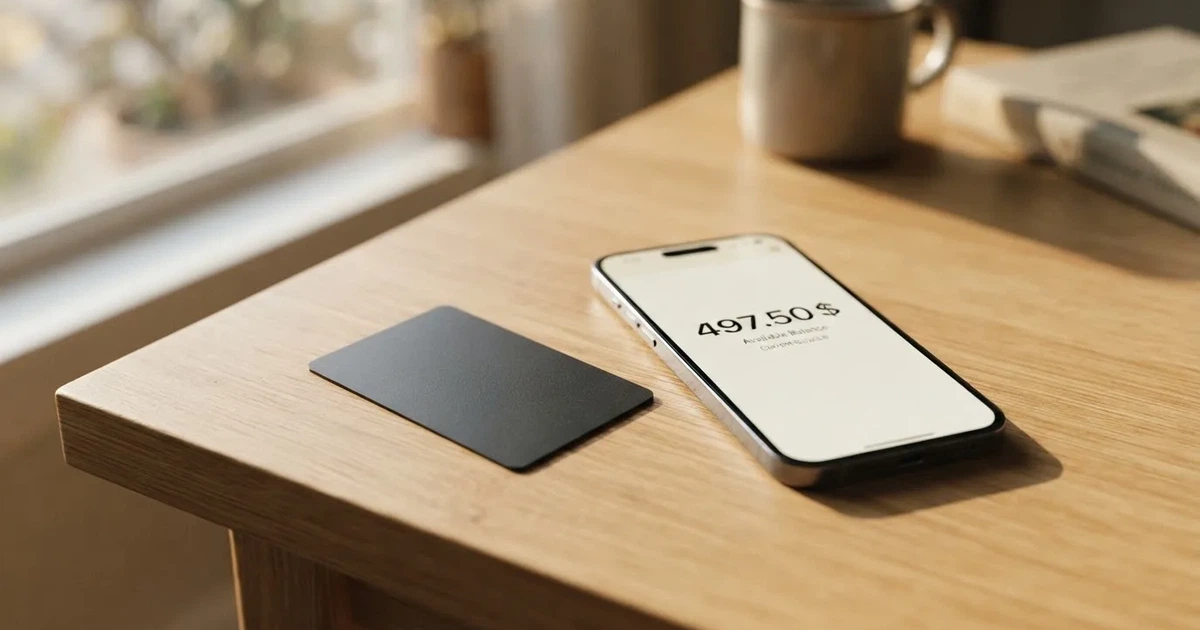
Who this suits: someone who already holds crypto, needs a card number quickly, and is comfortable treating the balance as spent money rather than savings. Who it does not suit: anyone planning to keep a balance there long-term, anyone who needs a card their bank recognises, and anyone who needs a dispute process they can actually win.
I checked the card’s own site and terms on 20 October 2026, and the public review pages on 21 October. Where the card’s public pages do not say something, I say so rather than filling the gap — and where a figure comes from a third-party site rather than CinCin, I mark it as unconfirmed.
The conditions described here are current as of October 28, 2026.
| Criterion | Mark | Why |
|---|---|---|
| Who can get it | 6 / 10 | Not offered in the UK, UAE, Japan or the US; further restricted countries are named, and the list can grow at any time |
| Cost | 4 / 10 | $25 to open, $55 minimum, “no hidden fees” claimed — but no percentages published at all |
| Top-up options | 9 / 10 | A USDT TRC20 balance, 24 coins including BTC, ETH, SOL-type assets, USDC and USDT |
| Reliability and complaints | 4 / 10 | Run by Sonder INC in the Marshall Islands; issuer and licences unnamed; Trustpilot 3.1/5 from 17 reviews |
| Everyday use | 5 / 10 | Virtual only, Apple Pay supported, Google Pay not mentioned, ATM situation undisclosed |
| Total | 5.4 / 10 | A wide funding door attached to a very thin disclosure wall |
The one audience that fits this card unusually well is someone who wants to fund a virtual card entirely through a Telegram bot, in a country where getting a normal bank card is slow, refused or impossible. If that is you, the mechanics are genuinely good: 24 coins, near-instant crediting, a $25 entry point. If you are reading this hoping for something that behaves like a bank card with crypto convenience bolted on, this is not that.
Will they give you the card
Yes, in most countries — and no in a list that is longer than the headline suggests.
The card’s terms name four countries where it is not offered at all: the United Kingdom, the UAE, Japan and the United States. Ten more are named as restricted: Iran, North Korea, Syria, Venezuela, Afghanistan, Belarus, Cuba, Myanmar, Somalia and Ukraine. Users on the FATF blacklist or under OFAC sanctions are barred outright. And the terms reserve the right to add countries at any time, which means the map you read today is not a guarantee for tomorrow.
Russia is not in the terms’ list. An earlier check said the Apple Pay variant is blocked in Russia; that is not confirmed in what I could verify, so treat it as open rather than settled.
The rule is applied by the country of the user. Whether the card looks at citizenship or at residence is not stated, and that distinction matters more than it sounds: sanctions screening and issuer risk policy usually run on citizenship and country of birth as well as on where you live. If you hold a passport from a restricted country but live elsewhere, you do not have enough published information here to know which way you fall.
One structural point about who is actually involved. The card is described as “issued and managed by a licensed third-party card issuer” — and that issuer is not named anywhere in the public material I read. CinCin is the front end. Behind it sits an issuing bank whose name, licence jurisdiction and complaint route you never see.
How to get it
The whole process is three steps inside Telegram, and the site advertises about 2 minutes with “no delays, no complex verification”.
- Open the company’s Telegram bot and sign in.
- The bot creates a USDT TRC20 address for you and you send at least $55 to it.
- The card is issued into your account.
There is no standalone app, no app store listing, no rating to read.
The verification question deserves a careful answer, because the marketing and the terms say different things. The site promises no complex verification. The terms say “CinCin does not independently perform KYC verification for Users” — while also stating that CinCin runs anti-money-laundering checks through third-party providers, may restrict access to the service, and may apply enhanced due diligence. What documents are required, what proof of address is needed, and what age applies: not stated.
That combination is unusual and worth understanding rather than glossing over. It does not mean nobody checks you; it means the company doing the checking is not CinCin, and you cannot see from the public pages what that check involves. It also means your own on-chain history is part of the picture whether or not you fill in a form — a $55 deposit from a wallet is a public transaction that can be looked at forever.
You will get a virtual card. The FAQ says it works “wherever MasterCard is accepted”. Whether a physical card exists: the card’s own pages say no, and third parties mention one — see the cost section, where that claim is flagged.
Fees: what a CinCin card really costs
The headline costs are published and modest. Almost everything else about the price of a payment is not.
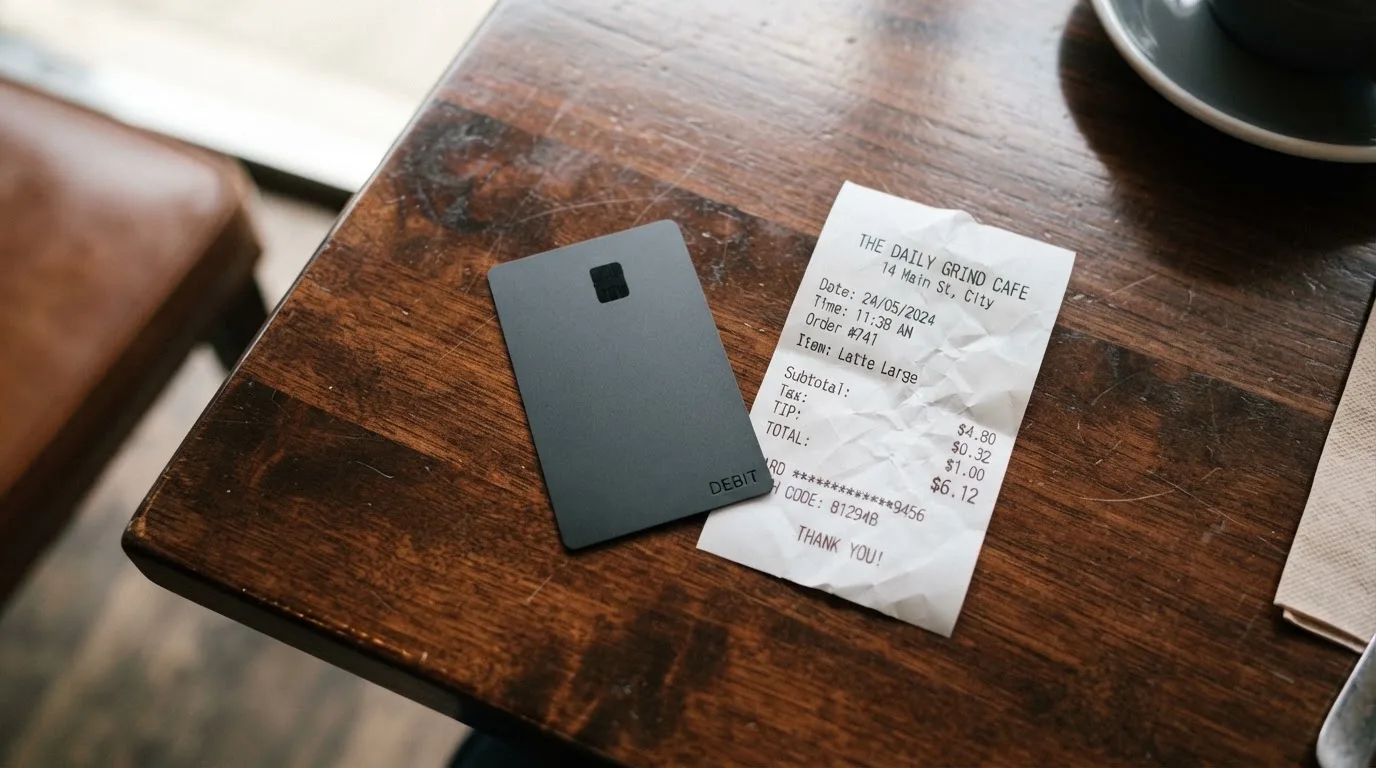
- Opening a virtual card: $25 issuance.
- Minimum to open: $55 — $25 of that is the issuance fee, the other $25 lands on the card balance.
- Monthly fee: not stated.
- Conversion fee, FX fee: percentages not stated. The site says “No hidden fees”; the terms say fees appear in the bot before you confirm, that quoted prices are indicative, and that the final price is the rate shown at the confirmation screen.
| Item | Amount | Source and status |
|---|---|---|
| Card issuance (virtual) | $25 | Card’s own site |
| Minimum to open the card | $55 | Card’s own site |
| Monthly fee | Not stated | — |
| Conversion percentage | Not stated | — |
| FX percentage | Not stated | — |
| ATM withdrawal | Not stated | — |
| Single transaction limit | $50,000 | Card’s terms |
| Daily limit | $200,000 | Card’s terms |
| Monthly limit | $2,000,000 | Card’s terms |
| Limits by KYC level | Not stated | — |
| Physical card issuance | $100 | Third-party aggregator, unconfirmed |
| Apple/Google Pay card | $79 plus $30 deposit | Third-party aggregator, unconfirmed |
| Visa card for AI services | $39 plus $30 deposit | Third-party aggregator, unconfirmed |
| Top-up fee | 4.5% | Third-party aggregator, unconfirmed |
| Physical-card transaction fee | $1.025 plus 0.4% | Third-party aggregator, unconfirmed |
So: three everyday payments, and what applies to each.
A $30 subscription bought online (an unconfirmed figure). The payment itself is the card’s business. What you do not know is how much of your crypto gets converted first, and at what rate. If the conversion fee and the network fee are both unstated, you cannot build a reliable cost per purchase — you can only check the bot before confirming, which is exactly what the terms tell you to do.
A $60 meal abroad, in a local currency. This is where the gap bites. There is no published FX rate, no published conversion percentage, and the card currency is not stated either — so the reader cannot tell whether they are paying a markup on the currency or a markup on the conversion, or both. My honest advice is not to use this card as your travel card.
A cash withdrawal. Whether the virtual card works at ATMs at all, and at what cost: not stated. Given it is virtual, assume it does not, and plan as though the answer is no.
One more thing about the limits, because they read more generously than the reality. $50,000 per transaction, $200,000 a day, $2,000,000 a month — and then the terms reserve the right to decline transactions above internal volume and frequency limits that are not published. So the published ceiling is the outer bound of what you will never exceed, not a promise of what you will be allowed.
How to Top up CinCin
This is the card’s strongest section and the reason the score is not lower.
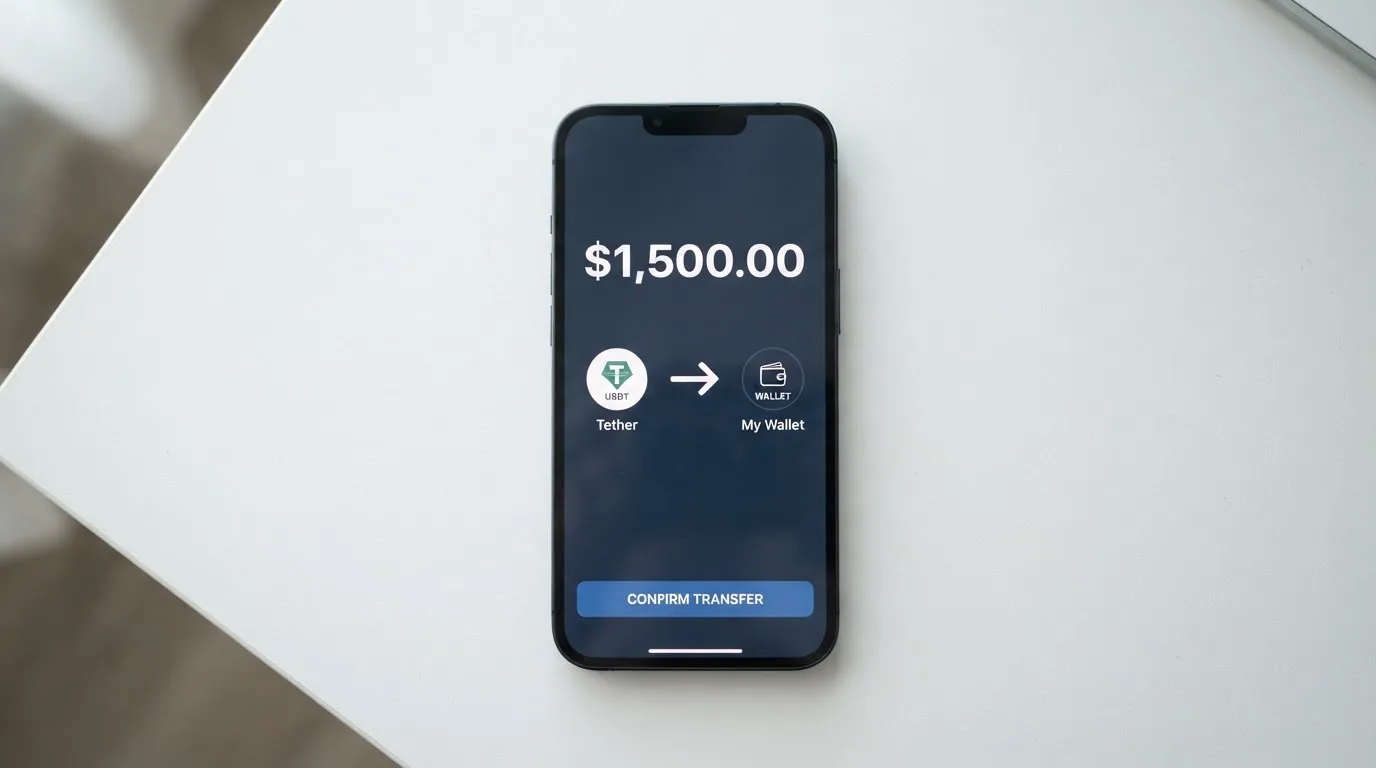
The balance is a USDT TRC20 address. Deposits go through the Telegram bot, and the card says exchanges happen “within seconds”. The supported coin list runs to 24: ADA, ALGO, AVAX, BCH, BNB, BTC, DOT, ETH, HBAR, HT, KRRX, LINK, LTC, MATIC, NEAR, SHIB, SUSHI, TON, TRX, UNI, USDC, USDT, XLM and XRP.
Three practical points follow from that, and all three matter.
First, TRC20 is a specific network, not a generic label. If you send USDT on Ethereum to a TRC20 address, the money does not arrive. Blockchain transfers are irreversible, so a deposit to the wrong network or to an address the provider does not support can be lost or need manual recovery with no guarantee attached. Check the network, not just the coin.
Second, the list includes coins that do not run on Tron, which means the bot is doing a conversion, not just an address display. That conversion has a cost, and the top-up fee is not stated. Anyone with a large ETH or SOL balance should assume a haircut.
Third, network fees on the deposit are charged by the blockchain, not by the card. Tron prices its transactions through bandwidth and energy, often by burning TRX, so a small top-up can cost you more in network fees than in card fees.
Not stated anywhere on the public pages: the top-up fee itself, who pays network fees in practice, whether fiat top-up is possible at all, and — the one that should make you pause before you load anything — how you get money back out. The terms are blunt about this: executed transactions are “final, non-cancelable, and non-reversible”; fees for a completed service are non-refundable; and on termination users “are not refunded”.
Treat the balance as one-way money. Whatever you put in beyond what you spend is what you lose.
Paying with the card every day
The card lives in Apple Pay — the site says “Add your virtual card to Apple Pay”. Google Pay is not mentioned anywhere. For a virtual card that cannot be handed over or inserted, a mobile wallet is not a convenience but the mechanism, so that single omission matters more than it would on a physical card.
A virtual card number behaves slightly oddly at the checkout. Merchants look up the issuer identification number at the front of the number and can see what institution and country issued it. If that country does not match your billing address, some merchants apply extra scrutiny, and some decline prepaid or foreign-issued cards outright. Address verification — the check that compares the street number and postcode you typed against the issuer’s records — is mainly available in the US, Canada and the UK and is generally unavailable for foreign-issued cards. Online declines that look inexplicable usually have one of these causes.
Some merchants will not take crypto-funded prepaid cards for online-game donations or similar virtual goods. The company does not publish its allowed-services list; when a user raised it, the company pointed to that list instead of reproducing it. Assume the categories you care about may be blocked and check first.
Declines can also leave a hold on your balance for several days — typically up to seven. A failed online payment can therefore quietly reduce your available balance.
If something goes wrong, contact support first. CinCin has up to 30 calendar days to respond. Unresolved disputes go to LCIA arbitration in London under English law, which is a real commitment but a slow and expensive one. Claims about unauthorized or wrongly executed payments caused by a CinCin error must be raised within 12 months. Chargebacks are not mentioned at all, which means you should not assume the familiar card-dispute route is open to you.
What can go wrong
I found no official incidents. What follows is what the published record does show.
The company is Sonder INC, a digital assets services provider incorporated in the Marshall Islands, registered office Trust Company Complex, Ajeltake Road, Ajeltake Island, Majuro MH96960, registration number 130414. The brand in the footer is “Cin-Cin Pay”. No licences are named, and the card issuer is not named.
On Trustpilot the card sits at 3.1 out of 5 from 17 reviews, with 23% one-star, and the company replies to about 25% of negative reviews. Read on 21 October 2026. The themes are consistent and they cluster around one word: refunds.
- April 2026: a user alleged the first deposit was not refunded. The company asked the reviewer to contact support; the review is dated 3 April, the company’s response 14 May.
- October 2025: a user reported no refund for the card itself, and that online-game donations were not on the allowed-services list.
- September 2025: a user reported slow support, up to an hour.
Three one-star stories out of seventeen reviews is not a scandal. It is enough, combined with the terms, to tell you where the risk sits: this is a small, young provider holding a prepaid balance in an offshore jurisdiction, with an unnamed issuer behind it, and a refund process that starts with support and may end in London arbitration.
Add the general risk of this category and the picture sharpens. Custodial platforms have a real history of failure — Mt. Gox with about US$350 million reported stolen across 2011 to 2014, Coincheck about US$400 million in 2018, Ronin Network US$625 million in 2022. Holding funds with a custodian carries counterparty and hack risk, and the private-key design means there is no recovery: the network cannot freeze or return a stolen transfer. CinCin’s balance is custodial — the service holds it. The site claims end-to-end encryption and says sensitive payment details are not stored; two-factor authentication, an in-app card freeze and safeguarding arrangements are not stated.
Card programmes also end. Visa terminated its global agreements with FTX on 13 November 2022 and the FTX US debit card was wound down; Visa suspended WaveCrest in Europe in 2018, closing every WaveCrest-issued Visa programme. Closures typically mean a notice period, then loading stops, then you’re asked to withdraw what is left. With CinCin you cannot check whether you are inside such a notice, because there is no named issuer to check.
One more structural risk that is specific to stablecoins, the assets your balance actually sits in. Stablecoins are not necessarily stable: TerraUSD collapsed in May 2022, and USDC briefly lost its peg in March 2023 during the US banking crisis. Roughly 90% of stablecoin market capitalisation sits in USDT and USDC. Your balance is denominated in one of those. And they are not censorship-proof — Tether says it disables tokens in wallets on the OFAC list and has frozen funds tied to illicit activity.
Support is Telegram plus an email address, with the site in English, Ukrainian, Russian, Spanish and Portuguese. Hours are not stated.
What to take instead
Three alternatives came up in my comparison, all of them equally young and none of them decisively safer. The scores are from the same method as CinCin’s.
| CinCin | Ape Wallet | MaxSwap | AnoCard | |
|---|---|---|---|---|
| Score | 5.4 / 10 | 5.5 / 10 | 5.2 / 10 | 5.9 / 10 |
| Card type | Virtual, Mastercard | Virtual Visa, service card and Apple/Google Pay card | Virtual, Mastercard | Virtual cards (VCC), reloadable and one-time, several BINs |
| Where it works | Mastercard acceptance, country list published | “Wherever Visa is accepted”, no country list | Claims no geographical restrictions | Not stated; the site was down |
| Issuance | $25 | Not stated — promo codes change it, Apple/Google Pay holders get a discount | $50 card with a $25 first deposit, listed total $77.125 | Varies by BIN, not published |
| Top-up fee | Not stated (4.5% unconfirmed) | No amounts; Telegram-username transfers free | 4.5% plus $1 | Varies by asset route, not published |
| Transaction fee | Not stated | Not stated | 0.25 USD plus 0.4% | Not published |
| Funding | USDT TRC20 balance, 24 coins | USDT balance | Crypto, same coin list | Depends on asset; SOL, BTC, USDT, USDC, ETH mentioned as unverified starting data |
| Rewards | Not stated | Two-level referral programme, share not given | Not stated | $5 per referred card, 0.25% of referred top-ups |
| Weak spot | Fees unpublished, support slow, issuer unnamed | No published country list, Russian-focused | Higher entry cost, same custodial model | Least transparency; site down at time of checking |
Read that table honestly. Ape Wallet publishes no country restrictions at all, which is not reassuring — it is missing information. MaxSwap publishes more fees than CinCin does, which is genuinely better for planning, at a higher entry cost. AnoCard publishes the least of all and its site was not reachable when I looked.
The comparison that actually matters is not between these four. It is between any of them and a regulated provider, because of the two-licence structure. In the EU, an electronic money institution can issue e-money and payment cards but cannot lend, and under MiCA e-money tokens may be issued only by a credit institution or an EMI. A crypto card typically depends on two licences at once — one for the crypto side, one for the card. Where a provider names neither, and names no issuer, you are being asked to trust a structure you cannot inspect.
Who I would recommend it to
I would recommend this card to someone in one specific situation: you already hold USDT or another supported coin, you need a card number today, your country is not on the restricted list, and you are treating the money as spent rather than stored. For that person the fit is good — 24 coins, fast crediting, a $25 entry, a card in Apple Pay within minutes.
I would not recommend it to anyone keeping a balance between months, because the terms say executed transactions are non-reversible and termination brings no refund. I would not recommend it to anyone who needs to dispute a payment, because the route runs through support and then LCIA arbitration in London and chargebacks are not mentioned. And I would not recommend it as a travel or everyday card, because the FX and conversion percentages are not published and no currency is stated for the card.
Before you load anything, three checks are cheap and would save a lot of grief:
- Confirm your own country is not on the restricted list, and check again when you come back — the terms allow countries to be added at any time.
- Open the bot and look at the actual fee and rate shown at the confirmation screen, because that screen, not this page, is where the price is set.
- Send a small test amount first, on the network the address actually specifies.
One last background note, because it explains why all four cards in this comparison look alike. Visa and Mastercard do not issue crypto cards to consumers themselves; they license issuers and can suspend a programme. So the company you talk to is usually a programme manager or front end, and the licensed institution is somewhere behind it. On this card, that institution is unnamed. On the others it is at least described. That single difference is most of what separates a 5.4 from a 5.9 in my scoring.
Frequently asked questions
What is CinCin card?
CinCin is a virtual payment card funded with crypto rather than a bank account. You open a Telegram bot, it issues you a USDT TRC20 address, you send at least $55, and a card appears that you add to Apple Pay and spend like a prepaid card. It is issued by an unnamed licensed third-party issuer and marketed by Sonder INC, a digital assets provider incorporated in the Marshall Islands.
How does CinCin card work?
The balance is crypto, and the card is a prepaid card over it. When you pay, the amount is deducted from the stored balance rather than from a linked current account, so the card cannot overdraw. Deposits in USDT TRC20 and 23 other listed coins are exchanged through the Telegram bot, which the card says happens within seconds. It works wherever Mastercard is accepted.
Is CinCin a bank?
No, and nothing in its public material suggests it is one. It is a digital assets services provider that manages a card programme front end; the card itself is “issued and managed by a licensed third-party card issuer” whose name is not published. No licences are named. That absence matters, and it is the main reason I scored reliability at 4 out of 10.
Does CinCin require KYC?
In a way that is different from other cards. The terms say “CinCin does not independently perform KYC verification for Users”, while also stating that CinCin runs anti-money-laundering checks through third-party providers and may apply enhanced due diligence. What documents, proof of address or age requirements apply is not stated. Your deposits are public blockchain transactions regardless of what any form asks.
How much does CinCin card cost?
Issuing the virtual card costs $25, and you need at least $55 in total — the other $25 goes onto the card balance. Monthly fees are not stated, and neither are conversion or FX percentages. The site says “no hidden fees” and the terms say the final price is the rate shown in the bot before you confirm. An unconfirmed 4.5% top-up fee appears on a third-party site.
Can I use CinCin card in my country?
Probably, but check the list before anything else. It is not offered in the United Kingdom, the UAE, Japan or the United States, and is restricted in Iran, North Korea, Syria, Venezuela, Afghanistan, Belarus, Cuba, Myanmar, Somalia and Ukraine. FATF-blacklisted and OFAC-sanctioned users are barred, and the terms let CinCin add countries at any time. The rule runs on your country; citizenship versus residence is not specified.
Is CinCin card safe?
I would not call it safe. It is custodial, so the balance is held by the provider rather than by you, and the history of this category includes Mt. Gox, Coincheck and Ronin Network. Crypto transfers are irreversible by design. The site claims end-to-end encryption; two-factor authentication, an instant freeze and safeguarding arrangements are not stated. Trustpilot shows 3.1 out of 5 from 17 reviews, with refund complaints recurring.
Is CinCin card free?
No. There is a $25 issuance fee and a $55 minimum to open the card, so your first outlay is $55 no matter how little you intend to spend. Whether a monthly or account-keeping fee applies is not stated. The $25 spent on issuance does not come back to you as balance — the remaining $25 of the $55 does.
How do I withdraw money from CinCin?
The public pages do not say, and that is the point I would want a reader to take away. The terms state that executed transactions are “final, non-cancelable, and non-reversible”, that fees for a completed service are non-refundable, and that on termination users “are not refunded”. Load only what you intend to spend, because the balance should be treated as one-way.
How do I add CinCin card to Apple Wallet?
Open the Telegram bot where your card is held and use the option to add the virtual card to Apple Pay, which the site describes directly. Apple Pay stores a device-specific token in the phone’s Secure Element rather than your card number, so the real number is never exposed. Google Pay is not mentioned anywhere in the card’s material, so assume it is not supported without checking.
How virtual cards work – cryptocardsexplained.com
Content created by the «cryptocardsexplained.com» team