
The everyday crypto card that scores well on use and badly on disclosure
 Available in US
Kredete is unusual in a category full of loud promises. It is not a loud promise. It is a USD Visa card with a virtual card that appears in ten seconds, a physical card, Apple Pay and Google Pay, cashback of up to 6%, and a card page that tells you almost nothing about what you pay. That combination — genuinely convenient day to day, unusually quiet on the details that decide whether it is cheap — is the whole of my verdict, and it is why my score lands where it does.
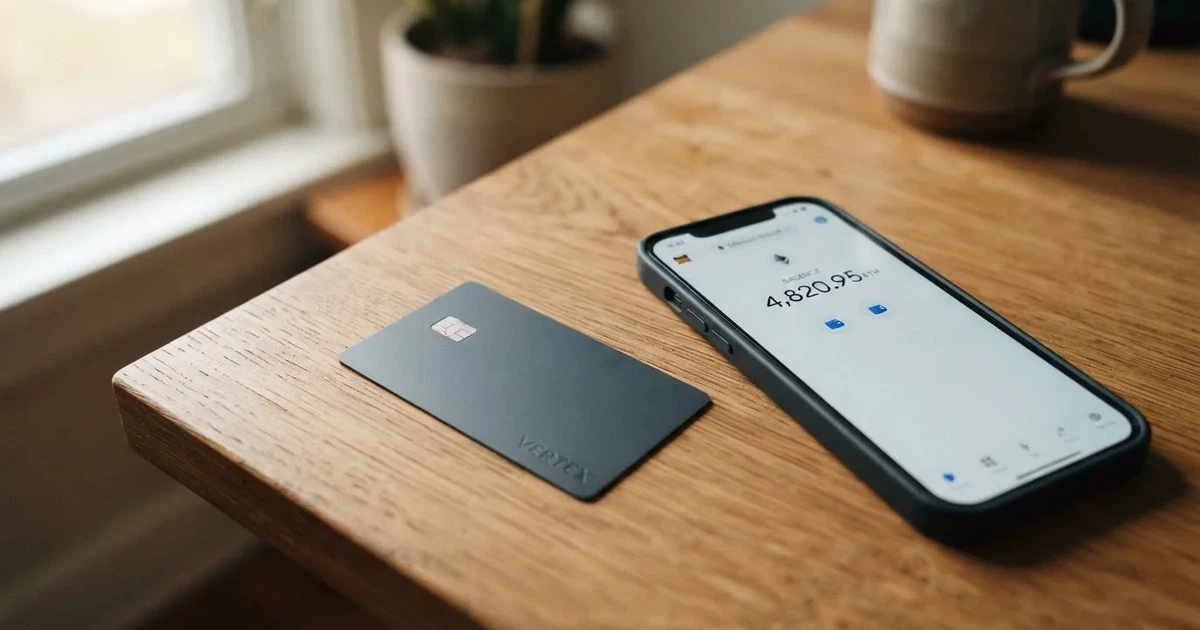
I scored Kredete 6.7 out of 10. That is a mid-table number, and it is not a punishment. The card does the things people actually want from a crypto card very well, and it leaves the things that decide cost almost entirely unsaid on its own pages. If you already know how you will use it and you are comfortable reading a fee table elsewhere, that may be enough for you. If you are choosing on price, you will be doing arithmetic with gaps.
The conditions described here are current as of October 28, 2026.
Verdict: 6.7 out of 10
Who this card suits is easy to say. It suits users in Africa who want a USD Visa with cashback — that is the audience the card is visibly built for, and it is the group it serves most convincingly. It suits anyone who needs a card that exists in seconds rather than weeks, and anyone who treats a card as a wallet they top up rather than a bill they pay.
Who it does not suit is equally easy to say. It does not suit you if your first question is what the card costs per month, because the official pages do not publish the issuance fee, the monthly fee or the ATM terms. It does not suit you if you want to see, before you sign up, exactly how crypto reaches the card balance, because the official card page does not mention crypto at all — that part comes from press reporting and third-party sources, not from the card.
| Criterion | Mark | Why |
|---|---|---|
| Who can get it | 6 / 10 | The App Store listing says “global accounts in 60+ countries” and the card works in 170+ countries; unofficial sources describe a launch in selected African markets, 50 African countries, and plans for the UAE, Saudi Arabia and Oman |
| Cost | 7 / 10 | 0% FX markup is a real, stated advantage; the issuance fee, monthly fee and ATM fee are not disclosed |
| Top-up options | 5 / 10 | The card is paid from the Kredete account balance and the card page does not mention crypto; unofficial reporting describes USDC settlement |
| Reliability and complaints | 6 / 10 | The seller is Kredete, Inc. and the issuer is not named; unofficial sources describe a Nigerian startup founded in 2023 with a US$2.25 million seed; no complaints found, App Store rating 3.97 from 98 ratings |
| Everyday use | 10 / 10 | Virtual card in ten seconds plus a physical card, Apple Pay and Google Pay, ATM access, and freezing from the app |
| Total | 6.7 / 10 | Strong at spending, quiet on everything you would need to price it |
One more thing belongs in the verdict rather than buried below: this is a card where the marketing and the documentation are not the same document. The App Store release notes are more informative about fees and plan names than the card page itself. That is not automatically a bad sign — plenty of young products document themselves in the app store rather than on the website — but it does mean you should expect to check things in the app after signing up, not before.
Will they give you the card?
The official card page does not say who is eligible. That is the honest answer, and I would rather give it to you than paraphrase around it. The App Store listing says “global accounts in 60+ countries”, which is a statement about where accounts exist, not about who will pass a check. The card is said to work in 170+ countries, which is a statement about where it will be accepted, not about who can hold one.
What comes from outside the card is more specific, and I mark it as unofficial. Per AppsAfrica in April 2026, users in 50 African countries can spend USD-backed stablecoins, the service launched “in selected African markets”, and there are plans to go live in the UAE, Saudi Arabia and Oman. An earlier report from Disrupt Africa on 4 June 2025 puts the figure at “more than 40 African countries”. Both figures describe the same intent and neither is confirmed by Kredete itself.
So there are three separate questions hiding inside “who can get it”, and only one of them has a published answer:
- Where accounts are available — the App Store’s “60+ countries”.
- Where the card can be spent — 170+ countries, per the card’s own 0% FX markup claim.
- Who passes the checks — not stated on the official card page.
If you are outside the markets the press describes, the practical answer is that the only way to know is to try. I would not build a plan around the assumption that a card available in 170+ countries will be issued to you. Availability of the card network and eligibility for the account are different things, and it is the second one that decides whether you get an account at all.
Two further points about eligibility are not stated and I will not guess at them: what document checks, if any, are required, and whether tiers of verification exist. Both are covered in the sections below where they belong, and both come back empty from the public pages.
How to get it
The signup path itself is short, and that is the card’s strongest practical feature. It is a USD Visa card, offered in two forms: a virtual card that is issued in ten seconds inside the app, and a physical card. The virtual card being instant matters more than it sounds — it means the card can be added to Apple Pay or Google Pay and used while a physical card is still in the post, and it means you are not waiting weeks to find out whether you were approved.
The physical card is delivered to 70+ countries. How long it takes and what it costs are not stated, so treat both as unknown rather than assuming either. Note the difference between the two numbers: 70+ countries for delivery of the physical card, 170+ countries for spending, 60+ countries for accounts according to the App Store listing. Three different figures, three different promises, none of them wrong on their own terms.
What I cannot tell you from the public pages:
- Whether identity verification is required before you can open an account — not stated.
- Whether verification levels are tiered — not stated.
- The steps to apply, beyond opening the app and choosing a plan.
I want to be careful here, because this is precisely where a wrong answer causes real harm. I am not going to describe a verification flow that the card does not publish, and I am not going to suggest that any step can be skipped or worked around. If identity checks apply to you, they apply — that is the rule everywhere in this category and it is not a problem to be solved. What you should do is expect to provide documents, keep them to hand, and treat any request for them as normal.
The plan names are public even though the pricing is not. The App Store release notes for version 4.4.0, dated 7 October 2026, invite you to “Compare Basic, Flex, and Premium side by side”. What each plan gives and what each costs are not stated. So there is a tier system, it is visible in the app, and its contents are not published — which means a reader cannot know today which tier they would end up on or paying for.
What it really costs: fees and limits
This is where the card earns its cost score, and where it frustrates me. The one thing it publishes clearly is the thing competitors charge for: 0% FX markup, stated for 170+ countries. If you spend a lot outside the United States, that is a genuine, meaningful saving and it is not a rounding error.
Everything else is a gap. The App Store release notes for v4.4.0 (7 October 2026) say that rates and fees are grouped by currency — USD, EUR, GBP, NGN — and that each transfer method shows its fee. That is a description of how the app presents fees, not a published table of them. No crypto conversion fee is stated. So the structure exists; the numbers are inside the app.
Here is what is known, and what is not:
| Fee or limit | What the public pages say |
|---|---|
| Issuance fee | not stated |
| Monthly fee | not stated |
| FX markup | 0%, stated for 170+ countries |
| Crypto conversion fee | not stated |
| ATM fee | not stated; ATM access with the physical card |
| ATM allowance | not stated |
| Daily limit | not stated |
| Monthly limit | not stated |
| Plan pricing (Basic, Flex, Premium) | not stated |
| Card currency | USD |
Three everyday payments, to make the shape of the problem concrete. None of these use figures the card has not published; they show you which published fact applies and where you are left guessing.
A coffee in a local currency. Suppose you are in a country outside the dollar zone and you tap for a small purchase. What you pay is the amount in dollars on the card page, converted at whatever rate the app shows, with a 0% markup on the currency side. The 0% figure is the good news and it is the only number here you can rely on. The bad news is that the rate itself is the app’s rate, shown at the moment of payment, and nothing on the public pages explains how far it may sit from the mid-market rate or how long it is held.
An online subscription priced in USD. Here nothing is converted and no FX is involved, so 0% markup does you no good at all. What you want is the monthly fee of your plan and whether the merchant’s category is one the card treats differently — and neither is published. Blocked categories are not stated either.
A cash withdrawal at an ATM. The physical card works at ATMs. The fee is not stated and the allowance is not stated. This is the single most expensive category of transaction on almost any card in this market, and it is the one with the least information behind it. If cash is part of how you plan to live, treat this as the number to go and find in the app before you rely on it.
A general point about limits: prepaid-style cards normally cannot overdraw, because the card spends only a loaded balance. That is the usual model for this category, and it is a genuine comfort — but Kredete does not state its limits, so I am not going to tell you that a specific ceiling applies here. If your plan involves a large one-off payment, find the daily and monthly limits before you plan around it.
And one more category that costs money without appearing on a fee table: the blockchain fee. When crypto is the source of the money, the on-chain network fee for your deposit is charged by the blockchain, not by Kredete. That is a separate cost, in a separate currency, on a separate schedule.
How to top up
Officially, the answer is one sentence: the card is paid from the Kredete account balance, and the card page does not mention crypto. That is not a dodge on the card’s part — it reads like a bank account that happens to be reachable as a card.
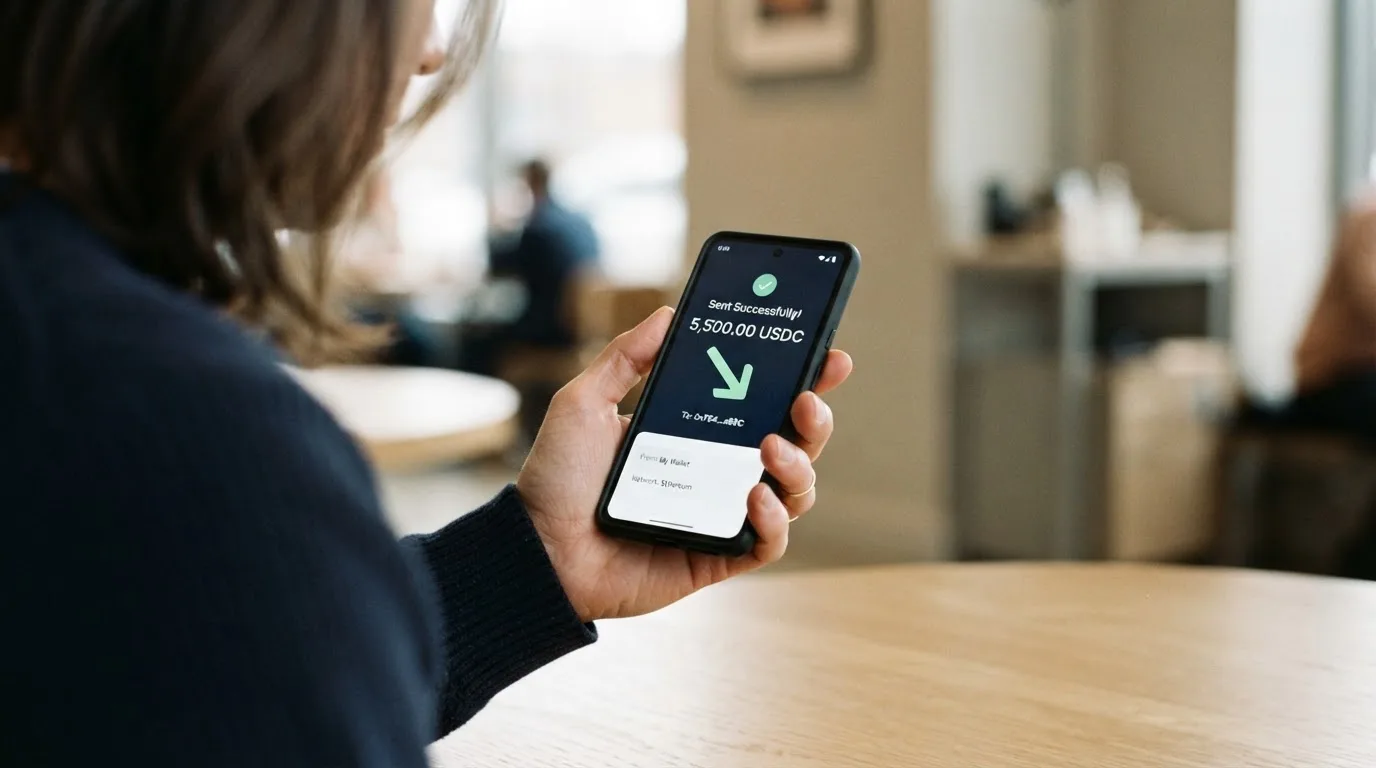
What fills that balance is where unofficial sources step in. Per Launch Africa in July 2025, the card “links to a user’s digital wallet”, with near-instant settlement in USDC and real-time FX conversion at the purchase. Per press coverage, settlement happens in USDC. None of this is confirmed by Kredete’s own pages, so treat the mechanism as reported rather than documented.
The top-up options themselves are not stated. Not one source I found gives a list: no bank transfer, no card load, no P2P, no crypto network, no minimum. This is the weakest section of the card’s public footprint and it is why top-up options scored 5 out of 10 — a middle-of-the-road card with a strong card experience but no published way to see what fills it.
If you are planning around a specific method, here is the honest list of what you would need to confirm, and none of it is on the card’s pages:
- Which assets and networks are accepted for funding.
- Minimum and maximum top-up amounts.
- Time from top-up to spendable balance.
- Any fee on the top-up itself, as distinct from the FX markup.
- Whether a direct stablecoin transfer to a card address works, and on which network.
That last one is where people lose money in this category, and it deserves a warning rather than a how-to. Blockchain transfers are irreversible. A deposit sent on a network the provider does not support, or to an address belonging to another network, can be lost or need manual support recovery with no guarantee. You are not looking for a shortcut here; you are looking for the correct network, and the only correct answer is the one the provider gives you inside its own product. Never send funds to an address you obtained from a message, a post or a stranger.
One more nil: how to withdraw money from Kredete is not stated.
Paying with it every day
This is the 10 out of 10 section, and it is not close. Kredete does the small number of everyday things that decide whether a card becomes your default, and it does all of them.
Apple Pay and Google Pay are supported. This is the most under-rated feature in the whole category. A card in a phone wallet is faster than a physical card, it never gets left at home, and the card number is replaced by a device-specific number rather than stored anywhere you might worry about. Whether Kredete blocks any merchant categories is not stated, which is worth asking about if you spend in a restricted sector.
Cashback up to 6% is advertised. The payout currency and the conditions are not stated — how it is paid, whether there is a minimum, whether it is a straight percentage or a tiered one. Six per cent is a headline number, and headline numbers are usually the best case. I would want to see what a typical month earns before I counted it in anything.
The app also lists up to 5% APY on balance. That is a different product from the card and a different risk, and I would keep the two apart in your head: cashback on spending is one thing, yield on a held balance is another.
The app itself is iOS, called “Kredete Send Spend Save Credit”, free, version 4.4.0 as of 7 October 2026, requiring iOS 16.2 or later. Its rating was 3.97 from 98 ratings when I read it on 22 October 2026. That is a small sample, and a small sample in that range is worth noticing rather than dismissing — 98 ratings is not enough to establish a track record either way, but it is not a glowing number. I did not read the Google Play listing, so I cannot tell you about the Android version.
Freezing. Both the virtual and the physical card can be frozen from the top bar of the app. This is the single most useful safety control on any card, because losing a card and freezing it takes seconds. Crypto sends and swaps confirm with Face ID or passcode, and privacy tools are listed in the app.
How you activate the card is not something the card’s public pages spell out step by step, and I am not going to invent a walkthrough. Open the app and follow it. How to use the virtual card specifically is also not documented publicly; what is documented is that it appears in ten seconds and works with Apple Pay and Google Pay, which is most of what you need.
Dispute handling — what happens when a charge is wrong, whether you can raise a chargeback from inside the app — is not stated. For a card you may be using across borders, that is worth confirming yourself.
What can go wrong
Let me split this into the things that are documented, the things that are simply unknown, and the general risks that attach to this whole category regardless of which card you pick.
What is documented as protection. Cards can be frozen from the app. Crypto sends and swaps confirm with Face ID or passcode. Privacy tools are listed. And 0% FX markup means the currency conversion is not a hidden revenue line. That is a decent list.
What is unknown. Custody and safeguarding are not stated. This is the question I would ask first if I were you, and I could not get an answer. If crypto sent through Kredete sits in a custodial wallet, then a failure at the provider is a failure you carry — and if it does not, the key management arrangements are exactly the thing you would want documented and are not. Nothing in the public material tells me which it is.
Complaints: I found none. That sounds reassuring and should be read carefully. There were no official incidents in my searches on 21 and 22 October 2026, and no independent user reviews or complaints, and no Trustpilot page. A young service with a small app has few reviews because it has few users, not because it has none.
Who you are actually trusting. The App Store seller is Kredete, Inc. The issuer is not named on the official page. Per Launch Africa in July 2025, Kredete is a “Nigerian fintech startup founded in 2023 by Adeola Adedewe”, built with Visa, Stellar and Rain, with a US$2.25 million seed in September 2024 — and that source also does not name the issuer. Unofficial, but it tells you the company is young and that the card sits on infrastructure other people built.
The news timeline is short: a stablecoin-backed credit card launched on 4 June 2025 with Visa, Stellar and Rain, and a partnership was announced on 20 April 2026 at the Visa Africa Fintech Accelerator Cohort 5 Demo Day at GITEX Africa in Marrakech, covering 50 African countries, over 150 million merchants and Gulf expansion plans. The company describes the card as stablecoin-backed and, in practice, settlement happens in USDC.
The category risks nobody can remove for you. Let me lay these out once, plainly, because they apply whether you use Kredete or any other card in this space:
- A card programme can end. Visa terminated its global agreements with FTX on 13 November 2022 and the FTX US debit card was wound down by its issuer. WaveCrest, a Visa issuer that supplied crypto card brands, was suspended by Visa in Europe in 2018, closing all its Visa programmes. Closures follow a pattern: a notice period, spending and loading stop, then you are asked to withdraw what is left.
- A card can be declined at the till. Merchants can look up the BIN and see the issuing institution and country, and may apply extra scrutiny when that differs from your billing address. Some merchants decline prepaid or foreign BINs for exactly this reason. Address verification is also mainly a US, Canada and UK thing and is generally unavailable for foreign-issued cards, which causes declines.
- A declined payment can leave a hold on your funds for several days, typically up to seven.
- Custody has a history. Mt. Gox, about US$350 million reported stolen across 2011–2014; Coincheck, about US$400 million in 2018; Ronin Network, US$625 million in 2022. Crypto transfers are typically irreversible and a stolen key has no recovery path.
- A stablecoin is not automatically stable. TerraUSD collapsed in May 2022 and USDC lost its peg temporarily in March 2023 during the US banking crisis. Both are real precedents.
- Regulation is real and does apply to you. KYC rules require regulated businesses to verify customers and assess risk. If due diligence cannot be completed, EU rules require the institution to refrain from the transaction or end the relationship, which is why accounts get closed pending documents. Under MiCA, e-money tokens may be issued only by a credit institution or an electronic money institution.
- And there is a money question. If the balance behind the card is crypto, paying with it is generally a taxable disposal in the US, measured at fair market value on the date of the transaction — so each card payment funded from crypto may be a separate taxable event. I am not giving tax advice here, only noting the shape of it, and you should take your own advice for your own situation.
Support contact details are not stated, which for a card spanning 170+ countries is a real gap.
What to take instead
I want to compare Kredete against three other cards on what they publish, not to tell you which one to buy — you know your country and your situation better than I do. What follows is a straight comparison of disclosure, and disclosure is what you have when a card’s numbers are not public.
| Card | Score | Who it is for | What it costs | How it is funded |
|---|---|---|---|---|
| Kredete | 6.7 / 10 | App Store listing says accounts in 60+ countries; card works in 170+ countries | Issuance, monthly, ATM fees not stated; 0% FX markup | Kredete account balance; USDC settlement per press |
| Stella | 6.5 / 10 | Countries not stated; terms bar users under sanctions programmes and route US and European users through affiliates | Not stated; fees “described under this User Agreement and/or on the App” | Deposit crypto into the account, which automatically tops up the card |
| UniFi Card | 4.7 / 10 | Not confirmed from official pages; app lists send-money routes to the Philippines, Mexico, the eurozone, Colombia, Brazil and the UK | Not stated; “Fees may apply. See UniFi website for more details.” | ACH, wire, SEPA, SPEI; paid out to a USDC wallet |
| Whop Cards | 5.2 / 10 | 31 US states for consumers, 41 for businesses; a stated list of unsupported countries | Page says “No extra fees”; no amounts listed | Spends from a Whop balance, backed by stablecoin collateral from a linked wallet |
Stella scores 6.5 and is the closest comparison. Its card is virtual and physical, on VISA, working at “over 40 million VISA merchants globally”. Its terms are, in one respect, better than silence: they bar users under economic sanctions programmes and route US and European users through affiliates, which is at least a stated rule. Its funding story is the most clearly documented of the four — deposit crypto into the account and it automatically tops up the card, through an in-app custodial wallet. Its card page states no cashback, and the Earn product is a separate yield. Its weakness is the same weakness: fees not stated officially.
UniFi Card scores 4.7 and is the most explicitly prepaid. It is a “Prepaid Debit Visa Card” issued by Lead Bank, spends from a USD balance, supports Apple Pay, and is funded by ACH, wire, SEPA or SPEI. It lists “3% rewards on balances” but states no card cashback. Every fee is behind “see our website”, which is where you would end up if you needed the number.
Whop Cards scores 5.2 and is the most geographically limited — 31 US states for consumers (Alabama through Wyoming, listed in full by name), 41 for businesses — and the only one of the four with an explicit statement that consumer business is not supported in Belarus, China (Mainland), Cuba, Hong Kong, India, Iran, Iraq, Israel, Myanmar, Nepal, Nicaragua, North Korea, Russia, Syria, Turkey, Ukraine, Venezuela and Vietnam, with Russia and Belarus also unsupported for corporate accounts. Whether eligibility runs on citizenship or residence is not stated. Its card is a Visa working anywhere Visa is accepted, can also be issued to team members, and spends from a Whop balance — a pending balance becomes usable as soon as a payment arrives, while standard withdrawals use settled funds. It offers 5% cashback at select merchants, currently Uber, with more planned, and its page says “No extra fees” without listing amounts.
The pattern across all four is worth naming: nobody publishes much. If your decision criterion is published pricing, this category will not satisfy you, and Kredete is honest about the same limits as the rest.
Who I would recommend it to
I would recommend Kredete to someone who has decided how they will use it. Specifically: a user in Africa who wants a USD Visa with cashback and is comfortable with a provider that documents itself inside its app rather than on its website. Someone for whom a virtual card in ten seconds solves a real problem — a card that arrives in seconds instead of weeks, works in Apple Pay and Google Pay, works at ATMs, and can be frozen from the top bar if it is lost.
I would not recommend it as a first card for someone who is cost-driven. The 0% FX markup is attractive and it is the number the card leads with, but the issuance fee, the monthly fee and the ATM terms are all unstated, and a 0% markup can be outweighed by a single ATM withdrawal or a monthly charge you did not know about. If you spend abroad heavily and only at shops, the maths may favour Kredete. If you take money out, you need those numbers first.
I would also hold off if you are in a market the press only describes as planned. The UAE, Saudi Arabia and Oman expansion is announced, not live as far as the public information goes. Do not apply on the strength of an expansion announcement.
And I would be careful, as with any custodial setup, about what “0% FX markup” is compensating for. It is not a safety signal. The card’s protection list is real but short: freeze, Face ID, 0% markup. Custody and safeguarding are not stated, support details are not stated, dispute handling is not stated, and there is no complaints record to lean on either way because there is no complaints record.
If you want a card where you hold the keys yourself and the provider cannot lose your money, that is a different product and Kredete is not it.
Before you decide, do four things: open the app and read the Basic, Flex and Premium tiers with their prices; find the daily and monthly limits; confirm exactly which networks are accepted for funding; and check whether your country is live or planned. All four are things the card’s own pages should tell you, and none of them currently do.
Frequently asked questions
What is the Kredete card?
Kredete is a USD Visa offered as a virtual card that appears in ten seconds in the app and as a physical card delivered to 70+ countries. The app is called “Kredete Send Spend Save Credit” on iOS, free, version 4.4.0 as of 7 October 2026. The card advertises cashback of up to 6%, supports Apple Pay and Google Pay, and works at ATMs. The seller named in the App Store is Kredete, Inc.
How does the Kredete card work?
The card is paid from your Kredete account balance, and it spends only what is in that balance. The official card page does not mention crypto at all. Press reporting describes the card as stablecoin-backed, settling in USDC, linked to a digital wallet, and converting at the point of purchase. In daily use it behaves like an ordinary Visa: tap, insert or pay online, and freeze it from the app if you lose it.
Is Kredete a bank?
Not on the published evidence. The App Store names Kredete, Inc. as the seller, and the issuer is not stated on the official card page. Press describes a fintech startup, founded in 2023, built with Visa, Stellar and Rain — a card programme running on someone else’s licence. Whether your funds are held as bank deposits or as e-money or crypto is not stated publicly, which is the single most important question to ask before you put money in.
Who owns Kredete?
Kredete, Inc. is the seller name in the App Store. Unofficial reporting describes a Nigerian fintech startup founded in 2023 by Adeola Adedewe, with a US$2.25 million seed in September 2024, built with Visa, Stellar and Rain, and without a named issuer. None of the company detail comes from Kredete’s own pages, so treat it as reported rather than confirmed.
Is the Kredete card free, and what does it cost?
Partly. The 0% FX markup is stated and applies across 170+ countries, and the app is free. Everything else is not stated: the issuance fee, the monthly fee, the ATM fee and allowance, and the pricing of the Basic, Flex and Premium plans. The release notes say fees are grouped by currency and shown per transfer method inside the app, so the structure exists even though the numbers are not public.
How do I top up the Kredete card?
The card draws on your Kredete account balance, and the top-up options are not stated. Unofficial sources describe funding from a digital wallet with USDC settlement and near-instant credit. Before sending anything, confirm inside the app which assets and networks are supported — irreversible transfers to the wrong network or the wrong address can be lost with no guarantee of recovery.
Does Kredete require KYC or identity checks?
The card’s public pages do not say. What is published is the App Store claim of “global accounts in 60+ countries” and 50 African countries per press — not an eligibility rule. What you can be certain of is that regulated providers everywhere in this category must verify identity and screen for sanctions, and that accounts get closed pending documents when checks cannot be completed.
Is Kredete safe?
In part it is, and the protection list is short but real: freeze the virtual or physical card from the app, confirm crypto sends and swaps with Face ID or passcode, and 0% FX markup. Not stated are custody and safeguarding, support contact details and dispute handling. I found no complaints or independent reviews at all, which for a card with 98 App Store ratings reflects a small user base rather than a proven track record.
Where can I use the Kredete card?
The card works in 170+ countries with 0% FX markup, the physical card ships to 70+ countries, and per press it reaches over 150 million merchants across 50 African countries. Spending abroad is not the same as being eligible for an account, though: the app lists accounts in 60+ countries, and the UAE, Saudi Arabia and Oman expansion is announced rather than confirmed live.
Is the Kredete card worth it?
For someone in Africa who wants a USD Visa with cashback, works in Apple Pay and Google Pay, and needs a card in seconds rather than weeks — plausibly yes, and it is the most usable card I found here. For anyone choosing on price, not yet: the 0% markup is offset by undisclosed monthly, ATM and issuance fees, and there are no published limits to plan a large payment around.
How app and neobank cards work – cryptocardsexplained.com
Content created by the «cryptocardsexplained.com» team