
A US company, a card from unnamed issuers, and a lot of blank spaces
 Available in US
The Stablepay card is a payment card you spend from a balance held in “digital dollars”, issued by third parties you are not told the names of, and governed by terms that were last revised on 8 Oct 2026. The promise on the surface is simple: money in, card out, and the balance turns into local currency at the moment of checkout. The reality when I read the public pages is thinner than the promise. There is no list of countries. There are no fees on the page. There is no stated card network, no stated virtual-or-physical choice, no stated limits, no stated delivery time. What there *is* is a self-custody claim, a set of named fiat rails, and a very new app.
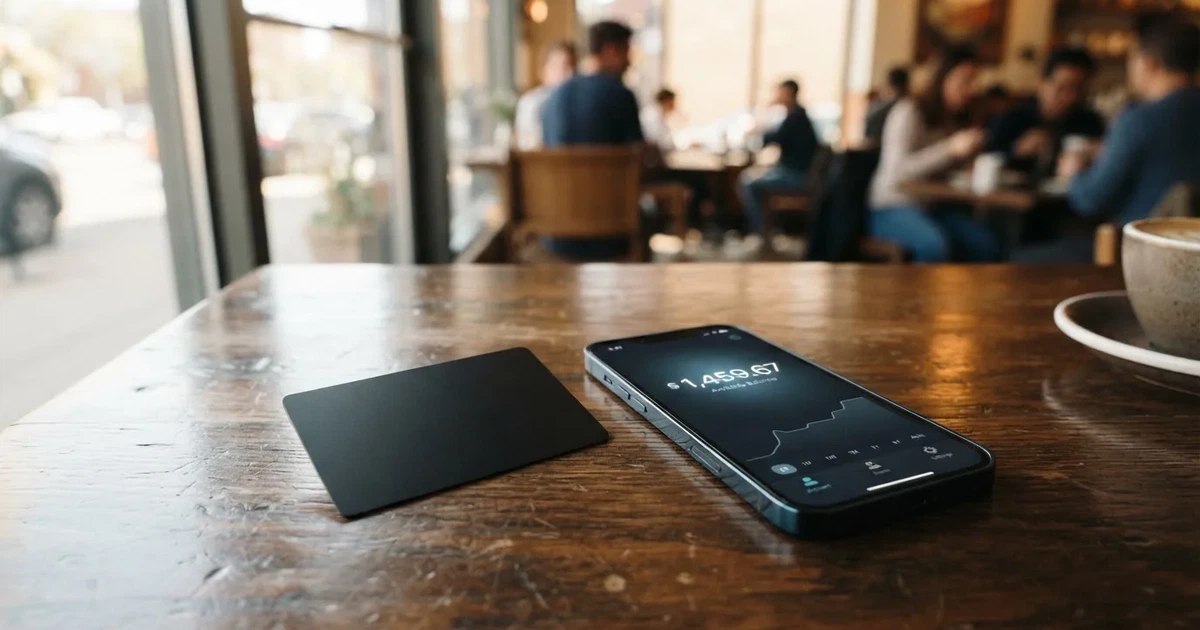
So this review is built around a fair question: if someone cannot answer the basic questions about fees and eligibility on its own website, what are they actually buying? My answer, below, is a score of 4.6 out of 10 — not because the product is a scam, but because almost nothing you would need to make a decision is disclosed, and because a card with no published card network, no limits and no fee schedule is a card you cannot budget with.
The conditions described here are current as of October 28, 2026.
Verdict: 4.6 / 10, and the biggest problem is silence
Let me lay out the score first, criterion by criterion, because the pattern matters more than the total. Where I could find an answer, I gave credit. Where the card’s own pages simply do not say something, I did not guess — and that silence is what drags the marks down.
| Criterion | Mark | Why |
|---|---|---|
| Who can get it | 5 / 10 | No country list is published; countries under comprehensive US and other sanctions are excluded; the privacy policy covers the US, EU/EEA, UK, Switzerland |
| Cost | 5 / 10 | Card fees are not disclosed; transfer fees depend on method and country and are shown before you confirm |
| Top-up options | 4 / 10 | Balances in “digital dollars”; fiat routes via ACH, SEPA, Pix and SPEI; coins and networks are not named |
| Reliability and complaints | 5 / 10 | StablePay International, LLC in Delaware; issuers unnamed; the app shipped on 2026-07-27 with 0 ratings and I found no complaints |
| Everyday use | 3 / 10 | The card form (virtual or physical), Apple Pay, Google Pay and ATM support are all unrevealed |
The audience the card appears to aim at is narrow and specific: freelancers and contractors who receive “digital dollars” from clients or employers and then want to spend that money by card rather than sitting on a stablecoin balance. If that is you, the concept fits. The problem is everything around the concept.
Who it does not suit, in my view: anyone who needs a fee figure before they commit, anyone who needs a named card network so they know whether their usual merchants will accept it, anyone who needs daily or monthly limits stated in advance, and anyone for whom “self-custodial” is a risk rather than a reassurance — because with no custodian, there is also no deposit guarantee and no one to file a complaint with when a transfer disappears.
I want to be careful about one thing before you go further. Nothing I found suggests Stablepay is illegitimate. What I found is a young product — the iOS app first appeared on 2026-07-27, the terms were revised on 8 Oct 2026, and the privacy policy took effect on 15 Oct 2026 — where the disclosure has not caught up with the ambition. A 4.6 is a statement about how much you can learn, not about whether the company is real. It is a Delaware LLC with a real address (2810 N. Church St #36879, Wilmington, Delaware 19802-4447), so yes, the company exists.
Will they give you the card?
Here is the honest answer: the card does not publish a country list, and its eligibility rules are negative rather than positive. You are told who cannot be served, not who can.
The terms say (Section 5.2.7) that users must not appear on OFAC’s SDN or Foreign Sanctions Evaders lists, and must not be located in, or owned by persons in, countries under comprehensive US or other applicable sanctions. That is the entire geographic rule. There is no “select your country” list of eligible places anywhere in the public material, which means the only firm exclusions are sanctioned jurisdictions — a much thinner test than a published whitelist.
The company is US-based, and the privacy policy is written for a specific set of audiences: US residents, EU/EEA, UK, Switzerland, and also Iceland, Liechtenstein, Norway and California residents. That tells you which legal regimes the company has prepared documents for. It does not tell you which of those places a card will actually be issued to.
The question readers search for most often — “is Stablepay card available in my country?” — is precisely the one the card leaves open. If your country matters to your decision, the only honest answer from public information is: ask, and get the answer in writing before you move money.
One more thing I could not find: whether eligibility runs on citizenship or on residence. The terms reference being “located in” a sanctioned country, which points to residence, but nationality is screened separately in this industry as a matter of course, and the card does not tell you which basis it uses. If you hold citizenship of a sanctioned country but live legally elsewhere, you are in exactly the grey zone the card does not describe.
For individuals the age floor is 18. There are no higher age tiers published.
How to get it
The signup path is short on the page and thin on detail. You register an account and provide KYC information as an individual, or KYB information if you are an entity, and Stablepay may verify what you submit. Access can be refused if the information is refused or inaccurate — that is Section 3.3 of the terms, and it is the one place the card is explicit that a bad application ends the process.
Identity verification is biometric and is performed by Sumsub Inc. Stablepay says it does not receive the biometric data itself, which is the standard arrangement for this kind of outsourcing and a point in the product’s favour on data minimisation.
What is not stated is the part that will decide whether you get through today or next week: which proof-of-address documents are accepted, how long verification takes, whether there are tiers of verification with different limits, and what happens to an application that stalls. The terms carry a single KYC or KYB requirement with no tiers, so there is no published route to a higher limit by verifying more.
On the card itself: the app description says “A Stablepay card” accepted at merchants worldwide, with the balance converting to local currency at checkout. Beyond that sentence, the public pages are silent. Whether it is virtual or physical is not stated. Whether it runs on Visa or Mastercard is not stated. Delivery time is not stated. The terms do tell you the structure — Spend Cards are issued and managed by third-party “Issuers”, and the terms list Spend Card Terms, Prepaid Card Terms and Card Authorized User Terms — so there are issuer-level documents somewhere, but they are not on the pages I read.
That silence on Visa or Mastercard is worth dwelling on, because it is not a cosmetic gap. The card network sets the acceptance rules, the chargeback reason codes, the 3-D Secure brand and the wallet rules. Not knowing which one you hold means you cannot check whether a merchant will accept it, and you cannot read the issuer terms that actually govern your money.
Fees: what it really costs
The short answer: nobody outside the company can tell you what a Stablepay card costs. Not the card fees, not the conversion, not the ATM, not the limits. Here is the full picture of what is published, which is a table of gaps.

| Item | What the card publishes |
|---|---|
| Issuance fee | not stated |
| Monthly fee | not stated |
| Conversion | balance converts to local currency automatically at checkout (App Store); no rate or fee published |
| Transfer fees | vary by method, destination and third-party involvement; disclosed before a transfer is finalised, on a commercially-reasonable-efforts basis (Section 2.1.8) |
| FX rate or markup | not stated |
| ATM withdrawal | not stated |
| Daily and monthly limits | not stated — the terms set no numeric transfer limits, and say Stablepay or its providers may refuse any transfer at any time (Section 2.1.5) |
| Account tiers | not stated |
Read that “refuse any transfer at any time” clause again later, because it is the one line in the terms that most changes the practical meaning of everything else. No published limits means no ceiling you can rely on; and the right to refuse sits with the company and its providers, with no criteria published.
Now, everyday payment examples, so you can see how much of this matters in practice. I want to be explicit that these are illustrations of *which* fee lines would apply, not calculations — the card publishes no numbers, so I will not invent any.
Paying 40 units of local currency for a meal abroad. What applies here is the conversion at checkout. The app says the balance converts to local currency automatically at checkout; that is the only published description. Whether that conversion is free, carries a spread, or carries a percentage fee is not stated. The network fee for getting the money onto the balance in the first place is also yours to pay: blockchain gas is charged by the network, not by the card provider, so a top-up from a self-custodied wallet costs you at the chain level before the card ever touches it.
Paying a subscription at a merchant that checks the card’s origin. No fee line is named in the card’s documents, but this is where acceptance rules bite rather than money. Merchants can look up the issuer identification number at the front of the card number and see which institution and country issued it, and may apply extra scrutiny if that issuer country differs from the billing address. A card with no publicly named issuer and no publicly named issuing country is harder for you to predict here.
Drawing cash from an ATM. This is the costliest shape of the three, and the one with the least information. ATM fees are not stated, and the card does not say whether ATM withdrawal is supported at all. If you plan to treat this as a travel card rather than an online-spending card, this is the single most important unknown on the page.
The everyday-use mark of 3 out of 10 comes from exactly this: I could not tell you what a payment costs, at a shop, in a foreign currency, or from a cash machine. A card whose fee schedule is disclosed “before a transfer is finalised” in the app is workable — you can check before you confirm — but it means the number exists only inside an app you must install and use.
Top up: how the money gets in
Topping up Stablepay means getting ordinary money, or digital dollars, onto the balance the card spends. The routes are named; the detail is not.
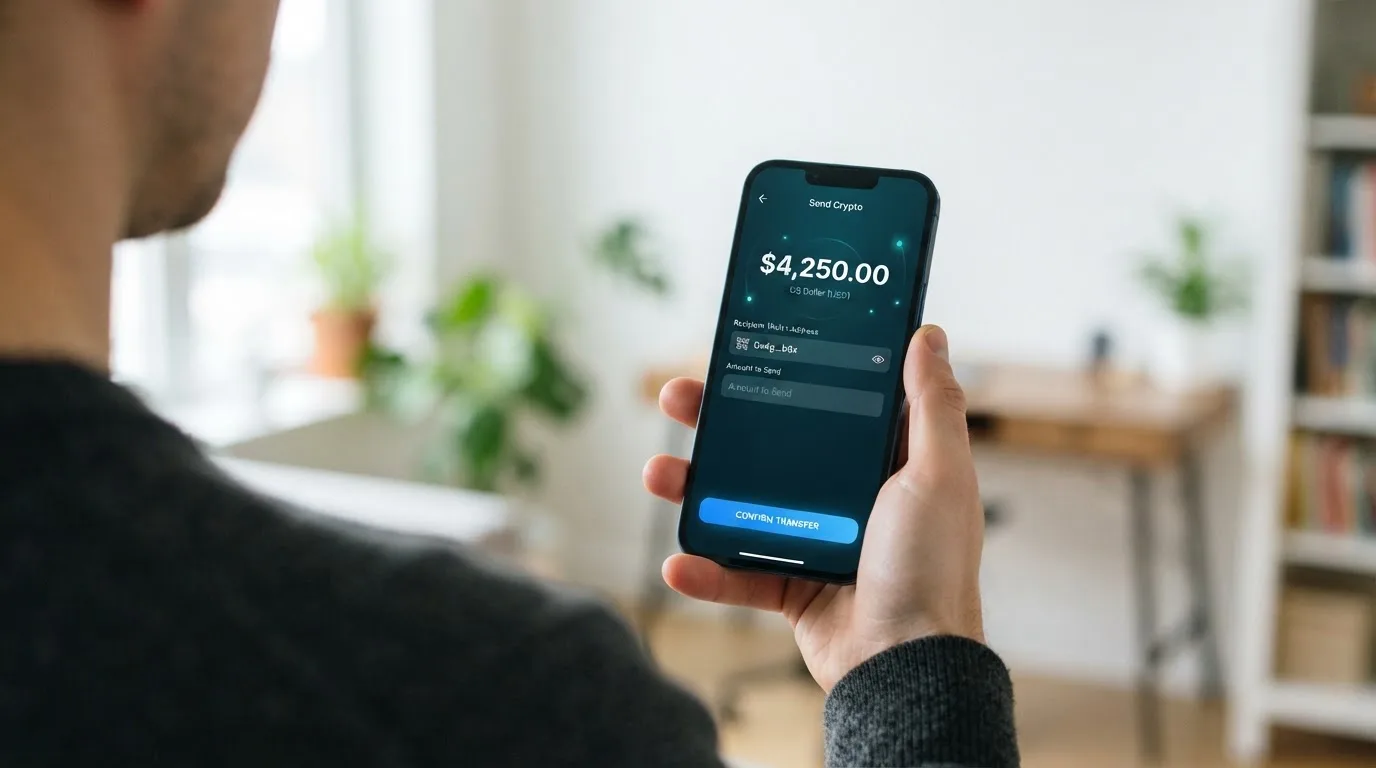
Balances are held in “digital dollars and supported currencies”. The app description says incoming payments can come from clients and employers, and that cross-border transfers run over ACH, SEPA, Pix and SPEI through licensed partners — with availability, timing and fees varying by country and eligibility.
That list is the most useful operational fact on the whole site, and it should tell you something about who this is for. ACH is the US rail. SEPA is the European one. Pix is Brazil’s instant system. SPEI is Mexico’s. So the intended user is someone being paid across those corridors — a freelancer invoicing a US client, a contractor working between Europe and elsewhere — rather than someone who just wants to convert coins they already hold.
And that is the gap. Coins and networks are not named. For a card whose entire premise is spending a digital balance, the card does not tell you which digital dollars, on which chains, or whether you can send crypto at all. Deposit fee and minimum are not stated. You would be choosing this card before knowing whether it accepts the asset you hold.
Outbound works in the same shape. Transfers to other people and cross-border payouts go over ACH, SEPA, Pix and SPEI, with fees that vary and are shown before a transfer is finalised. What happens to a remaining balance when an account closes is not stated — and this matters, because either party may terminate on 30 days’ written notice under Section 7. If you hold a balance and the relationship ends, the card does not publish how or when you get it back.
One practical warning that is not about fees at all: blockchain transfers are irreversible. A deposit sent on a network the provider does not support, or to an address belonging to another network, can be lost or need manual recovery with no guarantee. When the card does not name the networks it accepts, that risk is not something you can avoid — you are relying on the app to catch it.
Paying with it every day
Day-to-day use is where this card is thinnest, and the 3 out of 10 reflects that rather than any single broken feature.
The card itself. The app says it is accepted at merchants worldwide, with conversion to local currency at checkout. Virtual or physical: not stated. Network: not stated.
Wallets. Apple Pay, Google Pay and ATM support are not stated. The website links a Google Play listing, and the iOS app exists — “Stablepay: Send & Spend”, free, version 2026.10.20 (77) of 21 Oct 2026, requiring iOS 16.4 or later. But whether the card number can be tokenised into a phone wallet is precisely the kind of detail that determines whether the card is usable for daily transport and subscription payments, and the card does not answer it.
The app. New, English-language, no rating to speak of: as of 2026-10-22 the App Store listing showed 0 ratings. It does advertise real-time transaction tracking.
Rewards. Not stated. No cashback, no rebates, no tier benefits are published.
Disputes, if something goes wrong. This is the part I would read twice before funding it. Spend Cards are governed by separate Issuer Terms, so the instrument that actually controls your card money is a document I did not have. Under Stablepay’s own terms, disputes fall under New York law with the courts of New York, New York holding exclusive jurisdiction, and jury trial is waived. Aggregate liability is capped at $500 USD (Sections 9.1 and 10). The card chargeback process and its time frames are not stated.
So if a charge goes wrong, you are in a contractual chain you cannot see, under a waiver of jury trial, in a court you are probably not in, against a company whose aggregate liability it says is capped at $500. That is not a prediction that you will lose a dispute. It is a description of how thin your position is on paper.
What can go wrong
Grouping the risks by how likely they are to affect you, and starting with the one that is easiest to overlook.
The counterparty you cannot name. StablePay International, LLC is the company. But the card is issued by third-party “Issuers” whose names are not in the terms, and the card programme documents are linked from a separate domain (legal.raincards.xyz, via an e-signature notice). Stablepay says transfers go through “licensed partners”; no partner is named. When you ask “who has my money and who issued my card,” the public record answers the first question only partly. Licence claims without named licences are claims, not evidence.
Custody, and what it costs you. Stablepay states it is not a custodian, not a bank, not an FDIC-insured account, not a trustee, not a fiduciary and not an escrow agent, and that you are responsible for your wallet’s security (Sections 2.1.1–2.1.2). The app says it does not take custody of your balance. This is the part of the product I find most genuinely appealing — and also the part with the sharpest edge. In self-custody, control belongs to whoever holds the private key; a seed phrase, typically 12 to 24 words, is an unencrypted form of the private key, and anyone who obtains it can restore the wallet and spend the funds. Crypto transfers are typically irreversible and a stolen key has no built-in recovery, because the network cannot freeze or return funds. Custodial platforms have a real record of failure — Mt. Gox (about US$350 million reported stolen, 2011–2014), Coincheck (about US$400 million, 2018), and Ronin Network (US$625 million, 2022). Neither side of that trade is free. You are choosing between trusting a company and trusting yourself with a secret.
Two-factor authentication and card freeze. Not stated. These are the two controls most people would rely on after a lost phone, and their absence from the documentation is more telling than any single fee.
Nothing has gone wrong yet. No official incident notices found. A search on 2026-10-22 returned no Stablepay-specific coverage or reviews — the results were about unrelated companies such as Stables and Cashi. No Trustpilot page was found, and the App Store showed 0 ratings on that date. For a product three months old with no ratings and no complaints, “no complaints” is close to meaningless. Absence of evidence, at this age, is the expected state.
Where complaints go. [email protected] is named in the privacy policy for questions regarding third parties used to facilitate the services, and legal notices go to [email protected].
Acceptance friction you cannot predict. Some merchants decline prepaid or foreign-issued cards because the BIN lookup reveals the card type and the issuing country. Address Verification Service, which compares the numeric parts of a billing address against issuer records, is mainly offered in the US, Canada and the UK and is generally unavailable for foreign-issued cards, which can cause declines. A declined authorisation can also leave a hold on your funds that stays for days, typically up to seven. A card that does not publish its issuing country cannot help you anticipate any of this.
Sanctions screening cuts both ways. Tether says it disables tokens in wallets on the OFAC sanctions list and has frozen funds tied to illicit activity — stablecoins are not censorship-proof. If the card’s routes touch such rails, freezes are a possibility the terms do not discuss.
What to take instead
If you want a card for spending a crypto balance, the alternative set below is more transparent on the point that matters most: what it charges. These are not endorsements, and each has its own gaps — but you can price all three.
| Card | Score | Country position | Card | What it charges |
|---|---|---|---|---|
| BloFin Wallet Card | 6.9 / 10 | No list published on the card page; starting data lists 35 countries including US, Australia, Japan, UAE, Brazil, Mexico, Malaysia, New Zealand | Visa Platinum; virtual/physical not stated | Activation, annual, issuance and dormancy $0.00 each; spend fee “1% or lower” by VIP tier (VIP 0 1.00% down to VIP 5 0.00%); FX fee not stated |
| Decaf | 6.2 / 10 | Restricted countries published: Belarus, China, North Korea, India, Iran, Iraq, Israel, Myanmar, Nepal, Russia, Syria, Turkey, Cuba, Ukraine, Venezuela, Vietnam, Nicaragua, Puerto Rico, Nigeria; restricted US states: Arizona, Delaware, Georgia, Idaho, Louisiana, Maryland, Montana, Ohio, Oregon, Rhode Island, Washington, Wisconsin | Visa, virtual or physical (physical with tracked delivery) | Virtual card $5 worldwide; physical $10 US only, $90 rest of world; no annual or monthly fee; no FX fee added — “the FX is the one Visa offers” |
| SafePal | 6.2 / 10 | “Citizens of supported regions who live in supported areas”; the regions list was empty when fetched | Virtual Mastercard debit; physical not stated; limits in EUR | No account creation or management fees; issuance fee not stated; standard top-up 0%; Mastercard non-USD settlement 1% FX; refund processing 1 USD/EUR/CHF/7 CNH; swaps include an unquantified spread; elsewhere “as low as 0.4%” crypto top-up on top tier |
Two contrasts stand out. First, two of these three publish a restricted-jurisdiction list — Decaf even lists individual US states — which is the disclosure Stablepay does not make at all. Second, all three publish at least some fees, and two publish the FX position outright, where Stablepay publishes neither a fee nor a rate.
Their funding stories also differ from Stablepay’s. BloFin tops up with USDT and USDC on Arbitrum and Base. Decaf is paid by clients through a payment link or account details by card, bank transfer or USDC, with a sample balance shown in USDC, running on Solana and Stellar — though which coins and networks top up the card itself is not stated. SafePal takes crypto from 40+ blockchains, converts to USDC (default) or fiat, with transactions on Arbitrum. On rewards, BloFin has no cashback and instead cuts the spend rate by VIP tier; SafePal has no cashback but offers referral commissions of up to 40% of referred top-up fees plus tier privileges tied to deposits, referrals and SFP staking.
The honest caveat: BloFin’s virtual/physical status and FX fee are not stated either, and SafePal’s regions list came back empty. So the comparison is not “these are proven, Stablepay is not.” It is “these answer the money questions, and one of them does not.”
Who I would recommend it to
I would recommend Stablepay to a very specific person: someone whose income genuinely arrives as “digital dollars” from clients or employers, whose payment corridors are ACH, SEPA, Pix or SPEI, who is comfortable holding their own keys, and who treats the card as an online-spending tool rather than a travel or cash card. For that person, the concept is sound, the custody position is the right one, and the four fiat rails are a real advantage over cards that only speak crypto.
I would not recommend it as a first crypto card, and I would not recommend it to anyone who needs to know the fee before they spend. The gap is not that the product is bad — it is that it is undocumented at exactly the points where documentation is the product. A card with no published network, no published limits, no published fees, no stated delivery time, no stated ATM support and unnamed issuers cannot be budgeted, cannot be compared, and cannot be relied on for anything you would be upset to lose.
Before you fund it, I would do this: ask, in writing, what the card network is and who the issuer is; ask for the current fee schedule; ask what the daily and monthly limits are; and check the provider against ESMA’s interim register of authorised crypto-asset service providers and any equivalent register where you live. The first three are things you should be able to get in one reply. If you cannot, that is your answer.
And one thing that applies to any card you fund from crypto, independent of which one you pick: in the US the IRS treats digital assets as property, so exchanging them for goods, services or dollars generally produces a taxable gain or loss, measured in your local currency at the value on the date of the transaction — which can make each card payment a separate taxable event. I am not advising you on tax; I am flagging that the accounting exists. Before you take tax or legal advice, note the general pattern in your region: a card itself is a payment service regulated separately from the crypto side, so this kind of product often depends on two licences, and MiCA in the EU allows e-money tokens to be issued only by a credit institution or an electronic money institution (Article 48), with the transitional period for existing providers running until 1 July 2026 or until they are authorised or refused.
Frequently asked questions
What is the Stablepay card?
It is a payment card that spends from a balance you hold in “digital dollars and supported currencies”. The app says the balance converts to local currency automatically at checkout, and that the card is accepted at merchants worldwide. Spend Cards are issued and managed by third-party issuers rather than by Stablepay itself, and the terms point to separate Spend Card Terms, Prepaid Card Terms and Card Authorized User Terms. Whether it is virtual or physical, and which network it runs on, is not stated publicly.
How does the Stablepay card work?
You hold a balance, and when you pay, the balance converts to local currency at the point of sale. On the crypto side, Stablepay describes the wallet as self-custodial: it says it is not a custodian, bank, FDIC-insured account, trustee, fiduciary or escrow agent, and that you are responsible for your wallet’s security. On the fiat side, money moves over ACH, SEPA, Pix and SPEI through licensed partners. That combination is what makes it usable for someone paid across borders.
Is Stablepay a bank?
No, and it says so itself. The terms state that Stablepay is not a bank, not an FDIC-insured account, not a custodian, not a trustee, not a fiduciary and not an escrow agent. The company behind it is StablePay International, LLC, at 2810 N. Church St #36879, Wilmington, Delaware 19802-4447, and it describes transfers as running through licensed partners — though no partner is named. Electronic money accounts are also not the same as bank deposits, so do not assume deposit-guarantee cover.
Who owns Stablepay?
The terms name a single entity, StablePay International, LLC, registered in Delaware, and disputes under those terms fall under New York law. Beyond that, ownership is not detailed publicly. The card issuers are described only as third-party “Issuers” and are not named, and card programme documents sit on a separate domain, legal.raincards.xyz, reached through an e-signature notice.
Is the Stablepay card available in my country?
The card publishes no country list at all, which is the honest answer to this question. What the terms do exclude is anyone on OFAC’s SDN or Foreign Sanctions Evaders lists, and anyone located in or owned by persons in countries under comprehensive US or other applicable sanctions (Section 5.2.7). The privacy policy covers the US, EU/EEA, UK, Switzerland, Iceland, Liechtenstein, Norway and California residents, but that is about legal coverage, not card issuance. Ask before you rely on it.
How much does the Stablepay card cost?
Nobody can tell you from the public pages. Issuance fee, monthly fee, conversion rate, FX markup and ATM fees are all not stated. Transfer fees do vary by method, destination and any third-party involvement, and are disclosed before a transfer is finalised on a commercially-reasonable-efforts basis (Section 2.1.8) — so the number exists, but only inside the app at the moment you confirm. There are no account tiers described, and no daily or monthly limits published.
How do I top up the Stablepay card?
Balances are held in digital dollars and supported currencies, and you receive payments from clients, employers and others. Cross-border transfers come over ACH, SEPA, Pix and SPEI through licensed partners, with availability, timing and fees varying by country and eligibility. Coins and networks are not named, and neither is the deposit fee or minimum. That last point matters most: blockchain transfers are irreversible, so a deposit on the wrong network can be lost.
Does the Stablepay card require KYC?
Yes. You register an account and provide KYC information for individuals, or KYB for entities, and Stablepay may verify it; access can be denied if information is refused or inaccurate (Section 3.3). Biometric identity verification is performed by Sumsub Inc., and Stablepay says it does not receive the biometric data. You must be at least 18. There is one stated requirement, with no tiers, so there is no published upgrade path to higher limits.
Is the Stablepay card safe?
It depends which risk you mean, and both sides are real. On custody, the position is the one I prefer: non-custodial, your keys, your responsibility — with the usual consequence that a lost seed phrase, typically 12 to 24 words, means gone funds and no recovery, because transfers are irreversible. On company risk, the card is young — the app first released on 2026-07-27, terms revised 8 Oct 2026, privacy policy effective 15 Oct 2026 — and I found no complaints and no coverage. Two-factor authentication and card freeze are not stated.
Is the Stablepay card worth it?
For freelancers receiving digital dollars across ACH, SEPA, Pix or SPEI who are comfortable holding their own keys, the concept is worth it. For anyone else, the missing disclosure decides it. Liability under the terms is capped at $500 USD, disputes go to New York courts with jury trial waived, chargeback process and time frames are not stated, issuer documents are separate, two-factor authentication is not stated, and the app had 0 ratings when I checked on 2026-10-22. Get the network, the fees and the limits in writing first.
How wallet cards work – cryptocardsexplained.com
Content created by the «cryptocardsexplained.com» team