
Lava card review: a secured Visa you fund with crypto, and where it leaves you exposed
 Available in US
The Lava card is a Visa that spends from a US dollar balance which is, in turn, backed by crypto collateral you hold in a connected wallet. It is built for people who live outside the United States, who already hold bitcoin or stablecoins, and who want a familiar piece of plastic that pays them a small slice of bitcoin back. Whether it is a good fit depends less on the card itself and more on whether you understand how the collateral model works, what the fees really look like at the till, and how thin the safety net is if something goes wrong.
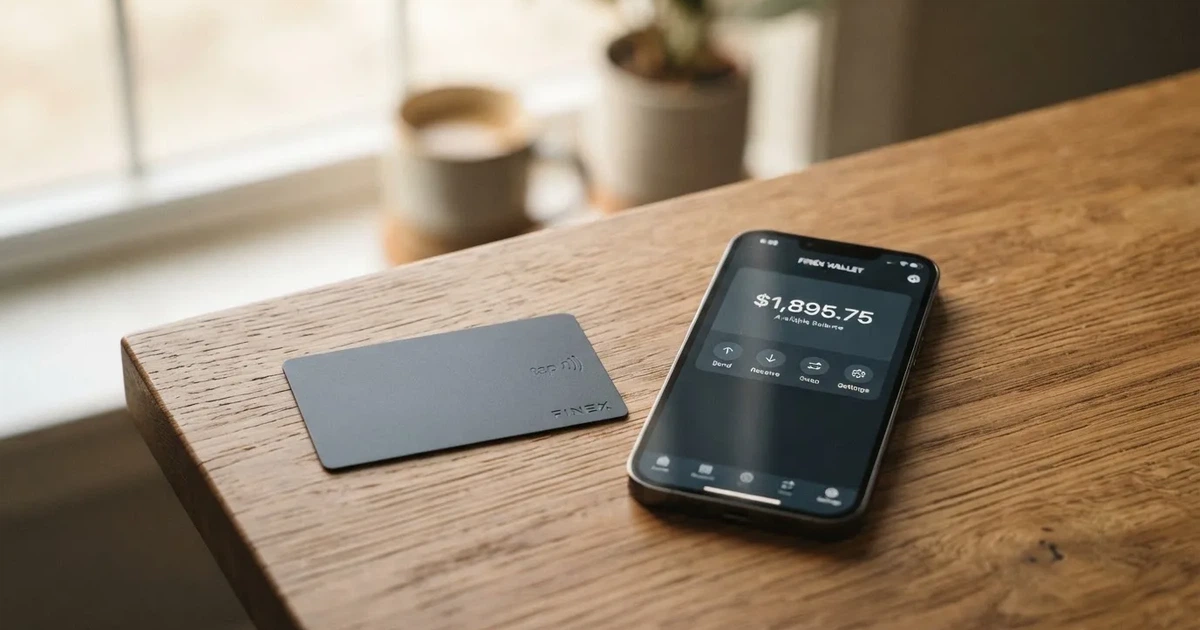
Conditions are current as of October 28, 2026.
Verdict
Lava earns 7.1 out of 10 in this review. That score reflects a product that gets the basics right: no annual fee, no foreign-exchange fee, no spread on top of the market rate, and a real Visa you can use at the till in 150 or more countries. The card is strongest for non-US holders who want bitcoin back on everyday spending and are comfortable topping up a USD balance with stablecoins or a bank transfer. It is weaker for people who expect a full bank account behind their card, an Apple Pay or Google Pay integration out of the box, a clear fee schedule on day one, or a public list of supported countries to check before they sign up.

| Criterion | Mark | Why it matters |
|---|---|---|
| Who can get it | 7/10 | Spends at 150+ country merchants; aimed at people outside the US; no published country list |
| Cost | 8/10 | No annual fee, no FX fee and no spread on FX; ATM 2% with a $1 minimum; issuance fee not stated |
| Top-up options | 7/10 | Stablecoins or local-currency top-up; collateral wallet on Ethereum, Polygon, Optimism or Arbitrum; supported coins not named |
| Reliability and complaints | 7/10 | Issued by Third National under a Visa licence; no public complaints found; Lava is not a bank and can liquidate collateral on a “Liquidation Event” |
| Everyday use | 6/10 | Visa acceptance, virtual and physical mentioned, ATM 2%; Apple Pay and Google Pay not stated |
| Total | 7.1/10 |
The short version: a tidy, low-fee secured Visa that pays bitcoin back, but one whose terms leave more questions than answers, and whose collateral model is the single biggest thing you need to understand before you load it.
Who Lava will issue the card to
The card’s international terms set the basic rule clearly: you have to confirm in writing that you are not a United States citizen and that you are not on a US sanctions list, and the card is meant for personal, family or household use, not business spending. A separate terms document covers US applicants, which confirms that Lava runs two programmes, one for each side of the border.
Beyond that, the card’s own pages do not publish a country list, and they do not say which nationalities or residences are accepted or refused. The same applies to age, residency length, minimum income or any other gatekeeping detail. In practice this means you only find out whether you qualify by starting an application, and there is no upfront “is my country supported?” table to check first.
If you live outside the US and hold crypto, this is a card built with you in mind. If you are a US citizen or resident, the card is not the right product for you, and you should look at the US version of Lava’s terms or at a US-based alternative instead. If you are a citizen of a sanctioned country or a person on a US sanctions list, the door is firmly closed.
How to get the Lava card
The signup flow is a black box from the outside. The card’s terms require true and complete information and exclude sanctioned persons, but they do not list the KYC documents they ask for, the verification tiers, or the time it takes to get approved. There is no statement about whether a national ID, a passport, a proof of address or a selfie video is needed, and no promise about how long approval takes.
What the terms do say is that you receive a “Lava Card” once you are through, and that you can use it at 150 million merchants across more than 150 countries. The card sits on the Visa network, and the international terms call it a Visa credit card. Both virtual and physical cards are mentioned, with replacements issued through your Lava account if the physical one is lost, but the country list, the delivery time, the shipping cost, and the replacement fee are not stated. Neither is the issuance fee itself: a card with no annual fee is not necessarily a free card to order, and Lava is silent on the front end.
In short, expect the same dance you get from most crypto cards: create an account, hand over the identity documents the flow asks for, wait for approval, get a virtual card immediately and a physical one in the post if you paid for shipping. The detail you care about, which is whether the card will actually arrive in your country, only becomes visible after you have signed up.
What the Lava card really costs
This is the part of the review where the numbers are most pleasant, and the part where the missing numbers hurt most. The card’s pricing page is built around a set of “no” claims: no annual fees, no foreign-exchange fees, and no FX spread. Bitcoin buy and sell orders on the platform have no exchange fees and no spread either. The Visa benefits that come free with the card include purchase protection up to $20,000, extended warranty up to $25,000, global auto rental insurance, travel accident insurance, and lost luggage insurance.
| Fee or limit | Value |
|---|---|
| Issuance fee | not stated |
| Monthly or annual fee | none |
| Crypto conversion fee | none disclosed |
| FX fee on non-USD spend | 0% |
| Cross-border fee | 0% |
| FX spread | none (“zero spread”) |
| ATM withdrawal fee | 2% with a $1 minimum (international terms); a Lava US page also says ATM is fee-free in all 50 US states |
| Daily ATM cash limit | not stated |
| Free ATM allowance | not stated |
| Spending limit | not a fixed number; tied to the USD value of your collateral or available balance; can be reduced to $0 at any time |
| Minimum spend | none |
What that table hides is the difference between paying in USD, paying in another currency, and paying with a card that has to be funded before it works. Here are three everyday situations and what each one costs you.
Buying coffee in London with pounds. You tap a £4.50 flat white. The card converts pounds to USD at the spot rate with no FX fee, no cross-border fee and no spread layered on top. The only thing the £4.50 has to cover is the network cost of authorisation, which is borne by the merchant, not by you.
Withdrawing cash from an ATM in Mexico City. You pull out cash. The international terms charge a 2% fee with a $1 minimum, so you pay 2% of the amount withdrawn, subject to the $1 minimum. There is no free monthly allowance and no stated cash ceiling, so every withdrawal eats a small slice.
Buying a $200 item online from a US store. The transaction is in USD, so the FX column does not apply. You earn bitcoin back at the rate that applies to the merchant (more on that in the everyday-use section), and your collateral-backed USD balance drops by $200. The 60-day dispute window starts the day the charge posts.
The big “not stated” in the costs story is the issuance fee. A card with no annual fee and no FX fees sounds almost too tidy, and a one-off charge for the physical card or the shipping is a fair guess, but the card’s pages do not put a number on it.
Top up the Lava card
The card is funded either by transferring stablecoins or by sending local-currency money from a bank. Lava’s “Global Money Movement” page groups these together as deposits in local currency or stablecoins, and the international terms describe a collateral wallet on a Supported Blockchain, which they list as Ethereum, Polygon, Optimism or Arbitrum. The actual coins and tokens the card accepts are not named on the public pages.
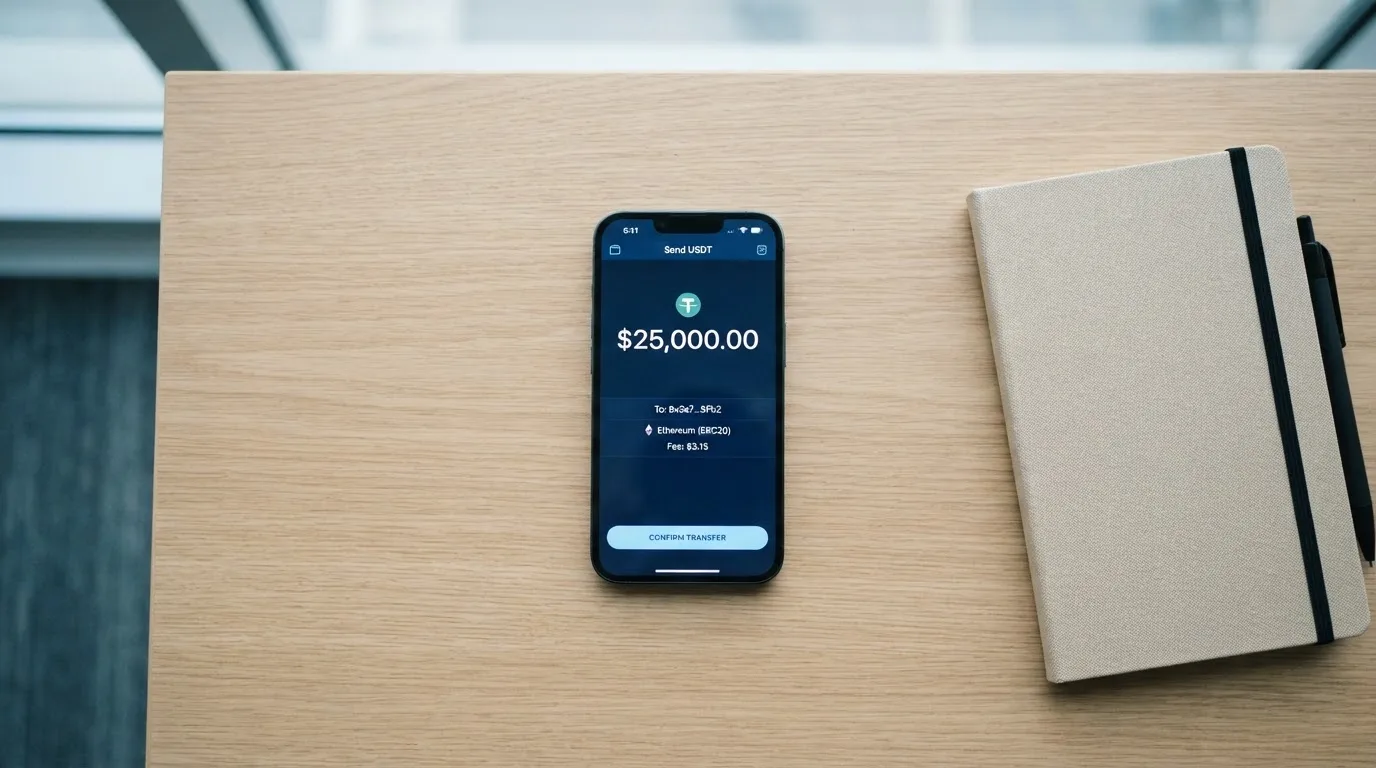
In practice, top-up has four routes:
- A stablecoin transfer on one of the supported networks, advertised as instant and available around the clock, with no hidden fees. You send USDT or USDC from a wallet you control to the address Lava shows you in the app, and the equivalent USD lands in the card’s spendable balance.
- A bank transfer from a local bank account, which moves local fiat into the USD balance the card spends from.
- Direct deposit, which is the US-style arrangement where a salary or a regular payment lands straight on the card.
- Borrowing USD against your bitcoin through BLOC, a separate product on its own terms with fixed rates from 6.50% to 8.50%. This is not a top-up in the usual sense; it is a loan that uses your bitcoin as collateral.
Two things to keep in mind. First, the deposit fee and the minimum top-up amount are not stated, so you only see the cost once the app shows you the quote. Second, on-chain network fees (gas on Ethereum, for example) are paid by you, not by Lava, and they are charged by the blockchain, not the card provider. If you choose the wrong network, or send a token the card does not support, the transfer can be lost or need manual recovery with no guarantee of success.
You cannot pull cash advances or run balance transfers with the card, and the issuer may suspend or close the account at any time. Closing the account does not cancel any repayment you still owe, and there is no penalty for paying the balance off early. If you do not pay on time, or your collateral falls below what you owe, Lava can trigger a “Liquidation Event” and sell your collateral to cover the balance. How to withdraw the USD balance back to your own bank or wallet is not stated.
Paying with the Lava card every day
Once the card is loaded, using it is the easy part. The card is a Visa, so it works anywhere Visa is taken, including online checkouts, in-store taps, and the 150 million merchants Lava cites. The international terms call out that the card is a Visa credit card, and that the spend is drawn from a USD balance, so the card cannot overdraw. There is no published merchant block list, no published list of supported wallet apps, and no statement about Apple Pay or Google Pay support. For a card aimed at phone-first users, the silence on mobile wallets is the most surprising omission.
Rewards are where everyday use gets interesting, and where the marketing gets ahead of the fine print. The headline number is “up to 5% back in bitcoin on every purchase”, and the breakdown Lava uses in its comparison article is 5% at partner merchants, 3% on other purchases for US cardholders, and 1% on other purchases for non-US cardholders. The 5% rate only applies at a small list of partner merchants, which includes Starlink and Discord in coverage seen so far. Rewards are issued once a transaction settles, and you can only redeem once you have at least 100,000 satoshis in your account. Some merchants and categories are not eligible, and the rewards program is described as promotional and subject to change.
The Lava app is where you manage the card day to day. The card’s pages link to the app on mobile and web, and the public App Store listing for “Lava: Secure Bitcoin Loans” shows 4.8 out of 5 from 132 reviews, last updated in mid-February 2026, which is a useful third-party signal even though it is not a card-specific rating. Inside the app you can set a daily spending limit, freeze the card, and review transactions. The card uses 3-D Secure for online payments, and disputes can be raised within 60 days of the charge posting. Lava’s own support says to try the merchant first, and that any chargeback resolved in your favour is credited back to a current or future statement.
Two things to watch at the till. First, the card spends from a USD balance, so any non-USD transaction is a conversion; that conversion is fee-free on Lava’s side, but the merchant’s terminal may still add a Dynamic Currency Conversion markup if it offers to charge you in your home currency instead of the local one. Always choose to be charged in the local currency. Second, a hold can stay on your balance for up to seven days after a declined authorisation, so a few failed taps can briefly reduce what you have available to spend.
What can go wrong with the Lava card
The first risk is the one Lava writes into the terms itself: a Liquidation Event. If a payment is not made within one calendar day of being due, or if the value of your collateral falls below the charges you owe, Lava can liquidate your collateral to cover the balance. The collateral sits on a public blockchain, which is also where the liquidation would happen, and the timing of that sale is not in your hands. A sharp move in bitcoin or in the stablecoin you posted could trigger this faster than you expect.
The second risk is the gap between the brand and the issuer. Lava markets the card, but the card is issued by Third National under a Visa licence, and Lava says it is not a bank. Third National’s address is listed as 2100 Southbridge Pkwy STE 650, Birmingham, AL 35209, and the international agreement is governed by Puerto Rico law with arbitration in New York. If something goes wrong, your recourse is through the issuer’s cardholder agreement channels, not through a familiar bank branch. There is no published information about insurance on your USD balance while it sits with the issuer, so treat that balance like any other prepaid card balance: it is only as safe as the institution that holds it.
The third risk is the security model. Lava says it does not rehypothecate customer funds, that it does not “trade, lend out, or otherwise use your funds”, that its infrastructure “minimises trust and eliminates single points of failure”, and that the collateral sits in a wallet on a Supported Blockchain (Ethereum, Polygon, Optimism or Arbitrum). The account itself uses passkeys and in-app controls, and you can set a daily spending limit yourself. That is a sensible set of claims, but the proof of any of them is in the audit, and Lava has not published one on the card pages.
The fourth risk is the support layer, which is both a strength and a weakness. Lava advertises 24/7 US-based client services reachable by email at [email protected] or by phone at (347) 588-9745, with a promise that you are “directly connected to a real human”, plus 24/7 Visa customer service for card-specific issues. The weakness is that none of this is a substitute for a public incident record. A search for official complaints, Reddit threads, Trustpilot pages and card-specific complaints found none, which is reassuring only up to a point: a small user base can also mean a small public footprint.
The fifth risk is the sanctions and citizenship rule. You have to confirm that you are not a US citizen and not on a US sanctions list to use the international card. Misrepresenting your status is a breach of the terms, and the issuer can suspend or close the account at any time, including for sanctions reasons, which can also trigger a Liquidation Event.
What to use instead of the Lava card
Lava is not the only crypto-backed Visa in the market, and the three alternatives below illustrate how different the trade-offs can be. None of them is a perfect substitute; each one suits a different kind of reader.
| Card | Score | Country reach | Funding model | Key trade-off |
|---|---|---|---|---|
| Gemini Credit Card | 4.9/10 | Not stated on the card page | Credit card paid off in fiat, with crypto rewards | No crypto funding; rewards only |
| Trastra | 4.1/10 | 31 listed countries including Germany, France, UK; “will be available for all residents of the EEA”; non-European residents: “Not at the moment” | Prepaid debit card topped up with crypto from a Mover wallet | Limited to Europe; fees and FX not stated |
| Based Visa Card | 6.9/10 | Worldwide except a published list of about 74 countries (effective 1 August 2026), including the Russian Federation, Belarus, the United States, Canada, Australia, China, India, Singapore, Ukraine, Iran, Turkey and others | Prepaid debit card funded with USDT, USDC, XSGD, SOL, HYPE or BASED on Solana, Arbitrum, Polygon or Hyperliquid | Country list is public; FX markup on non-USD spend (0% on the Gold tier, 1.5% on HYPE, 2.5% on Orange) |
The Gemini Credit Card is a Mastercard World Elite that pays rewards in bitcoin or in 50-plus other cryptos, with category bonuses of 4% on gas, EV charging and transit (on the first $300 per month), 3% on dining, 2% on groceries, and 1% on everything else, paid instantly into your Gemini account. The catch is that the card is a credit card, not a crypto-funded card, so you cannot use it to spend bitcoin you already hold. The Trastra card is a prepaid Visa debit card you top up with crypto from a Mover wallet; it works in a published list of 31 European countries and is on its way to full EEA coverage, but it is not open to non-European residents and the fees are not stated. The Based Visa Card is the closest cousin to Lava: a prepaid Visa debit card you fund with stablecoins or selected tokens on Solana, Arbitrum, Polygon or Hyperliquid, with a published country list that is one of the most transparent in the category, and a tiered FX markup that goes from 2.5% on the entry tier to 0% on the metal Gold tier.
If you need a card that takes non-USD deposits with no FX fee and pays bitcoin back, Lava is the most direct fit. If you are in the EEA and want a euro-denominated prepaid card you can top up with crypto, Trastra is the natural alternative. If you want a published country list, multi-network stablecoin support, and tiered rewards paid in a project token, Based is the more transparent option.
Who I would recommend the Lava card to
The Lava card is a good fit for a non-US adult who already holds bitcoin or stablecoins, who wants a Visa they can use in 150 or more countries, and who is willing to manage a collateral-backed USD balance in an app. It is also a good fit for someone who is allergic to FX fees and to the spread that most prepaid cards hide inside the conversion rate, because Lava is unusually clean on both counts.
It is a poor fit for a US citizen or resident, who should look at Lava’s separate US programme or at a US-based card instead. It is a poor fit for someone who needs Apple Pay or Google Pay on day one, because neither is confirmed on the card’s public pages. It is a poor fit for someone who needs a published list of supported countries before they start, because there is no such list. It is a poor fit for someone who cannot tolerate a Liquidation Event on a sharp move in bitcoin, because that is the core of the collateral model. And it is a poor fit for someone who wants a bank account behind their card, because Lava says it is not a bank and the issuer is a small Alabama institution you will not have heard of.
If you are in the target group, the practical path is straightforward: read the international terms end to end, fund the collateral wallet with a stablecoin rather than with bitcoin if you do not want price risk on your spendable balance, set a daily spending limit in the app from day one, and keep enough of a buffer in the collateral account to absorb a drawdown without triggering a Liquidation Event. The card is small, the fees are friendly, and the rewards are real. The only thing you should not do is treat it like a bank account, because it is not one.
Frequently asked questions
What is the Lava card?
The Lava card is a Visa issued by Third National under a Visa licence, and it is sold by Lava as a secured card that spends from a US dollar balance backed by crypto collateral you hold in a connected wallet. It is meant for personal, family or household use outside the United States.
How does the Lava card work?
You post crypto as collateral in a wallet on Ethereum, Polygon, Optimism or Arbitrum, the equivalent USD lands in the card’s spendable balance, and the card draws on that balance at the till. Lava does not lend, so the card cannot overdraw.
Is Lava a bank?
No. Lava says it is not a bank. The card is issued by Third National under a Visa licence, and the international agreement is governed by Puerto Rico law with arbitration in New York.
Who owns Lava?
The card’s pages do not name a legal entity for the Lava brand. The issuer is Third National, with an address of 2100 Southbridge Pkwy STE 650, Birmingham, AL 35209.
Is the Lava card available in my country?
The card’s pages do not publish a country list. The international terms require you to confirm that you are not a US citizen and not on a US sanctions list, and the card is aimed at people outside the US. The only way to know for sure is to start an application.
How do I get the Lava card?
You create an account in the Lava app, complete the KYC checks the flow asks for, and wait for approval. The card’s pages do not list the documents required, the verification tiers, or the approval time.
Does the Lava card require KYC?
The terms require true and complete information and exclude sanctioned persons, but the documents, tiers and processing time are not stated. Treat the KYC flow as a black box until the app shows it to you.
How do I top up the Lava card?
You can top up with a stablecoin transfer on Ethereum, Polygon, Optimism or Arbitrum, with a bank transfer from a local bank account, with a direct deposit, or by borrowing USD against bitcoin via BLOC at fixed rates of 6.50% to 8.50%. The deposit fee and the minimum top-up are not stated.
Is the Lava card free?
There is no annual fee, no FX fee, no cross-border fee and no spread on FX. ATM withdrawals cost 2% with a $1 minimum under the international terms, and the issuance fee is not stated, so a one-off charge for the physical card or shipping is a fair possibility.
Is the Lava card safe?
Lava says it does not rehypothecate customer funds, that the collateral sits on a Supported Blockchain, and that the account uses passkeys and in-app controls. There is no published insurance on the USD balance, and the card can liquidate collateral on a Liquidation Event, so the safety of the balance depends on the issuer and on the value of your collateral.
How credit and cashback cards work – cryptocardsexplained.com
Content created by the «cryptocardsexplained.com» team