
A prepaid Visa you fill from a crypto balance, priced like a premium metal card
 Available in US
BananaCrystal is not a bank and not an exchange in the ordinary sense: it is a card programme manager selling a prepaid Visa that you fill from a crypto balance, in tiers that run from a ten-dollar virtual card to a gold metal card priced at $1,120. That framing explains almost everything about it — why the fees are what they are, why the annual charge exists, and why the interesting parts of the terms are the ones the public pages leave unsaid. My score for it is 6.2 out of 10, and the reason that number sits in the middle rather than at either end is that the card does its stated job well while charging heavily for the privilege.
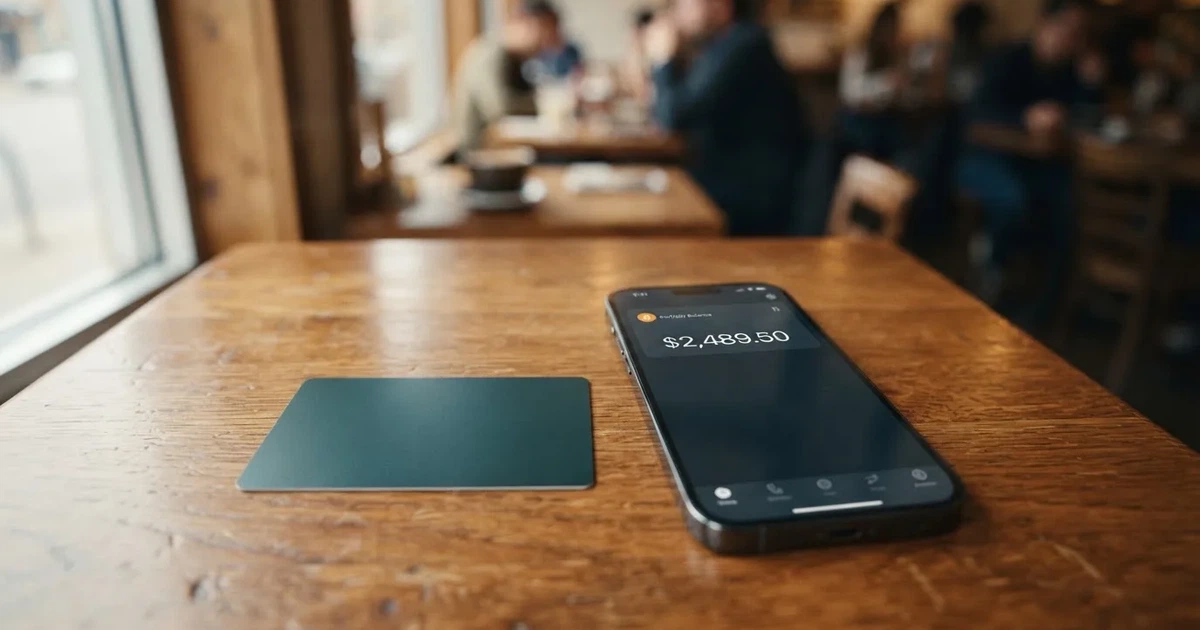
The conditions described here are current as of October 28, 2026.
I read this card the way I would read any prepaid financial product offered by a company I had never heard of, and I want to be upfront about the two things that shape everything below. First, the BananaCrystal public pages are unusually incomplete: several FAQ entries exist by title with no readable text underneath, and the pages that would list restricted countries did not load when I checked. Where that is the case I say so rather than filling the gap with a guess. Second, the cost structure is front-loaded and unusual, so the sticker price tells you much less than the fee table does.
Verdict: 6.2 out of 10, and who that suits
BananaCrystal works best for someone who already holds USDT, spends most of their money in USD, and treats the card as a convenient bridge rather than as a primary bank account. For that person, a wide acceptance footprint, an ATM you can actually use abroad, and Apple Pay and Google Pay on the virtual card are real advantages. It is a poor fit for someone who wants cheap everyday spending, who needs a clear answer on non-USD exchange costs, or who is uneasy about money sitting with a provider rather than with themselves.
The score breaks down as follows, with the marks exactly as I assessed them.
| Criterion | Mark | Why |
|---|---|---|
| Who can get it | 9 / 10 | Stated as available in “over 200 countries worldwide”; the pages listing unavailable countries did not load |
| Cost | 1 / 10 | Virtual issuance $10, plastic $400, Metal Black $620; annual fee $100; loading 3.125% on plastic, POS and online 0.75%, ATM 0.75% |
| Top-up options | 6 / 10 | From any USDT wallet, USDT and USDC listed, “Settled on Hedera”; deposit networks not disclosed |
| Reliability and complaints | 7 / 10 | Banana Crystal Inc, founded 2020, MSB in Canada (FINTRAC) and US (FinCEN); foreign banking partner not named; no complaints found |
| Everyday use | 9 / 10 | Plastic, metal and virtual Visa, Apple Pay and Google Pay on the virtual card, ATMs worldwide |
| Total | 6.2 / 10 | A card that functions well and charges heavily for it |
The two 9s and the 1 tell the story. This is an accessibility and acceptance story with a cost problem bolted on, and the cost problem is the reason I would not put this at the top of anyone’s list without them knowing exactly what they are buying.
Will they give you the card?
Yes — on paper, this is one of the more widely available card programmes I have looked at, with eligibility stated as “over 200 countries worldwide”. That is the headline claim, and it is worth taking at face value only up to a point, because the two pages that would tell you where it does not work did not load for me. The FAQ has entries titled “Countries where our virtual card is unavailable” and “Which countries are restricted for KYC”; the underlying text was not readable when I checked. Starting data lists the virtual card as unavailable in Belarus, Russia and others.
So the honest answer is: the card’s own pages promise very wide reach, and the exceptions are documented in principle but not readable in practice. If your country is one where card programmes usually run into trouble, you will want to ask support directly before you send any funds, and I will come back to that in the risks section.
One more thing the public pages do not say, and it is the kind of thing that decides applications: whether eligibility follows citizenship or residence. Not stated. That distinction matters in practice because sanctions screening and issuer risk policy are applied to citizenship and country of birth as well as to country of address, so being physically present in a supported country is not automatically the same as being eligible.
How to get it
The application is an ordinary sign-up followed by identity verification. You create a BananaCrystal account and complete KYC, which the card says “typically takes less than 10 minutes”. Accepted documents are a National Identity Card, an International Passport, or a Driver’s License. Proof of address and proof of age are not stated — that is another gap, and another reason a borderline case can end in a request for manual follow-up.
If you have not been approved and no email has arrived after 48 hours, the FAQ says a manual follow-up is available. The listed rejection reasons I did not read.
On the card itself, there are five tiers: Plastic, Metal Black, Metal Silver, Metal Gold, and Virtual. The card is Visa; the card page refers to “80 million merchants worldwide that accept VISA”, and the FAQ also mentions UnionPay. The card currency is USD, which matters more than it sounds — see the costs section.
Shipping for a physical card is 7 to 30 days depending on local couriers. A replacement fee exists in the FAQ but the amount was not readable. Which countries are shipped to is not stated, so if you are outside the well-served markets, that 30-day upper bound is the figure you actually have to plan around.
What it really costs: the Fees
This is where the card lives or dies on the facts, and the table below is the whole fee picture as published.
| Fee or limit | Value |
|---|---|
| Application fee — Virtual | $10 |
| Application fee — Plastic | $400 |
| Application fee — Metal Black | $620 |
| Application fee — Metal Silver | $770 |
| Application fee — Metal Gold | $1,120 |
| Annual fee | $100 |
| Loading / conversion fee — Plastic | 3.125% |
| Loading / conversion fee — Metal Black | 2.875% |
| Loading / conversion fee — Metal Silver | 2.625% |
| Loading / conversion fee — Metal Gold | 2.125% |
| POS and online purchases | 0.75% on every tier |
| ATM withdrawal | 0.75% on every tier |
| Monthly cap — Plastic | $20,000 |
| Monthly cap — Metal Black | $30,000 |
| Monthly cap — Metal Silver | $50,000 |
| Monthly cap — Metal Gold | Unlimited |
| Monthly cap — Virtual | Not listed |
| Daily withdrawal cap | Exists; amount not published, depends on a “VIP Bypass” request |
| Non-USD exchange fee | Not stated (FAQ titled, text not read) |
| ATM balance checks | May be charged by the ATM bank |
| Free withdrawal allowance | Not stated |
| Withdrawal under | $10 balance may be declined |
Now let me make that table mean something, because percentages without amounts are easy to skim past.
A coffee costing $5. You pay $5 on the terminal, of which 0.75% — about four cents — is the card’s fee. That part is unremarkable; 0.75% is a normal crypto-card surcharge. The part that bites is the loading fee paid when you top up the card: at the plastic tier’s 3.125% rate, loading funds for a purchase means paying that percentage of the amount loaded. A five-dollar coffee has quietly cost you that percentage plus the terminal fee.
An online subscription at $100. One hundred dollars of recurring spend triggers 75 cents in terminal fees, plus whatever the loading fee was on the money behind it. On a plastic card that loading fee is 3.125%, so on the order of three dollars and thirteen cents before you have bought anything. If the subscription is priced in euros, there is a non-USD exchange fee on top whose figure I could not read — the FAQ has a title for it and no readable text. That is not a small gap: on a USD card, spending non-USD means paying someone else’s spread, and I cannot tell you how large it is.
A $500 cash withdrawal at an ATM abroad. The 0.75% ATM fee is $3.75. The ATM operator may charge for balance checks, and the free allowance is not stated, so assume you are paying per transaction rather than per month. The withdrawal may simply be refused if the balance is under $10. And because there is a daily cap whose amount is not published and which appears to depend on a “VIP Bypass” request, I cannot tell you what to expect on a large one — you would be asking for an exception rather than reading a limit off a table.
The structural point is the one to take away: on this card the loading fee is not a one-off setup cost, it recurs every time you top up, and the card states the conversion fee equals the loading fee. Higher tiers buy you a lower rate — Gold at 2.125% is a full percentage point cheaper than plastic — plus a higher monthly cap. What they do not buy you is a cheaper everyday purchase, because POS and online is 0.75% on every tier without exception. Metal Gold at $1,120 with a $100 annual fee only makes sense if you move substantial sums and value the unlimited monthly cap.
How to Top up it
Top-up is the mechanism the whole card depends on, and the published information is thinner than the fee table. You can fund “directly from any USDT wallet”; USDT and USDC are listed; the Fund page mentions bank or USDC; and the platform is described as “Settled on Hedera”. The networks for deposit are not stated.
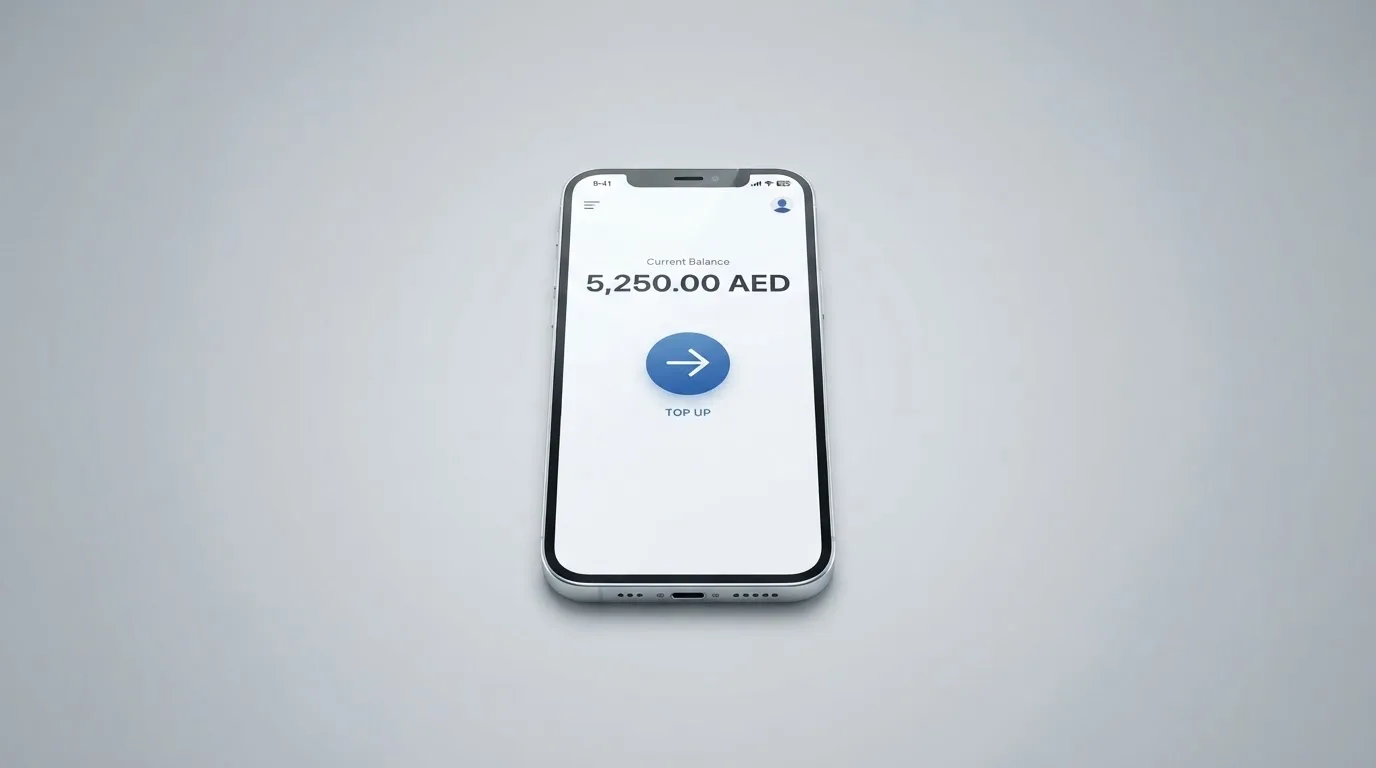
That last sentence is the one to sit with. On-chain transfers are irreversible. If you send on a network the provider does not support, or to an address belonging to a different network, the funds can be lost or need manual support recovery with no guarantee. Hedera is named as the settlement layer, but that is not the same as a published list of deposit networks, and I would not assume the two match.
The loading fee is what you pay at top-up, and it is also the conversion fee: 3.125% on plastic, 2.875% on Metal Black, 2.625% on Metal Silver, 2.125% on Metal Gold. For the virtual card, the loading fee is not listed at all — which, given the $10 issuance fee, makes the virtual card the one tier whose total cost I genuinely cannot calculate from the public pages.
Several things a top-up normally involves are simply absent: who pays the network fee, the minimum top-up, and any bank top-up fees. All three are not stated. If you are funding by bank transfer as well as by crypto, you are working with an unknown fee.
On-chain network fees for your deposit are charged by the blockchain, not by the card provider. That is worth separating from the loading fee so you do not go looking for it in the wrong place — and worth remembering when a transfer fails and you are unsure which fee you lost.
Paying with it every day
Day-to-day, the card behaves the way you would expect: a Visa that spends from a loaded balance. The virtual card supports Apple Pay and Google Pay, which is convenient because Apple Pay replaces the card number with a device-specific number kept in the phone’s Secure Element, never on Apple’s servers, and generates a one-time code per payment. The issuer can also restrict the tokenised number for channels such as magnetic stripe or website use.
The balance model is what shapes everyday behaviour. In a pre-loaded balance model, the card spends only what you have loaded and cannot overdraw — which is a genuine comfort, and also a real constraint if you are used to a card that floats on a bank balance.
Two everyday features are not stated and both would change how you use the card: blocked merchant categories, and any rewards for spending. A referral programme exists, but nothing on spending itself is published. If you were hoping for cashback, there is nothing on the public pages to support that hope.
The platform is web only: “Mobile App support is coming soon”. There is no app to rate, which is worth knowing given how much of your daily trust in a card lives in the phone.
If something goes wrong on a transaction, the route is email: report unauthorized transactions to [email protected] with your name and card number, and you can request a temporary freeze. No time frames are stated for either. The FAQ was updated 6 August 2024, which is the date to weigh those promises by.
What can go wrong
The specific risks here are counterparty risks, and they are worth being plain about.
Custody. The platform wallet is custodial — it is not self-custody. Whoever holds the private key controls the funds, and here the provider does. Seed phrases are typically 12 to 24 words and unencrypted; anyone who obtains them can restore the wallet and spend from it. Crypto transfers are typically irreversible, and a stolen key has no recovery path because the network cannot freeze or return anything. Custodial platforms have a real record of failure: Mt. Gox (about $350 million reported stolen, 2011–2014), Coincheck (about $400 million, 2018), Ronin Network ($625 million, 2022). None of those is BananaCrystal, but the structure is the same one those losses happened in.
The partner you cannot name. Banana Crystal Inc was founded in 2020 and is a registered money services business in Canada (FINTRAC) and the US (FinCEN). Card transactions are processed via Visa and UnionPay partnerships with an unnamed “offshore banking partner”; the issuer is not named. An unnamed issuer and an unnamed offshore bank are two places where a reader’s money touches an institution they cannot research from these pages. All physical tiers “come with an offshore bank account”, which is stated without elaboration on what it is or what it does.
Registration is not protection. Registration as an MSB is a reporting status, not a guarantee. Funds held through an electronic-money-style arrangement are safeguarded by segregation or insurance in the relevant regime, but they are not bank deposits and may not be covered by a deposit guarantee scheme. Anyone telling you a crypto card balance is equivalent to a bank account is overstating it.
Programme risk. Visa and Mastercard do not issue crypto cards themselves; they license issuers and can suspend a programme. Visa terminated its global agreements with FTX in November 2022 and the FTX US debit card was wound down. WaveCrest, a Visa issuer that supplied crypto card brands, was suspended by Visa in Europe in 2018, closing all WaveCrest-issued Visa programmes. Closures typically follow a pattern: notice, then loading and spending stop, then users are asked to withdraw remaining balances. On a card with a 3.125% loading fee and no published networks, a wind-down instruction is not something you want to receive.
Declines and holds. Address Verification Service compares numeric parts of your billing address with issuer records, is mainly offered in the US, Canada and UK, and is generally unavailable for foreign-issued cards — which can cause declines at US merchants. Some merchants decline prepaid or foreign BINs outright because the BIN lookup reveals the card type and issuer country. Merchant category codes also get blocked by policy rather than law: MCC 7995 covers gambling, and blocked lists vary by issuer; what BananaCrystal blocks is not stated. And a declined authorisation may leave a hold on funds that can remain for several days, typically up to seven.
Security claims. The FAQ lists 2FA and card locking after three failed PIN attempts. The page claims “military-grade encryption”, which is marketing language and tells you nothing you can verify. Support is live chat for signed-in users only, plus email, plus an option for a personal consultation; the page mentions “24/7 support”.
Complaints. I found none — and I found no Trustpilot page either. Absence of complaints is weak evidence when the evidence base is a company with no review footprint: it can mean no one has had a bad experience, or that people who had one did not post about it. I would not read it as a clean bill of health.
What to take instead
If the cost is what stops you, the honest comparison is with cards where the everyday spend is cheaper, even if the reach is narrower.
| BananaCrystal | Whop Cards | Stella | UniFi Card | |
|---|---|---|---|---|
| My score | 6.2 / 10 | 5.2 / 10 | 6.5 / 10 | 4.7 / 10 |
| Who it suits | USDT holders wanting a Visa with ATM access worldwide | US consumers in 31 states and businesses in 41 | EU and US users routed through affiliates | US users sending money to Latin America and the UK |
| Card | Visa, virtual and physical tiers, USD | Visa; virtual/physical and currency not stated | Virtual and physical Visa | Prepaid Debit Visa, issued by Lead Bank, USD |
| Issuance fee | $10 virtual, $400–$1,120 metal | Page says “No extra fees”, no amounts listed | Not stated | Not stated |
| Ongoing fees | $100 annual; loading 2.125–3.125%; 0.75% POS, online and ATM | Not stated | Not stated | Not stated |
| Funding | Any USDT wallet; USDT and USDC listed; settled on Hedera | Whop balance, backed by stablecoin collateral from a linked wallet | Deposit crypto; in-app custodial wallet auto-tops up the card | ACH, wire, SEPA (IBAN), SPEI (CLABE); get paid to a USDC wallet |
| Rewards | Not stated for spending | 5% cashback at select merchants, currently Uber | No cashback stated | Listing claims “3% rewards on balances”, card cashback not stated |
Two of these have a material advantage over BananaCrystal if cost is your concern, though both cost you something else. Whop Cards says “No extra fees” and lists no issuance or monthly amounts, and offers 5% cashback at select merchants, currently Uber — but it is for consumers in 31 US states (businesses in 41) and explicitly unsupported in, among others, Belarus, China (Mainland), Hong Kong, India, Iran, Iraq, Israel, Myanmar, Nepal, Nicaragua, North Korea, Russia, Syria, Turkey, Ukraine, Venezuela and Vietnam, with citizenship-versus-residence basis not stated. Stella scores slightly higher than this card at 6.5, is virtual and physical Visa working at “over 40 million VISA merchants globally”, and tops up by depositing crypto into an in-app custodial wallet — but it bars users under economic sanctions programmes, routes US and European users through affiliates, does not state its countries, and states no fees at all. UniFi Card scores 4.7 and is not confirmed from official pages; its App Store listing shows send-money routes to the Philippines (PHP), Mexico (MXN), the eurozone (EUR) and mentions Colombia, Brazil (PIX) and UK (GBP), with fees given only as “Fees may apply. See UniFi website for more details.”
The pattern across all three alternatives is the same: none of them publishes a fee table you can total up. I am not going to pretend that makes them better value. What it does mean is that this card is unusually transparent about what it charges, which makes it unusually easy to discover that it charges a lot.
Who I would recommend it to
I would recommend this card to someone in a specific situation: you hold USDT already, you spend mostly in dollars, you travel enough that ATM access in many countries matters, and you understand that you are paying a premium for that reach. If that is you, the virtual card at $10 is the cheap way to test it, and Apple Pay and Google Pay make it usable from a phone on day one.
I would not recommend it to someone who wants a cheap everyday card, who spends in euros or other currencies and is sensitive to exchange costs, or who wants their funds to sit in a wallet they control. The recurring 3.125% loading fee on plastic, $100 a year, and custodial balance are enough to rule it out for those three.
And if you are in a country where card access is difficult in the first place, the questions I would ask support before sending anything are narrow and specific: is my country supported for the tier I want; is my citizenship accepted or only my residence; which deposit networks do you accept for my coin; and what is the non-USD exchange fee. Three of those four have no readable answer on the public pages. Ask, and get the answer in writing, before you transfer.
Frequently asked questions
What is BananaCrystal card?
BananaCrystal is a prepaid Visa card programme run by Banana Crystal Inc, founded in 2020 and registered as a money services business in Canada (FINTRAC) and the US (FinCEN). You load it from crypto and spend the resulting balance like an ordinary Visa, in physical metal and plastic tiers or as a virtual card. The card states availability in “over 200 countries worldwide” and works at “80 million merchants worldwide that accept VISA”.
How does BananaCrystal card work?
It works like a prepaid card rather than a debit card. You convert or top up a balance — the card says “directly from any USDT wallet” — and the card spends only that balance, so it cannot overdraw. The platform is described as “Settled on Hedera”, and USDT and USDC are listed. Deposits arrive as converted fiat balance, and the loading fee doubles as the conversion fee.
Is BananaCrystal a bank?
No, and this distinction matters more than the marketing suggests. It is a card programme manager and money services business, not a deposit-taking bank. Its transactions are processed through Visa and UnionPay partnerships with an unnamed “offshore banking partner”, and the issuer is not named. Safeguarded customer funds are not the same as bank deposits and may not be covered by a deposit guarantee scheme.
Who owns BananaCrystal?
It is Banana Crystal Inc, founded in 2020. The company describes itself as a registered money services business in Canada under FINTRAC and in the US under FinCEN. It also offers a referral programme. Beyond that, the public pages do not name founders, funding or the banking partner, and I found no Trustpilot page to indicate an independent public footprint.
Does BananaCrystal card require KYC?
Yes. You create an account and complete identity verification, which the card says “typically takes less than 10 minutes”. Accepted documents are a National Identity Card, an International Passport and a Driver’s License. Proof of address and proof of age are not stated. If no email arrives within 48 hours, the FAQ says a manual follow-up is available.
Is BananaCrystal card free?
No. The virtual card costs $10, Plastic $400, Metal Black $620, Metal Silver $770 and Metal Gold $1,120, with a $100 annual fee. Beyond that, loading and conversion runs 3.125% on plastic down to 2.125% on gold, and POS, online and ATM transactions each charge 0.75% on every tier. ATM balance checks may also be charged by the ATM bank.
How to top up BananaCrystal card?
You send funds from a USDT wallet, with USDC also listed and the Fund page mentioning bank or USDC, and the platform settled on Hedera. The deposit networks are not stated, which is the part to be careful about: transfers are irreversible, so sending on an unsupported network or to another network’s address can lose the funds. The network fee for your deposit is charged by the blockchain, not by the card.
Can I use BananaCrystal card in my country?
The card states availability in “over 200 countries worldwide” and works at “80 million merchants worldwide that accept VISA”. The FAQ has pages titled “Countries where our virtual card is unavailable” and “Which countries are restricted for KYC”, but their text did not load when I checked; starting data lists the virtual card as unavailable in Belarus, Russia and others. Whether eligibility follows citizenship or residence is not stated.
Is BananaCrystal card safe?
Treat it as custodial, not self-custody: the provider holds the wallet credentials, and crypto transfers are typically irreversible with no built-in recovery if keys are stolen. The FAQ lists 2FA and card locking after three failed PIN attempts, and the page claims “military-grade encryption”, which is marketing language. I found no complaints, but also no Trustpilot page, so treat that silence as thin evidence rather than reassurance.
How do I withdraw money from BananaCrystal?
Cash withdrawal at ATMs worldwide costs 0.75% on every tier, and the ATM’s own bank may charge for balance checks; no free allowance is stated. A withdrawal may be declined if your balance is under $10. A daily withdrawal cap exists but its amount is not published and appears to depend on a “VIP Bypass” request. Withdrawal to crypto or to a bank is described only by FAQ title, with no readable detail.
How app and neobank cards work – cryptocardsexplained.com
Content created by the «cryptocardsexplained.com» team