
Ripio card review — a free Visa for Argentinian and Brazilian crypto spenders
 Available in US
The Ripio card is a prepaid Visa that lets you spend your crypto or Argentine peso balance at any merchant that takes Visa, online or in person, and at ATMs for cash. Ripio markets it as a simple way to pay with Bitcoin, Ethereum, USDT or any other coin on the platform, without a separate bank account. The virtual card is free and instant; a physical card is also free and gets delivered to your home. You can add it to Apple Pay or Google Wallet and walk out of a shop having paid in pesos or dollars without ever touching a bank.
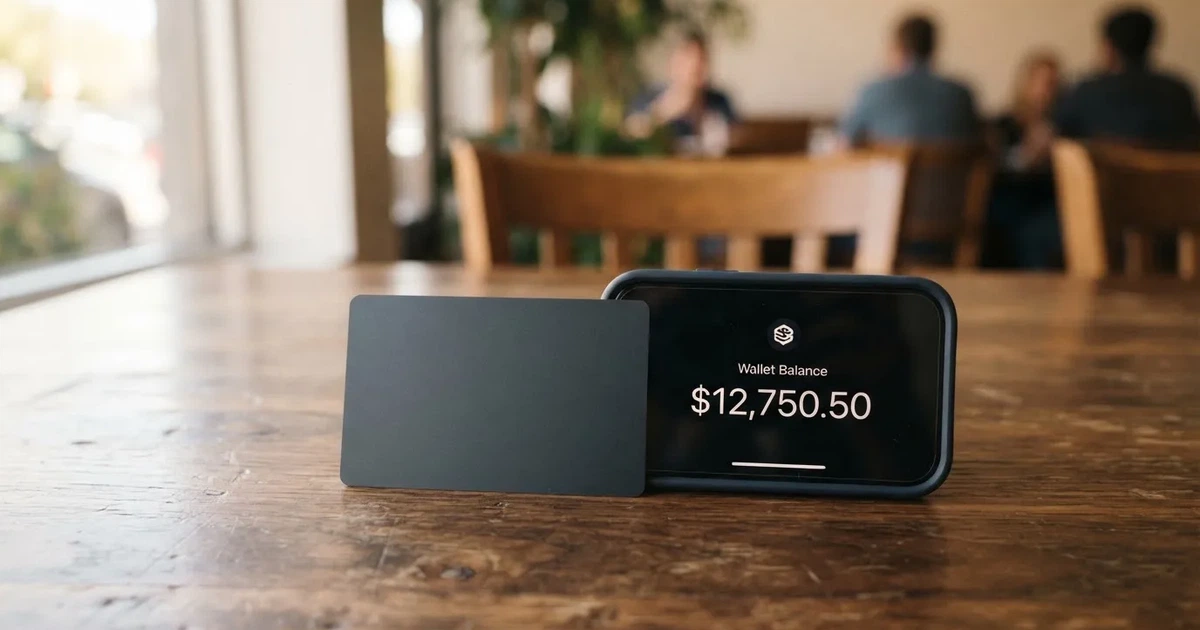
The catch is geography. The card is available only in Argentina and Brazil. Outside those two countries the product simply is not offered, and the public pages do not spell out which currencies the card itself runs in, what the conversion or foreign-exchange fees look like, or who actually issues and regulates the programme. Those gaps matter if you are deciding whether to trust a meaningful share of your spending to it.
The conditions described here are current as of October 28, 2026.
Verdict
Ripio’s card earns 5.5 out of 10. It does what it says on the tin for an Argentinian or Brazilian user who already holds crypto on Ripio and wants a free way to spend it through Visa. It stumbles on the things that decide whether you can rely on a card long term: a narrow two-country footprint, conversion and FX fees that are not disclosed, no public naming of the issuing bank or its licences, and a parent company whose overall Trustpilot score sits at 2.4 out of 5 from 1,848 reviews, with recurring complaints about funds not arriving and support that does not respond. The card itself is convenient, but the trust gap is real.
If you live in Argentina or Brazil, hold crypto on Ripio and want a no-monthly-fee Visa for everyday spending, the card is worth a look. If you need a card you can use in several countries, want published fees in advance, or expect responsive customer support, look elsewhere.
How the score breaks down
| Criterion | Score | Why it lands there |
|---|---|---|
| Who can get it | 2 / 10 | Only Argentina and Brazil — Ripio’s own footer says “Product available for Argentina and Brasil” |
| Cost | 7 / 10 | Virtual and physical Visa with no maintenance fee; conversion and FX fees are not published |
| Top-up options | 7 / 10 | Spend from any crypto on Ripio (BTC, ETH, USDT and the rest) or from ARS; conversion happens at the till; supported networks are not listed |
| Reliability and complaints | 4 / 10 | Visa network, processing by Pomelo; the issuing bank and its licences are not named; company-wide Trustpilot 2.4/5 with themes of missing funds and silent support |
| Everyday use | 9 / 10 | Virtual and physical Visa, free home delivery, Apple Pay and Google Wallet, cash withdrawals at ATMs |
| Total | 5.5 / 10 |
Will they give you the card
Ripio’s product is not a globally available card. The footer of the official Ripio Card page states plainly: “Product available for Argentina and Brasil.” If you live anywhere else, the card is not offered to you through the normal flow, and the company does not document what (if anything) happens if a user from another country tries to sign up.
The page does not state a minimum age, an explicit residency requirement beyond the two countries, or what identity documents you have to provide. The same page says you can order the card by signing up or logging in and accepting the terms and conditions, which is a light description compared with most card programmes that publish a checklist of documents. In practice you should expect the usual identity checks a regulated payment product involves — but the public information does not tell you which ones.
There is also no public statement of which currencies the card is denominated in. Ripio says spending happens in your local currency or in dollars, and that you fund it in crypto or Argentine pesos, but the card’s base currency is not named. A user in Brazil paying in reais, for example, will go through some conversion path that the published material does not document.
What this means for you: if you are in Argentina or Brazil, the card is in scope; if you are anywhere else, it is not. Treat the absence of an “available in your country” page as a firm no, not a maybe.
How to get it
The signup flow itself is short. You create or log into a Ripio account, accept the terms and conditions, and order the card. From there you choose between a virtual card, a physical card, or both.
The virtual card is intended for online and QR-code payments. It is ready as soon as you order it, so you can start using it while you wait for a physical card if you order one. The physical card works at any merchant that takes Visa. The card is prepaid, which means each purchase is deducted from your wallet balance at the moment of payment — there is no credit line and no overdraft.
Physical cards are sent to your home free of charge. The published material does not say how long delivery takes, and there is no mention of a replacement fee if the card is lost or damaged. You can activate and start using the virtual card while you wait for the physical one to arrive.
What this means for you: the order itself is quick. The slow part is waiting for delivery if you want a physical card, and the things the page does not say — replacement cost, what to do if the card never arrives, what documents you might be asked for during the order. Plan for those gaps by keeping screenshots of the order confirmation and the card’s terms.
What it really costs: Ripio card fees
The headline cost story is friendly: the virtual and physical Visa card carry no maintenance fee. There is no monthly or annual charge stated, and the physical card ships to you at no cost.

Beyond that, the cost picture is incomplete. Ripio does not publish the crypto conversion fee that applies when you pay with Bitcoin, Ethereum or any other coin, nor the foreign-exchange fee that applies when the merchant settles in a different currency from the one you are spending. Cash withdrawals at ATMs are possible, and the fee and any limit for that are not stated either. Daily and monthly spending limits are also not stated.
This matters because in a crypto card the conversion fee is usually the single biggest cost. A 1% difference between paying with a card that converts at the spot rate and one that adds a 1.5% spread is the difference between paying roughly 15 dollars more or less for every 1,000 dollars you spend. Without a published number you cannot price the card in advance.
| Fee or limit | Amount or status |
|---|---|
| Virtual card issuance | Not stated (no maintenance fee for the card overall) |
| Physical card issuance | Not stated; free home delivery stated |
| Monthly or annual fee | None (Ripio: “no maintenance cost”) |
| Crypto conversion fee | Not stated |
| Foreign-exchange fee | Not stated |
| ATM withdrawal fee | Not stated |
| Daily spending limit | Not stated |
| Monthly spending limit | Not stated |
| Cashback on crypto payments | 2% (USDT, BTC or ETH per FAQ; BTC, ETH or USD per Cashback section) |
| Cashback on ARS payments | 0.5% |
| New-user crypto cashback | 4% for 30 days |
| New-user ARS cashback | 1% for 30 days |
To give you a feel for the gap, three everyday situations.
Buying lunch in pesos with a USDC balance. The card converts USDC to pesos at the moment of payment. The conversion rate is set inside the app at that moment, and the fee the platform takes is not published. A small spread on a small purchase does not feel like much; on a steady diet of small daily payments, the cumulative cost can be visible by month end.
Buying a flight in dollars with a Bitcoin balance. The card converts BTC to dollars, then either settles in dollars (no FX fee) or in pesos if the merchant charges in local currency. Two layers of cost — crypto conversion and a possible FX layer — and neither rate is published, so the only way to know the cost is to watch the app at the moment of payment.
Withdrawing cash from an ATM. You can take cash out at ATMs, and the fee is not stated. Without that figure you cannot tell whether a withdrawal is going to cost you a small fee or a significant percentage of the amount you withdraw. If you plan to use the card for cash, ask support for the ATM fee before relying on it.
How to top it up
The card is a prepaid Visa, which means it spends from a balance held against your Ripio account. To use it, you need a positive wallet balance, and that balance can be in crypto or in Argentine pesos. The app lets you choose your payment currency in the Ripio Card section; the conversion happens automatically at the moment of purchase, so you do not have to swap coins by hand before paying.
The platform supports any cryptocurrency available on Ripio, including Bitcoin, Ethereum and USDT. Funding in pesos is described as well. What is not described is which blockchain networks the platform accepts for crypto deposits, so there is no public list to check a given transfer against. In practical terms, send to the address the app shows you, on the network the app shows you, and do not improvise.
For Argentina specifically, a Ripio launch article from February 2023 described the wallet being loaded by bank transfer, by Mercado Pago, or in cash through Rapipago Online and Pago Fácil. That is the most concrete funding picture in the public record, and it is the one you can lean on if you are an Argentine user.
Cash withdrawal is the flip side of cash top-up, and the public material does not describe it. You can take cash out at ATMs, but how you move funds from the card back to a bank or cash balance, or whether that is even possible, is not in the published information.
What this means for you: a deposit sent on the wrong network, or to the wrong type of address, is one of the most common ways people lose money with crypto cards, and the platform does not list the supported networks. If you are funding with crypto, copy the address and the network from inside the app, send a small test amount first, and only then send the rest. Withdrawals back to a bank are not documented at all, so if you expect to be able to move balances back out, ask support before you commit.
Paying with it every day
Once the card is loaded, daily use is the straightforward part. The card is a Visa, which means it is accepted wherever Visa is taken — supermarkets, online stores, restaurants, fuel stations, subscription services. The virtual card handles online and QR payments; the physical card handles everything a plastic card can do, including contactless. The card can be added to Apple Pay and Google Wallet, so you can leave the physical card at home and pay with a phone or watch.
Cash is also part of the picture. You can withdraw cash at ATMs, at supermarkets and at service stations. The fee for that is not stated in the public material, which is a gap if cash is a regular part of your spending.
Cashback is where the card has a small but useful edge. Crypto-funded payments earn 2% back; the FAQ says the eligible coins are USDT, BTC or ETH, while a separate “Cashback” section says BTC, ETH or USD. Argentine peso payments earn 0.5%. New cardholders get a higher rate for the first 30 days: 4% on crypto and 1% on ARS. Cashback is small in absolute terms — 2% on a 10,000-peso coffee habit adds up to a few free coffees a month — but it is paid in crypto, which means the rebate is exposed to the same price moves as the rest of the balance. Cashback is not a yield product.
Two practical things to know for everyday use. First, blocked merchant categories are not listed publicly, so you will only find out at the till if a particular category of merchant is restricted. Second, the app experience is the control panel — limits, freezes, top-ups all happen inside the Ripio app — and the page does not publish a current App Store or Google Play rating for that app. If you rely on the app being reliable, you have to take that on trust.
What can go wrong
The risks of using this card fall into three groups: things the company does not disclose, things the broader crypto card category is exposed to, and the company’s own track record with users.
On disclosure, the issuing institution and its licences are not named on the public card page. The page tells you the card runs on Visa and that Pomelo provides the processing technology; it does not tell you which bank actually holds the card programme, in which country that bank is regulated, or under which licence the card is issued. A prepaid Visa is a regulated payment product, and the difference between a bank-issued programme and an e-money-issued programme is the difference between which regulator can step in if something goes wrong. You can find out more by asking support, but the answer is not on the page.
Security features on the card itself — 2FA, instant freeze, spending limits, 3-D Secure behaviour — are also not described in the public material. Help is offered through an in-app or desktop “Support” section and through help.ripio.com, which redirects to help-ar.ripio.com and which, when read, had an empty Ripio Card section. Support hours and languages are not stated.
On the category-level risks, the usual crypto card caveats apply. The funds you load sit with Ripio, which means they are exposed to the platform’s solvency and to the security of its custody. Cryptocurrency transfers are irreversible, so a deposit sent on the wrong network is generally lost. Stablecoins can depeg. The card network itself — Visa — can suspend a programme, which is what happened with FTX’s card in November 2022; when a programme closes, you typically get a notice period, then a stop on spending and loading, then a request to withdraw remaining balances.
On the company’s own track record, Trustpilot carries 1,848 reviews of ripio.com (the company, not the card specifically) with an average of 2.4 out of 5, as of 21 October 2026. The themes in those reviews include funds not being credited (a report from August 2026), support being unreachable (August 2026 and an older thread from June 2021), and complaints about fees dating back to September 2021. The card itself has no published incident list, so you have to read company-level reviews as a proxy for how the platform treats its users when something goes wrong.
What this means for you: the gaps in disclosure are the real risk here, not the published fees. A card that is free, with no monthly fee, can be expensive if the conversion spread is wide. A card run by an unnamed issuer is fine until you need that issuer to act. A company with a 2.4 Trustpilot average and recurring “funds not credited” complaints is a place where small operational problems are not rare. None of this means the card will not work for you, but it does mean you should size the balance you keep on it accordingly, and keep the receipts.
What to take instead
The Ripio card is one of several options for spending crypto through a card, and the right comparison depends on whether the alternative is available to you. Below are three cards that come up in the same conversation. None of them is a drop-in replacement, because the country lists, the fee structures and the cashback terms are different, but they are the ones a Ripio user would typically weigh.
| Card | Score | Geography | Card type and key fees | Cashback |
|---|---|---|---|---|
| MSX | 6.4 / 10 | Not stated on an official page | Not stated officially | Not stated |
| Bybit Card | 6.0 / 10 | Argentina, AIFC (Kazakhstan), Georgia, Kazakhstan, Australia, Mexico, Brazil, Peru, Asia Pacific; not for EEA | Virtual free until further notice; physical issuance varies by region (e.g. 5 USD/USDT in Argentina, 29.99 USD in Australia); crypto conversion 0.9% (0.5% in Argentina); FX 2% (7% in Argentina, 1.5% in Brazil) | Tiered in points and USDT; up to 10% on crypto-funded spending at the top Infinite tier; fiat-funded spending no longer earns cashback from 5 October 2026 |
| MEXC | 5.6 / 10 | Philippines, Taiwan, Thailand and others (full list not shown) | Virtual only; issuance 20 USD with a discounted 0 USD price visible on the page; service fee 0% | By M-Score tier: Standard 4% to 100 USDT/month, Premier 6% to 300 USDT, Elite 10% to 800 USDT |
If you want a more international footprint, the Bybit Card is the obvious comparator: it is available in Argentina, Brazil, Mexico, Peru, Australia, Kazakhstan (AIFC), Georgia and an Asia Pacific region, with fees and limits published in detail. The trade-off is that the crypto conversion fee is published (0.9% in most regions, 0.5% in Argentina) and there is a published FX fee, so you know the cost in advance. The catch is that the Bybit card no longer rewards fiat-funded spending as of 5 October 2026, so the value depends on how much of your spend is funded from crypto.
If you are outside Argentina and Brazil and Ripio is not on the table at all, the MEXC card works as a virtual card with cashback that scales with the platform’s M-Score tier, but the country list, the supported networks and the conversion fee are not in the published material, so the same disclosure gap that affects Ripio applies here too.
If you are looking at a different product entirely, MSX sits in the same conversation but the public material does not say who it is for, what the card looks like, what the fees are, how it is funded, or what the rewards are, so it is hard to compare on facts.
Who I would recommend it to
The honest way to frame who should use this card is to start with who should not. If you live outside Argentina and Brazil, the card is not available to you, and that is the end of the conversation. If you need a card you can use across many countries, Ripio is not it. If you want every fee published up front, this is not the card for you either, because the conversion and FX fees are not in the public material. If you expect responsive support when something goes wrong, the company-wide Trustpilot record gives you a reason to pause.
For whom the card makes sense: an Argentinian or Brazilian user who already keeps crypto on Ripio, wants a free Visa to spend that crypto without touching a bank, and is happy to manage the card mostly through the app. The free issuance, the free physical delivery, the support for Apple Pay and Google Wallet, the cashback on crypto payments, and the ability to spend at any Visa-accepting merchant or ATM cover the everyday case well. The new-user cashback of 4% on crypto and 1% on ARS for the first 30 days is a reasonable way to test the card at a discount.
The middle of the market is the harder call. If you want a prepaid Visa in Argentina or Brazil with low friction and you can absorb some uncertainty around conversion costs and support, this card is a credible option. If you want the same convenience with a wider geography or with more disclosure, Bybit’s card is the natural next stop, and it has the published fees to match.
Two final pieces of advice that apply whichever way you lean. First, size the balance on the card to what you actually plan to spend in the next few weeks, not to your whole crypto position, because that is the amount exposed to platform-level risk. Second, before you commit, ask support the questions the page does not answer: what is the crypto conversion fee, what is the FX fee, what is the ATM fee, what are the daily and monthly limits, and which bank issues the card. The answers will tell you whether the gap between Ripio and the alternatives matters for you.
Frequently asked questions
What is the Ripio card?
The Ripio card is a prepaid Visa that lets you spend your Ripio wallet balance — in cryptocurrency or in Argentine pesos — at any merchant that takes Visa, online or in person, and withdraw cash at ATMs. It comes as a virtual card for online and QR payments and as a physical card for in-store use, and it can be added to Apple Pay and Google Wallet.
How does the Ripio card work?
You load a balance in crypto or pesos, choose your payment currency in the Ripio Card section of the app, and the card deducts the amount in real time. When you pay with crypto, the platform converts it to the merchant’s currency at the moment of payment. The card is prepaid, so the balance is held against your Ripio account and the card cannot overdraw.
Is Ripio a bank?
The public card page does not name an issuing bank or any banking licence, so it is not accurate to call Ripio a bank. The card is processed using Pomelo’s technology and runs on Visa; the licensed institution that actually issues the card is not publicly identified.
Who owns Ripio?
Ripio is a cryptocurrency company. The card page’s footer lists Ripio entities including BitPagos, Inc. and Moonbird S.R.L., which are part of the Ripio group. The full ownership structure and any licences are not described on the public card page.
Is the Ripio card available in my country?
The card is available only in Argentina and Brazil. The card page footer states “Product available for Argentina and Brasil” and there is no documented path for users in other countries to order it. If you are outside those two countries, treat the card as not available to you.
How do I get the Ripio card?
You sign up or log in to a Ripio account, accept the terms and conditions, and order the card from the Ripio Card section. You can choose a virtual card, a physical card, or both. The virtual card is ready immediately; the physical card is delivered to your home free of charge.
Does the Ripio card require KYC?
The card page does not state what identity verification is required, only that you sign up or log in and accept the terms. In practice, a regulated prepaid Visa programme involves identity checks, but the specific documents and steps are not in the published material. Plan to be asked for ID and a proof of address.
How do I add the Ripio card to Apple Wallet or Google Wallet?
The card supports Apple Pay and Google Wallet. The exact steps are not described in the public material, but the standard flow on both platforms is to open the wallet app, choose to add a card, and follow the in-app prompts. The Ripio app is the control panel for the card, so the option is likely surfaced there.
How do I top up the Ripio card?
You need a positive wallet balance in crypto or Argentine pesos. Any cryptocurrency available on Ripio can be used, including Bitcoin, Ethereum and USDT, and the app converts it to the merchant’s currency at the moment of payment. For Argentina, a 2023 launch article described the wallet being loaded by bank transfer, Mercado Pago, or cash at Rapipago Online and Pago Fácil. The card page does not list supported blockchain networks for crypto deposits.
Is the Ripio card safe to use?
The card runs on Visa with processing by Pomelo, and the standard crypto card caveats apply: crypto transfers are irreversible, deposits sent on the wrong network can be lost, and the balance you hold on the platform is exposed to the platform’s solvency. Ripio as a company holds a 2.4/5 Trustpilot score from 1,848 reviews, with recurring complaints about funds not being credited and unresponsive support. The card itself has no published incident list, so the company-wide reviews are the closest proxy for how issues are handled.
How exchange cards work – cryptocardsexplained.com
Content created by the «cryptocardsexplained.com» team