
Kolo card review — virtual Visa paid from any crypto, with caveats worth reading first
 Available in US
Kolo is one of those products that promise something genuinely useful on paper: load it from almost any cryptocurrency across a handful of networks, and spend the balance through a Visa number that slots into Apple Pay or Google Pay. That alone answers a real problem for people whose bank refuses them a card, or who simply prefer to keep spending money off a regular current account. The catch, as I found while reading through Kolo’s terms, the site, the user reviews and a couple of independent trackers, is in the fine print and in the company’s recent history. The product is live, the basic mechanics work, and the headline fees are competitive. The things that go wrong are mostly about people getting locked out of their own money.
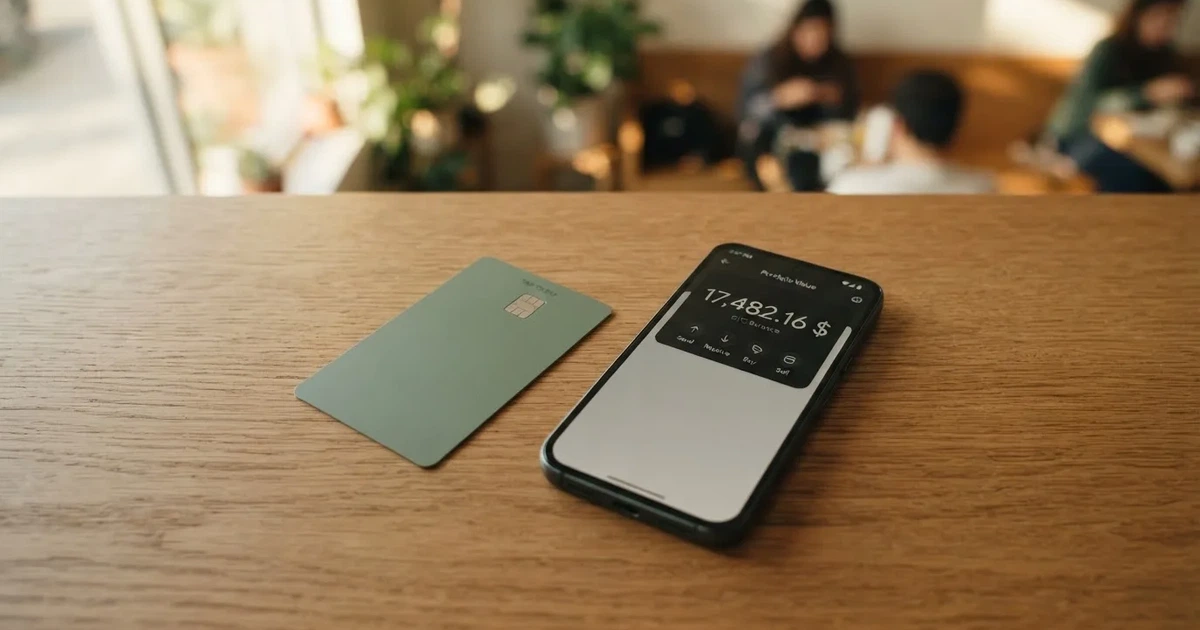
Conditions are current as of October 28, 2026.
This page is a review, not an advert. I will walk through who Kolo will actually issue a card to, what the application looks like, the all-in cost of a few everyday payments, the top-up flow, daily use, what can go wrong, and a couple of alternatives to consider before you sign up. Conditions and figures are current as of 2026-10-20.
Verdict
I land on a score of 6.4 out of 10 for Kolo. The reason is not that the product is broken — it is that the strengths and the weaknesses pull in opposite directions, and the weaknesses are the kind that hurt a normal person, not a power user.
Score
| Criterion | Mark | Why it scores that way |
|---|---|---|
| Who can get it | 7 / 10 | Service is open in 170+ countries, card works in 60+; only embargoed and sanctioned jurisdictions are excluded |
| Cost | 7 / 10 | Official 1% exchange fee plus network costs; unofficial trackers put a typical all-in cost near 1.4% on FX |
| Top-up options | 9 / 10 | Any crypto, BTC/ETH/LTC/USDT/USDC and others, seven networks, in-app swap |
| Reliability and complaints | 4 / 10 | Three operator changes in a year, the issuer is not named publicly, recurring reports of blocked withdrawals and closed accounts |
| Everyday use | 5 / 10 | Apple Pay and Google Pay are supported; the card is virtual-only for now, plastic is announced without a date, no ATM on the virtual card |
The single line I would tell a friend is this: if you want to fund a virtual card with any crypto across many networks, Kolo is one of the more flexible options around. If what you really want is a card from a steady, transparent company that will let you withdraw your money on a normal day, the operator history and the unresolved complaints make me hesitate.
Who will they give you the card
The first filter is geography, and Kolo draws it in the conventional way. The official terms bar anyone who is in, controlled from, or is a national or resident of Cuba, Iran, North Korea, Sudan, Syria, or any other country under US, UN, EU or HM Treasury sanctions, plus any listed sanctioned person. That rule covers both citizenship and residence, so even if you have moved away from a restricted country, your nationality can still exclude you.
Outside those exclusions, Kolo says the service is available in 170+ countries and the card works in 60+. A country list is published at kolo.xyz/countries. A common worry about this kind of card is whether the United States is supported, and a third-party US restriction that used to be advertised has been removed — though I should flag that the main terms text I read does not explicitly address US eligibility one way or the other, so treat US availability as unconfirmed until you check the country list yourself.
The second filter is identity. Kolo runs full KYC through Sumsub, with a flow that takes roughly a minute, plus two-factor authentication on login and withdrawals. The official terms say higher limits depend on which verification steps you have completed, and that Kolo can refuse or later lower those limits. Enhanced due diligence, meaning extra documents or information, may be requested to raise your limits or if the system flags something as suspicious. The exact tier names, per-tier limits, processing time and the precise list of reasons Kolo will reject an application are not published.
One unofficial wrinkle worth knowing: a tracker that follows crypto cards notes that a EUR-denominated card may require additional verification, including proof of address, on top of the standard KYC. If you need a EUR card rather than USD, expect to upload a bill or bank statement.
The bottom line on eligibility: if you live in an open country, have a government-issued ID, and are willing to do a selfie check, you should be able to get to a working virtual card. The friction you might hit is being asked for more documents later, especially if you want to raise limits or order a EUR card.
How to get it
The signup flow itself is short. You create an account, hand the Sumsub flow your ID and a selfie, turn on 2FA, and you are in. The card itself is generated inside the app or in the Kolo Telegram mini-app, and you can add it straight to Apple Pay or Google Pay. Kolo’s FAQ puts it in practical terms: the card works wherever Google Pay, Apple Pay or Visa/Mastercard are accepted.
The detail I want to be honest about is what the official pages do and do not tell you. Kolo’s terms and site confirm that Card Services are provided in collaboration with Signify Holdings Inc, a company in Wilmington, Delaware that also runs Rain cards at raincards.xyz. The terms do not name the actual card issuer or BIN sponsor, and they do not publish a cardholder agreement in a form a non-lawyer can read end-to-end. Independent trackers describe the card as a Visa (one specifically as Visa Platinum), virtual only, available in USD and EUR, and say a physical card has been advertised for Q3 2026 with no ordering schedule. The physical card is not available now, and you cannot order it yet. Delivery time, when it ships, is not stated.
What this means for you: the application will not take long, and you will have a working virtual card in your phone wallet by the end of the flow. Just don’t expect a plastic card in the post, and don’t expect the company to spell out the issuer in a public document you can read before you sign up.
What it really costs: Fees and the everyday payments that add up
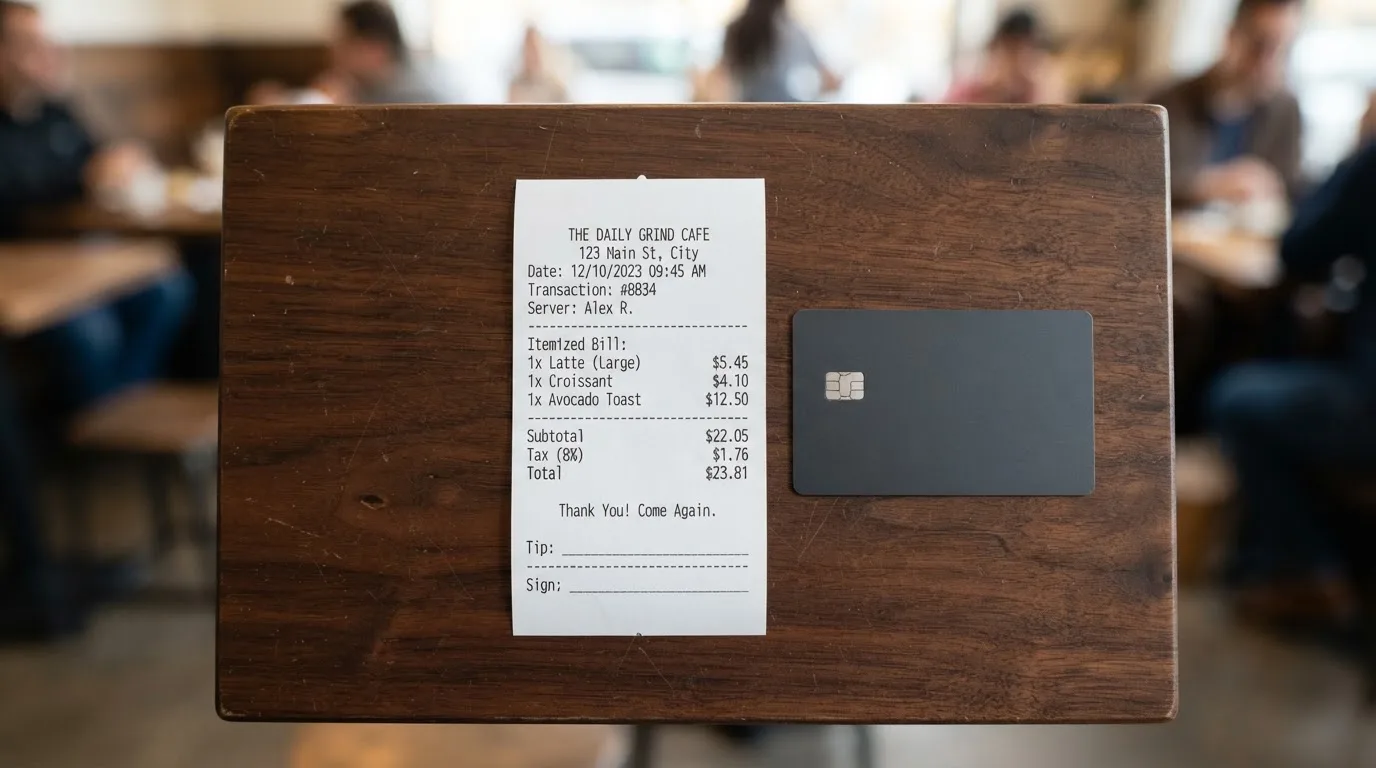
The honest answer to “what does Kolo cost” needs to separate what Kolo’s own terms and site say from what independent trackers have measured, because the two do not fully line up.
Costs
| Fee or limit | Value | Source |
|---|---|---|
| Virtual card issuance | Free (unofficial) | Unofficial trackers |
| Activation balance | $10 / EUR 10, held on the card and reusable | Unofficial trackers |
| Monthly fee | $0 | Unofficial trackers |
| Annual fee | $0 | Unofficial trackers |
| Exchange fee (crypto to fiat in app) | 1% of order, plus network and bank costs shown before confirming | Official terms |
| Card payment conversion fee | 1% on all card payments, including stablecoin-funded ones | Unofficial trackers |
| FX on USD card, non-USD purchase | Visa rate + 1% | Unofficial trackers |
| FX on EUR card, non-EUR purchase | Visa rate + 0.55% / 0.65% / 1.35% depending on currency | Unofficial trackers |
| ATM withdrawal (when available) | $1 + 0.65% per withdrawal | Unofficial trackers |
| ATM withdrawal limit | $500 per withdrawal, 3 per rolling 24 hours (one tracker says $250) | Unofficial trackers |
| Balance inquiry or declined ATM attempt | $0.60 | Unofficial trackers |
| Daily and monthly card spend limits | Vary by verification level, shown after login | Official terms |
| Card tiers (metal, premium) | None published | — |
| Mark-up on USDT, USDC, EURC | “0% mark-ups” on top-up conversion | Site |
The official line on the headline fee is that there is a 1% base fee on exchange orders, plus the underlying network and bank cost shown before you confirm, and 0% mark-up on USDT, USDC and EURC. The official pages do not publish a separate card-payment fee, an FX fee, ATM terms, or a card issuance or monthly fee. The independent trackers do, and they broadly agree with the official headline but add detail. The two sources do not fully agree on the stablecoin case, with one tracker putting the all-in FX cost on a card payment at about 1.40% versus mid-market; note that this figure is from third-party sources and is unofficial, not confirmed by Kolo.
Three everyday payments, worked through.
A coffee with USDT on a USD card at a US merchant. Kolo’s site says crypto is converted during payment “for no extra fee” and the official terms put a 1% exchange order fee on top-ups. Independent trackers add a 1% card-payment conversion fee on top. The realistic all-in number for a small US-dollar purchase is in the 1% to 2% range, depending on which tracker you trust more, plus the network gas you paid when you sent the USDT in.
A €30 dinner in Berlin with EURC on a EUR card. The site says 0% mark-up on EURC; the unofficial EUR-card FX schedule puts cross-currency spend at Visa rate plus somewhere between 0.55% and 1.35%. For a euro merchant, if the EUR card pays in EUR cleanly, you are looking at roughly the 0% to 1% mark-up on the EURC conversion plus the EURC network fee you paid to load it.
A cash withdrawal in a foreign currency from a future physical card. Unofficial trackers describe $1 plus 0.65%, capped at $500 per withdrawal with three per day, and a $0.60 fee just for asking the ATM for a balance. ATM is not available on the virtual card at all. There is no official number, and at least two of the unofficial sources disagree on the per-withdrawal cap, so treat this as approximate.
What this means in practice: if you only spend in your card’s own currency and load with the matching stablecoin, Kolo can be cheap. As soon as you cross currencies, the unofficial numbers put you in the 1% to 1.4% range, which is competitive with most crypto cards but not the cheapest on the market.
Top up: how to fund the card
Funding is Kolo’s strongest area, and the reason a lot of people end up trying it. The site says “any crypto”, and explicitly names BTC, ETH, LTC, USDT and USDC. The home page shows seven network logos, which appear to include BNB Chain, Ethereum, Sui, Tron, Base and Solana, with one more not clearly labelled. The app supports swap in-app, so you do not have to land on a specific coin to spend — you can hold what you like and convert at payment time.
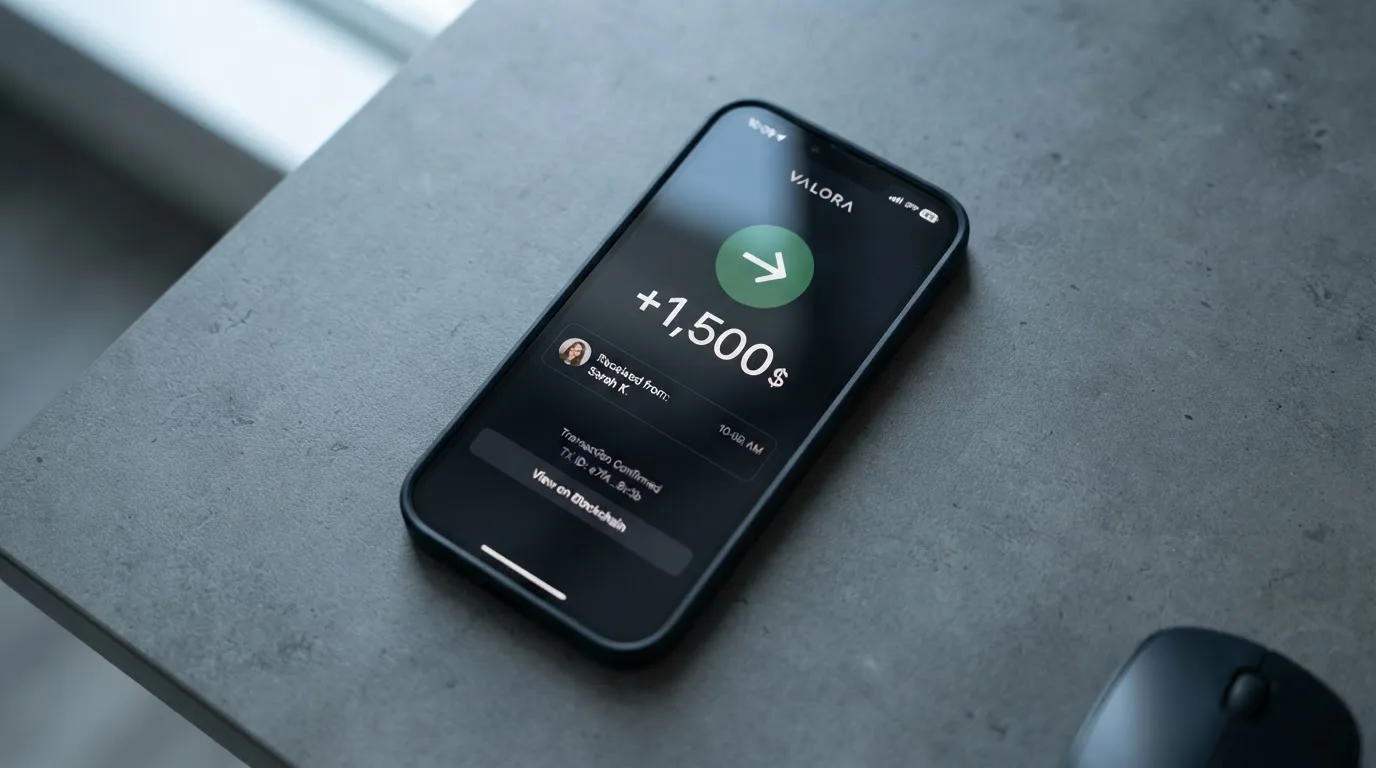
The site is also explicit on two points that often hide in the small print of other products. Crypto is converted at payment “for no extra fee”, and the 0% mark-up promise covers USDT, USDC and EURC. The official terms add a 1% exchange fee on swap, buy and sell orders, plus the network and bank cost shown to you before you confirm.
A few things to be careful about. The minimum top-up, the network fee arrangement and whether bank transfer or card top-ups are even supported are not stated in the official documents I could find. Unofficial trackers say the minimum is the $10 / EUR 10 activation balance, with no top-up fee published, though the on-chain gas you pay to send the crypto in is yours to absorb. The official terms also say fiat-related services — Ramps, Card Services — have volume limits per period that depend on the payment method and your verification level, and those limits are only shown after you log in. If you need to push a large balance in, the higher limits are available on request to [email protected].
For cashback, the site says 2% back in BTC for the first 30 days, dropping to 1% after that, with caps of $2 then $1 per purchase and $100 a month. The official terms add the important caveats: the Cashback Program is voluntary and discretionary, paid in digital assets, and can be changed or ended at any time without notice.
Withdrawing works the other way too. Kolo says you can send crypto to Revolut, Wise, N26 or any SEPA bank account, and the terms describe a non-custodial model from 1 July 2026 in which Kolo cannot unilaterally move, seize or recall your assets. The detail that matters is what happens at suspension or closure: your ability to recover your own key share and assets is preserved, but you stay liable for any amounts due before the closure, and there are no published withdrawal fees or limits.
What this means for you: Kolo is unusually flexible on the funding side, and that is its real selling point. Send the right coin to the right network, and the card pays out of the converted balance with no manual step. Send USDT to an address on a network Kolo does not support, and the funds can be lost, because blockchain transfers are irreversible.
Paying with it every day
Day-to-day use is the part Kolo gets partly right. The card works through Apple Pay and Google Pay, so at any contactless terminal that takes Visa, you tap your phone the way you would with any other card. The FAQ is direct about this: anywhere Google Pay, Apple Pay or Visa/Mastercard is taken.
Cashback is the obvious sweetener. You earn 2% in BTC on the first 30 days, then 1% after that, with the caps I described above. The terms make clear the programme is discretionary and can be reduced or ended, so do not budget around the headline rate.
The app itself runs on iOS, Android and inside a Telegram mini-app, with the download link at get.kolo.xyz. I could not read the App Store or Google Play rating pages, so I cannot tell you how the user ratings look. The experience in Telegram, judging from the number of positive reviews that mention fast Telegram-based support, is at least responsive.
A few everyday frictions are worth knowing about. The card is virtual-only for now, and Kolo is the kind of product where the physical card changes the picture: ATM access, tap-to-pay with the plastic itself, and the option to fall back on the card if your phone dies. Plastic is announced for Q3 2026 without a shipping date. There is no ATM on the virtual card at all. Blocked merchant categories are not published, so if you specifically need a card that works at gambling merchants or at a particular kind of retailer, do not assume.
The dispute and refund picture is the one I would read carefully. The terms say that if a card transaction is disputed or charged back, any related cashback is cancelled or debited. Kolo can pursue losses from a chargeback, including the card scheme’s administrative fees and the value of the assets at the time. Orders for digital assets are final, non-cancellable and non-refundable. You do have a 14-calendar-day right to withdraw from the agreement after your account is accepted, by emailing [email protected]. The actual card-payment dispute process and time frames are not stated, and that is a real gap if you rely on chargebacks to recover from bad merchants.
What can go wrong
This is the section that moved the score down, and the part I would read first if I were deciding whether to put real money on Kolo.
The operator has changed three times in roughly a year. Up to 2025 the service ran under Cryppo UAB, then BURVIX SP. Z O.O. from January to June 2026, and from 1 July 2026 all services are provided by Hardline Holding Limited, a company in Kazakhstan with company number 221240900259. The card programme itself runs in collaboration with Signify Holdings Inc in Wilmington, Delaware, which is also behind Rain cards. The card issuer and BIN sponsor are not named in the public documents, and Kolo’s licences and any regulatory fines are not stated either. The site claims MiCA alignment and 10 million users, both self-reported and not independently verified.
The user reviews line up with that history. A Trustpilot snapshot, summarised by a third party, put the score at 3.9 out of 5 from 52 reviews; reading the page directly on 2026-10-20 gave 3.7 from 54 reviews, with 16 in the last 12 months, 79% five-star and 17% one-star, and Kolo does not respond to negative reviews. The recurring themes are not minor: withdrawals blocked or not completed with support going silent, accounts or wallets closed without an explanation (including at least one report from Zimbabwe), verification problems that drag on for weeks, and a card that would not add to a phone wallet. Positive reviews point to fast Telegram support, and some reviewers allege fake positive reviews, which I cannot confirm either way.
On the security side, the model has actually changed for the better. From 1 July 2026 the wallet is non-custodial and secured with MPC key shares: you hold one share required for every transaction, Kolo holds another and can decline to co-sign for legal or risk reasons, and a recovery process is preserved. Kolo does not charge storage fees. The site also describes 2FA on login and withdrawals, real-time AML and risk checks under the “Fraud Shield” name, Sumsub KYC, and claimed alignment with MiCA and the Travel Rule. In-app card freeze, granular spending controls and insurance are not stated.
Support runs through [email protected] for email, a Telegram channel and the Telegram mini-app at t.me/kolo, with a legal address in Astana. There is no published support language list, and the working languages people actually use, judging from the reviews, are Ukrainian, Russian and English, with English support uneven.
What this means for you: the product itself has a sensible security model, but the company history is bumpy and the user reports about blocked withdrawals and closed accounts are the kind of complaint that hurts normal customers, not sophisticated traders. If you put more money on the card than you can afford to have stuck for a few weeks while support sorts something out, you are taking a risk. A practical mitigation is to load only what you plan to spend in the near term and to keep the bulk of your crypto in a self-custody wallet you control.
What to take instead
Kolo is not the only option, and depending on what you actually need, a different product will suit you better. Here is a quick comparison of three cards that come up in the same conversations.
| Card | Score | Eligibility | Form factor | Headline cost | Funding | Rewards |
|---|---|---|---|---|---|---|
| Kolo | 6.4 / 10 | 170+ countries service, 60+ card, sanctions exclusions apply | Virtual only, USD/EUR | 1% exchange + unofficial 1% card fee + 1% to 1.4% FX | Any crypto, 7 networks | 2% BTC first 30 days, then 1%, capped |
| BloFin Wallet Card | 6.9 / 10 | About 35 countries (US, AU, JP, UAE, BR, MX, MY, NZ and others); full list not published | Virtual/physical not stated | $0 activation, annual, issuance, dormancy | USDT and USDC on Arbitrum and Base | No cashback; tier-based spend fee 1.00% down to 0.00% |
| Decaf | 6.2 / 10 | Long exclusion list incl. Russia, Belarus, China, Iran, India and others; 12 US states restricted | Virtual ($5) or physical ($10 US, $90 RoW) | No annual/monthly fee; Decaf adds no FX fee | Card, bank transfer, USDC, app on Solana/Stellar | Not stated |
| SafePal | 6.2 / 10 | “Supported regions” only; /en/bank/regions was empty when fetched | Virtual Mastercard; physical not stated | No account or management fees | Crypto from 40+ chains, default to USDC, on Arbitrum | No cashback; referral commissions up to 40% |
BloFin is the closest match in spirit — a wallet card paid from stablecoins — and it scores slightly higher mainly because the company publishes straightforward fees and has a tier system that takes the spend fee down to zero at the top. The country list is not published, though, so you need to open the app and check.
Decaf is the option to look at if you want a physical card and a clean fee structure, including a flat $5 virtual or $10 US physical issuance, no annual fee, and no FX mark-up on top of Visa’s rate. The exclusion list is longer than Kolo’s and includes Russia and Belarus, so it will not work for everyone.
SafePal is the option to look at if you want to fund from a long list of chains and convert to USDC by default. The fee structure is mostly clean — no account or management fees, 1% Mastercard FX, no top-up fee — but the published region list was empty when fetched, and the headline crypto top-up rate on the bank page is “as low as 0.4%” at the top tier, which is a marketing number rather than a clear schedule.
Who I would recommend it to
Putting the whole review together, here is the kind of reader I would point at Kolo, and the kind I would point somewhere else.
Kolo fits if you need a card where a normal bank will not issue you one, you live in an open country, and you already hold crypto across several networks and want one balance that can convert at payment. It also fits if you are happy to keep balances small and reload, because the operator history and the user reports about blocked withdrawals are easier to absorb when you are not relying on Kolo to hold a large float. The cashback at 2% in BTC for the first 30 days is a real sweetener if you can spend inside that window. The unofficial FX numbers are competitive with most crypto cards, and the activation balance of $10 or EUR 10 is low enough to try the product without commitment.
Kolo does not fit if you need a physical card today, if you need ATM access, if you want a clearly identified issuer and BIN sponsor on a public document before you sign up, or if you want a company that has not changed hands three times in a year and that responds to negative reviews. It also does not fit if you are a US resident and US availability is still a question for you — check the country list before you start the KYC. If any of those matter more than funding flexibility, look at BloFin, Decaf or one of the established self-custody card programmes, and accept that you will trade some of Kolo’s network coverage for steadier operations.
Frequently asked questions
What is the Kolo card?
The Kolo card is a Visa-issued virtual debit card that draws on a balance funded from cryptocurrency. You load it by sending crypto to one of the supported networks, the app converts it, and the card spends the resulting fiat balance through Apple Pay, Google Pay or wherever Visa or Mastercard is taken.
How does the Kolo card work?
You complete KYC through Sumsub, generate the card in the app or Telegram mini-app, add it to Apple Pay or Google Pay, and top it up by sending supported crypto to the address Kolo gives you. The site says seven networks are supported, and the in-app swap lets you convert between assets before or at the moment of payment.
Is Kolo a bank?
No. Kolo is a crypto wallet and card programme. The card services are run in collaboration with Signify Holdings Inc in Delaware, which is also behind Rain cards. The actual card issuer and BIN sponsor are not named in the public documents.
Who owns Kolo?
Since 1 July 2026 Kolo has been operated by Hardline Holding Limited, a company registered in Kazakhstan. Before that it ran under BURVIX SP. Z O.O. and earlier under Cryppo UAB.
Is the Kolo card available in my country?
Kolo says the service is open in 170+ countries and the card works in 60+. Sanctioned jurisdictions are excluded, including Cuba, Iran, North Korea, Sudan and Syria. A current list is published at kolo.xyz/countries, and that is the page to check for your specific country.
Does the Kolo card require KYC?
Yes. Kolo runs full identity verification through Sumsub, with two-factor authentication on login and withdrawals. Higher limits depend on which verification steps you have completed, and enhanced due diligence can be requested later.
Is the Kolo card free?
The virtual card is free to issue, with no monthly or annual fee in the unofficial trackers. Activation needs a $10 or EUR 10 balance that stays on the card. Real cost depends on what you do: 1% on in-app exchange, an unofficial 1% on card payments, plus 1% to 1.4% on foreign-currency spend.
How do I add the Kolo card to Apple Wallet or Google Pay?
The card is generated inside the Kolo app or the Telegram mini-app, and from there you add it to Apple Pay or Google Pay the way you would add any other card. Independent trackers note that some users have reported trouble adding the card to a phone wallet.
How do I withdraw money from Kolo?
Kolo says you can send crypto out to Revolut, Wise, N26 or any SEPA bank account. The terms describe a non-custodial model from 1 July 2026 in which Kolo cannot unilaterally move your assets, and your ability to recover your own key share is preserved at suspension or closure.
Is the Kolo card safe?
The non-custodial MPC model from 1 July 2026 is a meaningful improvement: you hold one key share required for every transaction and Kolo holds the other. 2FA, Sumsub KYC and real-time risk checks are described on the site. The unresolved issues are operational: three operator changes in a year, an unnamed card issuer, and recurring user reports of blocked withdrawals and closed accounts.
How wallet cards work – cryptocardsexplained.com
Content created by the «cryptocardsexplained.com» team