
Jeton card reviewed: what the fees look like once you actually start spending
 Available in US
Jeton runs a multi-currency account with a Visa, Mastercard or UnionPay card that spends from a crypto balance you load. On paper it ticks a lot of boxes: a card for people in countries where ordinary banking is hard to get, plus Apple Pay, Google Pay, virtual and physical options. The reality, once you look at the fee schedule and the user reports behind the product, is more uneven, and that mix of promise and friction is what this review walks through.
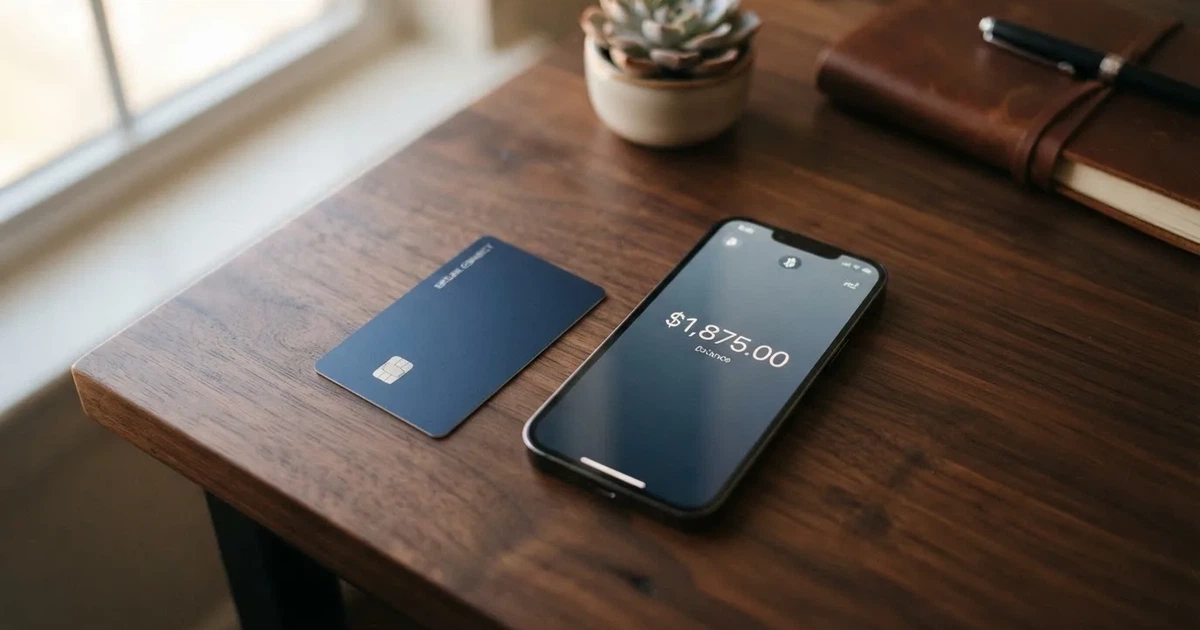
The conditions described here are current as of October 28, 2026.
Verdict
I rate the Jeton card 6.4 out of 10. That score reflects a regulated product with a wide footprint and solid everyday features, dragged down by a confusing top-up fee structure and a steady stream of complaints about locked accounts and slow support. If you specifically need a regulated app account where you can hold a balance, get a card in your name and spend from crypto, Jeton can do that job. If you’re choosing on cost alone, or you want a card that handles stablecoins the way modern cards increasingly do, you’ll likely want to keep reading the alternatives section before deciding.
The breakdown of the score by criterion:
| Criterion | Mark | Why I gave it that mark |
|---|---|---|
| Who can get it | 8 / 10 | Jeton Bank is authorised to serve clients worldwide; only an “All Countries” option is shown and no country list is published. |
| Cost | 4 / 10 | Virtual card 0.99 USD/EUR, physical 39.99 USD/EUR, no monthly fee, no FX fee, but top-up fees of 2.5%–5% and a 0.5% + 2% ATM fee outside the UK. |
| Top-up options | 6 / 10 | Six listed coins (BTC, ETH, LTC, BCH, DOGE, XRP), no stablecoin or network details, several percentage-based top-up fees. |
| Reliability and complaints | 5 / 10 | Issuer is named (Financial House Limited), the operator is FCA-authorised, but Trustpilot sits at 3.1 from 725 reviews, with freezes, lost cards, slow support and KYC delays as recurring themes. |
| Everyday use | 10 / 10 | Virtual and physical, Apple Pay and Google Pay, ATM access, freeze in app. |
The Jeton card suits you if you want a regulated app-based account, you live somewhere your home bank won’t easily give you a Visa or Mastercard, and you’re comfortable topping up with a small set of major coins. It is less suitable if you need a card that loads USDC or USDT from an Ethereum or Solana wallet, if you rely on fast human support, or if you want a fee-free experience.
Who can get the card
Jeton does things backwards from most card programmes. Instead of publishing a country list and refusing everyone outside it, the terms page offers only an “All Countries” option, and Jeton Bank states it is authorised to provide services to clients worldwide. In practice that means the door is technically open almost everywhere, but the region you choose when you sign up affects which terms apply to you. There is no public list of restricted jurisdictions to cross-check against before you start.
Two practical things stand out from the official material. First, the issuer of the card account and the card itself is a separate regulated entity called Financial House Limited, while the operator behind the Jeton brand is LA Orange Limited, FCA-authorised under registration 902088. A separate Jeton Bank Limited entity holds a licence in the Commonwealth of Dominica (2022/C0175). Second, the starting data confirms that the physical card is available to at least EU customers, which is a useful concrete signal in the absence of a country list.
For the everyday user this means: signing up is possible from a wide range of countries, but the exact card features and limits that apply to you will depend on your selected region. If the card product itself is the most important thing to you, you should not assume your country is excluded without trying to register; if certainty matters more, you will want a programme that publishes its supported list.
How to sign up
The Jeton sign-up flow is positioned as fast, and sign-in uses device verification plus a six-digit PIN. That is the marketing line, and it is consistent with the broader crypto card trend of paperless onboarding, but the small print about documents, proof of address, age and the KYC levels used is not stated on the public terms page. What users do report, which matters more than the marketing, is that KYC checks have been a source of delay, with some accounts held up at the verification stage.
Once you are in, the card product itself is straightforward: physical and virtual cards are available, the cards support Visa, Mastercard and UnionPay, and the underlying account is a multi-currency wallet. The card’s spending currency is not stated on the public material, although the starting data points to USD and EUR as the main options, and Jeton is best understood as a multi-currency account where you choose what you want to spend in. Up to 25 additional cards can be issued against a single account, which is more generous than most card programmes.
A few practical points on getting the card in your hand:
- Virtual card issuance is priced at 0.99 USD/EUR, physical at 39.99 USD/EUR, with no monthly or annual maintenance fee.
- Replacement cards cost 15 USD for a physical and 1 USD for a virtual, so a lost or damaged card is a real but not punishing expense.
- Delivery countries and delivery times are not stated, which is the kind of gap that matters if you need a card by a specific date.
Fees and what they really cost
This is where the headline “low-fee” reputation starts to break down. The card itself is cheap to hold, but the cost of putting money onto it is the largest fee you’ll pay, and that is exactly the part of the schedule that varies the most.

Here is the cost picture as stated by Jeton:
| Fee or limit | Amount |
|---|---|
| Virtual card issuance | 0.99 USD/EUR |
| Physical card issuance | 39.99 USD/EUR |
| Account and monthly maintenance | Waived |
| Annual fee | Waived |
| Additional cards | Up to 25 per account |
| Foreign-currency card payment | 0 |
| Crypto conversion fee | Not listed |
| ATM fee, UK | 0.5% of transaction value |
| ATM fee, outside UK | 0.5% + 2% |
| ATM balance enquiry | 0 |
| ATM limit, per transaction | $700 |
| ATM limit, daily | $2,000 |
| ATM limit, weekly | $10,000 |
| ATM limit, monthly | $10,000 |
| POS limit, per transaction | $100,000 |
| POS limit, daily / weekly / monthly | $1,000,000 (subject to card approval) |
| Max card load per month (one table version) | £60,000 |
| Card replacement, physical | $15 |
| Card replacement, virtual | $1 |
| Card closure | 0 |
Three everyday situations show how those numbers actually play out.
Paying in your card’s currency online. If you top up in a currency that matches your card and pay a merchant that settles in the same currency, the only fee on the card payment itself is zero. The variable cost is in the top-up: depending on method and country, you’ll pay 2.5%, 3%, 3.5% or 5% to load the card, and the published material does not list a minimum.
Paying in a foreign currency while travelling. The foreign-currency card payment fee is listed at 0, which is competitive. What you still pay is the conversion markup baked into the top-up or conversion path that put the right currency on the card in the first place.
Withdrawing cash from an ATM in the UK. A 0.5% fee applies, with no separate free allowance mentioned. Withdrawing outside the UK costs 0.5% plus an extra 2%, so a 100 euro cash withdrawal abroad would cost 2.50 in the percentage-based fees alone, before any ATM operator’s own surcharge.
A few more things from the schedule worth flagging: a 0.50 declined-payment fee has been reported by users, which is a small but annoying cost if a merchant’s payment system misbehaves; the fees page is dated January 2026, so the version on the site at the time of writing is recent but the symbol usage is inconsistent, suggesting the schedule has been edited in pieces.
Top up
Topping up a Jeton card starts with a transfer to the Jeton wallet, and the wallet then loads the card. The starting data lists six coins supported for that transfer: BTC, ETH, LTC, BCH, DOGE and XRP. What is not stated is which stablecoins, if any, are supported, and on which networks each of those six coins can be sent. For a card aimed at people who want a clean crypto-to-fiat bridge, that gap matters: if you hold USDC on Ethereum or USDT on Tron, the published material does not confirm that either of those routes is supported, and the safest assumption is that you may need to convert externally first.
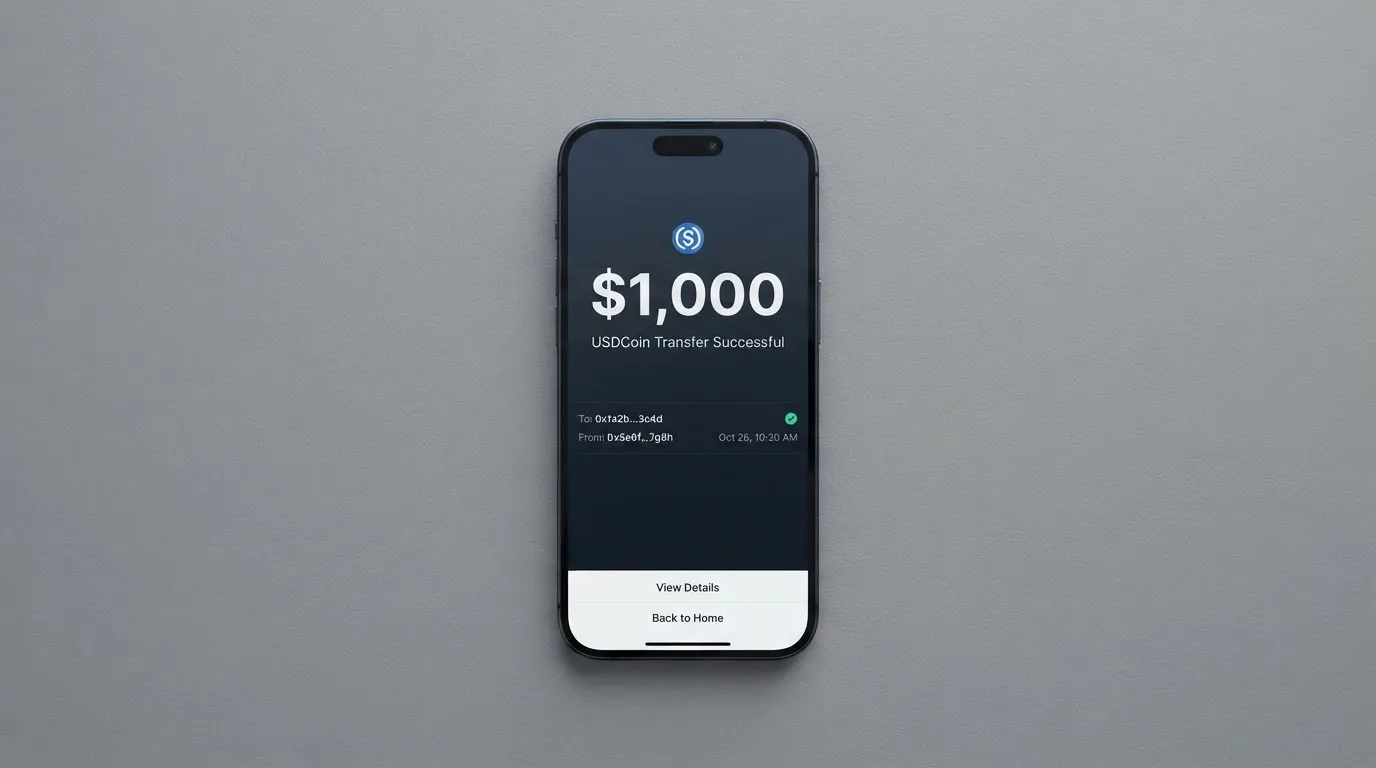
The top-up fee structure is where Jeton’s pricing gets the most complicated. In the general funding table, the percentage charged depends on both the method you use and the country you are in, and the published figures are 2.5%, 3%, 3.5% or 5%. There is no single number to point to, and the minimum top-up amount is not stated. That is enough variability that you should check the figure that applies to your specific country and method before committing a meaningful amount, not after.
A note on the technology behind the transfer: the fees you pay on the blockchain itself for the deposit (gas on Ethereum, bandwidth and energy on Tron, and so on) come out of your crypto balance and are not Jeton’s charge. They are simply the cost of using that network. The card’s published fees are on top of those, which is normal for this category but worth keeping separate in your head when comparing to a different card that may pass part of that cost on differently.
The card’s withdrawal side is thinner. There is no card-specific withdrawal fee listed, and closing a card costs 0, so getting out is not priced punitively. Withdrawals in PLN were removed in June 2026 and USD withdrawals were reported as unsupported in August 2026, both flagged in user reports. That is the kind of change that can affect how easy it is to move money out at a given moment, even when the headline fee is 0.
Paying with it every day
Once your balance is loaded, the Jeton card behaves much like other modern crypto cards. The virtual card is for online and mobile-wallet use, the physical card works in shops and at ATMs, and the app supports Apple Pay and Google Pay across the standard set of devices: iPhone, Android phones, Apple Watch, Wear OS, iPad, Mac and the web. You can freeze and unfreeze both the physical and virtual card from the app, set spending limits, and use the in-app controls the same way you would on any mainstream card app.
A few practical things to know for everyday use. First, the card supports 3-D Secure for online payments, which means you may be asked to confirm a payment in the app or with a one-time code, particularly on less familiar merchants. That is a friction point but a security feature, and it is the same flow used by mainstream banks. Second, address verification at checkout is mainly a US/Canada/UK feature; if you are using a card issued in another country, some merchants’ address checks can return no match, which can cause a decline that is not actually a funds problem. Third, merchant category restrictions (gambling, adult content and so on) are not stated in the public material, so you should not assume any particular category is blocked or allowed until you try.
On rewards, the Jeton card does not advertise cashback, and there is no published earn rate for spending. If a return on spend matters to you, this is a gap between Jeton and several competitors that do run cashback programmes. What you do get is a functional card on the major networks, mobile-wallet support, and freeze controls, which is the baseline that most people in this category are looking for.
A small but useful data point: the app itself has an unofficial third-party rating of around 3.5 out of 5, which is a middling score and roughly consistent with the mixed user feedback on the product as a whole. Official App Store and Play Store ratings were not retrievable for this review.
What can go wrong
The biggest risk on a crypto card is rarely the card itself. It is the company behind it: whether the platform is properly regulated, whether customer funds are safeguarded, and how the company behaves when something goes wrong. On each of those, Jeton has both reassuring and worrying signals.
On the regulation side, the news is good. The card account and the card itself are issued by Financial House Limited, a regulated entity. The Jeton brand is operated by LA Orange Limited, which is FCA-authorised under registration 902088. A separate Jeton Bank Limited entity holds a licence in the Commonwealth of Dominica (2022/C0175). That is a real regulatory footprint across two jurisdictions, not a paper company in an opaque offshore structure.
On the customer experience side, the news is more uneven. The Trustpilot score for Jeton is 3.1 out of 5 across 725 reviews, with about 260 of those in the last 12 months. The recurring themes, in roughly the order they show up in the reviews I read, are:
- An app update around 12 October 2026 caused lost history and login problems for some users.
- Lost or cancelled cards that took time to replace.
- Slow support responses, especially on account-level issues.
- KYC delays, with some users waiting longer than the marketing “three minutes” line suggests.
- Withdrawal holds, with the removal of PLN support in June 2026 and reports of USD withdrawal issues in August 2026.
- Frozen accounts pending documents.
- A 0.50 declined-payment fee that surprised some users.
None of those are deal-breakers on their own. The pattern matters because it suggests the operational side of the product is not as smooth as the regulated structure implies. For a small, infrequent top-up this would be a minor inconvenience; for a balance you rely on, it is something to plan around.
On the security side, the app supports two-factor authentication, instant card freeze and unfreeze, spending limits, and the device verification plus six-digit PIN flow. Jeton also lists UKAS accreditation, Cyber Essentials Plus and ISO 27001 among its certifications. What is not stated is whether customer funds are safeguarded in a segregated account in the way an EU e-money institution would normally be required to do. For a UK-based user, the FCA authorisation of the operator is the most relevant regulatory anchor; for an EU user, the absence of a clear safeguarding statement is the most relevant gap.
The honest summary: Jeton is a regulated product, but it is run by a company whose day-to-day execution is patchy, and the published material leaves some of the most important safety questions (safeguarding, KYC tiers, complaint turnaround times) unanswered. If you choose to use it, keep the balance modest, document your top-ups, and have a plan B for moving money out.
What to take instead
Jeton is not the only option, and three alternatives are worth a look depending on what you actually need.
Whop Cards sits at 5.2 out of 10 and is the most country-restricted of the three. Consumers are accepted in 31 US states (Alabama, Alaska, Arkansas, California, Colorado, Connecticut, Florida, Hawaii, Illinois, Indiana, Iowa, Kansas, Kentucky, Maine, Massachusetts, Michigan, Minnesota, Montana, Nebraska, New Hampshire, New Jersey, New York, North Carolina, Oklahoma, Pennsylvania, South Carolina, Texas, Utah, Virginia, West Virginia and Wyoming), with businesses accepted in 41 states. The list of unsupported consumer countries is long and includes Belarus, mainland China, Cuba, Hong Kong, India, Iran, Iraq, Israel, Myanmar, Nepal, Nicaragua, North Korea, Russia, Syria, Turkey, Ukraine, Venezuela and Vietnam. The card itself is Visa, the fees page says “no extra fees” without listing amounts, and spending happens from a Whop balance backed by stablecoin collateral from a linked wallet. The reward is 5% cashback at select merchants (currently Uber, with more planned). If you are in a supported US state and the cashback merchants match your spending, this is the most rewarding option of the three; if you are outside the US, it is not available to you at all.
Stella sits at 6.5 out of 10 and is closer to Jeton in shape: a virtual and physical Visa card, a custodial in-app wallet, and a top-up flow where you deposit crypto and the card is automatically funded. The official site does not state a list of supported countries; the terms bar users under economic sanctions programmes and route US and European users through affiliates. Fees are not stated officially, only that they are described in the user agreement or app, which is a transparency gap. The card has no published cashback, and the yield-bearing “Earn” product is a separate offering rather than a card benefit. If you want a Visa with a custodial wallet and you do not need a published fee schedule to feel comfortable, Stella is a reasonable alternative.
UniFi Card sits at 4.7 out of 10 and is the most unusual of the three. It is a “Prepaid Debit Visa Card” issued by Lead Bank, with card spending in USD from a USD balance. Funding options include ACH, wire, SEPA (IBAN), SPEI (CLABE) and USDC. App Store notes suggest send-money routes to the Philippines (PHP), Mexico (MXN), the eurozone (EUR) and recent additions for Colombia, Brazil (PIX) and the UK (GBP), which is a useful global-payments feature even if your own card balance stays in USD. The listing claims “3% rewards on balances,” but card-level cashback is not stated and fees are not listed on the public material. If you specifically need USDC funding and a US-issued Visa, this is the closest comparison; otherwise the lack of published fees and the more limited track record make it harder to recommend.
Here is a quick side-by-side view of the four cards on the dimensions that most affect a decision:
| Card | Score | Where it works | Top-up | Cashback | Card fee |
|---|---|---|---|---|---|
| Jeton | 6.4 / 10 | “All Countries” (no public list) | BTC, ETH, LTC, BCH, DOGE, XRP | Not advertised | Virtual 0.99, physical 39.99 USD/EUR |
| Whop Cards | 5.2 / 10 | 31 US states (consumers) | Stablecoin collateral from linked wallet | 5% at select merchants | “No extra fees” stated |
| Stella | 6.5 / 10 | Not stated officially | Crypto deposit (in-app wallet) | Not stated | Not stated |
| UniFi Card | 4.7 / 10 | Not confirmed from official pages | ACH, wire, SEPA, SPEI, USDC | 3% on balances (listing claim) | Not stated |
Who I would recommend it to
The honest version of the Jeton recommendation is that it depends on which compromise you are willing to make. I would recommend Jeton to a reader who:
- Lives in a country where their home bank will not give them a usable Visa or Mastercard, and where a regulated e-money account is a meaningful upgrade over a cash-based existence.
- Is comfortable holding and transferring the six coins Jeton supports, and is not relying on USDC or USDT being available.
- Plans to top up occasionally rather than treating the card as a primary salary account, which keeps the exposure to support delays and KYC holds manageable.
- Wants a virtual card, a physical card, mobile wallets and in-app freeze in a single product, and does not need a published cashback rate.
I would steer a reader away from Jeton if:
- The most important feature for you is a card that loads USDC or USDT directly from an Ethereum, Solana or other named-network wallet. Jeton’s published material does not confirm that, and assuming it works could cost you a transfer.
- You need fast, hands-on support. The complaint pattern on Trustpilot and the user reports I read suggest that “fast” is not the right word for Jeton’s support function.
- You are optimising purely on cost. A 2.5%–5% top-up fee plus a 0.5% + 2% non-UK ATM fee adds up quickly if you move money often.
- You want a card with a transparent, published safeguard statement for customer funds, or a card from a CASP-registered crypto provider under MiCA. Jeton’s documentation leaves that picture incomplete.
In those cases, Whop Cards (if you are in a supported US state and use the cashback merchants), Stella (if you want a Visa and are comfortable with non-published fees) or UniFi Card (if USDC funding is a priority) are more honest matches for what you need. None of the four is a perfect product, and that is part of the current state of the crypto card market.
Frequently asked questions
What is the Jeton card?
The Jeton card is a Visa, Mastercard or UnionPay debit-style card that spends from a multi-currency Jeton wallet. The wallet is funded with crypto (BTC, ETH, LTC, BCH, DOGE, XRP per the starting data) and the card is available in virtual and physical form, with Apple Pay and Google Pay support. The brand operates a regulated app-based account rather than a traditional bank account.
How does the Jeton card work?
You create a Jeton account, complete sign-up (with verification), transfer one of the supported cryptocurrencies to your Jeton wallet, and the wallet balance then loads the card. When you pay, the card draws on the loaded balance; the crypto-to-fiat conversion is handled inside the Jeton system, and the card itself behaves like a normal prepaid or debit card at the merchant.
Is Jeton a bank?
Jeton is not a single uniform bank. The Jeton brand is operated by LA Orange Limited, FCA-authorised under registration 902088; the card account and card are issued by a separate regulated entity called Financial House Limited; and a separate Jeton Bank Limited entity holds a licence in the Commonwealth of Dominica (2022/C0175). So the brand has both e-money and banking licences in its structure, but in different entities and jurisdictions.
Who owns Jeton?
Jeton is operated by LA Orange Limited, which trades as Jeton. The company is FCA-authorised and the card programme is issued through Financial House Limited, with a separately licensed Jeton Bank entity in Dominica. Beyond the operating-company structure, the ultimate ownership behind LA Orange Limited is not described in the public material.
Is the Jeton card available in my country?
Jeton’s terms offer only an “All Countries” option and the company states Jeton Bank is authorised to serve clients worldwide. The exact region you select at sign-up affects which terms apply to you, and a public list of unsupported countries is not published. The starting data confirms the physical card is available to EU customers, which is a useful concrete signal in the absence of a full country list.
Does the Jeton card require KYC?
Yes. Like any regulated e-money or card-issuing business, Jeton has to verify customers under anti-money-laundering and sanctions rules. The marketing line is that sign-up is paperless, but users have reported KYC delays when documents are requested, and the public terms page does not detail the KYC levels, documents, proof of address or age thresholds used.
How do I top up the Jeton card?
You top up by sending one of the supported coins (BTC, ETH, LTC, BCH, DOGE or XRP) to your Jeton wallet, and the wallet then loads the card. The top-up fee depends on the method and your country and can be 2.5%, 3%, 3.5% or 5%. The minimum top-up amount, the supported networks and whether stablecoins such as USDC or USDT are accepted are not stated in the public material.
How do I add the Jeton card to Apple Wallet or Google Pay?
Once you have a virtual card, you add it through the Jeton app, which supports Apple Pay and Google Pay on iPhone, Android phones, Apple Watch, Wear OS, iPad, Mac and the web. The exact steps are guided in-app; you do not type the card number into the wallet app manually, the tokenised card is provisioned through Jeton’s app flow.
Is the Jeton card safe?
Jeton is operated by an FCA-authorised company and the card is issued by a separate regulated entity called Financial House Limited, which is a real regulatory footprint. The app supports two-factor authentication, instant card freeze, spending limits and a six-digit PIN, and the company lists UKAS, Cyber Essentials Plus and ISO 27001 certifications. What is not stated is whether customer balances are safeguarded in a segregated account, and the public complaint picture includes slow support, KYC delays and occasional frozen accounts, so keep the balance modest and have a plan B.
How do I delete my Jeton account?
Account closure and card closure are both possible through the app; closing a card costs 0 and there is no card-specific withdrawal fee listed. The exact deletion flow for the underlying Jeton account, including how remaining balances are returned and how long that takes, is handled in the app and the user agreement, and is not described in detail on the public terms page.
How app and neobank cards work – cryptocardsexplained.com
Content created by the «cryptocardsexplained.com» team