
A stablecoin card for emerging markets, with fees that read well and details that do not
 Available in US
The OKX Money card is a payment card that spends a stablecoin balance instead of money sitting in a current account. You load the app, pass identity checks, and you get a virtual or physical card that draws on dollar-backed stablecoins — USDG, USDC or USDT — held in the app. On paper the two headline economics sound unusually clean: zero foreign exchange fees and no conversion markup when you spend in another currency. And the reach is aimed squarely at people the ordinary banking system serves badly: emerging markets across several continents, expanding market by market.
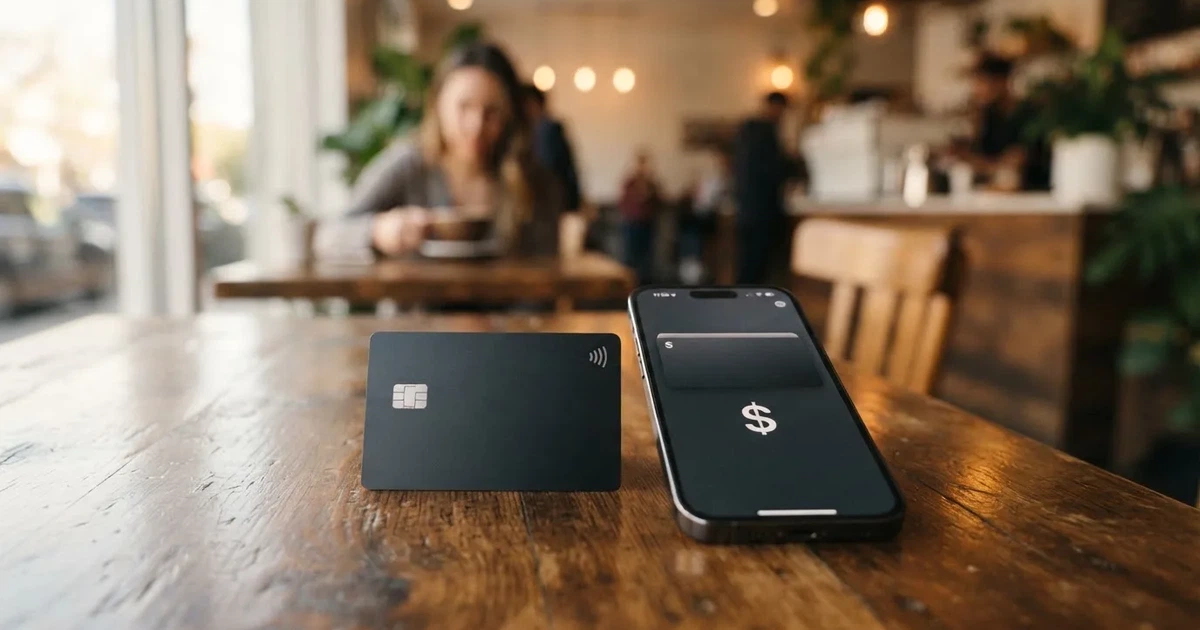
That is where I land after reading through the card’s own pages: a well-conceived product for a specific audience, with a headline fee structure that is genuinely better than most of the category, and with an unusual number of important blanks in the public information. The issuer is not named. The card network is not named on the official page. Spending limits are not published. Delivery times, ATM access, Apple Pay, Google Pay, support channels and dispute handling are all unstated. I score it 6.7 out of 10, and a good deal of that score rests on what is missing rather than on what is wrong.
This review is written for a person deciding whether to try it. If you are in one of the launch markets and you already hold dollars or stablecoins in a working way, the economics may suit you well. If you need a card that a landlord, an insurer or an online shop treats as ordinary domestic plastic, expect friction. I will tell you which is which as we go.
The conditions described here are current as of October 28, 2026.
Verdict: 6.7 out of 10
Let me give you the number first, then the reasoning, because the reasoning is uneven in both directions.
The card scores well on cost and reasonably well on everyday use. It scores middling on access, on funding and on reliability. Reliability is where a card review should be most cautious, and here the caution is about the unknown: no official incidents specific to OKX Money have surfaced, but that is partly because the product is new as a standalone app, launched on 6 October 2026, and because the entity that actually issues the card is not disclosed on the official page.
Here is how the score breaks down, criterion by criterion.
| Criterion | Mark | Why |
|---|---|---|
| Who can get it | 6 / 10 | Selected emerging markets in Latin America, Africa, South Asia and the Middle East; the exact list is not published |
| Cost | 8 / 10 | Zero foreign exchange fee and no conversion markup; issuance and servicing charges are not disclosed |
| Top-up options | 6 / 10 | The account is funded in 50+ currencies and converted into USDG, USDC or USDT; networks are not named |
| Reliability and complaints | 6 / 10 | OKX operates under licensing frameworks in 30+ jurisdictions; the issuer is not named; no official incidents for the card; Trustpilot shows 1.9/5 for the exchange across 1,624 reviews |
| Everyday use | 7 / 10 | Virtual or physical card from one app; up to 10% cashback; Apple Pay, Google Pay and ATM are not disclosed |
Total: 6.7 out of 10.
Two things follow from that table, and I would rather say them plainly than bury them.
First, the cost score is the strongest of the five, and it is strong on the strength of one specific published statement: the card charges zero foreign exchange fees and adds no conversion markup on purchases in another currency, and converting between supported stablecoins carries no conversion fee. That is a real and unusual promise. It does not, however, tell you what the card costs to obtain or to keep, because those figures are not stated. If a monthly fee exists, it is invisible to a reader.
Second, the reliability score is not low because anything has gone wrong with this card. It is mid-range because so much of the responsibility sits behind a page that does not tell you who is responsible. OKX is a large, long-running exchange with licensing frameworks in more than 30 jurisdictions, and that is a genuine positive. But the card issuer is not named, and in card terms the issuer is the party that holds your balance, authorises your payments and handles your disputes. Not knowing which entity that is makes it harder to hold anyone to anything.
Who this card suits, in my reading: someone in a launch market who wants to hold and spend in dollar-linked value, who is comfortable with a card that draws on a stored balance rather than a bank account, and who does not mind doing identity checks with an exchange. Who it does not suit: anyone who needs a card that reads as fully domestic everywhere, anyone whose landlord or employer requires a card from a named local bank, anyone who plans to rely on ATM withdrawals or mobile wallets without checking first, and anyone who wants published spending ceilings before committing money.
One more thing about the audience. This is not a card designed for people who already have easy access to dollars through ordinary banking. It is aimed at emerging-market users who save in digital dollars and spend them — a population for whom a stablecoin balance is not an exotic choice but a practical one. Read in that light, several of the gaps below stop looking like failures and start looking like a product still being built market by market. That is the fair reading, and it is why I have not marked the card down harder than I have.
Who will they give you the card
The official answer is: selected emerging markets in Latin America, Africa, South Asia and the Middle East. The exact list is not published, and the rollout is described as expanding market by market. Whether you can get one depends on your country — not your citizenship, as far as the official material goes, though the distinction matters for other reasons and I will come back to it below.
This is the first thing to check, before anything else, and it is easy to check. If your country is not on the list, there is no application worth filling in. If it is, you are inside the intended audience. If you are in one of the regions above but not yet covered, the honest answer is that nobody outside the company can tell you when your market will open, because no schedule has been published.
A secondary source, unofficial and not confirmed by the card, gives examples of launch markets: South Africa, Kenya, Nigeria, Pakistan and Bangladesh, per ProPakistani on 6 October 2026. I would treat that as a starting point for your own research rather than as an answer. Official pages do not confirm it, and markets in this category can open and pause. Check the current list in the app or on the official site rather than trusting a blog post, including this one.
One thing worth understanding, because it explains a lot of the friction you may hit later, is how the geography of a card works. Every card number starts with an issuer identification number of six or eight digits that tells the merchant — and the merchant’s payment processor — which institution issued it and from which country. Merchants can look that up and may apply extra scrutiny when the issuer country differs from the customer’s billing address. That is why a card issued in one country can look foreign to a shop in another. It is the mechanical reason behind most of the declines people report with crypto cards, and it has nothing to do with you personally.
How to get it
The stated process is short: new users sign up and pass identity checks before funding. Which documents you will need is not stated. That gap is worth taking seriously, because identity checks are the step where a card application most often stalls, and the card does not tell you what to have ready.
There is also no statement about verification levels — whether the card requires the same tier of checks as trading on the exchange, or a lighter one. That distinction can matter a great deal in practice, and you cannot infer it from the outside.
As a general matter, since it explains the shape of the process wherever you apply: anti-money-laundering rules require regulated businesses to verify customers and assess risk as part of their legal obligations, including ongoing monitoring and reporting of suspicious activity. In the EU, that customer due diligence normally covers name, address, date of birth, nationality and identity documentation, a sanctions check, the purpose of the relationship, and whether the customer is a politically exposed person. In the US, the customer identification programme requires name, date of birth, address and an identification number, and electronic systems also validate proof-of-address documents. If due diligence cannot be completed, rules in the EU require the institution to decline the transaction or relationship and, where necessary, end an existing one — which is exactly why accounts get closed or frozen pending documents rather than simply delayed.
Two points you should carry from that. First, nationality is recorded and screened separately from residence, because sanctions screening and issuer risk policy are applied to citizenship and country of birth as well as to country of address. If your citizenship and your country of residence differ, the card’s availability may follow either one, and the public pages do not say which. Second, prepaid and debit cards are generally available to adults aged 18 and over, and some issuers set higher limits — OKX Money’s are not stated.
The card itself comes in two forms, virtual or physical, from the same app. The card network is not named on the official page; unofficial reporting from crypto.news, dated October 2026, says Mastercard. The currency the card is denominated in is not stated. Delivery time for a physical card is not stated.
What that leaves you with, practically: apply in the app, complete whatever identity check is asked for, and then work out whether you actually need the physical card. A virtual card is the faster path and the one most people in the early days of this category should start with. If you are considering a physical card and travel or delivery timing matters to you, that is a question to put to support before you order — except that support channels are also not stated.
Fees: what it really costs
This is the section where OKX Money looks best and where I have the fewest complaints. One published sentence carries it: the card charges zero foreign exchange fees and adds no conversion markup on purchases in another currency, and converting between supported stablecoins carries no conversion fees.
Take a moment to appreciate how unusual that is in this category. A typical crypto card takes a spread somewhere between half a percent and several percent on the conversion, and the marketing page usually makes you hunt for it. Here the fee is stated as zero, in plain terms, on the official page. Whatever else you decide about this card, that part is a real advantage for anyone who spends across currencies or holds more than one stablecoin.
What is missing is everything around that sentence. Here is the honest state of the cost picture.
| Item | What is stated |
|---|---|
| Foreign exchange fee | Zero, with no conversion markup on purchases in another currency |
| Conversion between supported stablecoins | No conversion fees |
| Card issuance | Not stated |
| Monthly or servicing fee | Not stated |
| ATM withdrawal | Not stated |
| On-chain network fee for your own top-up | Charged by the blockchain, not by the card provider |
| Spending limits | No amounts stated; users can set spending limits in the app |
So let me run three everyday payments through that table and see what I can honestly tell you.
A coffee bought in a local currency, priced in dollars on the terminal. Zero foreign exchange fee, no conversion markup. If you hold USDG and the shop prices in dollars, the stablecoin conversion fee is also stated as zero. This is the payment the card is cheapest on, and if your spending looks like this, the cost case is strong.
A month of online subscriptions billed in dollars, from a wallet that holds USDT. Again zero conversion fee between supported stablecoins and no FX fee. But note the boundary: stablecoins themselves are not guaranteed to hold a fixed dollar value. The word “stable” is a description of intent rather than a guarantee, and the record is not clean — TerraUSD collapsed in May 2022, and USDC temporarily lost its peg in March 2023 during the US banking crisis. A zero fee on a conversion into a token that has drifted is not quite the same as a zero fee.
A cash withdrawal at an ATM. Here I can tell you almost nothing, because ATM terms are not stated. And there is a structural reason to be careful even if they were: fees here tend to come from the ATM operator rather than the card issuer, and the network’s own charge is set at the issuer’s discretion. If cash is part of how you plan to use this card, treat this as a must-ask, not a nice-to-know.
One category of cost sits outside the card entirely and is worth naming so it does not surprise you. If you fund the card by moving a stablecoin on a blockchain, that network fee is paid to the blockchain, not to OKX. On Ethereum, gas is paid only in ETH, which means a wallet holding USDT but no ETH cannot send at all. That is a wallet problem, not a card problem, but it is the kind of thing that costs people real money on a bad afternoon.
And one more, because it will happen to somebody reading this: tax. The IRS treats digital assets as property, so exchanging them for goods, services or dollars generally produces a taxable gain or loss. For personal holdings that result is a capital gain or loss, short-term if held a year or less, and it is measured in local fiat currency at the fair market value on the date of the transaction. That means each card payment funded from crypto may be a separate taxable disposal. I am not giving you tax advice and I am not giving you advice for your jurisdiction — I am telling you that “zero fees” and “no tax” are not the same sentence.
Top up: how the money gets in
The funding route is broad, and it is the second strongest thing about this card. Accounts are funded in more than 50 supported currencies, and those amounts are converted into dollar-backed stablecoins — USDG, USDC or USDT — held in the app balance. Fees and minimums for top-ups are not stated. Networks are not stated.
More than 50 currencies is a genuinely wide rail for a card aimed at emerging markets, where the practical problem is often not the number of banks but the fact that the money cannot leave the domestic banking system. If you are paid in a local currency and want to hold dollar-linked value, the promise here is that you can convert rather than find a way around a capital control.
Two things to check before you move anything.
The first is the network. Stablecoins live on different blockchains and the choice matters: Circle listed USDC as natively supported on 38 networks as of 16 September 2026, including Ethereum, Solana, Base, Polygon PoS, Avalanche, Arbitrum and Stellar, while USDT has been issued on networks including Ethereum, Tron, Solana, Polygon and Avalanche. Circle stopped supporting USDC on Tron in February 2024, so “USDC over TRC20” is not a native option. Blockchain transfers are irreversible, so a deposit sent on a network the card provider does not support, or to an address belonging to a different network, can be lost or need manual support recovery with no guarantee. The card’s own pages do not name the networks it accepts. Until they do, treat any network advice you find elsewhere — including here — as unconfirmed, and confirm inside the app before sending.
The second is that the on-chain route is not your only option and is not the cheapest for small amounts. Network fees are charged by the blockchain regardless of who receives the funds, so a chain transfer for a modest top-up can cost more than the amount you are moving, depending on the network and its current conditions. Card funding from a supported fiat currency avoids that layer entirely.
Withdrawals are not stated on the public pages. That is a real gap, not a formality: “how do I get my money back out” is a question you should be able to answer before you put money in, not after.
Paying with it every day
The everyday picture is simple in the good way and thin in the documentation way. One app holds the balance, the card and the controls. You can set spending limits in the app. That is the core loop, and for spending from a stored balance it is a sound design — the card cannot overdraw, because it can only spend what you loaded.
Rewards are where the marketing energy is. Up to 10% cashback on qualifying purchases is offered for eligible customers, and rates vary by region and eligibility; the payout currency is not stated. There is also up to 10% APY on eligible USDG balances, and referral commissions. Read the cashback carefully. “Up to 10%” with rates varying by region and eligibility is a ceiling, not a rate, and the difference between those two numbers is where people get disappointed. The APY on balances is a different product — an incentive to hold, not a reward for spending — and it carries its own conditions that I have not been able to read.
The app is a standalone OKX Money app. Store ratings were not read.
Then there are the features people expect from a modern card that this one does not describe. Apple Pay is not stated. Google Pay is not stated. ATM access is not stated. It is worth being precise about the first two, because confusion here is easy and expensive: the separate European OKX Card supports Apple Pay and Google Pay, and that is a different product. OKX Money is a separate standalone app, and its own pages do not describe mobile wallet support. Do not carry the OKX Card’s feature list across.
If mobile wallets matter to you — and for many people they are the difference between a usable card and an annoying one — this is a question to ask before you commit, not after. The mechanics, once set up, are friendly: a tokenised mobile wallet replaces your card number with a device-specific number stored in the phone’s secure hardware, never on the manufacturer’s servers, with a fresh one-time code per payment. That is a good design where it exists. Whether it exists here, the pages do not say.
Two everyday-payment realities to expect regardless of issuer. A merchant category code — a four-digit classification assigned when a business starts accepting cards — can cause friction: the gambling code is blocked on many cards by policy rather than by law, and the blocked list varies by issuer. And address verification, which compares the numeric parts of the billing address you typed with the issuer’s records, is mainly offered in the US, Canada and the UK and is generally unavailable for foreign-issued cards. Foreign-issued card, declined at checkout, is a routine event in this category rather than a sign that something is wrong with you.
Online payments add one more layer in your favour: 3-D Secure, where the issuer assesses the risk and either approves without interruption or challenges you with a one-time code or a biometric check. Under it, liability for a fraudulent online payment can shift from the merchant to your bank — or, as critics point out, to you. Visa’s brand is Visa Secure, Mastercard’s is Identity Check.
What can go wrong
No official incidents specific to the OKX Money card have surfaced in what I checked. That is worth saying plainly, and it is worth saying with the caveat that the product launched as a standalone app on 6 October 2026, so the short track record is also short evidence.
The complaints that do exist are about the OKX exchange, not this card. On Trustpilot the main exchange page shows 1.9/5 from 1,624 reviews; the app page shows 4.5/5 from 34 reviews. The recurring user-reported theme on the exchange is support loops — going round in circles without resolution — and there is a report of an identity-theft case. Neither is a direct finding against OKX Money. Both are reasons to look hard at how support actually behaves before you rely on it, which matters more here because the card’s own support channels are not stated.
The structural risks are the ones to think about.
The issuer is not named. In a card, the issuer holds the programme, authorises payments and handles disputes. OKX (OKX INC. per the card’s own material) operates under licensing frameworks in more than 30 jurisdictions, which is real substance. But knowing the brand is not the same as knowing who is liable for your balance, and the card pages do not bridge that gap.
Where your money sits matters. A card of this kind generally draws on a balance held by the provider rather than on your own bank account, and that is a custodial arrangement: the provider holds the credentials, so you trust them completely with the funds. The alternative — a self-custody-linked card, where the money stays in your own wallet until the moment of payment — shifts the risk to you instead: you bear sole responsibility for key loss, for phishing, and for clipboard-hijacking malware that silently swaps an address you copied. Neither model is free of risk; they just put the risk in different places.
The category has a record of custodian failure: Mt. Gox, about US$350 million reported stolen between 2011 and 2014; Coincheck, about US$400 million in 2018; Ronin Network, US$625 million in 2022. And there is no built-in recovery layer at the network level — transfers are typically irreversible, and a stolen private key cannot be frozen or returned.
Stablecoins are not censorship-proof either. Tether says it disables tokens in wallets on the OFAC sanctions list and has frozen funds tied to illicit activity.
Then there is the risk nobody prices in properly: the card programme can end. Visa and Mastercard do not issue crypto cards to consumers themselves; they license issuers, and they can suspend a programme. Visa said in November 2022 that it had terminated its global agreements with FTX, and the FTX US debit card programme was wound down by its issuer. WaveCrest, a Visa issuer that supplied crypto card brands, was suspended by Visa in Europe in 2018, closing all WaveCrest-issued Visa programmes. The pattern in those cases is consistent: a notice period, then loading and spending stop, then users are asked to withdraw remaining balances. Regulators do the same in orderly fashion. Under EU markets-in-crypto-assets regulation (MiCA, Regulation (EU) 2023/1114, which ESMA says took legal effect in June 2023), the transitional period for existing providers runs only until 1 July 2026 or until a MiCA authorisation is received or refused, whichever comes first — after which providers need their own authorisation. A card is regulated separately again, as a payment service under e-money and payments law, so a crypto card often depends on two licences rather than one.
Where you are, do the licence check yourself. ESMA maintains an interim register of authorised crypto-asset service providers, white papers and non-compliant entities, and it is a reasonable place to look. Note the asymmetry in what a licence does and does not do: an EMI in the EU must safeguard customer funds by segregating them in dedicated accounts or insuring them, but such funds are not the same as bank deposits and may not be covered by a deposit guarantee scheme. Cardholder protection in the US also comes from different rules depending on the card — debit card reversal rights under Regulation E, credit card rights under Regulation Z — and prepaid-card coverage varies and should not be assumed to be the same.
Two more small risks that are easy to underestimate. A declined authorisation can leave a hold on your funds that stays for several days, typically up to seven — you may be short at the wrong moment. And merchant category blocks can stop a payment at a till for reasons that have nothing to do with you.
Security features on the card itself are not stated, nor is support, nor is dispute handling. The general toolkit such a card would typically offer — app-based two-factor authentication, instant freeze, spending limits, 3-D Secure confirmation, tokenised mobile wallets — you should assume nothing about until you see it in the app. If a card can be frozen instantly, you will want to know that on day one, not on day ninety.
What to take instead
Two alternatives in the same category, both scored by the same method, both with their own problems. Neither is clearly safer or cheaper; they differ in what they disclose and what they refuse to.
MSX — 6.4 / 10. Almost nothing is available on official pages I could read: not who qualifies, not what the card is, not what it costs, not its fees, not how you fund it, not what it pays in rewards. A score of 6.4 on that basis reflects the method rather than the product. It is the option to consider only if you can get clear answers directly from the operator.
Bybit Card — 6.0 / 10. The most fully documented of the three, and the one where you can actually plan. Its help centre lists regions including Argentina, AIFC (Kazakhstan), Georgia, Kazakhstan, Australia, Mexico, Brazil, Peru and Asia Pacific, and it is explicit about its boundaries: the product is not meant for European Economic Area customers and all EEA participation is strictly prohibited. Its fiat-service restricted list — which covers deposits, withdrawals and One-Click Buy rather than the card itself — includes Belarus, the Russian Federation, Serbia, China and the United States, with a note that Russian users can only make RUB transactions in fiat. No card-specific statement on Russian or Belarusian citizens was found, and no rule distinguishing citizenship from residence, so do not infer one; the application asks for country of residence, and if the country is unsupported it registers your interest rather than opening an account.
Where Bybit is genuinely more useful to you is the arithmetic. It publishes physical card issuance costs by region — Australia 29.99 USD, Argentina 5 USD/USDT, Georgia 29.99 USDT, Kazakhstan (AIFC) 29.99 USDT, Asia Pacific 5 USDT, none in Brazil and Mexico, and no issuance or replacement fee for VIPs holding an Australia, Kazakhstan (AIFC), Georgia or Asia Pacific physical card — alongside the statement that virtual issuance is free in all regions until further notice, and “Auto interest, no annual fees”. It publishes conversion costs: a crypto conversion fee of 0.9% over the One-Click Sell rate in Australia, Asia Pacific, Georgia, Kazakhstan, Brazil and Mexico; 0.5% in Argentina; Peru not supported. And it publishes FX costs, which is where the gap with OKX Money is widest: 2% on top of the network rate in Australia, Asia Pacific, Georgia and Mexico; 2% “International Fee” in Kazakhstan (AIFC) on purchases outside Kazakhstan even in dollars; 7% in Argentina; 1.5% in Brazil; 1% in Peru.
That comparison is the single most useful thing in this review. On the one number OKX Money leads on — foreign exchange — Bybit’s published 2% in many regions is a real cost that OKX Money’s stated zero does not charge. If your spending is cross-border or multi-currency, OKX Money’s economics are simply better on that axis. If you care more about knowing your issuance cost, your cashback tier and your card currency in advance, Bybit discloses all three and OKX Money discloses none of them.
Bybit’s other structural difference is worth knowing: its card has no balance of its own. It draws on the Funding Account and the Flexible Easy Earn balance, fiat first; if fiat is insufficient, crypto is sold at the One-Click Sell rate plus the card’s crypto conversion fee. Supported cryptos are BTC, ETH, XRP, USDT, USDC and GRAM, with a default priority order you can reorder in the Card Dashboard. Its rewards are also more conditional than the headline suggests: from 2026-10-05 10:00 UTC only crypto-funded transactions earn points or cashback, fiat-funded spending does not; points pend for four calendar days; cashback in USDT equals points × 0.002; Auto Cashback must be on. Tiers run from Base at 2.00% with a 5 USD monthly cap up to Infinite at 10% with a 600 USD cap and 25,000 USD monthly spend to unlock.
MEXC — 5.6 / 10. A page listing that names “The Philippines, Taiwan, Thailand…” behind a Details link, with the full list not shown. Virtual card only — physical cards are not yet available — with network and card currency not stated. Issuance is shown as 20 USD, though the page apparently displays it next to a discounted 0 USD price in a way that is not clear, and a service fee of 0%, with fees varying by card type per a linked guide. Funding is by transferring USDT to the fiat account and adding it on the card page; networks not stated. Cashback runs by M-Score tier and is paid by the 15th of the next month: Standard 4% capped at 100 USDT per month, Premier (600–799) 6% capped at 300, Elite (800+) 10% capped at 800. Referral pays 20 USDT to the referrer and 10 USDT to the referee.
The honest summary of this comparison is that OKX Money and Bybit are not really competing for the same reader. OKX Money wins on published fee economics and loses on published detail. Bybit is the reverse. MEXC is a virtual-only option with an unclear headline price. If you are in a launch market for OKX Money and your main worry is the cost of spending across currencies, the fee comparison is decisive. If your main worry is knowing exactly what you are signing up for, Bybit is the more legible product.
| OKX Money | Bybit Card | MEXC | MSX | |
|---|---|---|---|---|
| Score | 6.7 / 10 | 6.0 / 10 | 5.6 / 10 | 6.4 / 10 |
| Regions named on official pages | Selected emerging markets in Latin America, Africa, South Asia and the Middle East; list not published | Argentina, AIFC, Georgia, Kazakhstan, Australia, Mexico, Brazil, Peru, Asia Pacific | Philippines, Taiwan, Thailand listed behind a Details link | Not stated |
| Card form | Virtual or physical | Virtual and physical (not physical in Peru) | Virtual only | Not stated |
| Card network | Not named officially | Mastercard and Visa by region | Not stated | Not stated |
| FX fee | Zero, no conversion markup | 2% in several regions; 7% Argentina; 1.5% Brazil; 1% Peru | Not stated | Not stated |
| Crypto conversion fee | None between supported stablecoins | 0.9% over One-Click Sell rate in several regions; 0.5% Argentina | Not stated | Not stated |
| Issuance | Not stated | Virtual free in all regions; physical priced by region; none in Brazil and Mexico | 20 USD shown, next to a 0 USD discounted price | Not stated |
| Funding | 50+ currencies into USDG, USDC or USDT; networks not stated | Funding Account and Easy Earn balance; BTC, ETH, XRP, USDT, USDC, GRAM | USDT to fiat account; networks not stated | Not stated |
| Rewards | Up to 10% cashback for eligible customers; rates vary by region; up to 10% APY on eligible USDG | Base 2.00% to Infinite 10%, monthly caps 5–600 USD | Standard 4% to Elite 10% by tier | Not stated |
Who I would recommend it to
I would recommend the OKX Money card to someone who is in a launch market, who already has a working way to buy or hold dollar-linked value, who spends across more than one currency or holds more than one stablecoin, and who is comfortable with a card that draws on a stored balance inside an exchange app. For that person the fee structure is the best in the category on published terms, and the 50-plus-currency funding route is a genuine practical advantage.
I would not recommend it — or rather, I would recommend waiting — to anyone who needs the card to behave like a domestic bank card from day one. If a landlord wants a card from a named local bank, if an insurer requires it, if you plan to withdraw cash regularly, if you rely on Apple Pay or Google Pay, or if you want published spending ceilings before you commit money, the honest advice is to wait for the disclosures rather than to discover the gap yourself.
My own order of operations, if I were doing this: confirm your country is on the current list, then confirm three things in the app before sending anything — which networks are accepted for top-up, whether mobile wallets are supported, and what the issuer entity is. Send a small test amount before a large one. Treat the cashback number as a ceiling, not a rate. And keep a working withdrawal route open somewhere other than inside the app, because that is the one thing you cannot test until it matters.
The score is 6.7 out of 10, and I would raise it the moment the issuer is named and the mobile wallet and ATM questions get answers. Nothing about the product so far suggests it is badly built. It suggests it is half-published.
Frequently asked questions
What is the OKX Money card?
The OKX Money card is a payment card that spends a stablecoin balance rather than a bank account. You pass identity checks in the OKX Money app, and the funds sit as dollar-backed stablecoins — USDG, USDC or USDT — in your app balance. A virtual or physical card draws on that balance. It launched as a standalone app on 6 October 2026 and targets those emerging markets.
How does the OKX Money card actually work?
It works much like a prepaid card. You top up in a supported currency, the amount is converted into dollar-backed stablecoins held in the app, and the card spends only that balance — so it cannot overdraw. Because the card holds a stored balance rather than drawing on a current account at each payment, it behaves like a prepaid instrument, and merchants can see from the card’s issuer identification number that this is what it is.
Is OKX Money a bank?
The public pages do not present it as a bank, and they do not name the entity that issues the card — OKX is named, but the issuer is not. In a card, the issuer is the party that holds the programme, authorises payments and handles disputes. Under EU markets law an electronic money institution may issue payment cards and e-wallets but cannot lend, and must safeguard customer funds; those safeguarded funds are not the same as bank deposits.
Who owns OKX Money?
It belongs to OKX, the crypto exchange, which operates under licensing frameworks in more than 30 jurisdictions and is recorded as OKX INC. The company is a long-standing exchange, not a bank I can identify from the card’s own pages. What the pages do not tell you is which separate entity issues the card itself, and that is the detail you are missing when you try to work out who to complain to.
Does the OKX Money card require KYC?
Yes — new users sign up and pass identity checks before funding, though the card does not state which documents you need or what verification levels apply. Anticipated checks will normally involve your identity document, address and date of birth, and a sanctions screening step. If the checks cannot be completed, accounts are commonly frozen or closed pending documents rather than simply delayed, so it is worth having your documents ready before you start.
Is the OKX Money card free?
Partly, and the honest answer is incomplete. The card states zero foreign exchange fees and no conversion markup on purchases in another currency, and no conversion fees between supported stablecoins — that is genuinely free. But issuance, any monthly or servicing fee, ATM fees and spending limits are all not stated on the public pages, so you cannot yet tell what the card costs to hold. On-chain network fees for your own top-up are paid to the blockchain, not to OKX.
Can I use the OKX Money card in my country?
Only if your country is on the current list. The card is offered in the regions mentioned above, but the exact list is not published and the rollout is market by market. Unofficial reporting, not confirmed by the card, names South Africa, Kenya, Nigeria, Pakistan and Bangladesh as examples. Check the current list in the app rather than relying on any published article, including this one.
How do I top up the OKX Money card?
You fund the account in more than 50 supported currencies, and the amount is converted into USDG, USDC or USDT held in your app balance. Top-up fees and minimums are not stated, and neither are the networks accepted — which matters, because sending on an unsupported network or to an address belonging to a different chain can lose the funds, since blockchain transfers are irreversible.
Can I add the OKX Money card to Apple Wallet?
The card’s own pages do not say. Apple Pay and Google Pay are not stated for OKX Money, and the separate European OKX Card does support them — a different product, with a different app. Since a tokenised mobile wallet stores a device-specific number in the phone’s secure hardware rather than sharing your card number, it is worth asking about support before you commit to the card if mobile payment is how you intend to use it.
Is the OKX Money card safe, and where are the risks?
No official incidents specific to the card have surfaced, but the product is new and the issuer is not named, which limits what you can verify. Your balance is held by the provider rather than in your own wallet, so you are trusting a custodian; the category has a record of custodian failure. Separately, card programmes do end when a network or regulator acts, and stablecoins can lose their peg — TerraUSD collapsed in May 2022 and USDC briefly in March 2023.
How exchange cards work – cryptocardsexplained.com
Content created by the «cryptocardsexplained.com» team