
A clean, cheap crypto card with a heavy Gold-tier gate on the plastic
 Available in US
Nexo is one of the more established crypto platforms in Europe, and its card is the part of it that touches ordinary life: you load it, tap it, and buy coffee. On paper that is a genuinely useful thing for someone whose money sits in crypto. In practice, the card is cheap to hold and cheap to spend inside the euro area, but it is fenced in three ways that matter more than the headline numbers: it is only for people in a handful of European countries, the physical version is locked behind a Gold tier with a $5,000 balance, and cashback — the reason most people come — only works in one of the platform’s two spending modes.
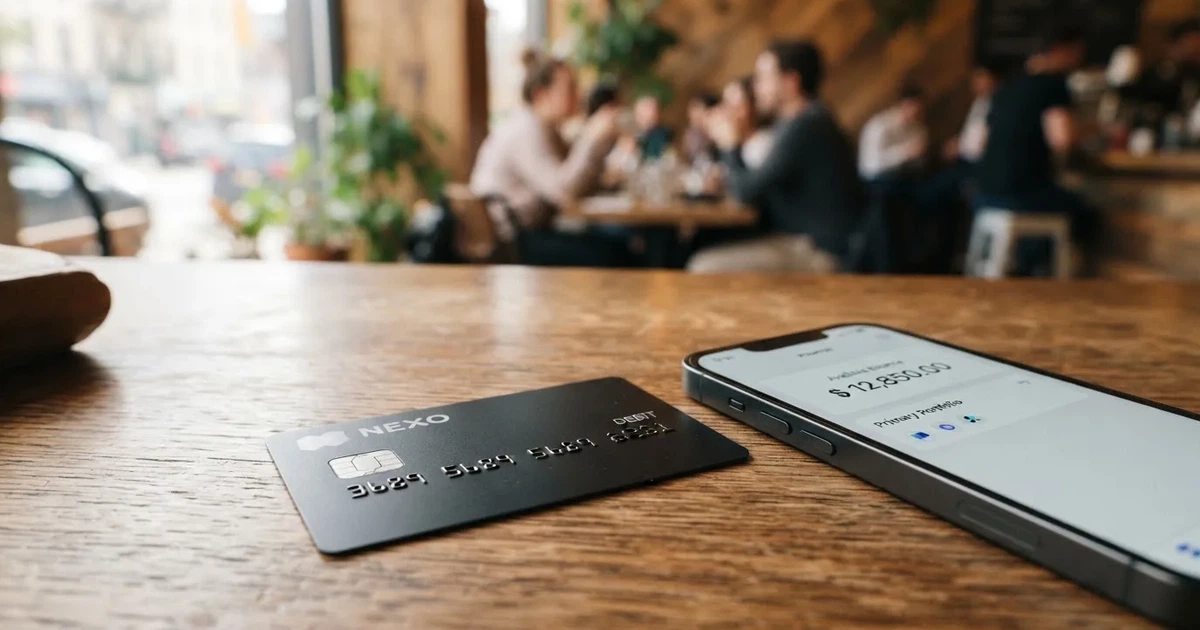
I gave it 6.3 out of 10. That is not a bad score. It means the card does its basic job well, and the disappointments are about gates, geography and ambiguity rather than about a broken product. If you hold a large crypto balance in Europe and want cashback, this is a card worth having in your wallet. If you want a simple bank card that works everywhere without conditions, it is not that.
The conditions described here are current as of October 28, 2026.
| Criterion | Mark | Why |
|---|---|---|
| Who can get it | 5 / 10 | Selected European countries including the EEA and the UK; no official country list on the page |
| Cost | 7 / 10 | No monthly or annual fee, issuance is free, FX is 0.2% on weekdays inside the EEA/UK; the plastic asks for Gold and $5,000 |
| Top-up options | 7 / 10 | Spends from the Nexo account across 100+ assets in Debit Mode; networks not disclosed |
| Reliability and complaints | 5 / 10 | Issuer DiPocket UAB (Bank of Lithuania) is named; Trustpilot 4.4 but complaints about withdrawal delays and closed accounts |
| Everyday use | 8 / 10 | Virtual and physical cards, Apple Pay and Google Pay, cash machines; plastic restricted to Gold and $5,000 |
| Total | 6.3 / 10 | A good card for the wrong shape of customer |
Will they give you the card
The short answer is: only if you live in one of a set of European countries, and the card page will not tell you which ones.
Nexo’s own wording is that the card is for residents and citizens of “selected European countries, including the EEA and the United Kingdom”. Two things to notice in that sentence. First, it is citizenship *and* residence — not just an address. Second, “selected” is doing a lot of quiet work: the page names no country list, and the jurisdictions where it is not available are simply “certain jurisdictions” without being named.
Third-party trackers do publish a list, and it is unofficial — Nexo’s own pages do not confirm it. On that reading the card is available in 30 countries, among them Argentina, Austria, Belgium, Croatia, Cyprus, the Czech Republic, Denmark, Finland, France, Germany, Greece, Hungary, Iceland, Ireland, Italy, Latvia, Liechtenstein, Lithuania, Luxembourg, Malta, the Netherlands, Norway, Poland, Portugal, Romania, Slovakia, Slovenia, Spain, Sweden and the United Kingdom, and it is restricted in Bulgaria, Estonia and the United States. Take that list as a map, not as a guarantee. What you can rely on is the card page’s own phrasing, and if your country is not obviously inside the EEA or the UK you should expect a refusal.
There is also history here that a reader deserves to know about before applying. Cointelegraph reported a 2025-era Bulgarian police raid on Nexo’s Sofia office over alleged Russia-sanctions and anti-money-laundering violations; Nexo made no official statement about any Russians being found. The Bulgarian angle matters twice over, because Bulgaria is on that unofficial “restricted” list — the place where the company operates most visibly is also one where the card is reportedly not available.
I am also going to say this once and then leave it alone: the card’s public pages do not state a minimum age, and they do not state whether proof of address is required. You will not find those answers in the terms; you find them by trying.
How to get it
You verify your identity with a supported ID document issued in the EEA, the UK or another eligible European country. That is the whole of the published verification requirement — one level, one document. The page says nothing about tiers of verification, nothing about how long it takes, and nothing about the reasons a check might be rejected. Expect to be asked for more than the page promises, because that is what happens at every regulated platform: a name, an address, a date of birth, a nationality, a sanctions check, and a decision about whether you are a politically exposed person.
What you get is two things. There is a virtual card that activates inside the app, and there is a physical card. A Mastercard trademark notice appears on the page, though the card network is not stated explicitly; third-party sources report Mastercard, and the fee tables are quoted in euros and pounds. The card is issued by DiPocket UAB, a company authorised by the Bank of Lithuania — that is the entity standing behind the plastic, and it is named on the page.
The physical card is ordered in the app, under the Card tab, at no additional cost. Standard delivery is up to four weeks and it may be delivered to your local Post Office. It has to be activated in the app once it arrives. The country list for delivery and the cost of a replacement are not stated.
One more thing worth knowing: the currency of your card is chosen when you activate the virtual card, and the order screen for the physical card will not let you change it. If you pick wrongly you have to contact Nexo. The card page never names the currency you are picking between.
Fees: what it really costs
Here is the honest summary: holding the card costs nothing, spending it inside Europe is cheap, and the expensive parts are the ones the card page explains least.
| Fee or limit | What the card page says |
|---|---|
| Issuance | Free; virtual card needs at least $50 in the account to activate |
| Monthly or annual fee | None |
| Inactivity fee | None |
| FX fee, weekdays | 0.2% (EEA/UK/CH); 2% (rest of world) |
| FX fee, weekends | 0.7% (EEA/UK/CH); 2.5% (rest of world) |
| Crypto conversion fee | Not stated |
| Cash machine | Available; free monthly allowance by tier, then 2%, minimum 1.99 EUR/GBP per withdrawal |
| Physical card | Free shipping, but needs balance above $5,000 in digital assets and at least Gold tier |
| Daily and monthly spend limits | Not stated |
There is no monthly fee, no annual fee and no inactivity fee. The virtual card needs at least $50 sitting in the account before it will activate, which is the only real entry cost.
The free cash machine allowance is the number people actually want, and it is tiered:
| Tier | Free allowance (EUR) | Free allowance (GBP) |
|---|---|---|
| Base | 200 | 180 |
| Silver | 400 | 360 |
| Gold | 1,000 | 900 |
| Platinum | 2,000 | 1,800 |
Above your allowance the fee is 2%, with a minimum of 1.99 EUR or GBP per withdrawal. Those allowances are per month.
Three everyday payments, and what each one costs:
- A coffee in Berlin, EUR to EUR. No conversion at all, because the merchant receives fiat in the currency you already hold. The 0.2% FX fee does not apply to a same-currency payment.
- A coffee in Prague, on a euro card. This is the 0.2% weekday case, or 0.7% at the weekend. It is a small number and it is the reason this card scores well on cost.
- A large purchase outside the euro area, from a euro balance. The 2% weekday rate applies — 2.5% at the weekend — and that is where the cheap-looking headline stops being cheap.
The gap I cannot close: the card page does not state the crypto conversion fee for Debit Mode, and third-party trackers put it at 0.75%, which they say can stack with the FX fee. If you spend crypto rather than a fiat balance, treat 0.75% as unofficial and check in the app before you rely on it.
Top up: how the card gets money
There is no top-up in the sense of handing the card an amount and spending exactly that. The Nexo card spends directly from your Nexo account balance. Whatever is in the account is what pays for the coffee.
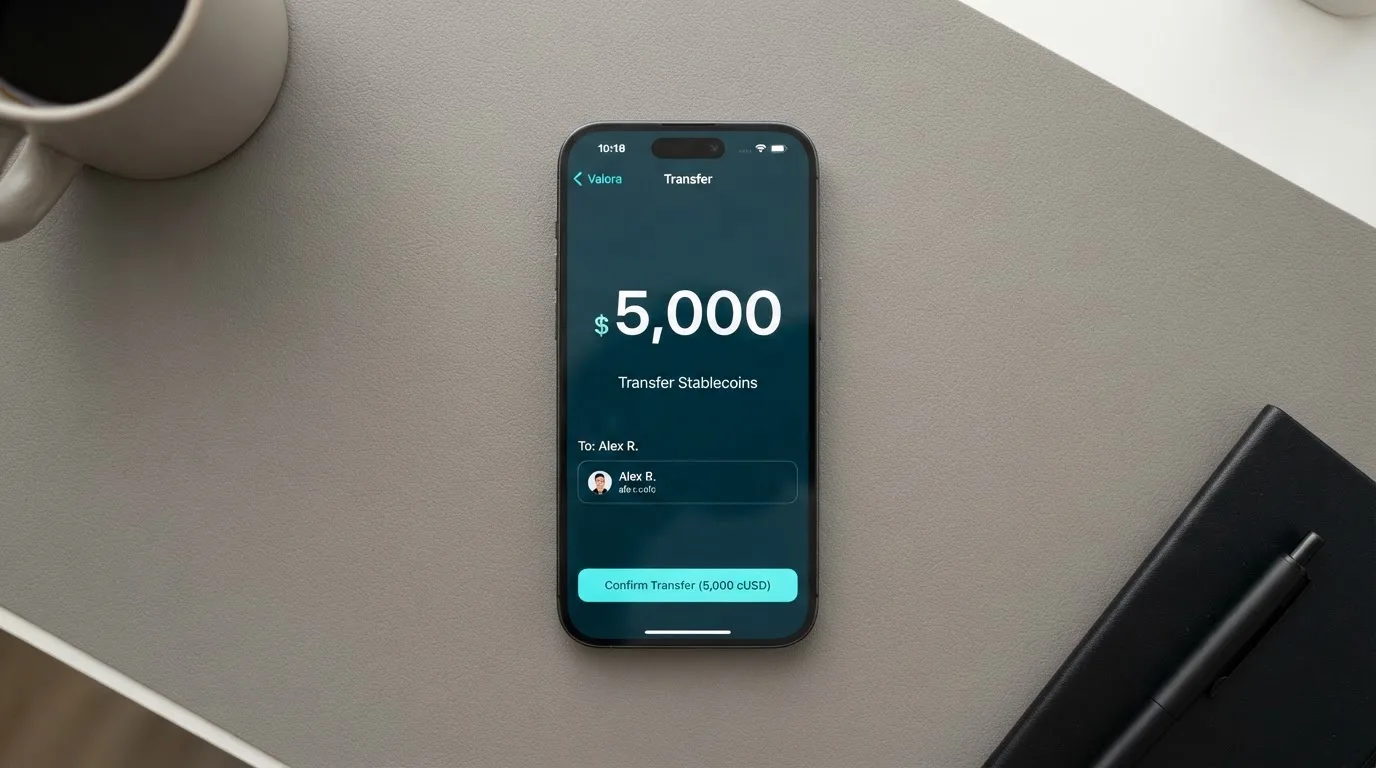
More than 100 digital assets are supported. In Debit Mode the card spends stablecoins, crypto and FiatX assets — things like EURx, USDx and GBPx, which are Nexo’s own fiat-denominated tokens. Cashback, where it applies, is paid in NEXO tokens or Bitcoin.
Three things about funding are simply not published:
- Deposit fee — not stated
- Minimum top-up — not stated
- Fiat top-up routes and their fees — not stated
The card’s networks are also not disclosed, so if you are planning to move money in on-chain rather than through the app, you cannot tell from the card page which chains are supported. And withdrawal terms are not stated either. Given that transfers are irreversible, that last omission matters more than it sounds.
Paying with it every day
Day to day, the card is competent. Apple Pay and Google Pay both work, so most of the time you are not handling plastic. There is a virtual card for the phone and a physical one for the rest, and there is a cash machine function with the tiered allowances above.
The catch is the physical card’s gate: it requires a balance above $5,000 in digital assets and at least the Gold tier. The virtual card has no such gate. So the card that most people can get is the one you cannot hand to a shop that wants a card reader.
Cashback is where I would slow you down before you spend. It is paid only on purchases made in Credit Mode, not Debit Mode, and the account must hold more than $5,000 in digital assets. Paid in NEXO tokens or Bitcoin, with the payout currency changeable:
| Tier | Cashback in NEXO | Cashback in Bitcoin |
|---|---|---|
| Platinum | 2% | 0.5% |
| Gold | 1% | 0.3% |
| Silver | 0.7% | 0.2% |
| Base | 0.5% | 0.1% |
Your tier is set by the share of NEXO tokens in your portfolio, not by your balance alone, and Nexo says the rates may change and vary by region. Note the second catch: cashback in Credit Mode means the purchase runs against credit, not against your balance.
There are four loyalty tiers — Base, Silver, Gold, Platinum — and members earn “up to 13%” on idle funds, though the rate per tier is not published. A metal card is not mentioned at all.
The app is a genuinely good part of the product. iOS covers iPhone, iPad, iPod touch and Apple Vision, and it carried a 4.2 out of 5 App Store rating from “2K” ratings when I looked. The interface is in 18 languages, including Russian, Ukrainian, Kazakh and Uzbek. I did not read the Google Play listing.
Two more things I could not find: which merchant categories are blocked (gambling is the usual suspect, but the page does not say), and what the dispute process is if a payment goes wrong.
What can go wrong
I want to split this into two halves: the practical risks and the structural ones.
Practically, the feature list is good — instant card freeze, security spending controls, biometric locks, and what Nexo calls “industrial-grade custody”. Whether two-factor authentication is offered is not stated on the card page, and I found no source confirming it. Support is advertised as 24/7 with a help centre, a contacts page and a status page, though the help pages themselves were unreadable when I looked. Whether funds are safeguarded or insured is not stated on the card page, and third-party trackers report no cardholder insurance at all — take that as unofficial, but note that “not confirmed” is not the same as “covered”.
The complaints are more interesting. Trustpilot shows a TrustScore of 4.4 out of 5 across 18,805 reviews. Underneath that number, the recurring themes in recent reviews are: high fees on small transactions and frustration with the $5,000 minimum balance, including the grace period when your balance dips below it; delayed withdrawals and locked or closed accounts; support described as unhelpful on technical problems by some and praised for speed by others; deposits slow to appear; a third-party “Earn Provider” custody objection; and regional restrictions on bank funding and card access.
Now the structural part, and it is the reason the reliability mark is only 5 out of 10.
The card is issued by DiPocket UAB, which is authorised by the Bank of Lithuania. That is the part I am most comfortable with: a named, regulated issuer behind the plastic, separate from the crypto side of the business.
The crypto side is where the questions are. Nexo said in a company post in June 2026 that it had set up a MiCA-compliant structure under German oversight with products unchanged — a social media post, not a regulator record. The MiCA transition period ended on 1 July 2026, and independent checks of the ESMA register in August and September 2026 found no entity named Nexo among authorised CASPs. EEA custody and trading run through partners, Tangany for custody and DLT Finance for trading, with a Bulgarian FSC application reportedly filed in February 2026 and still pending. Borrowing and Credit Mode sit outside the partners’ licences. And on 14 October 2026 there were conflicting public statements about whether physical cards can be ordered at all.
None of that means your card payment is unsafe — the issuer is a bank-authorised company and your card funds are not the same assets. But it does mean the platform behind the app is in the middle of a regulatory restructuring, and the card terms may change shape underneath you. Combined with the Bulgaria raid story and the volume of withdrawal complaints, that is a fair reason to keep a working bank card alongside this one.
What to take instead
I compared Nexo against three alternatives in the same category. The scores are close, which tells you something about the category: these are all workarounds for people who cannot get an ordinary card, not bank cards.
| Card | Score | Who it fits | Watch out for |
|---|---|---|---|
| Nexo | 6.3 / 10 | Europeans with large crypto balances who want cashback | Tier gates, no country list, regulatory restructuring |
| Pay3 | 6.3 / 10 | Users outside “Restricted Locations” who can attest they are not US citizens and are not OFAC-blocked | Issuance from $5, spend from $0.15, FX up to 3% |
| Exa | 6.2 / 10 | Very wide country reach — 45 countries plus 31 US states | Collateral-based credit line; Russian residents cannot be issued a card |
| Cardex | 5.6 / 10 | Users in 200+ countries, Naira-focused listing | No fee or reward detail published; multi-network card |
A few notes on each.
Pay3 matches Nexo’s score and opens up to anyone outside “Restricted Locations” — countries under trade sanctions, export controls or crypto/fintech prohibitions — though the list is not published and can change without notice. You must attest you are not a US citizen and not OFAC-blocked. It offers virtual, physical and Apple Pay/Google Pay cards under Visa licence. Issuance starts at $5, card spend from $0.15 per transaction. Currency conversion from 1.15%, foreign exchange up to 3%, cross-border up to 3%, foreign transaction up to 3%. The card is collateral-based: your collateral sets your limit. No cashback is stated.
Exa has the widest reach of the three: issued in 45 countries including Argentina, Brazil, Japan, Kenya, Mexico, Singapore, South Africa and the UAE, plus 31 US states, with Nigeria conditional. Eighteen countries are ineligible, including Belarus, China, India, Iran, Israel, Turkey, Ukraine, Vietnam and Russia — and “Russian residents cannot be issued a card”, with spending in Russia also blocked. The rule is by residence. It is a virtual Visa Signature card accepted at over 150 million merchants in more than 150 countries. It is marketed as free with no amounts on the page, fees are not stated, and there is no cashback — “earn while you spend” refers to yield on your assets, not spending rewards. Spending runs through Pay Now or installments against collateral.
Cardex markets itself as “one crypto card, 200+ countries” with no country list and no exclusions, and its app listing is Naira-focused. It runs on VERVE, Visa, Mastercard and UnionPay, virtual and physical. Conversion happens in real time at the moment of payment, and the site claims an “AI-Powered Conversion Rate” that scans exchange rates and picks the best one — no percentage is published. Funding wallets are USDT, USDC and BTC, networks not stated. No rewards stated.
My honest read: if you are in Europe with a big balance, Nexo’s 0.2% FX is the cheapest of these inside the euro area and its cashback is the only one of the four that pays you for spending. If you are outside Europe, Exa’s country reach is the deciding factor. If you want no cashback and no tier conditions at all, Pay3’s collateral model is simpler to reason about.
Who I would recommend it to
I would recommend this card to a European who already holds a substantial crypto balance, understands that the platform is a business they are trusting with that balance, and wants a clean 0.2% foreign-exchange rate inside the EEA and a small cashback for everyday spending. If you are already at Gold or Platinum tier, the physical card’s 0.2% FX and free cash machine allowances make this one of the better-spending crypto cards in Europe.
I would not recommend it as your only card. If you need one card that works everywhere with no conditions, this is not it — there is a $5,000 balance gate on the plastic, a tier system that decides what you get, and an app that will not tell you up front which countries qualify.
And I would be cautious, specifically, about certain groups. If you are trying to use this card to move money around in ways a bank’s compliance team would question, do not treat a crypto card as a workaround for those checks — they exist for a reason, and the Bulgaria story is a reminder of how they end. And if you are in a hurry to spend a balance that is not already there, note that deposits slow to appear are among the most common complaints, and that withdrawal terms are not published.
Everything else — cash machine fees, conversion rates, limits — you can check yourself. What you cannot check from outside is the thing that matters most: whether the platform behind the app will still look like this in a year.
Frequently asked questions
What is the Nexo card?
The Nexo card is a payment card that spends directly from your Nexo account balance. You get a virtual card that activates in the app and a physical card, and the money comes from crypto, stablecoins or Nexo’s own fiat-denominated tokens sitting in the account. There is no monthly or annual fee. In practice it behaves like a prepaid card: crypto is converted and loaded as balance, and the card spends only what is there.
Who can get a Nexo card?
The card page says residents and citizens of “selected European countries, including the EEA and the United Kingdom” — citizenship and residence both count. No official country list is published. Third-party trackers report availability in 30 countries and restrictions in Bulgaria, Estonia and the United States, but that list is unofficial. Excluded jurisdictions are described only as “certain jurisdictions” without naming them.
Is Nexo a bank?
No. Nexo is a crypto platform, and the card is issued by a separate company: DiPocket UAB, authorised by the Bank of Lithuania. The crypto side runs through licensed partners, with Tangany handling custody and DLT Finance handling trading in the EEA. A card is a payment service regulated separately from crypto, so the app and the card depend on two different regulatory relationships.
Does the Nexo card require KYC?
Yes. Identity Verification with a supported ID document issued in the EEA, the UK or another eligible European country is stated. The page does not say whether proof of address is required, does not state a minimum age, and does not publish tiers, processing times or rejection reasons. Expect the standard regulated checks — identity, address, nationality, sanctions screening.
Is the Nexo card free?
There is no monthly, annual or inactivity fee, and issuing either card is free. The virtual card needs at least $50 in the account to activate. The physical card has free shipping but requires a balance above $5,000 in digital assets and at least the Gold tier. Spending costs come from FX (0.2% on weekdays inside the EEA/UK/CH) and cash machine fees above your tier’s free allowance.
Can I use the Nexo card in my country?
That depends on where you live and where you are a citizen, and the card page will not give you a list. If you are in the EEA or the UK you are inside the stated eligibility; outside it, the answer depends on a list Nexo does not publish. Spending abroad also costs 2% on weekdays outside the EEA/UK/CH, and 2.5% at weekends — so a card that works at home can be an expensive card in a holiday town.
Does the Nexo card give cashback?
Yes, but with conditions. Cashback is paid only on purchases in Credit Mode, not Debit Mode, and the account must hold more than $5,000 in digital assets. It is paid in NEXO tokens or Bitcoin. By tier: Platinum 2%/0.5%, Gold 1%/0.3%, Silver 0.7%/0.2%, Base 0.5%/0.1% — the first number in NEXO, the second in Bitcoin.
How do I activate the virtual card?
You choose the card currency at activation, and that choice cannot be changed later on the physical-card order screen — contact Nexo if you pick wrongly. The account needs at least $50 for the virtual card to activate. The physical card is ordered in the app under the Card tab, takes up to four weeks, may arrive at your local Post Office, and must be activated in the app.
Is the Nexo card safe?
Handle it as you would a crypto platform, not a bank. The card side is issued by a Bank of Lithuania-authorised company and has instant freeze, spending controls and biometric locks. But funds are custodial, cardholder insurance is reported absent by third parties and not confirmed on the card page, and the platform itself is mid-restructuring under MiCA with partner-based custody. Keep a backup card.
Why do reviewers complain about Nexo?
The 4.4 Trustpilot score sits on top of recurring complaints: fees on small transactions and the $5,000 minimum balance, delayed withdrawals, locked or closed accounts, deposits slow to appear, and regional restrictions on funding and card access. Support is praised by some for speed and criticised by others as unhelpful. Add the reported Sofia police raid and the MiCA partner transition, and the picture is clear.
How credit and cashback cards work – cryptocardsexplained.com
Content created by the «cryptocardsexplained.com» team