
A cheap Hong Kong virtual card with a 4% top-up fee, no FX disclosure, and an unnamed issuer behind it
 Available in US
Capitalist is a virtual payment card that draws on a balance you load yourself, issued from Hong Kong and aimed squarely at people who need a card number for online spending — advertising platforms, subscriptions, services that will not take anything else — and who find ordinary bank cards slow, expensive or impossible to get. The pitch is simple: issuance costs $2.50 or €2.00, there is no monthly fee, and the balance is yours to top up.

Here is where my own testing of the numbers ends up less comfortable than the pitch. My score is 5.0 out of 10. The card is cheap to hold and cheap to open, and the audience it targets is genuinely served. But two of the things you most need to know before loading money are missing from the public pages: the exact foreign-exchange cost, and the name of the entity that actually issues the card. A 4% top-up fee is disclosed and payable; an unquantified FX fee is not the same thing, because you cannot budget it. And a card with no named issuer or licence on its own site is a category risk, not a personal one.
Read this as a description of the card as it stands, not a recommendation. I am not telling you what to do with your money — I am telling you what I could and could not verify, and which of my findings should worry you more than the price does.
Conditions are current as of October 28, 2026
Who will they give you the card
The card is issued in Hong Kong and its payments are accepted worldwide. The site does not publish a list of countries, so you cannot check eligibility before you try.
This is the entire “who can get it” answer, and it is thinner than it looks. There is no country table, no list of blocked nationalities, no note on whether residents of a particular place are accepted. What you are told is that cards are issued in Hong Kong and that payments work worldwide — which describes where the plastic-number logic comes from, not who the platform is willing to onboard.
That gap matters because, for a Hong Kong-issued card, the country of issue is the one thing a merchant’s risk system can see. Shops can look up the issuing institution from the first digits of the card number and see a card that is not local to them, and some will treat a foreign-issued prepaid card more carefully. More on that in the daily-use section. But the eligibility gap is separate: you simply do not know, from the public site, whether your country of residence is on the acceptable list. The honest answer to “is Capitalist available in my country” is “the site does not say, and you find out by applying.”
The audience the card is clearly designed for is people who want a cheap virtual card for advertising and online services. If that describes your needs, the design fits the job. If you are reading this hoping to find a mainstream everyday card with a proper banking relationship behind it, this is the wrong product for you.
How to get it
Sign-up is advertised as light on checks — the marketing says “no complicated KYC procedure” — but the card still asks for identity and address documents before you can hold a loaded, verified account.
Here is what that actually means in practice. Capitalist advertises its cards with the phrase “no complicated KYC procedure”, and it does run a “Verified user” status. That status requires identity documents and an address document, and the address document must be no older than three months. So: the onboarding is lighter than a full bank-grade file, but it is not anonymous and it is not document-free. There is a verification step, and there is a recency requirement on your address proof that people often trip over — a utility bill from eight months ago will not do.
The card itself is virtual. There is no physical card to wait for, which is why the delivery question does not apply here. The platform describes its cards as falling into two groups — one for any purchases, one aimed at advertising use. Each card is denominated in either USD or EUR. For advertising cards the site mentions “Trusted BINs UK and USA”, and 3-D Secure is supported.
Two honest caveats. The network itself is not stated — “Trusted BINs UK and USA” tells you something about the card numbers for advertising cards, not that you are holding a Visa or Mastercard. And the finer tiers and timelines are not stated: there is a “Verified user” status, and beyond that the public pages do not spell out other levels or how long approval takes.
The sequence, then: create the account, submit identity and a document from the last three months, reach Verified user status, and the virtual card appears in your account. That is short, but it is not the no-KYC experience the advertising language hints at.
Fees and what a payment really costs
Issuance is $2.50 or €2.00, the monthly fee is zero, and topping up costs 4%. What it costs to actually spend abroad is not disclosed, because the foreign-exchange fee is not stated.
Here is the cost table, drawn only from what the card’s own pages say:

| Fee or limit | What the card states |
|---|---|
| Issuance | $2.50 / €2.00 |
| Monthly fee | Free |
| Top-up fee | 4% (shown as “$ 4%” / “€ 4%”) |
| Foreign-exchange (FX) fee | Not stated |
| ATM withdrawal | Not stated |
| Card currency | USD or EUR |
| Top-up limits | “No limits on top-ups and spending” |
| Number of cards | Unlimited |
| Tiers | Single tier |
The two entries that matter most are the two that are blank. The FX fee is not stated, and neither is anything about cash withdrawal at an ATM. For a card whose whole appeal is international online spending, an undisclosed FX cost is not a footnote. It is the difference between a 4% top-up and a number you cannot predict.
Now let me take three ordinary payments and show you which of the disclosed fees bite, because that is usually clearer than a table.
Paying for an ad platform subscription in USD from a EUR balance. The 4% top-up fee applies when you load, not when you spend — so it hits every payment indirectly, folded into the cost of the balance. On top of that, converting EUR into USD to hold USD for the purchase is exactly where an FX fee would live, and the card does not tell me what it takes. The 4% is the part you know; the conversion is the part you are guessing.
Paying a subscription already denominated in your card currency. Load USD, spend USD. The 4% top-up is your clearly known cost. There is no conversion in the way at all. This is the cleanest way to use the card and it is why picking the currency that matches most of your spending matters.
Paying something priced in a third currency. USD or EUR balance, merchant billing in something else. Now you are relying on the Visa or Mastercard exchange rate on the transaction day, plus whatever the issuer’s FX fee turns out to be — the part that is not stated. You are, quite literally, paying a number the card’s own site declines to publish.
Two other things to keep in mind. The card describes its “no limits on top-ups and spending” as a feature, and unlimited cards as a feature — but a prepaid balance means the balance cannot go negative, so “no limit” here really means no artificial cap, not unlimited money. And the single-tier structure means there is no premium level where the FX fee is waived or the top-up is cheaper. What you see is what you get.
Top up: how the balance gets there
You can top up by SWIFT transfer, by SEPA transfer, or with USDT. The platform’s 4% fee applies on top, and it says it charges commission from the payment amount as well. The minimum is not stated.
Three routes, in plain terms. SWIFT is the classic international bank wire — you send money from your bank, it arrives in an account, and it is the slowest and often the most expensive in correspondent-bank charges. SEPA is the European instant-transfer scheme: faster and usually cheaper, but tied to the euro area. USDT is a dollar-pegged stablecoin — you send the token over a blockchain and skip the banking system entirely, which is the route most crypto-native users will take.
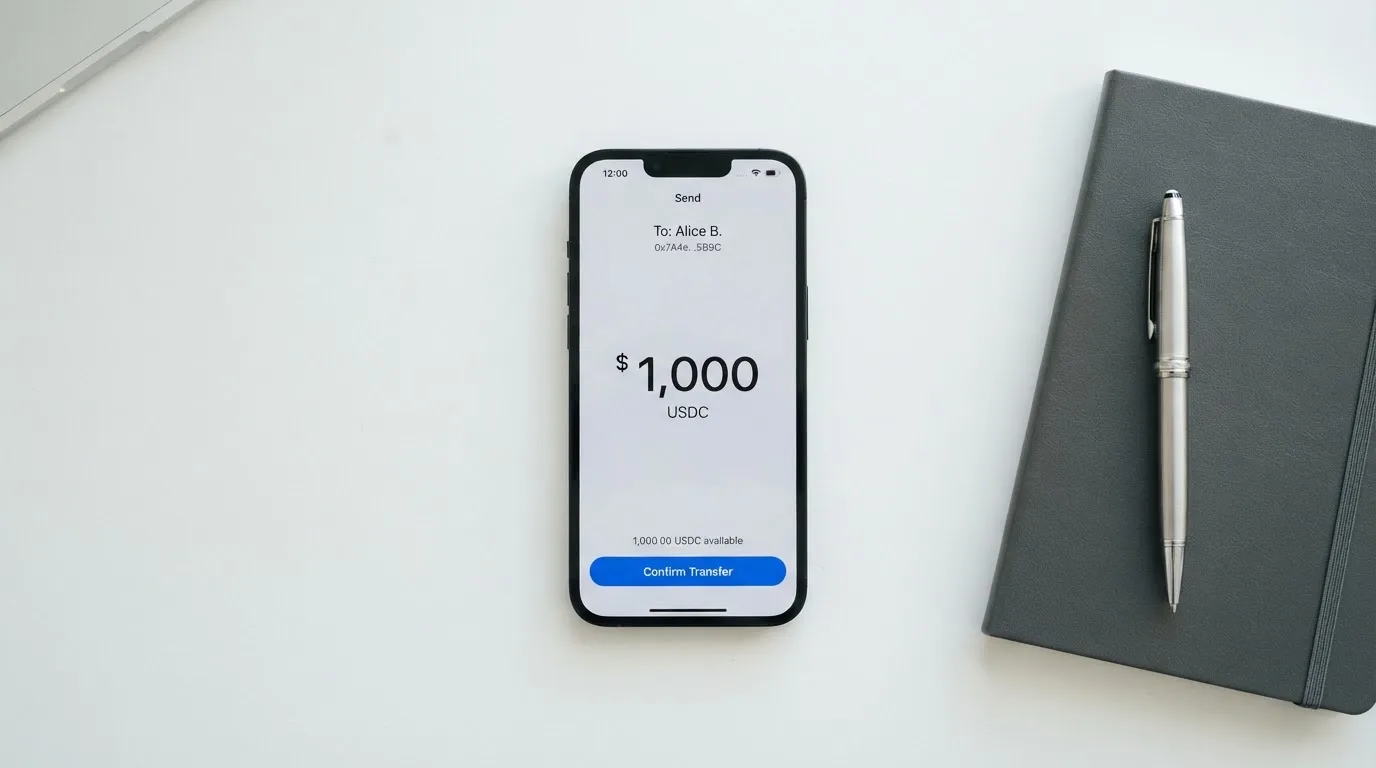
The cost of the top-up itself is 4%. On top of that the card notes that Capitalist additionally charges commission from the payment amount — so the number that leaves your account can exceed the 4% headline once that commission is counted. The minimum top-up is not stated, which is a small thing you will only discover by trying.
One more route exists that I want to flag carefully because it is unofficial — it comes from third-party reporting, not from a page the card confirmed. Earlier checks suggested you can deposit BTC, USDT, ETH or USDC to a wallet for free, and then load the card from that wallet at a rate somewhere between 3% and 4.7%. Treat that as a lead to verify yourself, not a term you can rely on. I am passing it along because it could save you money if it holds, but I cannot confirm it against the card’s own current pages, and unofficial cost figures move.
Withdrawal is a separate question and I cannot answer it: the fees page text was not retrievable when I looked, so how to get money back out, and what that costs, is something you will have to confirm yourself before you rely on it.
Paying with it every day
It links to Apple Pay. Google Pay shows a logo but no details. Blocked merchant categories and rewards are not stated. For most people “every day” here means online subscriptions and ad platforms, not tap-to-pay at a shop.
The wallet picture is uneven. Apple Pay support is stated — you can add the card to Apple Pay, which is how most people will actually use it, since you never handle the card number yourself and each payment carries its own one-time security code. Google Pay appears only as a logo with no supporting detail, so I would not plan around it until you have seen it work.
Two things the card does not tell you, both of which matter for daily use. It does not state which merchant categories are blocked. Some issuers restrict gambling and similar high-risk categories by policy rather than by law, and the list varies by issuer — but Capitalist does not publish one. And it does not mention any rewards or cashback.
The Telegram bot is the platform’s app surface, and store ratings I did not read. Disputes — what happens if a charge goes wrong — are also not stated, which for a card you may hold several currencies away from is a real absence.
The deeper daily-use constraint is the BIN. Merchants can look up the first six or eight digits of your card number and see it was issued by an institution in a particular country. If that country is not where the customer sits, some shops and payment processors apply extra scrutiny, and some decline foreign-issued prepaid cards outright. This is not a trick you can avoid; it is what a Hong Kong-issued card looks like from the other side. If your daily spending is online subscriptions and ad platforms — where the store is a platform, not a person waving your card aside — this matters much less than it would if you were tapping to pay in a local café.
What can go wrong
The biggest exposure is structural, not technical: the card’s public pages do not name the legal entity behind it, the issuer, or any licence. The 4.2/5 Trustpilot score is decent; the complaint themes are fees and delayed deposits.
Let me separate what I could not find from what went wrong.
The unnamed issuer. Capitalist describes “11 years of successful work”, but the legal entity, the card issuer and any licences are not named on the public pages. This is the finding I would weigh most heavily. A card is issued by someone, that someone is licensed by someone, and you are trusting them with money and a card number. If the site’s own pages will not tell you which company that is, you are being asked for trust on a credit. That is not automatically disqualifying — plenty of legitimate small providers look like this — but you should know you are extending it.
What users report. I found no official incident record. What I did find is user reports, and they are worth reading carefully: on Trustpilot in August 2026, a user said USDT sent from Trust Wallet “never arrived” after five days. Across August–September 2026 other reviews raised unclear or high fees, and unhelpful support. The overall Trustpilot standing is 4.2 out of 5 from 115 reviews, read 2026-10-21, with 25% of reviews being one-star. So: a broadly positive score, with a visible minority of people unhappy, and the unhappy cluster is about money — unclear fees and money that did not arrive. That pattern is precisely the pattern that makes an undisclosed FX fee worse.
The platform’s own risk posture. There is good security here on paper: a personal greeting, IP restriction, SMS confirmation, certificate, one-time password, payment PIN, and a recommendation to activate at least two methods. The account protections are described in reasonable detail. But account security is not the same as company risk — a locked account is recoverable, a failed issuer is not.
Support hours are thin. Working days 10:00–19:00 MSK; weekends and holidays 11:00–19:00 MSK, and only through internal messages and a feedback form. A Telegram bot is offered. Support languages are not stated. This is fine for a card used once a month for an ad subscription. It is not fine if something goes wrong on a Friday evening in a language you are not certain is covered.
One risk I want to name plainly because it is easy to forget: cryptocurrency transfers are typically irreversible. A USDT deposit sent on the wrong network, or to an address belonging to a different network, can simply be lost, or need manual recovery with no guarantee. The delayed-deposit complaint above sits right next to this. There is also a real category risk around crypto card programmes generally — card programmes do close, and when they do, spending and loading stop and users are asked to withdraw remaining balances. That is not a prediction about Capitalist. It is the shape of the risk you accept by holding a prepaid balance with a provider you cannot fully identify.
What to take instead
If the thin disclosure on FX and issuer is the thing that decides it for you, then the honest answer is that three other cards are more forthcoming about at least some of what Capitalist leaves blank. None of them is perfect, and I have not scored any of them as clearly better. But you can see their numbers where Capitalist hides some of its own.
| Card | Score | Cost picture |
|---|---|---|
| Capitalist | 5.0 / 10 | $2.50/€2.00 issuance, free monthly, 4% top-up, FX not stated |
| Cardex | 5.6 / 10 | Issuance and monthly fee not stated; conversion at payment time, no fee percentage published |
| TakeCard | 5.5 / 10 | Virtual $5; physical (Bolivia) $20 issuance + shipping; 1% commission per purchase |
| OkiCard | 6.0 / 10 | Issuance $0 / monthly $0 / starting price $15 (pages disagree); 3% load fee, 0% transaction fee on USD |
OkiCard is the most transparent on the points that hurt Capitalist most, and the highest-scoring of the four at 6.0. Its pricing page is open — issuance, monthly fee, load fee and USD transaction fee are all published, and it claims “no hidden exchange spreads”. It says “150+ countries” (some pages say “200+”), with “no geo-blocking based on your passport”, though users must confirm they are not in a sanctioned jurisdiction. It is virtual-only in practice, USD/EUR pegged, with an initial deposit of 100 USDT, and USDT accepted on BSC, Ethereum, Tron and Solana. The catch: its own pages disagree with each other on the exact starting price, which is a small blemish on an otherwise open fee sheet.
TakeCard is the one with the clearest purchase-side commission: 1% per purchase, USD payments 1:1 with no currency adjustment, and other currencies at the official Visa rate of the transaction day. It is virtual with an immediate card, USD-denominated and prepaid, issued in the United States. The big limitation is geography: the physical card is “available only to Bolivian users for now”, and the country list is not given clearly. Its issuance cost is higher than Capitalist’s (virtual $5), and one of its own help articles conflicts with another on the physical-card price — a sign the documentation is not tightly maintained.
Cardex markets itself as “one crypto card, 200+ countries” but publishes no country list or exclusions, and its app-store presence is Naira-focused. Its selling point is a claimed “AI-Powered Conversion Rate” that scans exchange rates at the moment of payment and picks the best one. That is an appealing idea, but no fee percentage is stated, so the cost of that cleverness is unknown. Networks: VERVE, Visa, Mastercard and UnionPay.
The comparison itself is instructive. Where Capitalist is cheap and quiet — $2.50 to open, no monthly fee — it is quiet about the FX rate and the issuer. The alternatives are often more expensive or more restricted, but at least they publish their purchase-side numbers. Neither profile is obviously right. The choice depends on which risk you can live with: a low price with gaps in the disclosure, or a clearer sheet with a higher or narrower price.
Who I would recommend it to
I would recommend Capitalist to a specific person: someone who needs a cheap virtual card number for online services and ad platforms, has a document they can produce for verification, is comfortable topping up by USDT or SEPA rather than by wire, and can accept that the FX cost and the issuer behind the card are not things the public pages will tell them.
That user gets real value here. Issuance at $2.50 or €2.00 with no monthly fee is genuinely cheap, the virtual-only design is appropriate for online ad spending, and Apple Pay support makes daily use painless. The audience this serves — people paying for advertising and online services — is exactly the audience the product is built around.
I would recommend it more cautiously — or not at all — to anyone who plans to use this as their main card, who needs to know the FX rate before committing money, who wants to know which regulated entity holds their balance, or who needs reliable deposit delivery. If the 4.2/5 Trustpilot score and the reported USDT deposit that never arrived do not sit comfortably with you, trust that instinct. The card’s own pages do not fill the gap that instinct leaves.
The honest summary is this: it is a cheap, purpose-built virtual card with a real use case, and the two things I could not verify — the FX fee and the issuer — are both about money. You can decide whether that is a trade you are willing to make. I would not decide it without knowing it, though, and neither should you.
Frequently asked questions
What is Capitalist card?
Capitalist is a virtual payment card issued from Hong Kong that spends a balance you load yourself, in USD or EUR. It is aimed at online spending — subscriptions, advertising platforms, digital services — rather than everyday in-person purchases. There is no physical card and no monthly fee, so it behaves much like a prepaid card: you top up, you spend, and the balance cannot go negative.
How does the Capitalist card work?
You create an account, verify it with identity and a recent address document, receive a virtual card number, and add it to Apple Pay or use the number online. When you pay, the balance you loaded is spent. Top-ups come by SWIFT, SEPA or USDT, at a stated 4% fee. It converts to fiat at the point of spending, so crypto becomes card money seamlessly.
Is Capitalist a bank?
Not on the evidence of its public pages. The site describes “11 years of successful work” but does not name the legal entity behind the service, the card issuer, or any banking or e-money licence. A card is normally issued by a licensed bank or electronic money institution, so the real issuer exists — Capitalist just does not identify it for you.
Who owns Capitalist?
That is the uncomfortable question, because the answer is not published. The platform is Capitalist, and it markets itself with “11 years of successful work”. Beyond that, no owning entity, issuer name or licence is given on the pages I could read. You are therefore trusting an unnamed company, which is the single biggest risk in using this card.
Do I need KYC to get a Capitalist card?
You need documents, though the onboarding is described as light. The card is marketed with “no complicated KYC procedure”, but the “Verified user” status requires identity documents and an address document that is no older than three months. So expect to prove who you are and where you live — just not through the longest possible process.
Is the Capitalist card free?
Nearly. Issuance costs $2.50 or €2.00 and there is no monthly fee, so holding it is almost free. Spending is not free: topping up costs 4%, and the card also says it charges commission from the payment amount. The foreign-exchange fee, the real cost when you spend across currencies, is not stated on the public pages.
How do I top up the Capitalist card?
Three ways: SWIFT bank transfer, SEPA transfer, or USDT. The 4% top-up fee applies either way, and the card notes it additionally charges commission from the payment amount. There is no stated minimum. An unofficial route — depositing BTC, ETH, USDT or USDC to a wallet, then loading at 3–4.7% — has been reported by third parties but is not confirmed by the card.
Is the Capitalist card safe?
It has reasonable account protections — two-factor options, IP restriction, SMS confirmation, one-time passwords and a payment PIN — but “safe” depends on what you mean. Your account can be locked and recovered; your funds sit with a provider that does not name its issuer or licence, which is the risk that cannot be locked away. Crypto transfers are also typically irreversible, so a deposit sent on the wrong network can be lost.
Can I use the Capitalist card in my country?
The card says payments are accepted worldwide, but it does not publish a country list or any exclusions, so you cannot check your eligibility in advance. Hong Kong is the issuing country. Because merchants can see the issuing country from the card number, a Hong Kong-issued card can also be treated more carefully by some overseas shops — though for online platforms this matters far less than for in-person payments.
Is the Capitalist card worth it?
It is worth it if you need a cheap virtual card for online services and can accept the undisclosed FX cost and unnamed issuer. At $2.50 issuance with no monthly fee, few alternatives are cheaper to hold. But if you need to know the FX rate in advance, or to know which regulated entity holds your money, this card cannot tell you — and a provider that will not publish those numbers is hard to call worth the risk.
How virtual cards work – cryptocardsexplained.com
Content created by the «cryptocardsexplained.com» team