
A virtual US Visa card for crypto balances, useful mainly to residents who already hold CASH
 Available in US
Phantom Cash is a virtual prepaid Visa debit card that spends a balance held in CASH, a dollar stablecoin, inside the Phantom app. It exists only for people living in the United States, and New York is excluded. There is no physical card — the card lives in Apple Wallet or Google Wallet — and the setup behind it is changing, because Phantom is moving to a new card issuer and every virtual card is being replaced.
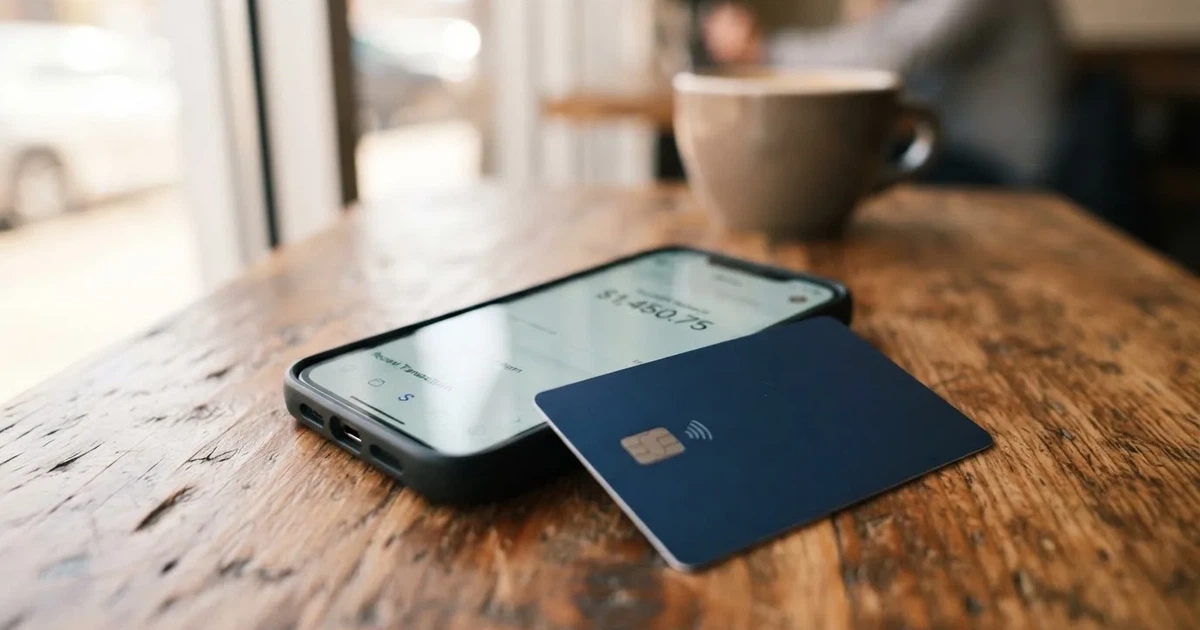
I scored it 5.3 out of 10. That is a middling mark, and I want to be upfront about why before I walk you through the details: the product is coherent and, in its narrow lane, does its job. But it is a narrow lane. If you are outside the United States, this card simply does not exist for you. If you are inside it, you get a virtual card with no ATM access and, according to unofficial sources, a default daily spending limit that is not especially large. The card is not free of charge in the way most people assume either — the card’s own pages say only that “fees may apply” and point to a Cardholder Agreement without publishing amounts.
Who it suits, in one line: US residents who already hold dollar stablecoins in Phantom and want to spend them at ordinary shops without touching a crypto exchange. Who it does not suit: almost everyone else, including US residents who need a physical card, cash withdrawals, or high spending limits.
Conditions are current as of October 28, 2026.
The score, criterion by criterion
| Criterion | Mark | Why |
|---|---|---|
| Who can get it | 4 / 10 | United States only, excluding New York, by place of residence |
| Cost | 7 / 10 | Fees officially undisclosed; unofficial reports say issuance, replacement and inactivity are free and an international transaction costs 1% + $0.30 |
| Top-up options | 4 / 10 | The card spends a CASH balance; top-ups run through Apple Pay, Google Pay, a debit card or a bank, with withdrawal to a bank or a Solana wallet; direct crypto top-up is not named |
| Reliability and complaints | 6 / 10 | Issuer Lead Bank, programme manager Bridge Ventures LLC, processing by Stripe; the virtual card is being replaced on an issuer change with no dates given; no complaints found |
| Everyday use | 5 / 10 | Virtual Visa for Apple Wallet and Google Wallet only; unofficial reports say no ATM |
| Total | 5.3 / 10 | A narrow, functional card with real limits on who and how |
Two of those marks deserve a word of explanation now rather than later. The Cost mark of 7 is not because the card is cheap — it is because nobody publishes the numbers. When an issuer hides its fee schedule behind a separate legal document, I cannot score generosity, only disclosure, and I score disclosure decently when the unofficial picture happens to look reasonable. The Top-up mark of 4 is about choice, not price. You are not sending crypto to a card address; you are topping up a balance through payment rails, and then optionally withdrawing to a Solana wallet.
The Everyday use mark of 5 is where most potential cardholders will feel the pinch. A virtual card with no physical plastic and, by unofficial accounts, no ATM is fine for subscriptions and online shops and awkward for a market stall, a garage or a cash tip. And the Reliability mark of 6 sits at the midpoint because I found nothing alarming but I did find an active change of issuer with no timetable published.
Who will they give the card to
The eligibility rule is short and absolute: United States only, excluding New York, decided by place of residence. Not citizenship — residence. If you moved to the US six months ago with a passport from elsewhere, the address is what counts. If you live in Toronto with a US bank account, you are out.
That single line does most of the work in this review. Before anything else, ask yourself honestly whether you live in one of the fifty states other than New York. If not, the rest of this page is background reading and the alternatives section is where your time is better spent.
There is no published list of states beyond the New York exclusion, no mention of a waiting period, and no mention of what happens to an applicant who lives in a state the issuer later decides to exclude. Proof of address is not stated. That last point matters more than it sounds: if you have just moved, the card company may still run a check behind the scenes that the marketing pages do not describe.
What about age and verification
No identity verification is needed to use Phantom or Phantom Cash in general. But the virtual card does require verification through Link, and Phantom’s marketing page says verification for bank transfers, direct deposit and the debit card is handled by Stripe. Applicants must be 18 or over. Verification levels, how long the process takes, and the reasons a check might be refused — not stated anywhere on the public pages.
So the honest summary is: you need to be an adult, resident in the US outside New York, and willing to complete an identity check for the virtual card. Everything beyond that — which documents, how fast, what gets you turned down — is left unsaid.
How to get it
The steps Phantom describes are short enough to repeat from memory: fund your Cash balance, complete the verification, receive the virtual card, then add it to Apple Wallet or Google Wallet. There is no plastic to wait for, which is the one genuine convenience of a virtual-only product — there is no delivery window and nothing to lose in the post.
The card itself is a virtual prepaid Visa debit. It works wherever Visa is accepted, which is genuinely everywhere that matters for online spending. A physical card is not stated — the pages describe only the virtual one, and the help centre’s own notice about the issuer change speaks only of a “virtual Phantom debit card.” Whether a physical version exists is not stated.
The card currency is USD by implication: the balance is denominated in the CASH stablecoin, which is designed to track the dollar. But the card’s own currency disclosure is not stated, and it matters for the exchange fee question later.
One practical note on ordering: because there is no plastic, adding the card to a wallet is not an optional extra. It is the delivery mechanism. If you are someone who prefers tapping a physical card at a terminal, this is the point at which you will know whether the product is for you.
Fees: what it really costs
Here is the honest state of affairs. Phantom Cash’s pages say “Fees may apply” and refer you to the Cardholder Agreement. They do not publish the amounts. There is a separate line saying stablecoin trades are described as fee-free. ATM fees, spending limits, monthly fees, currency conversion fees — not stated.
That is a poor position to be in as a consumer, and I will not dress it up. You are being asked to accept a fee schedule you have to go and find.
What I can tell you comes from third-party data, which the card has not confirmed and which carries its own caveats: a card-details page on DeFiLlama reports no issuance fee, no replacement fee, no inactivity fee, free cash loads, and free purchases in the US. That same source reports an FX fee of 1% plus $0.30 per international transaction, and it reports that the data was last verified on 28 September 2026 but partly carried forward from an older dataset. Treat all of it as unofficial.
| Fee or limit | What is stated officially | Unofficial reports |
|---|---|---|
| Issuance | “Fees may apply”; amount not stated | No card issuance fee |
| Monthly fee | Not stated | No inactivity fee |
| Replacement | Not stated | No replacement fee |
| Domestic purchase | Not stated | Free in the US |
| Conversion (crypto to fiat) | Stablecoin trades described as fee-free | — |
| International purchase / FX | Not stated | 1% + $0.30 per transaction |
| ATM withdrawal | Not stated | No; ATM fee not disclosed |
| Daily spending limit | Not stated | $2,000 by default; up to $5,000 on request |
| Monthly limit | Not stated | Not disclosed |
Three ordinary payments, priced
Take a week of ordinary spending and see which lines above actually touch you.
A $40 lunch in Chicago. Under the unofficial picture, a US purchase is free, and the conversion from your CASH balance is described as fee-free. This is the card’s best case and the one it is genuinely built for. If your lunch costs $40, you can expect roughly $40 taken from your Cash balance and nothing more — assuming the unofficial data is right and the fee schedule does not contradict it.
A €25 subscription billed in euros. Here the unofficial FX fee of 1% plus $0.30 applies per international transaction. On a €25 charge that is $0.25 plus $0.30, or $0.55, plus whatever the underlying Visa exchange rate does to the euro figure before the fee is applied. Nobody publishes that rate. For a large recurring foreign subscription, this is where the hidden schedule starts to matter; for a one-off, it is a rounding error you will never notice.
$120 spent abroad on a trip, or $120 taken out of an ATM. The FX line gives you roughly $1.20 plus $0.30, assuming the merchant or ATM is foreign. The ATM case is worse: unofficial reports say ATM withdrawals are not supported at all, and that the ATM fee is not disclosed — which is a strange thing to disclose about a service you apparently cannot use. If you need cash while travelling, this card does not solve that.
Now the limits. Unofficially, the daily spending cap is $2,000 by default and can go up to $5,000 on request; the monthly limit is not disclosed. If you are someone whose rent or main shopping trips clear those numbers, you will want to know how the increase request works before you need it.
One fee that is not on the card’s list
Anything you send over a blockchain to reach this balance costs a network fee charged by the blockchain itself, not by the card company. If you later move value into a Solana wallet, for example, the transfer costs what Solana charges. That is not a Phantom fee and it does not appear in any card fee table, but it is a real cost if you use the withdrawal route.
Top up: how the balance gets money into it
The card does not hold crypto directly at the point of payment. It spends a balance called Cash, denominated in CASH, and the top-up routes are the interesting part.
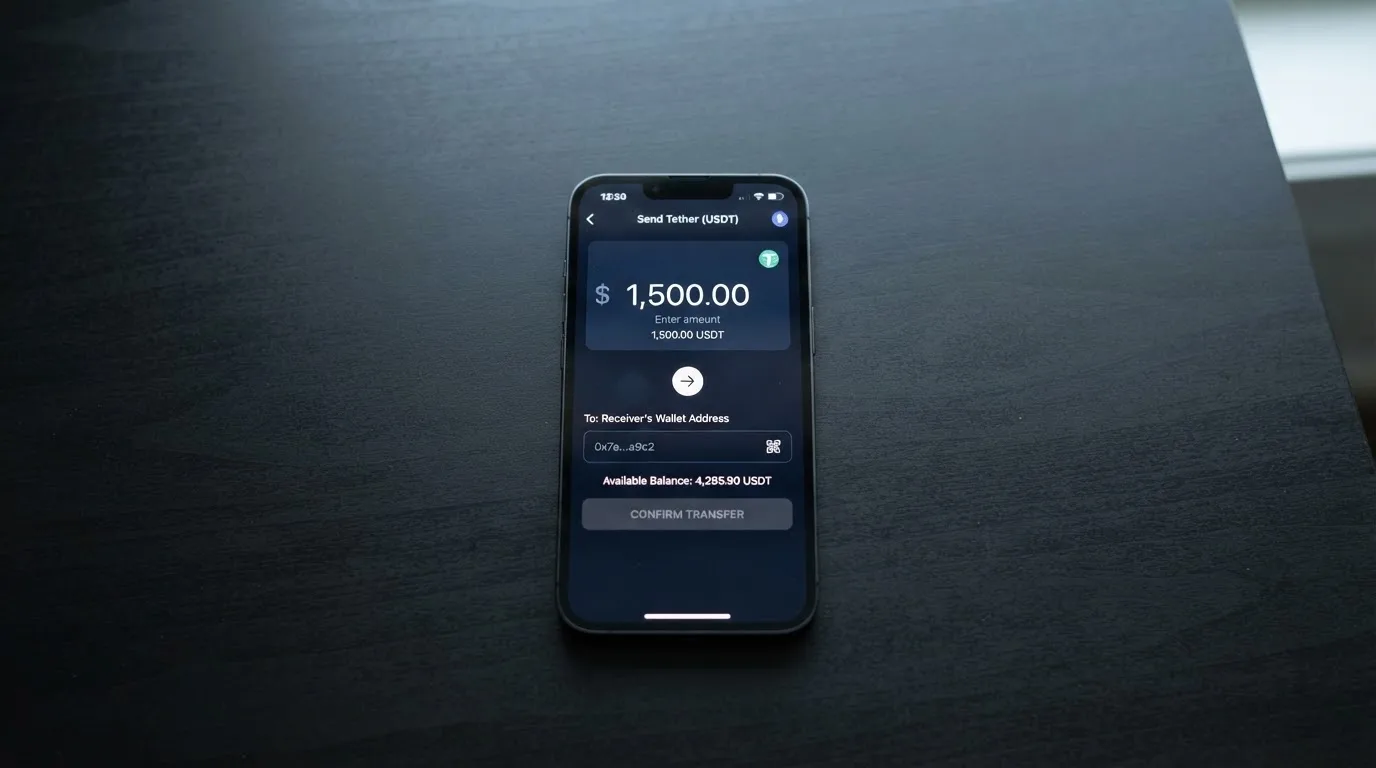
Cash can be funded through Apple Pay, Google Pay, a debit card, or a bank account, depending on your region. That is the documented list. Fees and minimums for those top-ups are not stated. Stablecoin trades are described as fee-free. Notably absent from the description of the top-up routes: sending USDT or USDC straight to the card. Direct crypto top-up is not named.
That is the practical crux for anyone coming from a self-custody wallet. You are not moving tokens to a deposit address. You are moving money through a payment rail into an app balance, in the way you would fund any prepaid account. If your reason for wanting a crypto card is to spend coins you already hold without converting through an exchange, this is the wrong tool — the card does not do that, and no amount of searching the help centre will change that.
Getting money back out
Two routes are named: a bank account (US) or a Solana wallet. Fees and timing are not stated on the pages I read. What happens to a balance if you close the account is not stated either — and given that this is a card programme in the middle of an issuer change, that is a question worth asking the support chat before you commit real money.
Taken together, the funding picture is why this criterion scored 4. Four ways in, two ways out, none of them involving a direct crypto deposit, and no published fees or minimums anywhere in the chain.
Paying with it every day
What you actually hold is a number in your phone’s wallet. You can add the card to Apple Wallet and Google Wallet. Restricted categories — where the card is declined by policy, like gambling or crypto exchanges — are not stated. Some issuers block whole merchant categories by choice rather than by law, and I could not find a list here, which means you may discover the restrictions at a till rather than in advance.
The everyday experience has three moving parts.
The tap. Apple Pay replaces your card number with a device-specific number stored in the phone’s secure hardware, and each payment carries a one-time code, so the wallet route is the safer of the two. Google Wallet works the same way in spirit. The issuer can also restrict a tokenised card number — for example blocking it on websites or magnetic stripes — and no such restriction is described here.
The online payment. Online payments may trigger 3-D Secure, where the issuer decides whether to approve quietly or send you a code or a biometric check. Address verification can also apply, comparing the billing address you type against the issuer’s records; it is mainly a US, Canadian and UK system and tends not to work on foreign-issued cards. If a shop declines you, a decline is often boring rather than sinister — it can be an address mismatch, a foreign BIN, or a hold from an earlier failed authorisation lingering for days.
The money you don’t actually hold. The card works wherever Visa is accepted, but a merchant can look up the issuer’s first six or eight digits — the BIN — and see what institution and country issued it, and may apply extra scrutiny when the issuer’s country differs from the billing address. A US-issued card with a US address should not trip that. It is worth knowing anyway, because “prepaid card” is also visible in that lookup, and some merchants treat prepaid cards with suspicion.
Two smaller things. Stripe handles card disputes for debit card transactions; the process and time frames are not stated. And a declined payment can leave a hold on your money for several days, sometimes up to a week — a real cost when the balance is small.
What can go wrong
The most concrete risk is not a hypothetical. Phantom’s own help centre carries a notice: “Your virtual Phantom debit card is being replaced as we move to a new card issuer.” The instruction is to add the replacement to Apple Wallet or Google Wallet. No dates are given. The current setup is Lead Bank as issuer, Bridge Ventures LLC as programme manager, and Stripe processing transactions and disputes — and the notice says this will change.
Read that as what it is: a card programme in migration. Your card may be replaced, and you may be asked to re-add it to your wallet, on a schedule nobody has published. If you depend on it for a subscription, keep an eye on the help centre.
Who is actually behind the card. Phantom is the platform provider and says plainly it is “not a bank.” Lead Bank issues the card under a Visa licence, Bridge Ventures LLC manages the programme, and Stripe processes transactions and disputes — with that arrangement now changing. In plain terms, your money’s path to a shop runs through four separate organisations, and three of them are being swapped out. This is normal for this category and not a red flag in itself, but it is a reason to keep balances on this card modest.
Where your crypto sits. The balance is secured on-chain as CASH. Phantom says it does not store KYC information, and that verification is handled by Stripe. Card freeze, two-factor authentication and insurance are not stated — meaning you should not assume any of them exist. This is the custodial-versus-self-custody question in miniature: if the provider holds the credentials, you are trusting the provider, and the sector’s record on that is not clean. Exchanges have failed before with hundreds of millions lost, and irreversible transfers have no built-in recovery.
Custody and keys generally. Control of crypto belongs to whoever holds the private key. A seed phrase — typically twelve to twenty-four words — is the private key in plain form; anyone who obtains it can restore the wallet and spend the funds. Blockchain transfers are irreversible, so a deposit to the wrong network or the wrong address can be gone, with recovery dependent on the provider’s goodwill.
Sanctions and freezes. Stablecoins are not censorship-proof. Tether says it disables tokens in wallets on the OFAC sanctions list and has frozen funds tied to illicit activity. Providers screen nationality and country of birth as well as address, which is why a card can be declined for reasons that have nothing to do with you.
Complaints. I searched for Phantom-specific complaints on Trustpilot and Reddit and found none — no user reports, no news of a problem. Treat that as weak good news rather than strong good news: a young product with a small user base can be quiet simply because few people have used it long enough to be annoyed.
What a closure would look like. Programme closures tend to follow a pattern: a notice period, then loading and spending stop, then users are asked to withdraw what remains. One 2026 closure reported by a secondary source ended new loads on 8 July 2026 and spending on 8 August 2026 — a single unconfirmed source, cited here only to show the shape of the risk, not to predict anything about this card.
Taxes, briefly and without advice. The IRS treats digital assets as property, so exchanging them for goods, services or dollars generally produces a taxable gain or loss, measured in dollars at the value on the date of the transaction. That means each card payment funded from crypto can be a separate disposal. This is not tax advice — it is a flag to talk to someone who does this for a living before you spend your balance in a particular pattern.
What to take instead
If the eligibility rule or the virtual-only format rules this card out, the three below are the ones I would look at. They are not better in every respect — they are better in different directions.
| Phantom Cash | BloFin Wallet Card | Decaf | SafePal | |
|---|---|---|---|---|
| Score | 5.3 / 10 | 6.9 / 10 | 6.2 / 10 | 6.2 / 10 |
| Who can get it | US only, excluding New York, by residence | Country chosen in the app; starting data lists 35 countries including US, Australia, Japan, UAE, Brazil, Mexico, Malaysia, New Zealand; citizenship vs residence not stated | Not in Belarus, China, North Korea, India, Iran, Iraq, Israel, Myanmar, Nepal, Russia, Syria, Turkey, Cuba, Ukraine, Venezuela, Vietnam, Nicaragua, Puerto Rico, Nigeria; US states restricted include Arizona, Delaware, Georgia, Idaho, Louisiana, Maryland, Montana, Ohio, Oregon, Rhode Island, Washington, Wisconsin | “Citizens of supported regions who live in supported areas”; the list was empty when fetched |
| Card | Virtual prepaid Visa debit; no physical card stated | Visa Platinum, virtual or physical not stated | Visa, virtual or physical with tracked delivery | Virtual Mastercard debit; physical not stated |
| Up-front cost | Not stated; unofficial: no issuance or replacement fee | Activation, annual, issuance, dormancy $0.00 each; cancellation free | Virtual card $5; physical $10 in the US or $90 elsewhere; no annual fee | No account or management fees; issuance fee not stated |
| Spend or FX fee | Not stated; unofficial 1% + $0.30 international | 1% or lower by VIP tier, from 1.00% down to 0.00%; FX not stated | No added FX fee — “the FX is the one Visa offers”; crypto conversion not stated | 1% FX on Mastercard non-USD settlement; swaps include a spread |
| Top-up | Apple Pay, Google Pay, debit card or bank; withdraw to bank or Solana wallet | USDT and USDC on Arbitrum and Base | Card, bank transfer or USDC; the app runs on Solana and Stellar; which coins top up the card itself is not stated | Crypto from 40+ blockchains, converted to USDC or fiat; transactions on Arbitrum |
| Rewards | No cashback stated; holding CASH described as earning passive income without lockups, no rates given | No cashback or rebates; reduced spend rate instead | Not stated | No cashback; referral commissions up to 40% of referred top-up fees, plus tier privileges |
Three contrasts are worth drawing out.
On eligibility. BloFin and Decaf both reach far more countries than Phantom. Decaf’s exclusion list is long and specific — it names both Russia and Belarus, and eleven US states — and whether it applies by citizenship or by residence is not stated, which is exactly the sort of ambiguity that strands people. SafePal’s own country page was empty when I fetched it, which is its own problem: you cannot check your eligibility against a blank page.
On cost. BloFin is the only one of the four publishing a full schedule, and its numbers are the friendliest here: nothing to activate, nothing annually, and a spend fee that falls to zero at its top tier. Decaf charges for the card itself — $5 virtual worldwide, $10 for physical in the US, $90 elsewhere — but adds no FX fee of its own, passing Visa’s rate straight through. That $90 figure is worth pausing on if you are outside the US.
On funding. Only BloFin and SafePal let you fund from crypto directly — USDT and USDC on Arbitrum and Base for BloFin, forty-plus blockchains converted to USDC for SafePal. Decaf’s funding routes are card, bank transfer or USDC, and the page does not say which coins top up the card itself. If your starting point is coins you already hold, the direct-crypto options are worth a look before Phantom, whose top-up is entirely through payment rails.
The case for Phantom Cash anyway. It is the only one here aimed squarely at someone already inside Phantom who wants to spend a dollar stablecoin balance with the minimum of ceremony. If you are that person, and you live in the right state, the case is serviceable. If you are reading this to find a way to spend crypto from a self-custody wallet, Phantom Cash is answering a different question than the one you asked.
Who I would recommend it to
I would recommend Phantom Cash to one specific person: someone living in the United States outside New York, already holding CASH in Phantom, spending mostly at US merchants who take Apple Pay or Google Pay, comfortable with a virtual card and no cash access, and willing to keep the balance modest while the issuer migration plays out. For that person it is a reasonable, no-frills tool that does one job.
I would steer everyone else elsewhere, and I would say so without hesitation:
- Anyone outside the United States. Not a judgement call; the card is not available to you.
- New York residents. Excluded by name.
- Anyone who needs cash. No ATM, by unofficial accounts, and no fee disclosed for a service that appears unavailable.
- Anyone spending more than a couple of thousand dollars a day, or anyone whose rent clears the limit. The default cap is $2,000 a day, unofficial, and the monthly figure is unknown.
- Anyone holding a large balance. Programme migrations go wrong, and a card whose issuer is being swapped out with no published timetable is not where I would park significant money.
- Anyone who wants to spend coins from their own wallet. This card does not accept a crypto deposit; it spends an app balance you top up through Apple Pay, a bank, or a card.
- Anyone who cares about published fees. “Fees may apply” plus a link is not a schedule.
My one practical recommendation, whatever you decide: read the Cardholder Agreement yourself before funding anything. The whole fee picture of this card lives in that document and nowhere else, and the unofficial figures in this review are a third party’s, not the issuer’s.
Frequently asked questions
What is the Phantom Cash card?
Phantom Cash is a virtual prepaid Visa debit card that spends a balance held in the Phantom app and denominated in CASH, a dollar stablecoin. It is virtual only — no physical card is described. You add it to Apple Wallet or Google Wallet and tap or pay online wherever Visa is accepted. It is not a bank account and the card provider is not a bank.
How does the Phantom Cash card work?
You top up a Cash balance through Apple Pay, Google Pay, a debit card or a bank account, depending on region, and the card spends that balance. When you buy something, the amount is deducted as a card payment. Withdrawals are possible to a US bank account or to a Solana wallet. The card cannot overdraw, because it spends only what you have loaded.
Who owns Phantom Cash?
Nobody owns it in the usual sense. Phantom is the platform provider and says it is “not a bank.” Lead Bank issues the card under a Visa licence, Bridge Ventures LLC is the programme manager, and Stripe processes transactions and disputes — and all of that is now changing, as Phantom moves to a new card issuer.
Is Phantom Cash available outside the United States?
No. The card is for United States residents only, and New York is excluded. Eligibility is decided by place of residence, not citizenship. That restriction alone rules it out for most of the world’s potential users, and it is why I would look at BloFin or Decaf instead.
Does Phantom Cash require KYC?
Not for Phantom or Phantom Cash in general. Identity verification through Link is required for the virtual card, and Phantom says verification for bank transfers, direct deposit and the debit card is handled by Stripe. Applicants must be 18 or over. Proof of address, verification levels, timing and refusal reasons are not stated on the public pages.
How do I top up the Phantom Cash card?
Through Apple Pay, Google Pay, a debit card or a bank account, depending on your region. Fees and minimums are not stated. Stablecoin trades are described as fee-free. Direct crypto top-up is not named, which means you cannot send USDT or USDC straight to the card — you fund through payment rails instead.
Can I use the Phantom Cash card at an ATM?
According to third-party sources, ATM withdrawals are not supported, and the ATM fee is not disclosed — an odd thing to disclose about a service you apparently cannot use. Neither the card’s own pages nor its help centre states ATM availability clearly. If cash is important to you, assume this card cannot provide it.
Is the Phantom Cash card free?
Officially, the pages say only that “fees may apply” and point to a Cardholder Agreement. Unofficial sources report no issuance, replacement or inactivity fees, free US purchases, free cash loads, and 1% plus $0.30 per international transaction. Read the Cardholder Agreement yourself; that document is the only official fee schedule.
Is the Phantom Cash card safe?
It carries normal category risks plus one live one. The balance is secured on-chain as CASH, and Phantom says it does not store KYC information, but card freeze, two-factor authentication and insurance are not stated, so do not assume them. The live risk is the issuer change: the virtual card is being replaced with no dates given.
Why is my Phantom debit card being replaced?
Because Phantom is moving to a new card issuer, and its help centre carries a notice that the virtual card is being replaced as part of that move. The instruction is to add the replacement to your Apple or Google Wallet. No timetable is published. The current arrangement — Lead Bank, Bridge Ventures LLC, Stripe — is changing with it.
Is Phantom Cash worth it?
For a US resident outside New York who already holds CASH in Phantom and shops mostly in the US, it is a workable convenience with no issuance cost. For anyone who needs cash, a physical card, higher limits, a crypto top-up, or a published fee schedule, it is worth skipping. My honest recommendation is to read the Cardholder Agreement before you fund it.
How wallet cards work – cryptocardsexplained.com
Content created by the «cryptocardsexplained.com» team