
A USDT-funded virtual card for Southeast Asia, cheap to open and cheap to spend, but with no chargeback route
 Available in US
Relopay is not really a bank account and not really a self-custody card. It is a payment card front end on top of a crypto balance: you send USDT, the balance is held as dollars by a licensed issuer, and you spend it wherever a card is accepted. That design makes it genuinely useful for people who already live on stablecoins and want to pay ordinary shops — but it also means the money sits with someone else and the terms on the card’s public pages leave several important numbers unpublished. My score is 6.0 out of 10. That is a card that works as advertised for the audience it was built for, and a poor fit for anyone who wants consumer-grade recourse when a payment goes wrong.
The conditions described here are current as of October 28, 2026.
Verdict: 6.0 out of 10, built for one specific reader
Relopay suits people in Southeast Asia who already hold USDT, mostly receive and send it over Telegram, and want a card that spends it without a bank account in their own name. If that is you, the economics are good: issuance is $3, there is no annual fee, top-ups are free on the virtual plan, and a successful transaction costs $0.2. If you are somewhere else, or you need a card you can dispute a charge on, or you want to hold funds yourself rather than with a provider, look elsewhere. The card works in 170+ countries, but accounts are only opened for people in the supported countries listed in the app, and a long list of countries is excluded on citizenship as well as residence.
| Criterion | Mark | Why |
|---|---|---|
| Who can get it | 3 / 10 | Accounts only in the “Supported Countries” list inside the app (an earlier check showed Vietnam, Thailand, Indonesia plus a waitlist); the card itself works in 170+ countries, but the United States, Canada, Hong Kong and others are barred |
| Cost | 7 / 10 | $3 issuance, no annual, inactivity or cancellation fee, $0.2 per successful transaction, $0.5 for a declined one, 0% top-up — but the crypto conversion rate is not published |
| Top-up options | 8 / 10 | USDT on TRC20 with a $5 minimum; the cards page names Bitcoin, USDT and other coins (an earlier check listed USDT, USDC, ETH, BTC, TON, BNB), with conversion at payment |
| Reliability and complaints | 7 / 10 | Issuer Xfers Pte. Ltd. (a third-party profile reports a MAS licence); companies 1507613 B.C. LTD (Canada) and RELOPAY PTE. LTD (Singapore); no complaints found, but transactions are final and cannot be disputed |
| Everyday use | 6 / 10 | Virtual card with Apple Pay and Google Pay; the physical card is still “launching soon”, and ATMs only come with that physical card |
| Total | 6.0 / 10 | A solid payment tool inside a narrow corridor, with protections that stop where the money stops |
The pattern across those five lines is the whole story: Relopay is cheap and convenient inside its own borders, and thin everywhere else. Nothing I found suggests a problem hiding — no official incidents, no user reports on the usual complaint sites, an issuer that is a licensed Singapore institution. But the same terms that make it simple make it final. Every transaction is final and may not be disputed, reversed or cancelled, except where the issuer or the law say otherwise. That single clause is the difference between a 6 and a card I would recommend without hedging.
Will they give you the card?
Only if you are in the supported countries and not on the excluded list. Accounts are limited to the “Supported Countries” listed on the website and in the app, and that list is not published in text form — an earlier check found Vietnam, Thailand and Indonesia with a waitlist for more. The card’s documentation claims it can be used in 170+ countries once you have it, which is a statement about where it spends, not about who can open an account. Those are different things and people routinely confuse them.
The exclusions are broader than most. The restrictions page bars citizens *and* residents of a long list: American Samoa, Albania, Belarus, Bosnia and Herzegovina, Burundi, Canada, Central African Republic, Congo, DR Congo, Cuba, Guam, Hong Kong, Afghanistan, Iran, Iraq, Kosovo, Lebanon, Liberia, Libya, Montenegro, Myanmar, Nicaragua, Northern Mariana Islands, North Korea, Puerto Rico, North Macedonia, Russian Federation, Serbia, Somalia, South Sudan, Sudan, Syria, Ukraine, United States, US Virgin Islands, Venezuela, Yemen and Zimbabwe.
Note the two words in that sentence. Because the screen applies to citizens as well as residents, being physically elsewhere does not help if you hold one of these nationalities. Belarus and Russia are excluded outright. Canada and the United States are on the list too, which surprises people who assume the card is aimed at the global crypto audience — it is not aimed at North America at all.
This is normal for the category rather than a mark against Relopay specifically. Sanctions screening runs on citizenship and country of birth as well as country of address, because a customer’s nationality changes the institution’s risk regardless of where they live. If you are outside the supported list, the honest answer is that no amount of cleverness will get you an account, and anyone offering you a workaround is offering you their account, with their name on it.
How to get it
You need to be 18 or over with full legal capacity, and the app says standard verification is required. Identity checking runs through Sumsub. You choose the region “All countries except USA”, pick your country and document, upload a photo of it, then complete a selfie or camera check. The app puts the result at “a few seconds”. Prepaid products are labelled “KYC required”. Proof of address is not mentioned anywhere in what I read.
What that means in practice: a passport or national ID, a selfie, and a decision. There is no mention of a second document, an upload of a utility bill, or a wait. There is also no published list of why a check might be rejected, no stated review times for edge cases, and no tiers — one standard Sumsub verification is described, and that is all. If your first attempt fails, you are in the dark about the reason, which is worth knowing before you plan a payment around the card.
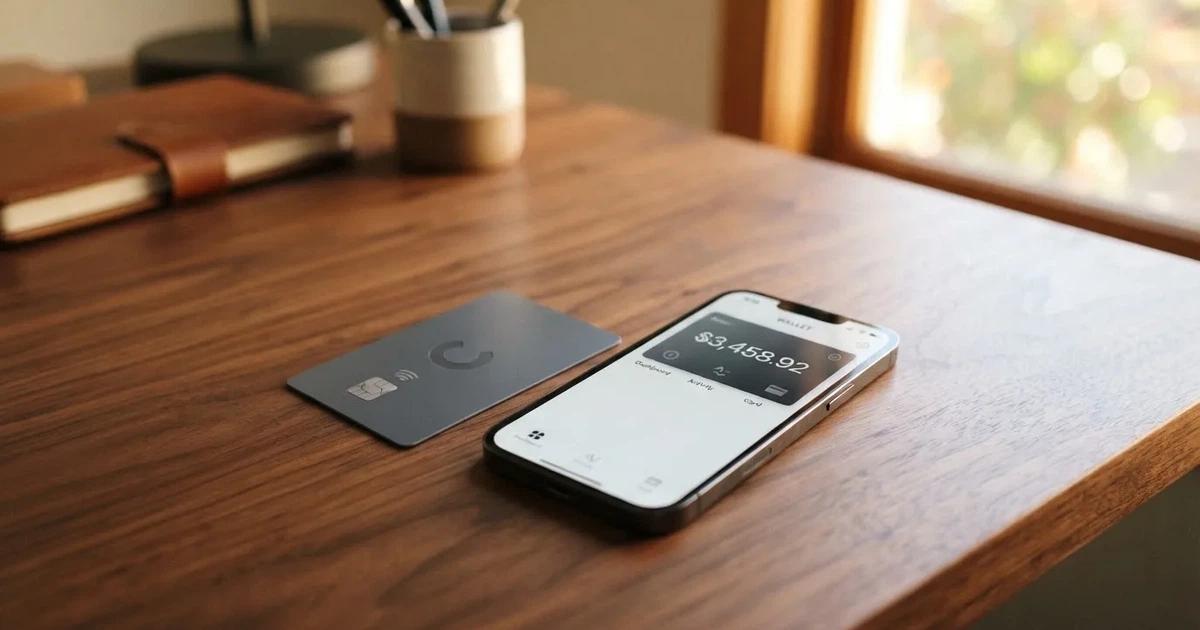
The card itself has three forms. The virtual card is the main product: 24 months of validity, 3-D Secure, reloadable, denominated in USD. A prepaid virtual card is also offered: 60 days of validity and a maximum balance of $1,000. The physical card has been “launching soon” for a long time now — the cards page still carries that label in 2026, and there is a waitlist for further countries — so if you are reading this hoping for something you can slide into a shop’s terminal, that is not what you get today. The card network is not named in the documentation; an earlier check said Visa, and I would treat that as unconfirmed.
Fees: what it really costs
The visible numbers are genuinely low. Issuance is $3. The annual fee, the inactivity fee and the cancellation fee are all free. A successful transaction costs $0.2 and a declined one costs $0.5 — which is worth pausing on, because a declined payment costs more than twice a successful one, and a payment declined for a mundane reason like a wrong billing address will cost you half a dollar. Top-up is free on the virtual plan.

The two numbers that are missing matter more than the ones that are printed. The card says “conversion fees apply when cryptocurrency is converted to fiat at the time of purchase” and does not publish the rate. So the headline cost of a purchase — $0.2 plus whatever the crypto conversion costs you — is only half the figure, and the other half is the one you cannot check in advance. The same applies to foreign currency: payments in a currency other than USD are converted automatically and the fee is not stated. The documentation recommends paying in USD, so if you are spending abroad, you are spending at an unpublished rate.
ATM withdrawals “may include small charges”, with no amounts given. Since the card is virtual-only, this is not a cost you can incur today.
| Fee or limit | What the card states |
|---|---|
| Card issuance | 3 USD |
| Annual fee | Free |
| Inactivity fee | Free |
| Cancellation fee | Free |
| Successful transaction | $0.2 |
| Declined transaction | $0.5 |
| Crypto-to-fiat conversion | Applies when cryptocurrency is converted at the time of purchase; rate not published |
| Foreign exchange | Non-USD payments converted automatically; fee not stated |
| ATM withdrawal | May include small charges; amounts not stated; virtual cards are online-only |
| Virtual card maximum monthly spending | $4,000 in the usage terms; the cards page shows a $4,000 maximum balance and $50,000 monthly spending — the sources disagree |
| Prepaid card maximum balance | $1,000 |
| Other limits | The terms say Relopay or the issuer may set daily, monthly and per-transaction limits |
The three plans differ in ways that matter more than the fee lines suggest. The virtual plan is marked most popular, with a 0% top-up fee and a $4,000 balance. The prepaid plan has a 0% spending fee, a $1,000 balance and expires after 60 days — which makes it a trial, not a home. The physical plan, whenever it arrives, is described with a 1% USDT top-up fee and a three-year validity.
Three everyday payments, and what actually happens:
- A $30 grocery shop in your own currency, paid in USD. $0.2 goes to Relopay. The conversion fee is not published, so you cannot see the total before you pay.
- A $12 subscription in euros. $0.2, then an automatic currency conversion at a rate the card does not publish. Budget more than $12.20 and you will not know by how much.
- A payment that gets declined — a restaurant that will not take a prepaid BIN, a hotel that wants an address match. $0.5, and you still have not bought anything. This is the fee most likely to surprise you, and it is charged for the attempt.
How to top up
Top-ups go in as USDT on the TRC20 network, with a minimum of $5. That is the specified route in the usage terms, and it is also the most common shape for this kind of card in the category. The cards page additionally names Bitcoin, USDT and “other cryptocurrencies”, and an earlier check of the same page listed USDT, USDC, ETH, BTC, TON and BNB. Coins are converted into local currency at the moment of payment, so the conversion happens when you spend, not when you load.
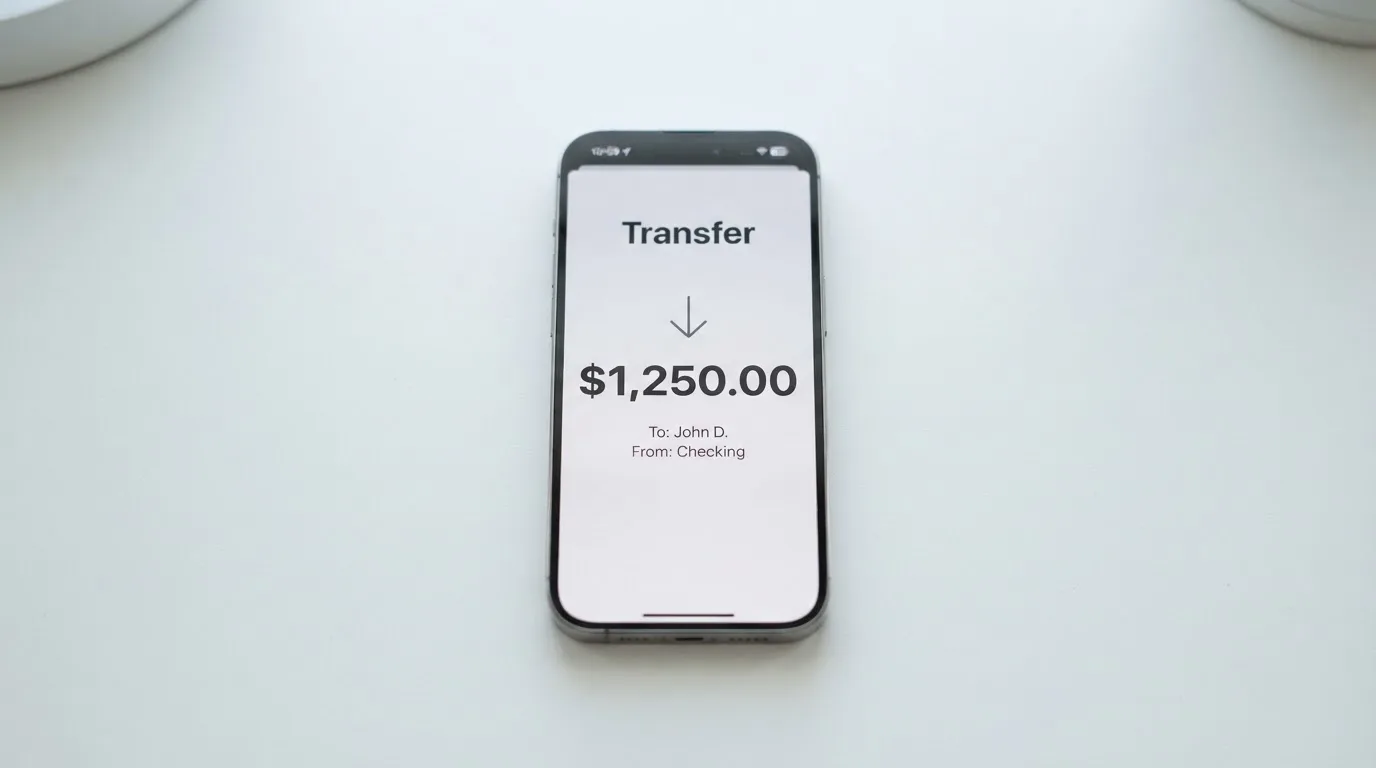
The top-up fee is 0% on the virtual plan, and the physical plan is shown at 1% for USDT. Fees are calculated in USDT. Fiat top-ups are not stated anywhere I read — if you were hoping to load from a bank account directly, that is not a documented feature.
Two things about the money that you should decide about before you load, not after. First, deposits on the virtual plan are non-refundable, and an unused balance cannot be refunded to your wallet. Second, the card expires after 24 months, and it expires with your remaining balance on it. These are not quirks; they are the model. A crypto-funded card is not a bank account, and there is no deposit guarantee behind it.
Getting money back out is similarly narrow. On account closure, funds are withdrawn within “a reasonable period”, less fees, and unclaimed funds are kept for three years.
The network choice is not a detail. USDT on Tron is cheap and fast, and sending the wrong network, or sending to an address belonging to a different network, can lose the deposit with no built-in recovery, because blockchain transfers cannot be reversed. And note one specific trap: USDC is not a native option on Tron, because Circle stopped supporting USDC on Tron in February 2024. If you hold USDC and try to send it over TRC20, you are sending something that does not exist on that network.
Paying with it every day
The virtual card works with Apple Pay and Google Pay, and this is how most people will actually use it. Adding the card to a wallet costs nothing on paper, but the setup uses a $0 verification transaction that may carry a small fee and can leave the balance slightly negative. That is a normal design; it is just worth knowing before you see a strange small charge.
There is no App Store or Google Play app I could find. The product runs as a Telegram mini app at @RelopayBot, with support at @RelopaySupportBot, plus a Telegram channel, X and Instagram. No ratings are available for anything. So if you are someone who will not touch Telegram, know this: the whole product, including sign-up and the verification flow, lives inside Telegram.
Some categories are restricted: gambling, dating, money transfers, quasi-cash, fuel and EV charging, telecoms, gift cards, brokerage and charity. The charity line carries a 30% penalty of the transaction value, $5 minimum — so a donation through this card costs you more than the donation. These are issuer policies rather than legal requirements, and blocked categories vary from issuer to issuer.
No cashback or rewards programme is stated. Nothing to offset the fees, but also nothing misleading in that direction.
And then the clause that shapes everything else in this section. The terms say: “All Relopay Card transactions are final and may not be disputed, reversed, or cancelled” — except where the issuer or the law provide otherwise. A second clause adds that disputes about goods are between you and the merchant. In practice, if you pay for something that never arrives, the answer is the merchant, not Relopay, and the card offers no chargeback. If a card cannot give you a chargeback, you should think of it as a spending tool rather than as protection, and size your balances accordingly.
The virtual card is also online-only, so no shops, no card-present purchases, and no ATMs. That is the same fact as the ATM line in the fee table, and it is the real limit on “every day” use: subscriptions, app stores, delivery, online shops and wallet taps are where this card works.
What can go wrong
The structural risk is custodial, and it is the same one that runs through every card in this category. Your balance is fiat held by the issuer, and your access runs through a Telegram mini app account. Control of crypto belongs to whoever holds the key; with a custodial provider the credentials sit with them, so you are trusting them completely. The industry record is not encouraging: Mt. Gox reported about US$350 million stolen between 2011 and 2014, Coincheck about US$400 million in 2018, and the Ronin Network US$625 million in 2022. I am not suggesting Relopay has had any of this — I found no official incidents and no user reports at all — but holding funds with a custodian carries counterparty and hack risk by construction.
The second risk is that there is nothing to appeal to. No dispute rights on the card, no refund of deposits, a balance that expires with the card, and unclaimed funds kept for three years. Deposit guarantee schemes do not apply to e-money balances.
The third is the exit. An account you cannot use, a support channel that is a Telegram bot, and a physical card that is still “launching soon”.
Some categories of failure are generic to crypto and worth naming because the card’s documentation does not. A card issued in one country can look foreign to a shop in another, because a merchant can look up the BIN and see which institution and country issued it — this is why some merchants decline foreign-issued or prepaid cards. Address verification, which compares the numeric parts of the billing address you type against issuer records, is mainly offered in the US, Canada and the UK and is generally unavailable for foreign-issued cards, which causes declines. And a declined authorisation can leave a hold on your funds that stays for several days, in some cases up to seven. That hold does not cost you the $0.5 back.
Two more category-level points, because they bear on whether you can rely on this at all. Visa and Mastercard do not issue crypto cards themselves — they license issuers and can suspend a programme. Visa terminated its global agreements with FTX on 13 November 2022, and the FTX US debit card was wound down. WaveCrest, a Visa issuer that supplied several crypto card brands, was suspended in Europe in 2018 and all its programmes closed. A programme closure typically means a notice period, then loading stops, then spending stops, then you are asked to withdraw what is left. Holding a crypto card means holding a business relationship that can end.
On the specifics of Relopay’s own protections: 3-D Secure is there, which is the standard identity check on online payments. What is not stated is any freeze function or two-factor authentication, which are the two things people most expect a modern card to have.
On who is behind it: cards are issued by Xfers Pte. Ltd., and fiat balances are held by the issuer. A third-party profile states that Xfers holds a Major Payment Institution licence from MAS — that is not confirmed by the card’s own pages. The corporate entities named are 1507613 B.C. LTD, a FINTRAC-authorised payment services company in Canada, and RELOPAY PTE. LTD in Singapore (UEN 202514348M). Two companies in two jurisdictions is a normal structure for this category, and it is also the reason you should read the entity whose terms you accept.
What I could not find is as informative as what I did. No Trustpilot page for Relopay exists that I could locate, and searching for reviews turned up unrelated companies with similar names. That silence is mildly reassuring — no complaint pile-up — and mildly unhelpful, because it also means there is no public track record either way.
What to take instead
If Relopay does not fit, the honest comparison is against other cards in the same low-cost virtual category rather than against ordinary bank cards. Here is where they stand, using the same criteria I applied to Relopay, and noting where each one publishes less than Relopay does.
| Card | Score | Country rules | What it charges | How you fund it |
|---|---|---|---|---|
| Relopay | 6.0 / 10 | Supported countries listed in the app; long exclusion list on citizenship and residence | $3 issuance, $0.2 per successful transaction, $0.5 declined, 0% top-up; conversion rate not published | USDT on TRC20, $5 minimum |
| Ape Wallet | 5.5 / 10 | No country list given; site says the card works wherever Visa is accepted; Russian focus | Issuance price not stated, promo codes change it; no fee amounts published, but the total is shown before you confirm | USDT wallet balance; Telegram transfers to other users are free |
| MaxSwap | 5.2 / 10 | Not stated; site claims no geographical restrictions | $50 card with a $25 first deposit (issuance listed at 77.125 USD); top-up 4.5% plus $1; transaction 0.25 USD plus 0.4% | Crypto, long coin list including BTC, ETH, TON, TRX, USDT, USDC and others |
| AnoCard | 5.9 / 10 | Not stated on the page I could read; the site was down | Not published on the page; creation fee varies by BIN, some products carry a maintenance fee, shown before payment | Route depends on the asset, via Telegram bot or the SORN dashboard |
Three honest observations. Relopay is the cheapest of the four on the published numbers: $3 issuance against $50 for MaxSwap, and against Ape Wallet, which will not tell you the price because promo codes move it. Relopay also publishes the most about identity checking — the rest say nothing about KYC at all, which is not a good sign.
But MaxSwap publishes more about costs, which is Relopay’s actual weak spot. Its fees are stated as percentages and amounts; Relopay’s conversion rate is not published anywhere. If you are someone who wants to see the number before you spend, MaxSwap’s model is the more transparent one, even though it costs more. And Ape Wallet’s free Telegram-to-Telegram transfers are a feature Relopay’s restricted categories list explicitly rules out — money transfers are blocked.
Ape Wallet’s referral programme pays a share of invited users’ card purchases, and AnoCard’s pays $5 per referred card plus 0.25% of referred top-ups. Neither Relopay nor MaxSwap states any rewards at all.
Who I would recommend it to
I would recommend this card to one specific person: someone in Vietnam, Thailand or Indonesia who is paid in USDT, runs their money through Telegram, has no card they can use from a bank in their own name, and wants to pay for things online without touching an exchange. For that person the numbers are good — $3 to open, 0% to load, $0.2 a purchase — and the waitlist structure means the company is growing in roughly the right direction.
I would not recommend it as a first card, and I would not recommend it to anyone who wants chargeback rights or who is uneasy about a balance sitting with a provider accessed through a chat app.
Before you load anything, I would check five things in this order. Whether your country is on the supported list and your nationality is not on the excluded list, because nothing else matters if it is not. Whether you can live without a dispute route, which means you treat this money as spending money, not savings. The $4,000 monthly limit, which is where the sources disagree and where you should assume the lower number. That you are sending USDT on TRC20 and nothing else, given how easily a wrong network loses a deposit. And the expiry — 24 months on the virtual card, with the balance going with it.
And one habit. If you are sending more than you need for the week, keep the rest in a wallet you control. A card is a convenience; the money should not depend on the convenience staying open.
Frequently asked questions
What is Relopay card?
Relopay is a virtual payment card funded from cryptocurrency rather than from a bank account. You send USDT, the balance is held as US dollars by a licensed issuer, and the card spends it online or through Apple Pay and Google Pay. It is a payment tool, not a bank account: there is no interest, no deposit guarantee, and no chargeback on transactions. The physical card is still listed as “launching soon”.
How does Relopay card work?
You top up with USDT on the TRC20 network, minimum $5, and the balance converts to fiat at the moment of payment rather than at the moment you load. When you pay, the amount is deducted from that stored dollar balance, and coins are converted into local currency as the purchase happens. You can then use the virtual card online or in a mobile wallet. The card expires after 24 months, and deposits on the virtual plan are non-refundable.
Is Relopay a bank?
No. It is a card programme front end. Cards are issued by Xfers Pte. Ltd., and fiat balances are held by that issuer rather than at a bank in your name. A third-party profile states that Xfers holds a Major Payment Institution licence from MAS, but the card’s own pages do not confirm this. Funds sit with a provider, so you are exposed to counterparty risk and, per the terms, get no deposit protection.
Who owns Relopay?
Two companies are named: 1507613 B.C. LTD, a FINTRAC-authorised payment services company in Canada, and RELOPAY PTE. LTD in Singapore (UEN 202514348M). The card itself is issued by Xfers Pte. Ltd., a Singapore institution. There is no conventional parent in the usual banking sense, and no public reputation to lean on — I found no Trustpilot page and no user reports, only similarly named companies called RelayPay and Relay Payments.
Is Relopay card available in my country?
Only if your country is on the “Supported Countries” list inside the app, which is not published in text form; an earlier check found Vietnam, Thailand and Indonesia with a waitlist for others. Citizens and residents of a long exclusion list are refused, including the United States, Canada, Hong Kong, Belarus and the Russian Federation. Because both citizenship and residence count, being abroad does not help if you hold one of those nationalities.
Can I use Relopay card in my country?
Once you have it, yes in a lot of places: the documentation claims use in 170+ countries. That is a statement about where the card spends, not about who can open an account, and the two are easy to mix up. Expect declines on some foreign-issued and prepaid cards anyway, since a merchant can look up the issuing country and apply its own rules, and address verification is generally unavailable outside the US, Canada and the UK.
How do I get the Relopay card?
You need to be 18 or over with full legal capacity. Registration runs through a Telegram mini app at @RelopayBot, where you select the region “All countries except USA”, choose your country and document, upload a photo, and complete a selfie check through Sumsub. The app quotes a result in “a few seconds”. Proof of address is not mentioned, and no reasons for rejection or review times are published.
Does Relopay card require KYC?
Yes — standard verification is required, and prepaid cards are labelled “KYC required”. You supply identity documents and a selfie through Sumsub. There is one standard verification level described, with no tiers and no stated rejection reasons. That is worth knowing before you rely on the card for a payment: if a check fails, the documentation does not tell you why.
How much does Relopay cost?
Issuance is $3, with no annual, inactivity or cancellation fee. A successful transaction costs $0.2 and a declined one $0.5, which is the fee most likely to surprise you. Top-ups are free on the virtual plan. What is not published is the crypto conversion rate that applies at the time of purchase, and the foreign exchange fee — so the printed figures are not the full cost of a purchase.
Is Relopay card safe?
Safe enough to use, if you treat it as a spending tool rather than as somewhere to keep money. There is 3-D Secure, and I found no official incidents and no user complaints. But the balance is custodial, the access point is a Telegram mini app, freeze and two-factor authentication are not stated, and every transaction is final and cannot be disputed or reversed. Size your balances accordingly.
How virtual cards work – cryptocardsexplained.com
Content created by the «cryptocardsexplained.com» team