
A prepaid virtual Visa or Mastercard paid for in crypto, built for one-off online checkouts — and surrounded by question marks
 Available in US
Ezzocard sells virtual prepaid Visa and Mastercard numbers that you pay for in cryptocurrency. The product is simple enough: pick a card, pay in Bitcoin or USDT, get a card number you can type into an online checkout. The company behind it, what it costs to keep, and how disputes are handled are all much harder to pin down. I went through every page I could open, plus the public complaints, to work out who this card actually fits — and who should walk away.
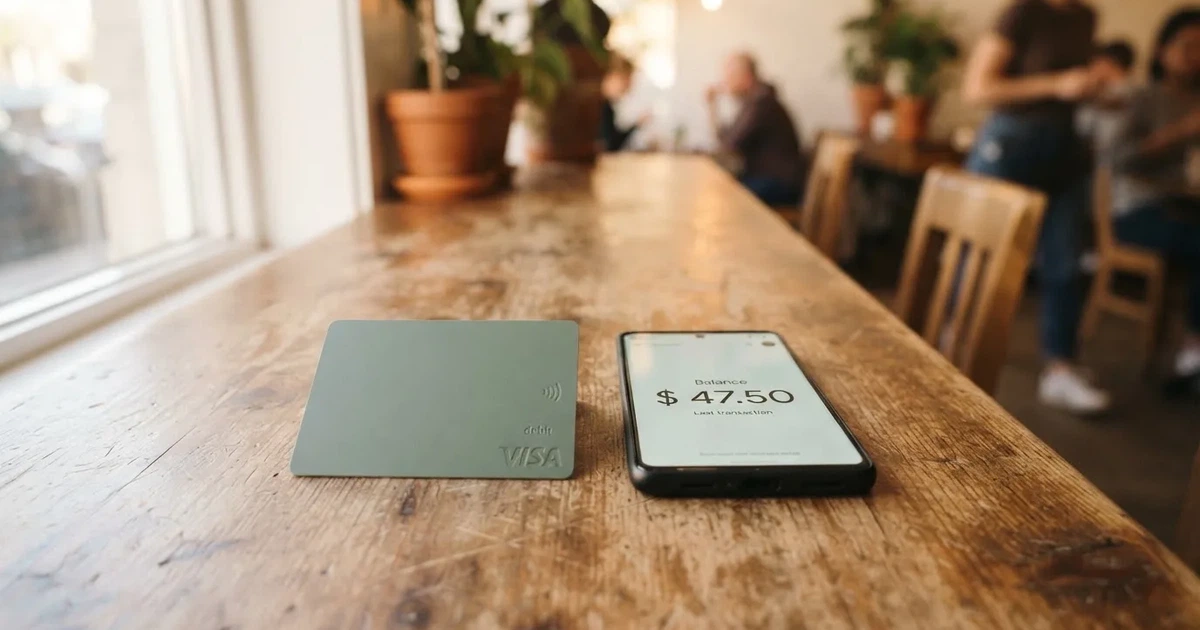
Conditions are current as of October 28, 2026.
Verdict: 5.3 out of 10
Ezzocard scores 5.3 out of 10 overall. That number reflects a real split: the buying experience is unusually easy, the crypto coverage at checkout is broad, and the cards are aimed at exactly the kind of one-off online payment where a prepaid number has its place. Against that, the company behind the product is essentially opaque, the public complaint profile is poor, and almost every line item you would normally expect to see on a card’s pricing page is missing.
The card is at its best for someone who wants a single-use or short-life virtual card paid for in crypto, with no app to install and no account to keep alive. It is at its weakest for anyone who plans to keep money on the card, who needs receipts and chargeback rights, or who wants a company they can identify, contact, and hold to account when something goes wrong.
Here is how the score breaks down by criterion.
| Criterion | Mark | Why it scored that way |
|---|---|---|
| Who can get it | 8 / 10 | The site is open about selling to people from “anywhere in the world” and the signup path is friction-free, which is the whole point. |
| Cost | 5 / 10 | Issuance fees and per-transaction costs are not published; you only learn the price once you start the order, and there is no monthly fee disclosed. |
| Top-up options | 7 / 10 | Bitcoin, Ethereum, USDT, Dogecoin, Litecoin, Tron, Solana and BNB are accepted, but cards are prepaid and not reloadable with crypto after purchase. |
| Reliability and complaints | 2 / 10 | The owner, the registered entity and the issuing bank are not disclosed, and the public review profile is poor, with a Trustpilot score of 2.5 from 368 reviews. |
| Everyday use | 4 / 10 | Virtual prepaid only; Apple Pay, Google Pay and ATM access are not confirmed, and the card’s currency is not stated anywhere. |
| Total | 5.3 / 10 | A useful single-use tool, wrapped in operational and disclosure gaps that prevent a higher mark. |
The card fits one specific use case: a one-off online payment with a prepaid virtual card. If that is what you are looking for, Ezzocard does it. If you are looking for a long-term spending product, a card you can reload, a card that lives in your phone wallet, or a brand with a clear company behind it, this is not the place.
Will they give you the card
The short answer: almost certainly yes, because Ezzocard is built for people who can’t easily get an ordinary bank card. The site’s own summary, surfaced in search results, says cards can be bought “from anywhere in the world.” That is the headline pitch and it is unusual among crypto cards, which often list supported countries or block US persons, UK residents, or sanctioned jurisdictions by name. Ezzocard does not appear to do that.
What is just as telling is what the site does not say. There is no published country list, no “supported regions” page, and no list of exclusions. The signup form, as far as I could read it, does not ask for an ID document, proof of address, or a selfie at registration. That is the upside for a reader who has been turned away by mainstream issuers because of their country of residence, citizenship, or immigration status. It is also the source of every concern later in this review, because the absence of identity checks is a feature only if you trust the operator with your money.
The card itself is a virtual prepaid Visa or Mastercard. “Prepaid” means you load it before you spend, and it cannot go overdrawn. “Virtual” means there is no plastic card in the post and nothing to tap at a shop — you get a number, an expiry and a CVC, which you type into an online checkout. Third-party summaries describe two flavours: a single-use card that is good for one transaction, and a reloadable card that you can fund again. Ezzocard’s own pages do not spell that out, so treat the third-party read as unofficial and not confirmed by the card.
A few practical consequences fall out of all this:
- The card’s currency is not stated. A Trustpilot reviewer mentions a $25 CAD card, which suggests the card can be denominated in something other than USD, but the site does not publish a list of currencies, and there is nothing to say which currency you will get for any given order.
- There is no physical delivery because the card is virtual. That is the design, not a delay. A reader who expects a card in the post will be confused; a reader who wants a number in their inbox is in the right place.
- The minimum age, residency and any “high-risk country” screening are not stated on the public pages. If you are reading this from a sanctioned jurisdiction or as a sanctioned person, do not assume that no public list means no checks at all — those decisions are often made behind the scenes at the payment level.
The bottom line for this section: the entry door is wide open, the product is a virtual prepaid number, and the only filter is what the payment processor decides when you try to pay. That openness is the reason you are looking at Ezzocard and the reason a long list of readers have complained afterwards.
How to get it
Ezzocard’s signup is built to be quick. The published path is: pick a card, pay in crypto, receive a card number. There is no separate account to create in the way a bank or an exchange asks you to create one, and at the point of registration the site states that no ID or other document is required. You choose the card, you pay, you get the card details.
That is the official version. The unofficial version is more uneven. At least one Trustpilot reviewer, writing in September 2025, says that ID verification was requested and blocked the use of a card after payment. So “no verification” is what the marketing says; “we may ask later” is what some customers report. There is no published KYC tier — nothing equivalent to a regulated EMI’s tiered identity limits. If you need a card with a predictable verification process and a published ceiling, that is something to weigh against the convenience.
A few things to check before you pay:
- Card currency. Confirm which currency the card will be denominated in before you send crypto. With no published list, the only way to know is the order page itself.
- Single-use versus reloadable. The third-party summary calls out both options, but the site does not label them clearly enough to copy here. Decide which one you need before you order, because paying for the wrong kind of card is the kind of mistake that turns into a refund request.
- Delivery speed. The card is virtual, so delivery is the email with the card details. A reviewer reports a card not arriving 1.5 days after payment in March 2023; treat that as a worst-case data point, not a typical one, but do not assume instant delivery either.
- Refund window. The site does not publish a refund window for orders not used, and complaints include refund requests left pending for between 12 and 54 days in late 2025. If the card matters for a specific purchase, buy it with enough lead time.
If you have been refused a normal bank card, or you are buying for a one-off online checkout that you do not want tied to your main card, the signup path here is about as low-friction as the category gets. If you are planning a long-term relationship with the brand, the missing KYC ladder and the missing company details are exactly what would worry a more cautious reader.
What it really costs: Fees
Here is the first place the review gets uncomfortable. Ezzocard’s own pages do not publish a fee schedule. Issuance fees, per-transaction costs, ATM fees (if any), monthly fees, foreign-exchange margins, daily and monthly limits — none of these are stated on the official site. The pricing page returned a blank when checked. A reader who wants to compare costs in advance cannot do so from the public site, and the only way to find out the price of a specific card is to start an order.

What I can show you is the structure of the costs, with the published gaps marked as such. Everything below is what a reader should expect to ask the order page, not what the public site confirms.
| Fee or limit | What Ezzocard says |
|---|---|
| Card issuance | Not stated |
| Monthly or annual fee | Not stated |
| Crypto-to-fiat conversion fee | Not stated |
| Foreign exchange (FX) fee | Not stated |
| ATM withdrawal fee | Not stated |
| Daily spending limit | Not stated |
| Monthly spending limit | Not stated |
| Card currency | Not stated (one user report mentions a $25 CAD card) |
| Top-up after purchase | Not stated; starting data says cards are not reloadable with crypto |
Three everyday payments, and what fees could apply
To make the absence of a fee schedule more useful, here are three everyday payments and the fees that would normally show up. None of these are confirmed by Ezzocard; they are the questions a reader should put to the order page or to support before paying.
- A €30 one-off online subscription paid from a USD-denominated card. Conversion: the card’s network converts USD to EUR at the wholesale rate the network uses on the day. Ezzocard does not publish an FX margin, so a 0% to 3% range is a reasonable ballpark for a card that does not advertise “no FX fee.” The cardholder also paid crypto at checkout, and the spread between the spot rate and the rate Ezzocard applied when converting is part of the cost — that spread is not disclosed either.
- A $50 single-use card used once, then discarded. There is no monthly fee and no ongoing balance to maintain, so the only cost is the issuance price and the crypto network fee for the deposit. For BTC and ETH that network fee can be material on busy days; for USDT on Tron it is usually small.
- A reloadable card kept alive for a few months. If the card is reloadable in the way the third-party summary suggests, the cost is not just the price of the card but the cost of every top-up after the first: the spread, the network fee, and any loading fee the site does not publish.
A note on the network fee. Whatever crypto you pay in, the on-chain fee for the deposit is set by the blockchain, not by Ezzocard. USDT on Tron is typically the cheapest of the eight coins the site accepts, because Tron’s network resources are designed for cheap transfers. BTC and ETH on a busy day can be the most expensive. If the cost of getting the money in matters, the coin and the network matter more than anything else on the order page.
The honest summary for a careful reader: Ezzocard’s cost is a black box until you start the order, and there is no published schedule to compare it against. The site’s silence on fees is not a competitive advantage; it is a missing page.
How to top it up: Top up
The funding story for Ezzocard is unusual, and worth understanding before you put any money in. Ezzocard does not run a reloadable prepaid product in the way a mainstream card does. The starting data says the cards are prepaid and not reloadable with crypto. In other words, you do not “top up” an Ezzocard card the way you would top up a Revolut or a Wirex balance. You buy a card with crypto, you spend what is on it, and that is the end of the product for that card.
A third-party summary describes both single-use and reloadable options, so there may be a reloadable tier in the catalogue, but Ezzocard’s own pages do not explain the difference, and there is no published way to add money to a card after the initial purchase. If reloadability matters to you, treat it as something you must confirm on the order page rather than as a documented feature.
The crypto side is clearer. The site accepts eight coins at checkout: Bitcoin, Ethereum, USDT, Dogecoin, Litecoin, Tron, Solana and BNB. The site does not state which network each coin should be sent on. For USDT in particular that matters, because Tether issues on many networks, and a USDT transfer sent on the wrong network can be lost or stuck in manual recovery. A few practical rules from the wider category, applied to Ezzocard:
- Match the network exactly to what the order page tells you. If the page says USDT on Tron, do not send USDT on Ethereum; the address is different and the transfer may be unrecoverable.
- Send a small test transaction first if you are sending a large amount for the first time. Network fees are small on Tron and Solana, and even on Ethereum a test transfer is cheaper than learning the lesson the hard way.
- Keep the transaction hash. If anything goes wrong, the hash is the only reference the support team will accept, and the only way to start a recovery with a blockchain explorer.
- Do not assume the merchant or the network can undo a transfer. Crypto transactions are irreversible by design, and a payment processor that holds the funds on its side is the only practical route to a refund.
The withdrawal story is also worth naming. The site does not say whether you can move money off a card back to a bank account or back into crypto. “Withdrawal” in the prepaid sense usually means ATM access, and ATM access is not stated either. If the only thing you need is to spend the balance online before the card expires, that is fine. If you want a way to get the money back out, you should ask the order page before paying.
Paying with it every day
Ezzocard is built for online payments, and that is where it works. You type the card number, the expiry and the CVC into an online checkout, and the network routes the payment to the issuing bank. As a virtual prepaid number, it does what virtual prepaid numbers do: it spends down the balance you loaded at purchase, and once the balance is gone the card stops working.
What is missing is everything around that basic flow. There is no published Ezzocard app, and the product pages do not describe tokenisation for Apple Pay or Google Pay, so the card cannot be added to a phone wallet in the documented way a Visa or Mastercard would usually be added. There is no mention of 3-D Secure, no description of how AVS mismatches are handled, and no public statement about how the card behaves at merchants that are strict about prepaid or foreign-issued BINs. If you have ever had an online checkout refuse a prepaid card from an unfamiliar issuer, you already know why a missing statement on this point is a worry.
The card currency is not stated, which is a problem for everyday use in a way that is easy to underestimate. If the card is denominated in USD and you are paying in EUR, the conversion is done by the network on the day, and the rate is whatever the network’s wholesale rate was at the time. If the card is denominated in a currency you didn’t expect, you can end up paying two spreads: the spread Ezzocard applied when you bought the card, and the spread the network applies when you spend it. A reader who cares about the rate should pin down the card’s currency on the order page before paying.
Refunds are the other everyday-use topic that the public material does not cover. The site does not describe a dispute process, and reviewers report refund requests left pending for between 12 and 54 days in late 2025. In a regulated market, prepaid cards are covered by the same chargeback framework as any other card: the issuer can reverse a transaction with a reason code for fraud, goods not received, or duplicate billing. Whether Ezzocard’s issuer offers that is not stated. If you are paying for something you might need to return, that is a gap.
The rewards question is also not stated. The site does not describe a cashback programme, a points programme, or any incentive to use the card. Ezzocard is positioned as a tool, not a product with perks.
A short list of what works and what does not, in everyday use:
- Online checkout with a virtual prepaid number: yes, that is the product.
- Adding the card to Apple Pay or Google Pay: not stated, treat as unsupported until confirmed.
- ATM withdrawal: not stated, treat as unsupported.
- Card-to-card transfer: not stated, treat as unsupported.
- Cashback, points or other rewards: not stated, none advertised.
- Dispute or chargeback process: not stated, with reviewers reporting slow or no responses.
- 3-D Secure handling: not stated; the card may or may not prompt for an additional check depending on the issuer’s settings.
What can go wrong
The risk section is the longest part of this review, because the public record around Ezzocard is the main reason the score is 5.3 and not 7.
Trustpilot: 2.5 out of 5 from 368 reviews (read 2026-10-21). The themes in those reviews are not subtle. Reviewers report:
- Paying for a card and not receiving one. Cases in 2023 and 2026.
- Cards being declined by merchants including PayPal and eSIM providers, in 2022, 2023, 2025 and 2026.
- Refund requests that go unanswered for weeks or months, with cases in 2025.
- The main site going offline and a move to a new domain in late 2025, with reviewers reporting lookalike domains in the same period.
- Requests for extra fees after a transfer described as an “ezzo gift card” in mid-2026.
Trustpilot itself flags the company profile as unclaimed, with a warning that the company “may be associated with high-risk investments.” That is Trustpilot’s wording, not mine, but it is the platform’s own signal that the brand has not engaged with the review process the way a regulated issuer would.
The corporate picture is the second risk. The provider is named in the starting data as Ezzocard.Finance, formerly Ezzocard.com. The owner, the country of registration, the company number, and the issuing bank are not disclosed on any public page I could read. A regulated card programme has an issuing bank or an e-money institution at the back of it, with a name and a regulator you can look up. Ezzocard’s issuer is not identified in the public material. That means:
- You cannot check the issuer on the regulator’s register before you pay.
- You cannot tell whether the issuing bank is in your country, which matters for cross-border declines.
- You cannot tell whether the programme is licensed under MiCA, registered with FinCEN as a money services business, or authorised under any specific national framework. The absence of a stated licence is not the same as the presence of one.
Security is the third risk. The site does not describe 2FA, instant card freeze, or any of the standard safeguards a regulated issuer would publish. There is no app, which means there is no place to freeze a card from your phone. The only published support channel is email, and the review pattern shows that most 2025 and 2026 negative reviews do not receive a company reply. Language support is not stated.
The regulatory backdrop adds a layer. The MiCA transitional period runs until 1 July 2026 or until a provider receives or is refused a MiCA authorisation, whichever comes first. ESMA keeps an interim register of authorised CASPs that a reader can check by name. If you cannot find Ezzocard or its stated issuer on that register, that is information worth weighing before you put money in.
A few things a reader can do before paying, that take a few minutes and remove some of the risk:
- Check the Trustpilot profile and read the negative reviews, not the positive ones. The patterns are more useful than individual stories.
- Check the WHOIS of the domain. If the site has changed name in the last 12 months, that is information.
- Search the regulator’s register for the name on the card or the name on the checkout page. If nothing comes back, that is information too.
- Start with the smallest card the site sells. Treat the first purchase as a test, not as a way to fund a meaningful balance.
- Keep the crypto transaction hash and a screenshot of the order page. If you need to ask for a refund, those are the artefacts that move a support request forward.
None of these steps make the card safer to use. They make it easier to recognise when something is wrong, and easier to recover if it is.
What to take instead
The honest reading of Ezzocard’s score is that the product does one specific thing and the rest of the market does similar things with more disclosure. Three alternatives, all of them virtual crypto cards, all of them with stronger public information than Ezzocard.
Cardex, scored 5.6 out of 10. Cardex markets a single crypto card to 200+ countries, with no country list and no exclusions in the public material. The card runs on Verve, Visa, Mastercard and UnionPay, with virtual and physical options, and the App Store listing positions the card as Naira-denominated. The site describes an “AI-Powered Conversion Rate” that scans global exchanges and picks the best one at the moment of payment, which is a marketing claim rather than a published fee. The card is funded from USDT, USDC and BTC wallets. Cost, fees and rewards are not stated in the public material I could read.
TakeCard, scored 5.5 out of 10. TakeCard issues virtual and physical cards on Visa, with the physical card limited to Bolivian users and the virtual card open to a wider set of countries that the starting data lists as Argentina, Bolivia, Peru, Chile, Paraguay, Colombia, Ecuador, the US, Spain and Italy. The card is prepaid, denominated in USD, and USD payments are 1:1 with no currency adjustment; other currencies use the official Visa rate of the transaction day. Virtual TakeCard costs USD 5, with the physical card priced at USD 20 issuance plus USD 20 shipping (the help centre has a separate article that says USD 10 for the physical card in Bolivia — the two sources conflict). The site charges a 1% commission per purchase, and funding is from the Takenos balance in the same group of products. The top-up networks listed in the starting data — USDC and USDT on Polygon, BNB Chain, Tron or Ethereum — are not verified on a page I could read.
OkiCard, scored 6.0 out of 10. OkiCard serves 150+ countries, with some pages saying 200+, and a stated policy of no geo-blocking based on passport. Users must confirm they are not in a sanctioned jurisdiction. The card is virtual, with a physical card mentioned on some pages but without details; the network is described as “Visa/Mastercard” without further specification; the card currency is USD/EUR pegged. Pricing is $0 issuance, $0 monthly, and a $15 starting price for the virtual card, with a one-time issuance fee mentioned in the FAQ — the pricing page and the FAQ disagree. The initial deposit is 100 USDT. Funding is USDT on BSC (BEP-20), Ethereum (ERC-20), Tron (TRC-20) or Solana (SPL), with USDC “soon” and BTC and other coins “coming soon.” The site says the load fee is 3% and the USD transaction fee is 0%, with “no hidden exchange spreads” — that is a marketing claim, and FX fee is not stated.
| Cardex | TakeCard | OkiCard | Ezzocard | |
|---|---|---|---|---|
| Score | 5.6 / 10 | 5.5 / 10 | 6.0 / 10 | 5.3 / 10 |
| Countries stated | “200+” (no list) | Virtual: AR, BO, PE, CL, PY, CO, EC, US, ES, IT; physical: BO only | 150+ / 200+ | “From anywhere in the world” |
| Card type | Virtual and physical | Virtual (immediate) and physical (Bolivia) | Virtual (physical mentioned) | Virtual prepaid |
| Card currency | Naira (listing) | USD (1:1, no FX) | USD/EUR pegged | Not stated |
| Stated issuance | Not stated | Virtual USD 5; physical USD 20 + USD 20 shipping (or USD 10 per another article) | $15 starting; issuance $0; monthly $0; one-time fee in FAQ | Not stated |
| Stated load / commission | Not stated | 1% per purchase | 3% load fee | Not stated |
| Funding | USDT, USDC, BTC | Takenos balance; USDC/USDT on Polygon, BNB Chain, Tron, Ethereum (starting data, unverified) | USDT on BSC, ETH, TRON, SOL | BTC, ETH, USDT, DOGE, LTC, TRON, SOL, BNB; non-reloadable |
| Rewards | Not stated | Not stated | Not stated | Not stated |
The table does not make any of the alternatives look more complete than they are. It is a side-by-side of stated information, and the column with the most “not stated” entries is Ezzocard’s. If a reader is choosing on the basis of disclosed information, OkiCard has the most disclosed information; if a reader is choosing on the basis of country coverage stated as text on the site, Ezzocard is the most open-ended. None of the four is a clear winner across every criterion, and none of them is a substitute for a regulated card issued by a bank you can identify.
Who I would recommend Ezzocard to
Ezzocard is the right tool for a narrow use case, and the wrong tool for almost everything else. A reader who should consider it:
- Someone who needs a one-off virtual card for a single online purchase, and who is comfortable that the product is a number, not a relationship.
- Someone who is paid in or holds the eight coins Ezzocard accepts, and who can move the money in cheaply on the network the order page specifies.
- Someone who has been refused a normal bank card or a mainstream crypto card, and who understands that the absence of identity checks is what makes the entry easy, and is also why the consumer protections are thin.
- Someone who is treating the first purchase as a test, with a small balance, and who is prepared to walk away if the order page, the support response, or the card delivery do not match what they were told.
A reader who should not consider it:
- Anyone who plans to keep a meaningful balance on the card. Prepaid cards do not pay interest, and an issuer you cannot identify is not a safe place to park money.
- Anyone who needs Apple Pay, Google Pay, ATM access or a physical card. Ezzocard’s product is virtual, and the public material does not describe tokenisation or ATM support.
- Anyone who needs a real dispute process. The site does not describe one, and the public complaint record is consistent with slow or no responses.
- Anyone whose main concern is regulatory cover. The issuer is not named in the public material, the company behind the brand is not identified with a country or a company number, and there is no licence to check on a public register.
- Anyone who has read the Trustpilot profile and decided the patterns there are not for them. That is a reasonable read, and a reader who has reached that conclusion should follow it.
If you do decide to use Ezzocard, the order of operations is the same as for any product with thin disclosure. Read the order page before paying. Match the network for the crypto you send. Keep the transaction hash. Start with a small card. Do not load the card with more than you are willing to lose. And if the response from support does not arrive in the time you need it, treat that as the answer rather than as a delay.
Frequently asked questions
What is the Ezzocard card?
Ezzocard is a virtual prepaid Visa or Mastercard that you buy with cryptocurrency. The product is a card number, an expiry date and a CVC, delivered by email after payment. There is no physical card and no app; the card is designed for online checkouts.
How does the Ezzocard card work?
You pick a card on the site, pay in one of the accepted cryptocurrencies, and receive the card details by email. You then type the card number into the online checkout you want to use. The card is prepaid, so it can only spend the balance loaded at purchase, and it cannot be overdrawn.
Is Ezzocard a bank?
Ezzocard is not a bank, and the site does not name a bank behind the product. The card is issued by an institution that is not disclosed on the public pages, which means you cannot check the issuer on a regulator’s register before you pay.
Who owns Ezzocard?
The brand is named in public summaries as Ezzocard.Finance, formerly Ezzocard.com. The owner, the country of registration and the company number are not stated on any page I could read. The information is genuinely not there rather than being hidden in a footer.
Is the Ezzocard card available in my country?
The site’s stated position is that cards can be bought “from anywhere in the world.” There is no published list of supported or excluded countries, and there is no KYC tier that would limit a card by residency. The practical filter is what the payment processor decides at checkout, not what the site advertises.
Does the Ezzocard card require KYC?
The site says no verification is needed at registration, and does not ask for ID or a proof of address on the order page. At least one Trustpilot reviewer reports that ID verification was requested and blocked the use of a card after payment, so “no verification” is the marketing line and “we may ask later” is the customer experience.
How do I add the Ezzocard card to Apple Wallet?
The site does not describe tokenisation, and there is no Ezzocard app. Without a published integration with Apple Pay or Google Pay, the card cannot be added to a phone wallet in the documented way a Visa or Mastercard would normally be added. Treat the card as online-only until the issuer confirms otherwise.
How do I top up an Ezzocard card?
The starting data says Ezzocard’s cards are prepaid and not reloadable with crypto. A third-party summary describes a reloadable option, but the site’s own pages do not explain it, so the safe assumption is that you buy the card with crypto at the point of purchase and spend what is on it. There is no documented way to add money to a card after the first load.
Is the Ezzocard card safe?
The site does not describe 2FA, instant card freeze, or other standard safeguards, and there is no app. The Trustpilot profile is 2.5 out of 5 from 368 reviews, with patterns around cards not arriving, cards being declined, and refunds being delayed. The card can be used safely for a small one-off payment; it is not a safe place to keep a balance.
Is the Ezzocard card worth it?
For a single online purchase paid in crypto, Ezzocard is a working tool. For anything beyond that — a balance you want to keep, a card you want in your phone wallet, a brand you want to identify, a dispute process you can rely on — the public material does not support the case, and the alternatives in this review offer more disclosed information for a similar product.
How virtual cards work – cryptocardsexplained.com
Content created by the «cryptocardsexplained.com» team