
Gpayvcc Card Review — What You Actually Pay and What You Actually Get
 Available in US
The Gpayvcc card is a virtual prepaid card that lets you spend crypto through the ordinary Visa and Mastercard rails that shops, subscriptions and online merchants already accept. You load it from your crypto balance, and the card draws down a stored value like a gift card rather than tapping into a bank account. My score for it is 6.9 out of 10 — firmly in the middle, not a card I would push at anyone without asking what they are trying to do. It is well built for a specific job: buying prepaid virtual cards funded with many different coins, fast, without a bank account. It is a poor fit for someone who wants a physical card in their wallet, an ATM, or a long list of everyday features that the public pages simply do not mention.
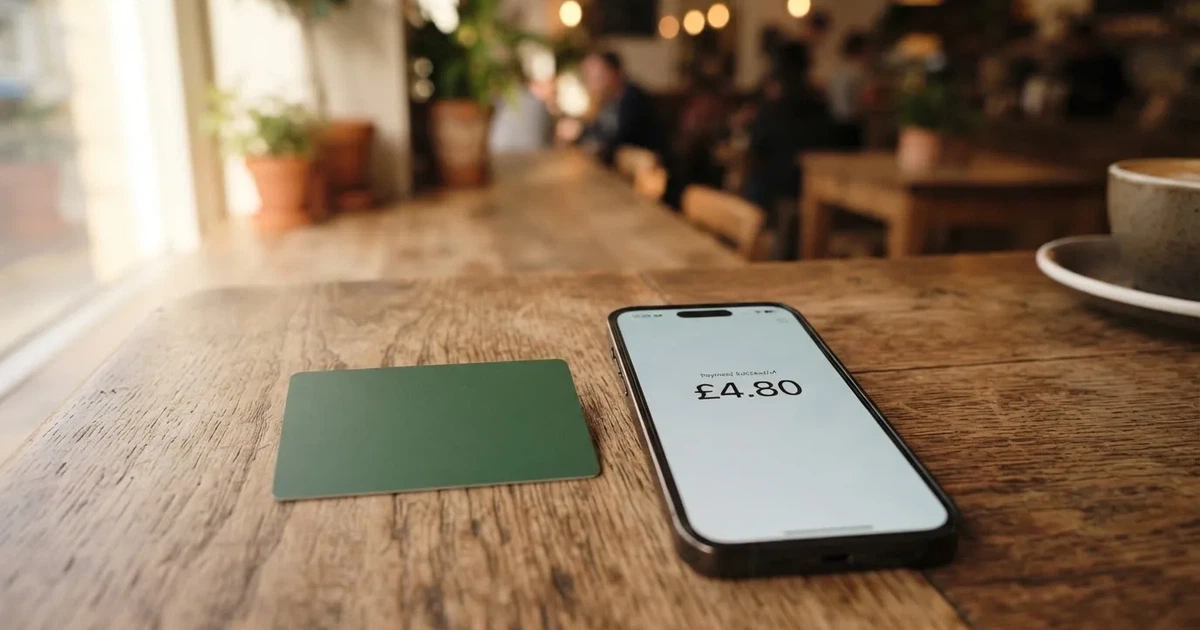
The conditions described here are current as of October 28, 2026.
The verdict: a 6.9 out of 10, built for one specific job
Let me give you the breakdown before the argument, because a number without reasons is just a number. The total is 6.9 out of 10. It is not a bad card; it is a narrow one that does a couple of things well and leaves a dozen questions unanswered on its own public pages.
Here is the score table, one row per criterion, with the mark and my short reason:
| Criterion | Mark | Why |
|---|---|---|
| Who can get it | 8 / 10 | No country list is published, no countries are excluded, and registration is by email, name and phone number alone. That openness is genuinely attractive — with the caveat that “open” is not the same as “confirmed to work in your country.” |
| Cost | 7 / 10 | Issue fees are stated and low: 5 USD for most cards (Virtual Visa Reloadable, Visa Gold, Mastercard Reloadable Classic) and 15 USD for Visa Platinum. No monthly fee and no inactivity fee. An unofficial source flags a “high crypto-to-fiat conversion spread” — the real cost often hides in the conversion, not the issue fee. |
| Top-up options | 8 / 10 | USDT, BTC, TON and more are supported; an earlier check listed USDT, BTC, ETH, BNB, Solana, TON, TRX, LTC and BCH. Wide coin choice. Networks are not disclosed, which is the one gap that matters. |
| Reliability and complaints | 6 / 10 | It is not a bank, cards come from partner issuers, and no licences are named. Trustpilot shows 4.7 from 56 reviews with 92 percent five-star. An unofficial source lists “no refunds on card balances” as a con. |
| Everyday use | 5 / 10 | Virtual only. Details arrive by email about five minutes after crypto payment confirms. Apple Pay and Google Pay are supported. No plastic, no ATM. That is the weakest column and it caps the whole score. |
| Total | 6.9 / 10 | A specialist prepaid virtual card, excellent for its audience, thin on everyday conveniences. |
Who is this for? Someone who already holds crypto, wants to convert and spend it as ordinary card payments, and does not have — or does not want — a traditional bank card. Someone who values choosing among many coins to fund the card. Someone who is content with a virtual-only card and does not need cash from an ATM.
Who is it not for? Someone who needs a physical card they can hand over in person. Someone who plans to travel and pay in many currencies without surprises. Someone who wants to be able to reverse a purchase through a formal chargeback process and expects it to work like a bank card. Someone whose peace of mind depends on reading a licence number.
Will they give you the card?
The honest answer is: it looks wide open, but nobody will tell you exactly how wide.
Gpayvcc does not publish a list of the countries it serves, and it does not publish a list of countries it refuses. That is unusual. Most card services of this kind either list a long roll of supported countries or post a short blocklist of the ones they will not touch. Gpayvcc’s public pages, as far as I can read them, name neither. If you are somewhere unusual and you are wondering whether you will be turned away at sign-up, the honest answer is that you will not find out from the marketing site — you would find out by trying.
Here is what the sign-up flow actually asks for, which is the second half of the answer to “will they give it to me.” Registration is by email address, your name and a phone number. No bank account is required. The page adds a caveat that more information may be needed for legal and issuer reasons — which is the polite way of saying that in some cases they will ask you for more than three fields, but it does not tell you when or what.
What about identity checks? The official pages do not state a verification level. A third-party review site describes the process as Level 1, email only, with no phone, no ID and no selfie photo. Treat that as unofficial: it is one site’s summary, and it is not confirmed by Gpayvcc. It is also entirely compatible with the caveat above — many services start at email-only and escalate later, sometimes at the first withdrawal or once you cross a spending threshold. So if your plan is to open an account in five minutes and then move meaningful sums, do not be surprised if a document request arrives later.
One more thing worth knowing at this stage, because it shapes everything that follows: Gpayvcc states plainly that it is not a bank and does not itself issue cards. The cards are issued by third-party partners. So the institution whose name is on your card is not the institution whose website you signed up on. This is normal for crypto cards — the crypto brand is usually the front-end and programme manager while a licensed issuer holds the actual card programme — but it means the protections you get, and the complaints you can make, come from a company whose name may not appear anywhere on your statement.
How to get it
The process is short, which is the card’s best feature. Sign up with your email, name and phone number. Choose a card from the list. Pay in crypto. About five minutes after that crypto payment confirms, the card details — the number, the expiry date, the CVV and a billing address — arrive by email.
That is the whole flow, and it is genuinely fast. There is no waiting for a physical card to arrive in the post, because there is no physical card.
What you are choosing between is not really “which card” so much as “which denomination.” Gpayvcc’s page says 28 card types across four networks, and each card carries its own currency — the Argentine Peso Card is the example given — which means you pick the value and the currency together. The cards are virtual prepaid products on the Visa and Mastercard networks. Prepaid is the key word: the card spends a balance you have already loaded, not a credit line and not a bank balance.
So when I describe this as easy to get, I mean it in a narrow sense: no branch, no paperwork in the post, no credit check, no bank account. It is easy to get in the same way that buying a prepaid gift card online is easy. The ease is real, and so are the limits of that ease.
Fees: what it really costs
Here is the cost picture, and I want to be blunt about the part that is missing. The issue fee is stated. Almost everything else is not.

| Fee or limit | What the card says |
|---|---|
| Issue fee — Virtual Visa Reloadable | $200 card value / $5 |
| Issue fee — Visa Gold | $200 card value / $5 |
| Issue fee — Visa Platinum | $300 card value / $15 |
| Issue fee — Visa Virtual Universal | $100 card value / $5 |
| Issue fee — Mastercard Reloadable Classic | $100 card value / $5 |
| Starting price | $100 |
| Monthly fee | None |
| Inactivity fee | None |
| Conversion fee | Not stated (no FX or crypto fees are listed) |
| ATM | Not stated; virtual cards only |
| Daily and monthly spending limits | Not stated; no limit on the number of cards; payments must be covered by the balance |
| Currency | Per card; the Argentine Peso Card exists; multi-currency not stated |
Two things to notice. First, the “card value / issue fee” columns are not the same thing: $200 is the value loaded onto the card, $5 is what you pay to get it. Second, and more important: the row that matters most to your wallet is empty. No exchange rate, no spread, no crypto conversion fee is stated anywhere in the public information. That is not the same as “zero.” It means you cannot calculate your true cost per purchase from what the card publishes, and you should assume there is a spread somewhere in the conversion.
One unofficial source contradicts the official page on price, listing card issuance at $200 rather than the $5 issue fee for the Virtual Visa Reloadable. Where an official price and a third-party price disagree like that, go with the official one and note the discrepancy. The same source lists monthly, ATM, FX, top-up and decline fees as “Free” and separately flags a “high crypto-to-fiat conversion spread” as a con — which is the more informative half of that source’s summary. “Free” in the fee column, “high spread” in the con column, is a pattern I have seen many times: the headline fees are zero and the cost is in the conversion rate.
Let me run three everyday payments through what we know, to make the abstract concrete.
A $30 online subscription. The subscription merchant sees a prepaid Visa or Mastercard. The dollar amount is taken from the card balance. No issue fee applies again. No monthly fee applies. What may apply is whatever conversion spread exists between your crypto and the merchant’s currency — and if the merchant charges in a currency other than the card’s, any currency conversion on their side or yours. Neither is stated. You cannot predict the final amount from the published information.
A $60 grocery shop. Same shape: the balance covers it or it declines. No cash withdrawal, because there is no ATM and no physical card. If the shop declines prepaid cards — some merchants do — you have no fallback, because there is no plastic to present. This is a real, everyday risk with virtual-only cards and it does not show up in any fee table.
A $200 online purchase from a merchant in a currency your card does not hold. This is where the unstated costs would bite hardest. The card carries its own currency (the Argentine Peso Card is one example of many). Cross-currency spending means a conversion somewhere in the chain — the crypto-to-fiat step, the fiat-to-different-fiat step, or both — and the card does not publish what any of it costs. If you travel, this is the scenario to be most careful about.
The bottom line on cost: entry is cheap and predictable. Ongoing spend is where you are flying blind, because the one number that would let you budget — the conversion rate — is exactly the number not stated.
Top up: how the money gets in
Funding is the part this card does well, and it is the reason people are interested in it in the first place. You deposit into your account balance, and you buy cards from that balance.
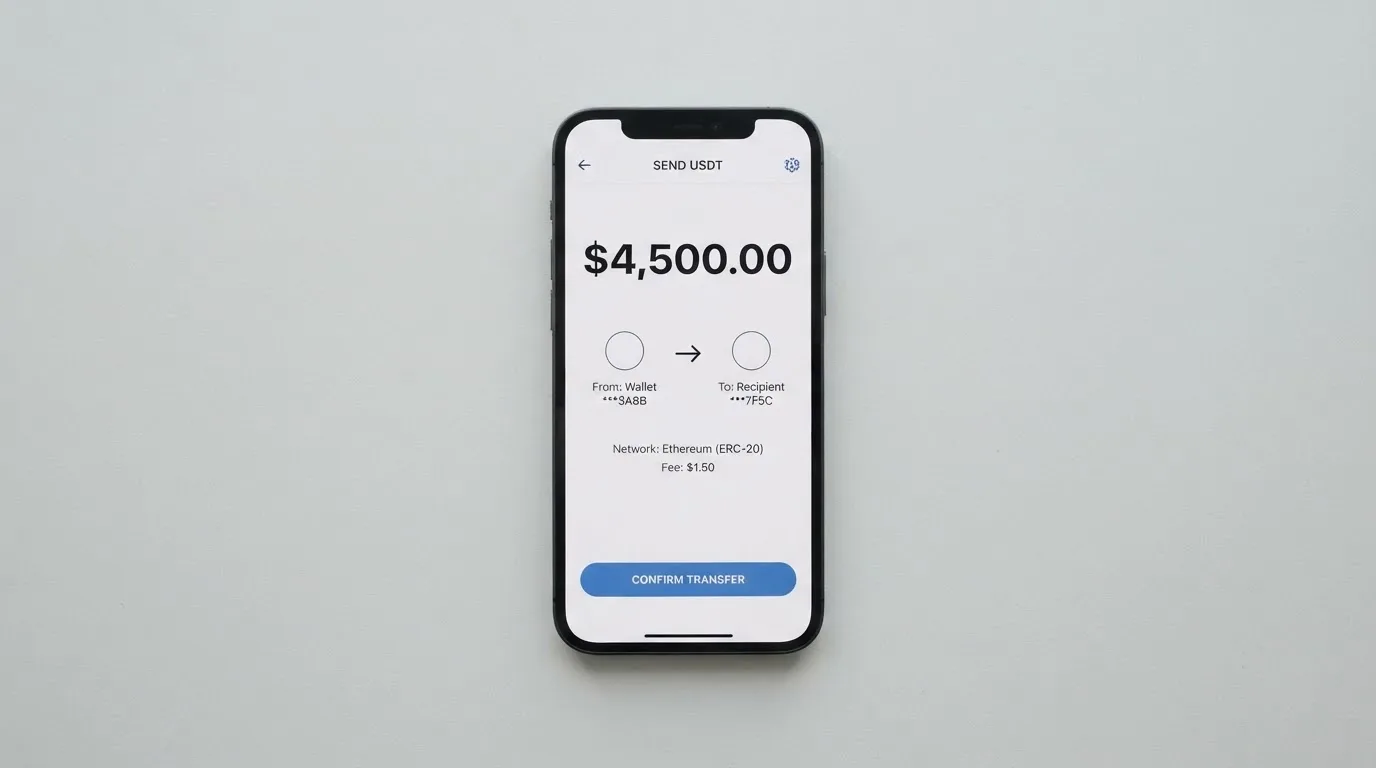
The coin list is generous. The current pages name USDT, BTC, TON and more. An earlier check of the same pages listed USDT, BTC, ETH, BNB, Solana, TON, TRX, LTC and BCH — nine coins. That is a wide menu, and for someone holding several assets rather than one, having a choice is a real practical advantage: you are not forced to convert a coin you would rather keep into USDT before you can spend.
But here is the gap I keep coming back to, and it deserves emphasis because it is the kind of detail that can cost you money. The networks are not disclosed. Not which chains USDT is accepted on, not whether BTC goes on its native chain or a wrapped version, not whether Solana or Tron are supported for which token. When you send crypto to a service, the network has to match or the funds are gone — blockchain transfers are irreversible, and a deposit sent on the wrong network can be lost or need manual support recovery with no guarantee. An undisclosed network list is not a small omission in a service whose entire job is receiving crypto. Treat “which network?” as the first question to ask support before your first transfer, and read it as a reason to send a small test amount first.
Reloadable cards can be topped up. The reload fee is not stated, the minimum top-up is not stated, and the card does not state who pays the on-chain network fee for a deposit. That last one matters: network fees for your deposit are charged by the blockchain, not by the card provider, so they are real money that comes out of your transfer regardless of what the card’s own fee schedule says.
Withdrawal is not stated at all. There is no published information about whether you can take money back out, on what terms, or with what delay. For a card you fund with crypto, that is a meaningful silence — it is the difference between a wallet you can exit and one you can only spend from.
Here is the funding picture in one view:
| Funding element | What is known |
|---|---|
| Coins accepted | USDT, BTC, TON and more; earlier listing added ETH, BNB, Solana, TRX, LTC, BCH |
| Networks accepted | Not stated |
| How funding works | Deposit to account balance, then buy cards |
| Reloadable top-up | Available on reloadable cards |
| Reload fee / minimum | Not stated |
| Who pays the on-chain deposit fee | Not stated by the card; the blockchain charges it |
| Withdrawal | Not stated |
Paying with it every day
Everyday use is where this card is weakest, and I want to set expectations honestly rather than let you find out at a till.
There is no physical card. The product is virtual only. That single fact removes cash withdrawal, removes the ability to tap a terminal that wants a card, and removes the fallback you would normally reach for when an online payment is declined. There is also no ATM — the card does not support one — so if part of “everyday” for you means getting cash, this is not that card.
What it does support is the phone. Apple Pay and Google Pay are both supported, per the FAQ. This matters more than it sounds: a virtual card number typed into a wallet once becomes a tokenised number stored on the device, and each payment uses a one-time code, which is a meaningfully better security posture than re-typing your card number into sites. So if you are paying online a lot or paying in stores via your phone, the virtual-only design is less limiting than it first appears. If you are the sort of person who still hands over a card, it is a genuine gap.
Two more everyday realities. First, some merchants refuse prepaid cards. It is not illegal and it is not always prejudice — the merchant’s payment processor can decline prepaid or foreign-issued cards as a matter of policy — but it happens often enough that anyone who relies on this card for essentials should know it will occasionally just not work, and there is no backup. Second, blocked merchant categories are not stated. The card does not publish a list of what it refuses to pay for. Some issuers in this category block gambling (the merchant category that covers casinos, betting and lotteries) by policy rather than by law, and the list varies by issuer. Gpayvcc does not tell you theirs.
On rewards: the official site states no cashback. There is no rewards programme described anywhere. No app is mentioned either — the card does not appear to offer a mobile application of its own, which also means the usual app-based controls (instant freeze, spending limits, two-factor authentication) are not something I can confirm you have. Security features are not stated. That is a gap worth naming plainly: the standard protections people assume a card has are simply not documented here.
Support, at least, is documented and reasonably broad: live chat, WhatsApp, Telegram, and [email protected], with a target response within 24 hours. Languages are not stated. A 24-hour target is a target, not a guarantee, and on a card that never sleeps it is worth knowing what “target” means in practice.
What can go wrong
I will separate what the card documents from what people report, because they are different kinds of evidence.
The structural risks. Gpayvcc states it is not a bank and does not issue cards; third-party issuing partners do. Registration and licences are not stated. That is not a scandal — most crypto cards work this way — but it means you cannot check a regulator for a licence that is not published, and it means your money sits with a structure whose legal shape you cannot fully see from the outside. Compare that with a card issued by an institution that names its regulator and its deposit or safeguarding arrangements: the difference in your protection is real, and it is the difference you are being asked to accept here.
Conversion and value. The costs of conversion are not stated. An unofficial source lists “high crypto-to-fiat conversion spread” as a known drawback. If you are loading the card with crypto, the spread between what you paid and what landed on the card is the largest single cost you will pay, and it is the one you cannot calculate in advance. This is the practical risk I would rank highest, because it hits every purchase and it hits quietly.
Balances and refunds. An unofficial source states “no refunds on card balances.” Not confirmed by the card, but the direction of travel across this category is consistent: money loaded onto a prepaid card is typically spent from, not recovered from. Chargeback rights are also not stated, and prepaid-card coverage under consumer law varies by country and should not be assumed. If a purchase goes wrong, do not assume you have the same reversal rights you would have with a bank card — check, because the answer is not written down anywhere here.
Declines and holds. A card that only draws on a stored balance cannot overdraw, which is a genuine structural benefit. But a declined online authorisation can leave a hold on your funds that lingers for days — up to seven in some cases — and on a prepaid card with a fixed balance, a hold is money you cannot spend. Combined with the fact that merchants may decline prepaid cards, this is the everyday failure mode: the payment does not go through and the balance is tied up while you sort it out.
The network problem. Networks undisclosed, transfers irreversible. Send on the wrong chain and the money is gone. This is the one risk with a genuinely binary outcome, and it is entirely within your control to manage — by asking which networks are supported, and by testing with a small amount first.
Reviews and complaints. The aggregate picture is good: Trustpilot 4.7 from 56 reviews, 92 percent five-star (read 21 October 2026). Read the shape of that number, though. Fifty-six reviews is a small sample, and the same page notes reviews with similar wording and no replies to negative reviews — which tells you the score is not being actively curated by the company, but it also means the negative tail is not being answered publicly either. One user report on a third-party aggregator describes a card failing repeatedly at checkout and a slow refund that needed repeated follow-up; the only complaint visible on the Trustpilot page itself was lag on the details page on mobile (23 August 2026). No official incidents are reported. One detailed complaint is not a pattern, but it is the kind of complaint that tells you what a bad day looks like here: a card that will not work at checkout, and money that is slow to come back.
There is no news section, no published incident log, and no security documentation — so on security specifically, the honest summary is that you have to take it on trust.
What to take instead
I looked at three comparable services. The comparison below is on the same criteria I scored Gpayvcc on, and none of them is dramatically better; they are different shapes of compromise. I am not endorsing any of them — I am showing you that the field is thin, and that the choice is mostly about which unknown you can live with.
| Gpayvcc | Cardex | TakeCard | OkiCard | |
|---|---|---|---|---|
| Score | 6.9 / 10 | 5.6 / 10 | 5.5 / 10 | 6.0 / 10 |
| Card type | Virtual prepaid Visa/Mastercard | Debit crypto card on VERVE, Visa, Mastercard, UnionPay | Virtual card (immediate); physical for Bolivia only | Virtual card; a physical is mentioned without detail |
| Countries | Not stated; no exclusions | “One crypto card, 200+ countries”; no list or exclusions | Physical card only to Bolivian users; Takenos says payments from any country | “150+ countries” (some pages “200+”); no passport geo-blocking |
| Issue cost | $5 most cards, $15 Platinum | Not stated | $5 virtual; $20 physical + $20 shipping in Bolivia | Issuance $0 on the pricing page, $15 starting price — pages disagree |
| Fees | Monthly and inactivity none; conversion spread not stated; unofficial: “Free” fees but a high conversion spread | Real-time conversion, “AI-Powered Conversion Rate” picking the best rate; no percentage stated | 1% commission per purchase; USD 1:1, other currencies at the official Visa rate | Load fee 3%; USD transaction fee 0%; “no hidden exchange spreads” |
| Top-up | USDT, BTC, TON and more; networks not stated | USDT, USDC, BTC; networks not stated | From the Takenos balance (coins not named) | USDT on BSC, Ethereum, Tron, Solana; USDC “soon”; BTC and altcoins “coming soon” |
| Rewards | None stated | Not stated | Not stated | Not stated |
| Physical card | No | Yes (per App Store listing) | Yes, Bolivia only | Mentioned, no details |
Three things stand out from that table.
Cardex is the only one of the four with a stated physical option and a real-time conversion mechanism it makes a point of — it says an AI-powered conversion rate scans global exchange rates and picks the best one at the moment of spend. That is an answer to the exact problem Gpayvcc leaves open. Its score is the lowest of the three alternatives at 5.6, and its costs are not stated either, so the pitch is stronger than the disclosure.
TakeCard is the most transparent on fees of the lot — 1% commission per purchase, USD payments 1:1, other currencies at the official Visa rate — but it is the narrowest on geography. The physical card is for Bolivian users only. Its funding story is also the least clear: you top up from the Takenos balance, and the coins are not named in the article.
OkiCard is the only alternative that publishes its fee percentages (3% load, 0% transaction on USD) and its networks (USDT on BSC, Ethereum, Tron, Solana). It also has the clearest conflict on its own site: the pricing page says issuance $0 and a $15 starting price, while the FAQ mentions a one-time issuance fee — those do not agree, which is a small but real sign of how much documentation discipline varies in this category.
Read across the whole row and one pattern holds: every one of these cards publishes less than you would want, and the card that publishes the most (OkiCard on networks and percentages) is not the card with the best score. Score and disclosure are different things. Disclosure is what lets you budget.
Who I would recommend it to
I would recommend the Gpayvcc card to someone in a fairly specific position. You hold crypto, several kinds of it, and you want to spend it without the detour of converting everything to a bank balance first. You do not have a usable ordinary bank card, or you would rather not use one. You are comfortable paying in a virtual card number from your email, and you are comfortable that the conversion rate is going to cost you something you cannot calculate in advance. You travel or shop online more than you need cash, and you want Apple Pay and Google Pay.
I would not recommend it — and would point you at OkiCard or Cardex instead — if any of the following is true of you. You need a physical card. You need an ATM. You plan to hold a balance on this card rather than spend it as you go, because the terms around balances and refunds are not stated and an unofficial source says balances are not refundable. You plan to rely on chargebacks. You are in a country where you are not certain cards will be issued, because Gpayvcc does not tell you. Or you simply want to know what you are paying — the cost of conversion is the number this card does not give you, and for many people that alone settles the question.
My own single piece of advice, if you take one: before your first transfer, find out which networks are supported and send a small test amount. Everything else on this card can be checked after you have funded it. That one detail cannot.
Frequently asked questions
What is the Gpayvcc card?
The Gpayvcc card is a virtual prepaid payment card. You fund an account balance with crypto, buy a card from that balance, and receive the card number, expiry date, CVV and billing address by email about five minutes after the crypto payment confirms. It runs on the Visa and Mastercard networks and behaves like a gift card: it spends a stored balance rather than tapping a bank account. There is no physical version.
How does the Gpayvcc card work in practice?
You sign up with an email address, name and phone number — no bank account needed — choose one of the card types, and pay in crypto. The card details arrive by email roughly five minutes after that payment confirms, and you enter them wherever a card number is accepted, or add them to Apple Pay or Google Pay, both of which are supported. The card draws down only the balance you have loaded, so it cannot overdraw.
Is Gpayvcc a bank, and who owns it?
No — Gpayvcc states plainly that it is not a bank and does not issue cards. Cards are issued by third-party partner issuers, which is the standard arrangement in this category. Registration details and licences are not stated on the public pages, so you cannot verify a regulatory licence for the entity whose name appears on your card. That is a normal structure for crypto cards, not a warning sign in itself, but it is a fact to accept consciously.
Does the Gpayvcc card require KYC?
The stated sign-up needs only an email address, your name and a phone number, and no bank account. A third-party site describes this as Level 1, email only, with no ID or selfie — but that is unofficial and not confirmed by Gpayvcc. The card’s own pages add that more information may be required for legal and issuer reasons, so expect the possibility of being asked for documents later.
Which countries is the Gpayvcc card available in?
The card does not publish a country list, and it does not publish an exclusion list either. So the honest answer is that availability is unconfirmed — you would have to try. If you travel, do not assume the card will work everywhere, because the card carries its own currency and cross-currency conversion costs are not stated anywhere in the public information.
What does a Gpayvcc card cost?
The issue fee is $5 for most cards — Virtual Visa Reloadable, Visa Gold, Visa Virtual Universal and Mastercard Reloadable Classic — and $15 for Visa Platinum, with a starting price of $100. There is no monthly fee and no inactivity fee. What is not stated is the crypto-to-fiat conversion spread, which is where the real cost usually sits, and an unofficial source explicitly flags it as a drawback.
How do I top up the Gpayvcc card?
You deposit crypto into your account balance and then buy cards from it. Supported coins include USDT, BTC and TON, with an earlier listing also naming ETH, BNB, Solana, TRX, LTC and BCH. Reloadable cards can be topped up again. The networks are not disclosed, so ask which chains are supported before your first transfer and test with a small amount, because blockchain transfers cannot be reversed.
Can I add the Gpayvcc card to Apple Wallet?
Yes — Apple Pay and Google Pay are both supported, per the card’s own FAQ. This is the most useful thing about a virtual-only card: once the number is in your phone wallet it is tokenised on the device, so you are not re-typing your card number at checkout. What you give up is the ability to pay with a physical card or take cash out at an ATM, neither of which this card supports.
Is the Gpayvcc card safe?
Treat safety as unproven rather than unsafe. The card states it is not a bank, does not itself issue cards, and does not publish its licences, its security features, or its refund and chargeback terms. Reviews are strong on the surface — 4.7 from 56 on Trustpilot with 92 percent five-star — but one user report describes repeated checkout failures and a slow refund. Load only what you can afford to have tied up.
Is the Gpayvcc card free?
Not quite. There is no monthly fee and no inactivity fee, and the issue fee is low at $5 for most cards or $15 for Platinum. But the card publishes no exchange rate, no spread and no crypto conversion fee, and an unofficial source lists a “high crypto-to-fiat conversion spread” as a known drawback while calling the listed fees “Free.” That combination usually means the cost is in the conversion rate rather than in the fee schedule — so budget from your own maths, not from the card’s pricing page.
How virtual cards work – cryptocardsexplained.com
Content created by the «cryptocardsexplained.com» team