
HoneyCoin card reviewed: a stablecoin-funded Visa for users outside the traditional banking system
 Available in US
The HoneyCoin card is a Visa that lets you spend a stablecoin balance wherever Visa is taken, with a virtual card issued instantly and a physical card shipped in two to three weeks. HoneyCoin, Inc., the Nairobi-based company behind it, says the card is live in more than forty-five countries and works with USDC on Coinbase’s Base network alongside mobile-money and bank-transfer top-ups, a combination that targets users in Africa and other emerging markets who struggle to get an ordinary bank card.

The conditions are current as of October 28, 2026.
Verdict
I went through HoneyCoin’s public pages, the company’s August 2025 funding announcement, and the third-party App Store listing, and the picture that came together is mixed. The card scores 6.7 out of 10. It is genuinely useful if you live somewhere that stablecoins are the easiest way to put money on a Visa, and you can tolerate fees and limits that the company does not fully publish. If you are in a country with a normal banking card and a cheap FX option, the same product is harder to justify.
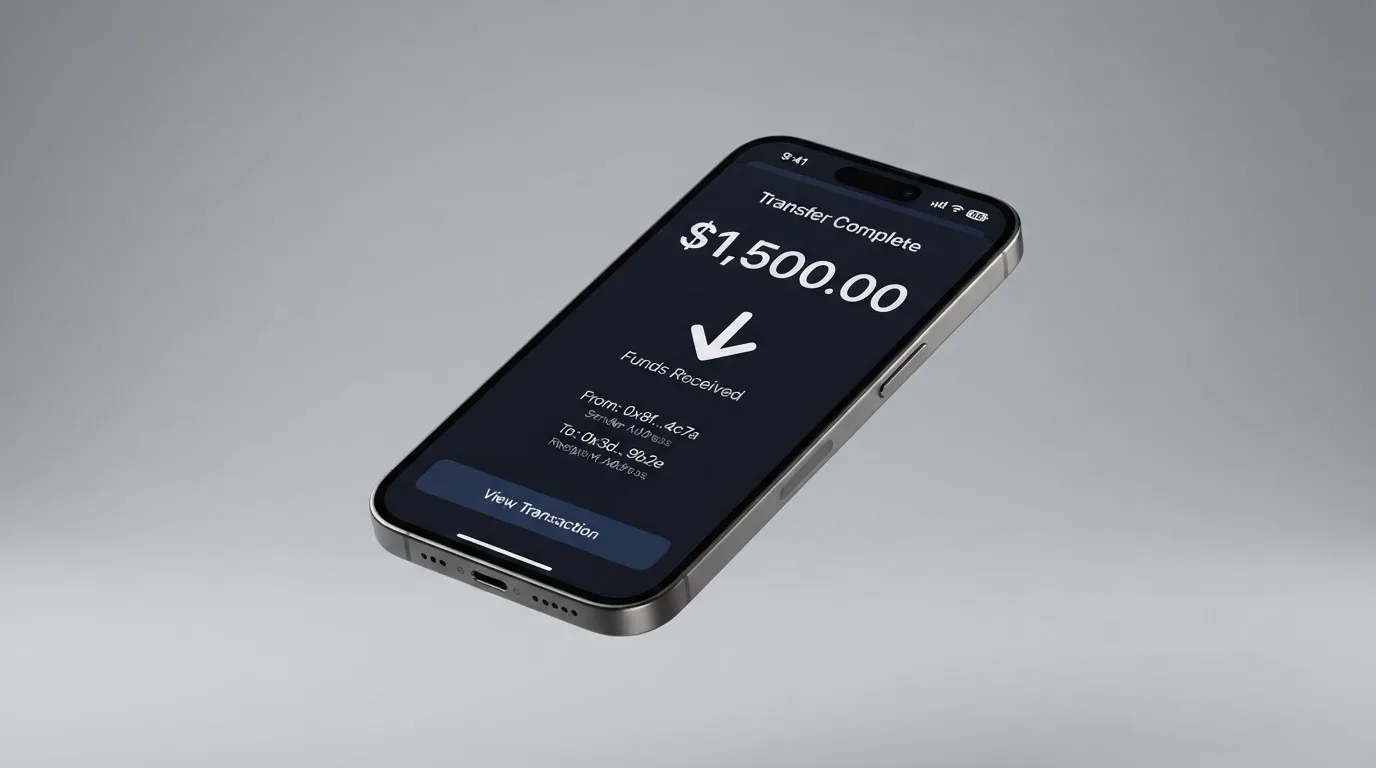
The following table summarizes the card’s features and performance.
| Criterion | Score | Reason |
|---|---|---|
| Who can get it | 8 / 10 | Accepted wherever Visa is accepted, live in 45+ countries, but no country list and a vague “some countries, merchants, and MCCs may be restricted” caveat |
| Cost | 7 / 10 | Issuance, monthly and yearly fees are free; USD transactions 0%; other currencies up to 3% FX spread; crypto conversion fee not stated |
| Top-up options | 6 / 10 | Mobile money, bank transfer, card, on-chain stablecoins; token table lists only USDC on Base, FAQ adds USDT and “select other assets” |
| Reliability and complaints | 5 / 10 | HoneyCoin, Inc. in Nairobi; card issuer not named; consumer-app card payments paused for months because of card-testing attacks in 2025; App Store shows 1.0 from 1 rating |
| Everyday use | 7 / 10 | Virtual card instant, physical 2–3 weeks; Apple Pay and Google Pay supported; ATM terms not stated |
For users in Africa and emerging markets funding a Visa with stablecoins, this is one of the more interesting options I have looked at. The rest of this review walks you through what I found, in the order I would want to read it myself: who gets approved, how to sign up, what it costs, how to top it up, how it works day to day, what can go wrong, and what to use instead if it is not for you.
Will they give you the card
The headline is simple: HoneyCoin says the card works wherever Visa is accepted, and that it is live in more than forty-five countries. That is the same reach Visa has, in theory, but in practice HoneyCoin narrows it. The public materials say “some countries, merchants, and MCCs may be restricted” without giving you the list. There is no published roster of supported countries, so the only way to find out whether your country is in or out is to start sign-up and see.
Two things follow. First, “Visa-accepted” is not the same as “HoneyCoin-accepted.” Visa sets the network; HoneyCoin decides which of its cardholders can spend where. The platform can block specific merchant category codes (MCCs), and many crypto-card programmes exclude gambling, certain financial services, and a long list of country-specific categories. HoneyCoin does not publish its blocked-MCC list, which is a real gap if you are weighing the card for a specific type of spending.
Second, the same product has different reach in different places. The forty-five-country figure is from HoneyCoin’s own August 2025 announcement, and the company is headquartered in Nairobi with a stated focus on African and emerging-market corridors. If you are in Europe or North America, the card is technically available, but the funding rails and the support footprint are built with other users in mind.
A note on what is not stated: the public pages do not say what minimum age applies, what documents are required, or whether the card is available to non-residents. KYC is required before use, but the level of due diligence is not described. Treat any of this as a moving target until you see the in-app prompts.
How to get it
Sign-up is not a multi-page form on a marketing site; it is a flow inside HoneyCoin’s app. From what is published, the process looks like this.
You download the app, create an account, complete identity verification, and once KYC clears you can request a virtual card immediately. A physical card, if you want one, arrives in two to three weeks. The card currency is US dollars, and transactions priced in USD carry no percentage fee from the card itself. That is the published story; the public pages do not give a detailed step-by-step with screenshots, so the exact sequence and any waiting periods between steps are not stated.
Identity verification is mandatory before the card is usable. HoneyCoin confirms the requirement but does not spell out which documents are accepted, whether a proof of address is needed, or how the age check is run. If you have been through a regulated onboarding before, expect a national ID or passport, a selfie, and possibly a proof-of-address document. If the platform cannot complete due diligence, EU-style rules that the wider industry works under require it to step away from the relationship, which can mean the account is held in review or closed pending documents. The same is broadly true in most jurisdictions that HoneyCoin says it operates in.
There is one structural detail worth understanding before you sign up. The company behind the card, HoneyCoin, Inc. (Nairobi, with founder data pointing to Quicknode Technologies Ltd as a starting entity), is the programme manager. The card-issuing bank is not named publicly. HoneyCoin refers only to “licensed partners” and says the company is “licensed in key markets including the US, Canada, the EU, and several African jurisdictions.” That is the kind of phrasing that is common in the category, but it is also exactly the kind of detail you want to know before you load real funds. If the issuing bank matters to you for chargeback rights or regulatory standing, the public materials will not tell you who it is.
What it really costs: Fees
This is where I want to slow down, because the published fees look simple on the surface and that is misleading. The card has no issuance fee, no monthly fee, and no yearly fee. Transactions in US dollars cost 0% from the card’s perspective. That is genuinely good for a card with this kind of reach. The catch is everything that sits around the 0%.

Here is the cost picture as published.
| Fee or limit | Amount |
|---|---|
| Card issuance | Free |
| Monthly fee | Free |
| Yearly fee | Free |
| USD transactions | 0% |
| Non-USD transactions | FX spread up to 3% |
| Crypto-to-fiat conversion fee | Not stated |
| ATM fees | Not stated |
| Daily spending limit | 10,000 USD |
| Daily loading limit | 10,000 USD (default) |
| Higher limits | Available after review, “Increases with Usage” |
A few practical scenarios will make this less abstract. Imagine you are in Nairobi and you top up the card with USDC on Base at a 1:1 dollar value, then buy a coffee in Kenyan shillings. The coffee costs the dollar equivalent of, say, 4 USD. HoneyCoin will apply the FX spread on the shilling leg, which the company puts at up to 3%. On a 4 USD payment that is 12 US cents. On a 400 USD supermarket run it is 12 USD. The FX spread is not a flat fee; it is folded into the rate, so a 3% spread on a large payment is a real cost.
Now take the same card to a country where you spend in dollars directly, such as a US merchant that settles in USD. The card-side fee is 0%, but if you funded the card with stablecoins, there is a conversion step somewhere. HoneyCoin’s public pages do not state a conversion fee. That is an important gap. Public information does not specify a conversion fee, nor whether one is built into the rate. Without a published number you have to assume there is one and try to measure it on a test transaction before you load a large balance.
A third case: ATM withdrawals. The published materials do not say what HoneyCoin charges at the ATM, nor what daily or per-transaction ATM limits apply. On top of HoneyCoin’s own terms, the ATM operator will usually apply its own surcharge, and your own bank may apply a foreign ATM fee if the card is treated as foreign-issued. The total ATM cost is therefore unknown from the public information.
One more thing on limits. The default daily ceiling is 10,000 USD for both spending and loading, and HoneyCoin says limits “increase with usage.” Lower custom limits can be set in-app. That is reassuring for a new user testing the product, but it is also a signal that the platform reserves the right to hold or block higher amounts pending review. If you are planning to put a serious balance on the card, expect a conversation with support rather than a frictionless upgrade.
How to top it up
HoneyCoin’s published funding options are the strongest part of the product for its target audience. The card accepts four kinds of top-up: mobile money, bank transfer, card, and on-chain stablecoins. That list is broader than most crypto cards offer, and it lines up with the way money actually moves in the corridors the company is built for.
The on-chain option is the one that matters most if you are coming from a self-custody wallet. HoneyCoin’s token table lists USDC on Base as the supported stablecoin, and the FAQ also mentions USDT and “select other assets where enabled.” Base is Coinbase’s Ethereum layer-2 network, which keeps gas costs low and settlement fast compared to mainnet Ethereum. If you fund from a wallet that already holds USDC on Base, the deposit should be straightforward. If your USDC is on Ethereum mainnet, Polygon, Solana, or Tron, you will need to bridge or swap before sending, and the bridge or swap will charge its own fee.
A practical caution that applies across the category and is worth repeating here: stablecoin transfers are irreversible, and sending on a network the provider does not support, or to an address of a different network, can mean the funds are lost or stuck in a manual support recovery with no guarantee. There is also a network-fee question that HoneyCoin does not answer. The blockchain charges gas for the deposit; the question is who pays and from what balance. On a low-fee network like Base the answer barely matters, but it is the kind of detail that bites people the first time they do it.
Mobile money and bank transfer are the rails that make the card interesting in African and emerging markets. M-Pesa in Kenya, MTN Mobile Money in several West African countries, and similar schemes can fund a Visa through HoneyCoin without going through a US or European bank account. That is the use case the company is built around. Bank transfer is the slower but more universal option; card top-up is the most familiar one if you already have a regular bank card.
On the way out, HoneyCoin’s platform-level materials say “Payout to local accounts or wallets on demand.” That is the platform’s payout product, not the card’s. The card side of the product does not publish fees for moving the balance back out to a bank account, mobile-money wallet, or external crypto address. Treat the card as a spend vehicle first; if you need to cash out frequently, check the in-app fees before you commit to large balances.
Paying with it every day
Day-to-day use is the part HoneyCoin handles well, with one reservation. The virtual card arrives in the app the moment your account is approved, which means you can add it to Apple Pay or Google Pay and start paying online and in store before a physical card lands. The physical card ships in two to three weeks, which is in line with most card programmes and not unusual for a card mailed to a country outside the issuer’s home market.
Apple Pay and Google Pay are both supported, and tokenised mobile-wallet payments are, in the broader category, the safer way to use a card in person: the merchant never sees your real card number, and a token can be revoked from your phone without replacing the plastic. HoneyCoin does not publish which MCCs are blocked, which means there is no published list of merchants or merchant types you can be sure will be declined. If a particular category matters to you, the only honest test is a small real transaction.
There is no cashback or rewards programme mentioned on the public pages. Some cards in this category return 1% to 5% on spending or on specific merchant categories; HoneyCoin is not in that group. If rewards matter to your decision, this is a real difference, not a minor one.
Two operational details that you would otherwise have to find out the hard way. The first is the App Store experience. The US App Store listing for HoneyCoin’s consumer app, “Peer – the everything app.”, shows 1.0 out of 1 rating as of late October 2026. That is a near-empty sample, not a meaningful user score. The Google Play listing was not read for this review, so I cannot compare the two. The second is support: HoneyCoin publishes 24/7 support for institutional and corporate clients, and a sales email plus an API email. The implied support tier for consumer cardholders is not stated as 24/7 on the public pages, which is a small but real difference if you need help at midnight with a stuck payment.
A point on the underlying mechanics that is worth flagging: a Visa card payment travels through the card network, the issuing bank, and HoneyCoin as the programme manager before settling, and the BIN (the first six or eight digits of the card number) tells the merchant’s system which institution and country issued the card. Some merchants decline prepaid or foreign-issued BINs, and some run an Address Verification Service (AVS) check that is more reliable on US, Canadian, and UK cards. AVS is generally unavailable for foreign-issued cards and can cause declines that look random. None of this is specific to HoneyCoin; it is a category-level friction. But it is the kind of thing that turns into a “the card doesn’t work” complaint when the real cause is upstream of the card.
What can go wrong
This is the section I would not skip if I were deciding whether to put real money on the card. There are four risks worth taking seriously, and one of them is not hypothetical; it has already happened.
The first and most concrete is the August 2025 card-payment pause. HoneyCoin’s own company blog from 12 August 2025 describes a $4.9M funding round, the forty-five-country rollout, and, in the same announcement, says card payments on the consumer app were paused for months because of card-testing attacks. Card-testing is a specific kind of fraud: criminals try small authorisations against stolen card numbers to see which ones work, and they use the card programme as the testing ground. The fact that this caused a multi-month outage for paying customers, on a programme that was being rolled out across forty-five countries at the same time, is a real reliability signal. HoneyCoin recovered, and the blog frames the episode as part of growing up, but the fact remains that consumers could not pay their card during that window.
The second risk is the unnamed issuer. HoneyCoin says the card is issued through “licensed partners” and that the company itself is licensed in the US, Canada, the EU, and several African jurisdictions. The actual bank behind the card is not published. In a category where programmes have been shut down with limited notice (Visa terminated its global agreements with FTX in November 2022; WaveCrest was suspended by Visa in Europe in 2018, closing all WaveCrest-issued programmes), the identity of the issuer is a load-bearing fact. If the programme manager and the issuer are not the same legal entity, the cardholder’s relationship is, in the first instance, with the issuer, and HoneyCoin’s role is to be the front door. That structure is normal in the industry, but it is also exactly the structure that becomes uncomfortable when something goes wrong.
The third risk is the security setup. HoneyCoin’s published security posture includes segregated client funds (“Client money is safeguarded and held completely separate from ours”), two-factor authentication on login and on privileged actions, and PCI DSS Level 1 compliance. None of those are minor. PCI DSS Level 1 is the highest level of the payment-card industry’s data-security standard, and segregated client funds mean the company does not co-mingle your balance with its operating money. What is not mentioned on the security page is a card-freeze or kill-switch feature, which is a near-universal feature on modern card apps and would let you lock the card instantly from your phone if it were lost or stolen. Its absence from the public description is a gap, not a proof that it is missing from the app, but I would verify it in-app before loading a meaningful balance.
The fourth risk is the third-party trust signals, or the lack of them. There is no Trustpilot page for HoneyCoin, and the searches that returned Trustpilot results for “HoneyCoin” pulled up unrelated brands called “Honeycard.” There is also no meaningful Reddit footprint. A young company in a new market does not always have review-site coverage, but the absence of those signals means the main public record of complaints is HoneyCoin’s own blog, which is naturally selective. For a fair read, you would want to test customer support with a real question before loading funds, and you would want to start with a small balance that you can afford to lose while you get a feel for the product.
A general risk worth naming: the regulatory ground under crypto cards is moving. In the EU, MiCA (the markets-in-crypto-assets regulation) took legal effect in June 2023, with stablecoin rules applying from 30 June 2024 and the broader crypto-asset service provider rules from 30 December 2024. There is a transitional period running until 1 July 2026 for providers already operating under national law, and a card that bridges crypto and payments in the EU is sitting on top of two licences at once. None of that is specific to HoneyCoin, but the practical effect is that card programmes in this category are more likely than mainstream card products to be re-papered, re-issued, or have their terms revised during the next couple of years.
What to take instead
If HoneyCoin is not the right fit, three other cards in the same category cover different corners of the same problem. None of them is a perfect substitute, and each has its own trade-offs.
Whop Cards scores 5.2 out of 10. The consumer card is available in thirty-one US states, listed by name, which is a level of transparency HoneyCoin does not match. The corporate version is available in forty-one states. A defined list of unsupported countries is also published, including Belarus, Mainland China, Cuba, Hong Kong, India, Iran, Iraq, Israel, Myanmar, Nepal, Nicaragua, North Korea, Russia, Syria, Turkey, Ukraine, Venezuela, and Vietnam. The card is a Visa, spends from a Whop balance, and the balance is backed by stablecoin collateral from a linked wallet. Five-percent cashback is offered at select merchants (currently Uber, with more planned). The trade-off is geography: if you are not in the United States, Whop is not for you.
Stella scores 6.5 out of 10. The card is virtual and physical, runs on Visa, and works at “over 40 million VISA merchants globally.” Crypto deposited into the in-app wallet automatically tops up the card, and the wallet is custodial. The official pages do not state which countries are supported; the user agreement excludes users under economic sanctions programmes and routes US and European users through affiliates. The fee schedule is not officially published, and there is no cashback on the card itself (yield is a separate product). If the country and fee gaps are tolerable, the automatic top-up from crypto is a genuinely nice flow.
UniFi Card scores 4.7 out of 10. It is a prepaid Visa debit card issued by Lead Bank, spends from a US dollar balance, and supports Apple Pay. Funding routes include ACH, wire, SEPA (IBAN), and SPEI (CLABE), plus receiving pay to a USDC wallet. The app’s send-money routes cover the Philippines (PHP), Mexico (MXN), the eurozone (EUR), and recent releases add Colombia, Brazil (PIX), and the UK (GBP). The listing claims 3% rewards on balances; card cashback is not stated. Fees are not stated beyond “Fees may apply. See UniFi website for more details.” The card has the most varied funding rails of the three, but the public pricing is the thinnest.
A quick comparison, side by side.
| Card | Score | Where it works | Funding | Cashback | Issuer disclosed |
|---|---|---|---|---|---|
| HoneyCoin | 6.7 | 45+ countries (list not published) | Mobile money, bank transfer, card, USDC on Base (USDT also mentioned) | None stated | Not named |
| Whop Cards | 5.2 | 31 US states (consumer) | Whop balance backed by stablecoin collateral | 5% at select merchants | Not stated |
| Stella | 6.5 | Countries not stated; routes US/EU through affiliates | Crypto deposit, auto top-up | None on card | Not stated |
| UniFi Card | 4.7 | US-centric, with send-money routes to PH, MX, EU, CO, BR, UK | ACH, wire, SEPA, SPEI, USDC wallet | 3% on balances (listing) | Lead Bank |
If I had to pick a single tiebreaker, it would be this. HoneyCoin is the best of the four if you are funding a Visa from mobile money or a stablecoin in an African or emerging-market corridor, and you can live with the lack of a public fee schedule and the unnamed issuer. Whop is the best if you are a US consumer who wants cashback and a published supported-state list. Stella is the closest match for the auto top-up from crypto flow. UniFi is the one to look at if your funding has to come from ACH, SEPA, or SPEI.
Who I would recommend it to
Putting the pieces together, here is how I would frame the recommendation.
I would recommend HoneyCoin to a user who lives in a country where getting a normal Visa or Mastercard debit card is genuinely difficult, who already holds or is comfortable acquiring USDC on Base, and who treats the card as a way to spend a working balance rather than as a primary bank account. For that user the combination of mobile-money funding, on-chain USDC, Apple Pay and Google Pay, and a 10,000 USD daily ceiling is a meaningful improvement over the alternatives. The 0% USD transaction fee and the lack of a monthly or yearly fee are real, not marketing.
I would be more cautious about recommending it to a user in a country with a normal banking card, where the 0% USD leg is less of a draw and the unnamed issuer and unpublished crypto conversion fee become harder to justify. I would also be cautious about recommending it for large, long-term balances. The card-payments-on-consumer-app-paused-for-months episode in 2025 is the kind of operational hiccup that is forgivable once and less forgivable twice, and the third-party trust signals (no Trustpilot, no Reddit footprint, an App Store rating of 1.0 from 1 rating) are thin. The most prudent use of the product, in my view, is as a spending rail you keep topped up to the level you would keep in a physical wallet, not as a store of value.
A short pros and cons list, to keep the trade-offs in one place.
Pros:
- 0% on USD transactions and no monthly or yearly fee.
- Wide funding mix: mobile money, bank transfer, card, USDC on Base (USDT and other assets also mentioned).
- Virtual card instant, Apple Pay and Google Pay supported, physical card in 2–3 weeks.
- Live in 45+ countries, with a stated focus on African and emerging markets.
- Segregated client funds, 2FA, PCI DSS Level 1.
Cons:
- Crypto conversion fee not stated; non-USD FX spread up to 3%.
- Card-issuing bank not named; rely on “licensed partners.”
- Consumer-app card payments were paused for months in 2025 due to card-testing attacks.
- No cashback or rewards programme.
- No published country list, blocked-MCC list, or ATM fee schedule.
- Thin third-party review footprint and a near-empty App Store rating.
- A freeze or kill-switch feature is not described on the security page.
If the cons on that list are the ones that would worry you most, the alternatives above give you more transparency in exchange for less reach. If the pros line up with your situation, HoneyCoin is a reasonable fit.
Frequently asked questions
What is the HoneyCoin card?
The HoneyCoin card is a Visa payment card tied to a US dollar balance funded from mobile money, bank transfer, a payment card, or on-chain stablecoins such as USDC on Base. HoneyCoin, Inc., the Nairobi company behind it, says the card is live in more than forty-five countries and is aimed at users who want a Visa without going through a traditional bank.
How does the HoneyCoin card work?
You complete identity verification in the HoneyCoin app, get a virtual card immediately, and can add it to Apple Pay or Google Pay. A physical card is shipped in two to three weeks. You top up the card’s USD balance from one of the supported funding methods, and HoneyCoin converts the funding into a spendable dollar balance; payments in non-dollar currencies are subject to a foreign-exchange spread of up to 3%.
Is HoneyCoin a bank?
HoneyCoin describes itself as a financial-technology company, not a bank. The card-issuing bank is not named publicly; HoneyCoin refers only to “licensed partners” and says the company is licensed in the US, Canada, the EU, and several African jurisdictions. Client funds are held in segregated accounts separate from the company’s own money.
Who owns HoneyCoin?
HoneyCoin, Inc. is the company behind the card, headquartered in Nairobi at The Cube on Riverside Drive. The company was founded in 2021; some starting data also references Quicknode Technologies Ltd. The company raised a $4.9M funding round announced in August 2025.
Is the HoneyCoin card available in my country?
HoneyCoin says the card is live in 45+ countries but does not publish the list. The public materials note that “some countries, merchants, and MCCs may be restricted” without specifying which. The only reliable way to find out whether your country is supported is to start the sign-up flow and see what the in-app prompts say.
Does the HoneyCoin card require KYC?
Yes. Identity verification is required before the card is usable. The public pages confirm the requirement but do not state which documents are accepted, whether proof of address is required, or how the age check is run. In the EU and similar regimes, regulated businesses must complete customer due diligence, including sanctions and PEP screening, before letting a customer transact.
How do I activate the HoneyCoin card?
The virtual card is available inside the app as soon as your account is approved and is ready to add to Apple Pay or Google Pay. The physical card, if ordered, arrives in two to three weeks and is activated in the app once delivered. Activation steps beyond that are not described on the public pages.
How do I top up the HoneyCoin card?
You can top up with mobile money, bank transfer, a payment card, or on-chain stablecoins. The published token table lists USDC on Base; the FAQ also mentions USDT and “select other assets where enabled.” If you fund from a self-custody wallet, send on the network HoneyCoin supports, double-check the address, and remember that blockchain transfers are irreversible.
Is the HoneyCoin card free?
Issuance is free and there is no monthly or yearly fee. USD transactions cost 0% on the card side. Non-USD transactions carry a foreign-exchange spread of up to 3%, and the crypto-to-fiat conversion fee is not stated in the public materials. ATM fees and the network fee on on-chain deposits are also not stated, so the true cost of a particular transaction depends on the route you use to fund and the currency you spend in.
Is the HoneyCoin card safe?
The published security posture includes segregated client funds, two-factor authentication on login and on privileged actions, and PCI DSS Level 1 compliance. On the other side of the ledger, card payments on the consumer app were paused for months in 2025 because of card-testing attacks, the issuing bank is not named, and there is no Trustpilot or Reddit footprint to draw on. Treat the card as a working balance rather than a store of value until you have tested it yourself with a small amount.
How app and neobank cards work – cryptocardsexplained.com
Content created by the «cryptocardsexplained.com» team