
A ruble-friendly virtual Visa you load with USDT — but read the fees first
 Available in US
The IMBA Wallet card is a virtual Visa or Mastercard that you fund with USDT and spend like an ordinary card. It targets users in Russia and the CIS, accepts ruble deposits through SBP, and is the kind of product you look at when an ordinary bank card has become hard to get. I went through the card’s own materials, the fees and the supporting pages, and what follows is my honest read on who this card actually works for, what it costs in real money, and where it falls short.
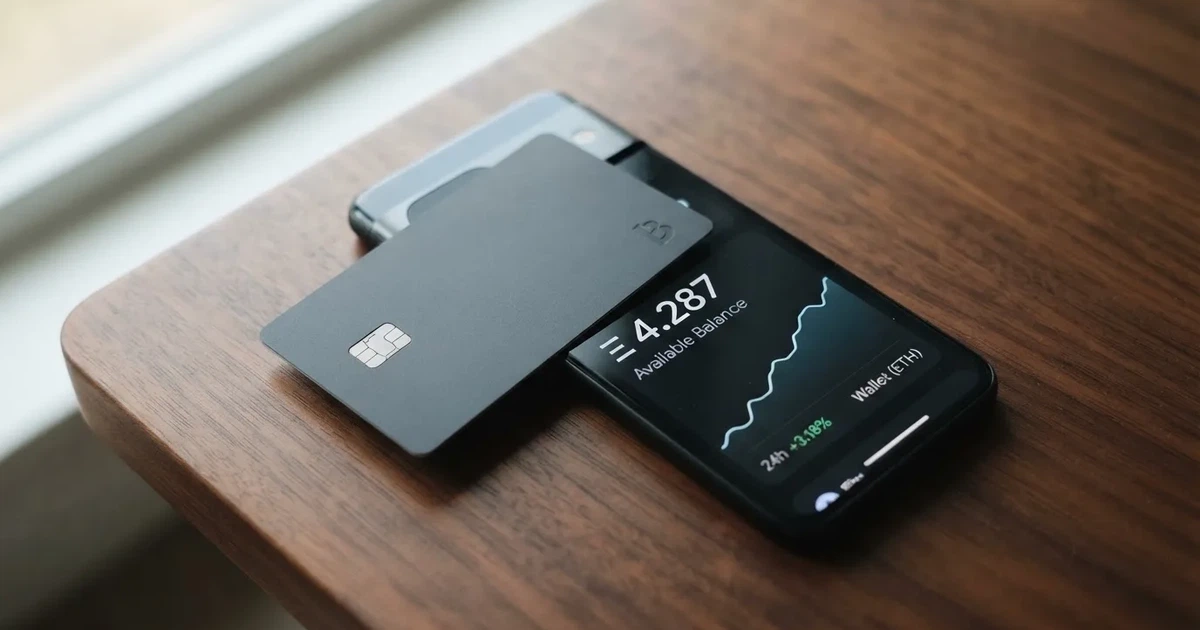
Conditions on this page are current as of October 28, 2026.
Verdict
I rate the IMBA Wallet card 4.8 out of 10. The score is honest about what the card is: a narrow, virtual, payment-only product that does one thing — convert your USDT into a card payment at the till — and asks unusually high fees for the privilege. If you are a user in Russia or the CIS who already holds USDT on TRC-20 or TON, lives where a normal Visa is hard to obtain, and needs a way to pay for subscriptions and online shopping, the card is workable. If you are outside that region — for example in the EU, the UK, the US or Latin America — there is no reason to choose it over a more established, properly licensed alternative.
What pushes the score up is the very low friction to get a card: you can be issued one with just an email and a phone number, and the IMBA Black tier is comparatively cheap to keep alive at $10 a month. What pulls it down is the cost stack. A basic Light card costs $20 to issue, $3 a month, and an 8% top-up fee on every load. On a $200 top-up that is $16 before you have spent a cent — and that does not include the extra ~1–2% you pay converting USDT to rubles if you fund from a Russian bank card. The provider itself says it is not a bank and holds no banking licence, and I could find no Trustpilot page or other third-party review presence for it, which makes the “is this safe?” question harder to answer than it should be.
The table below shows the criteria I weighted. Numbers come straight from the card’s published materials.
| Criterion | Mark | Why |
|---|---|---|
| Who can get it | 5 / 10 | The card says it serves “users in Russia and the CIS” but does not publish a country list or an exclusion list; the cards are issued in Singapore |
| Cost | 3 / 10 | Five tiers priced from $0/$10 (VISA micro) to $10/$60 (Black) a month/issue, with top-up fees of 3–12% depending on tier and an extra ~1–2% on the USDT-to-ruble exchange |
| Top-up options | 7 / 10 | USDT on TRC-20 or TON to a shared wallet balance, and ruble top-up via SBP converted to USDT; ERC-20 and BEP-20 are not accepted and sending them risks losing the funds |
| Reliability and complaints | 5 / 10 | Provider is identified as Asha Wallet LLC; the FAQ states the service is not a bank and holds no banking licence; I could not find a Trustpilot page or independent user reviews |
| Everyday use | 5 / 10 | Virtual only, issued instantly with number, CVV and expiry in the app; Apple Pay and Google Pay available for compatible cards; no plastic, no ATM, “payment only” |
| Total | 4.8 / 10 | A narrow, ruble-friendly virtual card with a real cost problem and an unproven provider |
In short: useful in a narrow case, expensive in everyday use, and not a product I would push on a friend without a long talk about the risks.
Who will they give you the card
The card’s own materials describe the target audience as “users in Russia and the CIS”. Beyond that, IMBA Wallet does not publish a country list and does not list countries it refuses. The cards themselves are issued in Singapore, which is something a merchant’s payment system will see when it looks up the card’s BIN at checkout. For most readers in Europe, North America, Latin America, Africa or Southeast Asia, the card is simply not pitched to you — the ruble-on-ramp and the CIS framing make that clear.
There is no age statement on the FAQ and no proof-of-address requirement described. KYC happens in two steps. Issuing a card is the “simplified” step: email and phone on the order form, no passport or selfie. The “full” step is required once, when you first buy or sell USDT for rubles — that is a passport and a selfie, taking about 1–2 minutes, after which every RUB↔USDT trade is unlocked. USDT deposits, USDT withdrawals, peer-to-peer transfers inside IMBA and the referral programme do not need the full step. The site does not list which nationalities or residence countries it will or will not accept, so the only honest answer is: try the sign-up and see.
Two practical consequences follow from this profile. First, if you are outside Russia or the CIS and the card still lets you in, that is partly because the provider has chosen not to gate by IP or passport at sign-up — it does not mean the card is licensed in your country. Second, because the cards are Singapore-issued, a foreign merchant can decline the BIN, and even when the BIN is accepted, US-style Address Verification Service (AVS) is not available, so a US, Canadian or UK site may treat the card as foreign and refuse it.
How to get it
Signing up is genuinely quick — that is one of the card’s few real strengths. The order form asks for an email and a phone number; you do not submit passport biometrics to obtain a card. Once the order is in, the card is virtual and is issued instantly: number, CVV and expiry are displayed in the app the same minute. You can hold up to five cards on a single account.
The five products differ in price and benefits. IMBA offers VISA micro, IMBA Light, IMBA Classic, IMBA Apple Pay and IMBA Black. IMBA Apple Pay is, as the name suggests, the product built for tokenised Apple Pay use. The card currency is not stated on the published materials; what is stated is that the wallet’s working balance is in USDT, and that you convert to fiat at the moment of payment. In practice, a Russian user is usually settling in rubles.
The full KYC step — passport and selfie, 1–2 minutes — only kicks in the first time you move rubles in or out. If your entire use case is “I have USDT already, I want a card”, you can go from sign-up to a working card number without ever showing ID, which is unusual for any product that ultimately touches a Visa network.
Two omissions worth flagging up front. The site does not state a minimum age, and it does not state how it would handle a rejected application. If you are refused, you will not find a reason on a public page; the only recourse is support.
What it really costs: a Fees breakdown
This is the section to read carefully. The headline price of a card — “$20 to issue” — is the smallest part of what you actually pay, because every load of the card carries its own fee and the ruble path adds another percentage on top.
The costs table below is built only from the figures IMBA Wallet publishes. Where the card does not say something, I have written “not stated” rather than guess.
| Fee or limit | VISA micro | IMBA Light | IMBA Classic | IMBA Apple Pay | IMBA Black |
|---|---|---|---|---|---|
| Issuance | $10 | $20 | $30 | $30 | $60 |
| Monthly fee | $0 | $3 | $5 | $4 | $10 |
| Top-up fee | 12% | 8% | 4% | 4.2% | 3% |
| USDT-to-ruble exchange (ruble-funded cards) | ~1–2% | ~1–2% | ~1–2% | ~1–2% | ~1–2% |
| FX fee (non-card-currency purchases) | not stated | not stated | not stated | not stated | not stated |
| ATM withdrawal | not stated (cards are “payment only”) | — | — | — | — |
| Card spending limits | not stated | not stated | not stated | not stated | not stated |
| RUB bank-payment top-up, per operation | 100,000 RUB max, ~1,050 RUB min (incl. gateway fee) | — | — | — | — |
Three worked examples make the stack easier to feel.
A $100 top-up on a VISA micro. You lose 12% to the top-up fee, so $88 lands on the card. There is no monthly fee on this tier, but the 12% load is the most expensive in the line-up, and it only makes sense if you will spend the balance almost immediately.
A $500 top-up on an IMBA Black. The 3% top-up fee takes $15 off the top, leaving $485. The $10 monthly fee applies if you keep the card open in a month you do not use it. The all-in cost of holding $500 for a year, ignoring any USDT-to-ruble conversion, is roughly $135 in fees.
A 10,000-ruble top-up via SBP on an IMBA Classic. The bank-payment route is capped at 100,000 rubles per operation and the minimum is around 1,050 rubles including the gateway fee. The 4% top-up fee on Classic takes 400 rubles; the USDT-to-ruble exchange takes another ~1–2%, so 100–200 rubles more. You arrive at roughly 9,400–9,500 rubles on the card from a 10,000-ruble bank transfer, before any merchant-side currency conversion.
A few things the table does not say but you should assume. The FX fee is not stated; if you pay in a currency that is not the card’s settlement currency, you should expect a markup. The card-spending limits are not stated, and there is no published daily or monthly cap. ATM use is not addressed because the cards are described as “payment only” — there is no cash access, full stop.
How to top it up
The card has a single, unified wallet balance held in USDT, and almost everything flows through that balance. The two main ways to put money in are:
- USDT on TRC-20 (Tron) or TON (The Open Network). The wallet generates a deposit address; the funds credit in 1–30 minutes, then sit in the shared USDT balance until you top up a card.
- Rubles via SBP (the Russian Faster Payments System). The bank payment is converted to USDT and credited to the card; the per-operation cap is 100,000 rubles, the minimum is around 1,050 rubles including the gateway fee.
Two networks are explicitly not accepted: ERC-20 (Ethereum) and BEP-20 (BNB Chain). If you send USDT on either of those, the funds are at risk — the wallet does not show a tag for those networks, and a recovery is at best a manual support case with no guarantee. Send on Tron or TON only.
Peer-to-peer transfers inside IMBA (the C2C feature) are free at the platform level. USDT can be withdrawn to an external wallet for $0–$1.5 per withdrawal. Selling USDT for rubles to a Russian bank card, or via a bank payment, settles in seconds to minutes. Card-to-card or card-to-bank transfers are not available: the card is one-way, and getting cash out means selling USDT to a bank account, not pulling from the card.
The app is where the funding lives. It is available as a Telegram bot, on Google Play, on RuStore, as a direct APK and on MAX, with a web client too. Store ratings are not stated in the published materials, so I cannot tell you whether the Android build is well-reviewed.
Paying with it every day
The day-to-day experience is shaped by three limits: the card is virtual only, the card is payment only, and the card’s working currency is USDT.
In the app, the virtual card shows a number, a CVV and an expiry the moment it is issued. You can freeze it from the app at any time. Tokenised mobile wallets work for compatible cards: IMBA Apple Pay for Apple Pay, and IMBA Classic (and other compatible cards) for Google Pay. There is no plastic card and no ATM access. If you need cash, your only path is selling USDT to a Russian bank account.
A few everyday behaviours are worth knowing in advance:
- Online card payments work the way any Visa or Mastercard online payment does, with the BIN identifying the issuer as a Singapore entity. That can occasionally trigger a foreign-card decline at smaller merchants, particularly US sites that rely on AVS.
- Transfers from the card are not available. In particular, PayPal top-ups and MoneySend (MCC 6537) are explicitly not supported, so the card is not a tool for funding other wallets.
- Cashback is not stated; there is no rewards programme on the card itself. The referral programme pays out in USDT across three levels, but the rates are not published.
- 3-D Secure is a network-level feature and works for the card the way it does for any Visa or Mastercard: the issuer either approves the payment silently or challenges it with a code or biometric. The dispute and chargeback process is not described in the FAQ, and digital gift card codes are flagged as usually non-refundable. Bank payments from an unverified device or an unverified account may be reversed.
If your spending pattern is “subscribe to a streaming service, pay for an online store, settle a software bill”, the card covers that well. If your spending pattern involves sending money to other people, topping up other wallets, or pulling cash out, the card will not get you there.
What can go wrong
I separate risks into three buckets: the issuer, your money, and the network.
On the issuer: the FAQ is unusually frank that the service is not a bank and holds no banking licence. The provider is identified in earlier coverage as Asha Wallet LLC, and the cards are issued in Singapore. There is no public incident I could find, but neither is there a Trustpilot page, a Reddit thread or any other independent review presence to balance the company’s own statements. When a financial product has no third-party footprint, the reader is being asked to take the provider’s word for it, and that is a real thing to weigh. The site itself is in Russian; the support channels it points to are Telegram, MAX and email, and no service hours are published. Recovery of account access goes through those channels.
On your money: the wallet is custodial, which means the provider holds the keys, not you. There is no seed phrase for the user to back up. If the provider is hacked, becomes insolvent, or simply stops answering messages, recovering funds is a matter of negotiation, not a matter of holding your own keys. The card’s published safeguards are: a PIN, an email login, optional two-factor authentication, and the ability to freeze a card in the app. Whether customer funds are safeguarded in segregated accounts, or insured, is not stated. Compared with regulated e-money institutions in the EU, which must segregate customer funds, this is a meaningful gap in the disclosure.
On the network: card programmes can be wound down. Visa has closed programmes before — most famously the WaveCrest suspension in 2018 and the FTX US debit card in November 2022. When that happens, the issuer typically gives a notice period, stops new loads, then stops spending, and asks users to withdraw their balance. If you keep a large float on an IMBA card, you are exposed to that kind of event. Add the fact that IMBA Wallet is a custodial platform, and you have the classic “all your funds with one provider” risk that the broader crypto industry has been reminding users about since Mt. Gox.
Two more practical risks to keep in mind. First, a stablecoin on the wrong network is lost money: sending USDT on ERC-20 or BEP-20 to the wallet is a real footgun, and the network cannot reverse the transfer. Second, bank payments from an unverified device or account can be reversed, so the ruble on-ramp is not as one-way as it looks at the moment of transfer.
What to take instead
The honest comparison here is between IMBA Wallet and other crypto-funded virtual cards that are easier to verify. I am focusing on three: Cardex, TakeCard and OkiCard. None of them are a perfect substitute — they target different geographies and different funding models — but each one answers at least part of the question “what else is there?”.
| Card | Score | Where it works | Card form | Funding | Cost highlights |
|---|---|---|---|---|---|
| IMBA Wallet | 4.8 / 10 | “Users in Russia and the CIS”; Singapore-issued | Virtual only | USDT on TRC-20 or TON; RUB via SBP converted to USDT | $0–$60 issue, $0–$10/month, 3–12% top-up, ~1–2% USDT↔RUB |
| Cardex | 5.6 / 10 | “200+ countries” per the site; App Store listing is Naira-focused | Virtual and physical, on Verve, Visa, Mastercard, UnionPay | USDT, USDC, BTC wallets (networks not stated) | Real-time crypto-to-fiat conversion; no fee percentage published |
| TakeCard | 5.5 / 10 | Virtual card for several Latin American and European countries per starting data; physical card Bolivia-only | Virtual (immediate) and physical (Bolivia) | Top-up from a Takenos balance; starting data mentions USDC/USDT via Polygon, BNB Chain, Tron, Ethereum | $5 virtual, $20–$10 physical + shipping; 1% commission per purchase |
| OkiCard | 6.0 / 10 | “150+ countries” (some pages say “200+”) | Virtual (and a physical card mentioned) | USDT on BSC, Ethereum, Tron, Solana; USDC “soon” | $0 issuance, $0 monthly, $15 starting price; 3% load fee; 0% USD transaction fee |
Cardex is the broadest geographically and the most network-agnostic on the card side, with a Visa/Mastercard/Verve/UnionPay debit card available in both virtual and physical form. The site describes an “AI-Powered Conversion Rate” that scans exchanges at the moment of payment, but does not publish a fee percentage, which makes a real cost comparison hard. The App Store listing is Naira-focused, which is worth knowing if your spending currency is not the Nigerian naira.
TakeCard is the most relevant alternative if you are in Latin America and your starting point is the Takenos wallet. The virtual card is $5 to issue, the physical card is priced inconsistently in the help centre ($20 + $20 shipping in one article, $10 in another, both for Bolivia), and there is a 1% commission on every purchase. USD payments are 1:1; non-USD payments use the official Visa rate. For non-Latin American users, the card is not the obvious answer: the physical card is Bolivia-only and the help articles do not list every country that gets the virtual one.
OkiCard is the cleanest of the three on the cost side. Issuance and monthly fees are zero, the starting price is $15 for a virtual card, the load fee is 3%, and US-dollar transactions carry no transaction fee. The initial deposit is 100 USDT. USDC is on the roadmap, with BTC and other coins “coming soon”. The catch is geographic: it advertises 150+ or 200+ countries, with users confirming they are not in a sanctioned jurisdiction, but the licensing picture is not as clearly stated as a MiCA-authorised e-money institution’s would be.
If you are weighing IMBA Wallet against these three, the decision comes down to geography, then cost, then funding. For a user in Russia or the CIS with USDT on TRC-20, IMBA is the only one of the four with a native ruble on-ramp via SBP. For anyone else, OkiCard’s 3% load and $0 monthly is hard to beat, and TakeCard’s 1% purchase commission is worth a look if Takenos is already your wallet.
Who I would recommend it to
I would recommend the IMBA Wallet card to a specific person: a user in Russia or the CIS, holding USDT on TRC-20 or TON, who has already had a normal bank card closed or refused, and only needs a virtual Visa for online subscriptions and small online purchases. For that person, the card is workable: the ruble on-ramp is real, the issuance is instant, and a Black-tier card is reasonably cheap to keep alive at $10 a month with a 3% top-up fee.
I would not recommend it to several other readers. If you are in the EU, the UK, the US, Latin America, Africa or Southeast Asia, the card is not pitched to you and the Singapore-issued BIN will be a friction point at some merchants. If you care about the card being issued by a licensed e-money institution with segregated customer funds, IMBA is not that, and an EU-authorised CASP-issued alternative will be a better fit. If your spending involves sending money to other people, topping up PayPal, or pulling cash out, the “payment only, no transfers, no ATM” design will block you. And if you are keeping a large float on the card, you are taking a real custodial risk on a provider with no published third-party reputation.
Two closing recommendations. First, if you do use the card, fund it just before you spend rather than letting a balance sit: the 3% Black load fee and the 8–12% load fee on the cheaper tiers are the cost you actually control, and a smaller, more frequent float limits your exposure to a programme shutdown. Second, send USDT only on TRC-20 or TON — the wrong network is a permanent loss, and the support team has no protocol to refund it.
Frequently asked questions
What is the IMBA Wallet card?
The IMBA Wallet card is a virtual Visa or Mastercard that you fund with USDT and use to pay online and at contactless terminals. It is one of five products in the IMBA Wallet line-up, which also includes a basic VISA micro card, an IMBA Apple Pay card and an IMBA Black tier.
How does the IMBA Wallet card work?
You hold USDT in your IMBA wallet and load a virtual card from that balance. At the till, the card pays in fiat, and the USDT is converted in the background. The card itself is “payment only” — you cannot transfer from it or use it at an ATM.
Is IMBA Wallet a bank?
No. The card’s own FAQ states that IMBA Wallet is not a bank and holds no banking licence. The provider identified in earlier coverage is Asha Wallet LLC, and the cards are issued in Singapore. You are dealing with a payment service, not a regulated deposit-taker.
Who owns IMBA Wallet?
The published materials do not name a legal entity in the FAQ. Earlier reporting identifies the provider as Asha Wallet LLC, and the cards are issued in Singapore. If ownership matters to you for compliance reasons, the lack of a clear legal-entity line is a flag worth raising with support.
How do I get the IMBA Wallet card?
Sign up in the app or via the Telegram bot, enter an email and a phone number, choose a tier, pay the issuance fee in USDT, and the virtual card is shown in the app immediately with its number, CVV and expiry. The full KYC step (passport and selfie) is only needed the first time you buy or sell USDT for rubles.
Does the IMBA Wallet card require KYC?
Issuing the card requires only an email and a phone number. Trading rubles for USDT, or USDT for rubles, requires a one-time full KYC: passport and selfie, taking about 1–2 minutes. USDT deposits and withdrawals, peer-to-peer transfers inside IMBA and the referral programme do not need full KYC.
How do I top up the IMBA Wallet card?
The two main routes are USDT on TRC-20 (Tron) or TON to your shared USDT balance, and rubles via SBP to USDT credited to the card. The ruble route is capped at 100,000 rubles per operation with a minimum around 1,050 rubles including the gateway fee.
How do I withdraw money from IMBA Wallet?
You cannot withdraw from the card itself. To turn your balance back into local currency, you sell USDT for rubles — to a Russian bank card or via a bank payment — which settles in seconds to minutes. USDT can also be sent to an external wallet for $0–$1.5 per withdrawal.
Is the IMBA Wallet card safe?
The published safeguards are a PIN, email login, optional two-factor authentication, and the ability to freeze the card in the app. The wallet is custodial, meaning IMBA holds the keys. There is no published safeguarding arrangement for customer funds, and no banking or e-money licence, so the answer depends on how much you trust an unregulated custodial provider.
Is the IMBA Wallet card worth it?
For a user in Russia or the CIS with USDT who needs a quick virtual Visa and accepts the 3–12% load fees plus the ~1–2% ruble conversion, yes, in a narrow sense. For anyone with a regulated, EU-authorised alternative, the cost stack and the licensing gap will not look attractive. The honest read is that the card is a tool for a specific problem, not a general-purpose spending product.
How virtual cards work – cryptocardsexplained.com
Content created by the «cryptocardsexplained.com» team