
A virtual Visa for spending your Airtm balance, cheap in the small print and prickly in the reviews
 Available in US
The Airtm card is a virtual Visa prepaid debit card that pulls from your Airtm balance. It launched in May 2025 in the United States and Argentina, costs nothing to issue or maintain, and is free for everyday foreign-currency spending. It also has a Trustpilot score of 3 out of 5, with recurring complaints about accounts being frozen and customer support being slow. Whether it is the right tool for you depends on which of those facts you weigh more heavily.
If you are looking at Airtm because ordinary bank cards are hard to get where you live, because you hold crypto and want to spend it, or because you already use the Airtm platform to move money and want a card to go with it, this review walks through who can get the card, what it costs, how the top-up flow works, and what users actually complain about. I am a reviewer writing from the card’s own pages and from public user feedback, not from using the card myself. Everything below is the result of checking the sources listed in the verification line at the end.
The conditions described are current as of October 28, 2026.
Verdict
Airtm scores 6.3 out of 10 in my reading of the card. The cost profile is the strongest part: no issuance fee, no monthly fee, no foreign-exchange fee, and a 1% top-up charge that is capped at about 2 USDC per month and disappears entirely once you load more than $200 in a calendar month. For small regular spending the card is hard to beat on price.
Where the card loses points is everyday convenience and reliability. It is virtual only, so there is no ATM access, no cashback, and no physical card to hand to a shop that needs to swipe or tap something. The Trustpilot profile and app-store reviews carry the same three complaints: accounts being limited without a clear reason, funds being held for weeks or months, and customer support taking a long time to reply. If you put a meaningful balance on the card, you are betting on Airtm’s operations behaving well.
Score
| Criterion | Mark | Why it gets that mark |
|---|---|---|
| Who can get it | 5 / 10 | Available in 15+ countries by residence, starting with the US and Argentina, with several Latin American markets on the roadmap; a long blocklist including Russia, Belarus, Cuba, Iran, North Korea, Syria, Sudan, Myanmar, Crimea, Donetsk and Luhansk, and certain US states. |
| Cost | 9 / 10 | $0 to issue, $0 monthly, $0 foreign exchange, $0 per purchase; only charge is 1% on the first $200 of monthly top-ups, capped at 2 USDC, and a $1 inactivity fee if you stop loading for 30 days. |
| Top-up options | 7 / 10 | Card is funded from your Airtm balance in USDC; the Airtm wallet itself accepts 500+ funding methods, but the networks for crypto deposits are not publicly listed. |
| Reliability and complaints | 5 / 10 | The issuing bank is Lead Bank, the program manager is Bridge Ventures, and Airtm Inc. has been registered as a money services business with FinCEN since 2015; Trustpilot sits at 3 out of 5 across roughly 7,000 reviews, with blocks and held funds the dominant theme. |
| Everyday use | 5 / 10 | Virtual Visa only, with Apple Pay and Google Pay supported; no physical card, no ATM, no cashback. |
| Total | 6.3 / 10 | Cheap and reasonably open, but virtual-only and under-serviced. |
The card suits you if you live in the US or in a covered Latin American country, already use the Airtm platform to hold or move money in USDC, and want a low-friction way to spend that balance online or through a mobile wallet. It is a weaker fit if you need cash, a physical card, a multi-currency wallet, or quick, responsive support when something goes wrong.
Will they give you the card
Airtm grants the card to anyone whose Airtm account has verified residence in one of 15 or more supported countries. The check is by residence, not by citizenship, so the country where you live and can prove an address is what matters, not the passport you hold. The card started in the United States and Argentina, and Airtm has named several countries on its near-term roadmap: Bolivia, Venezuela, Colombia, Ecuador and the Dominican Republic, with Guatemala, Chile, Angola, Brazil and Peru listed as planned further out.
The blocklist is long. Airtm is not available in Belarus, Cuba, Iran, Myanmar, North Korea, Sudan, Syria, Russia, and the Donetsk, Luhansk and Crimea regions of Ukraine, and the card is also unavailable in certain US states, including New York. The fact that Airtm’s own service is blocked in those places is worth pausing on: it is not just the card that is off-limits, it is the underlying platform. If your country is on the blocklist, you will not be able to open the wallet that funds the card in the first place.
The age requirement is 18 or older. Beyond residence, age and identity verification, Airtm has not published a list of reasons it would refuse a card application, so the practical answer to “will they give me the card” is the same as the answer to “will they let me use Airtm at all”: if you can complete the Special Features KYC and you are in a supported country, the path is open.
How to get it
The card is virtual only. There is no plastic to ship to you, no delivery address to fill in, and no waiting for the post. That removes one of the more common friction points in the crypto-card category, but it also means you cannot rely on a physical card for situations where one is required.
The process starts with the Special Features KYC, which is the verification tier Airtm uses for premium offerings like the card. It accepts an official ID carrying your name, address, date of birth and government ID number, and it has to be done before the card can be approved. If you have already completed the Special Features KYC for another Airtm feature, such as a US Virtual Account, you do not have to repeat it. The basic Airtm account verification is a separate step and is not by itself enough for the card.
Once the KYC is in place, you open the card page inside the Airtm app, follow the steps on screen, and the card is approved. Airtm says approval takes a few minutes to two business days, which in practice usually means within minutes if your documents are clean and a day or two if a human has to look at them. From there, the card is ready to add to Apple Pay or Google Pay, or to use for online checkouts wherever Visa is accepted.
What it really costs: Fees
The cost structure is the part of the Airtm card that I find easiest to recommend. There is one tier, and the headline numbers are friendly: zero to issue, zero per month, zero on foreign-exchange transactions, and no charge per purchase. The card is denominated in US dollars, so a payment in euros or pounds is treated as an international transaction, and the FX fee on those is also zero.
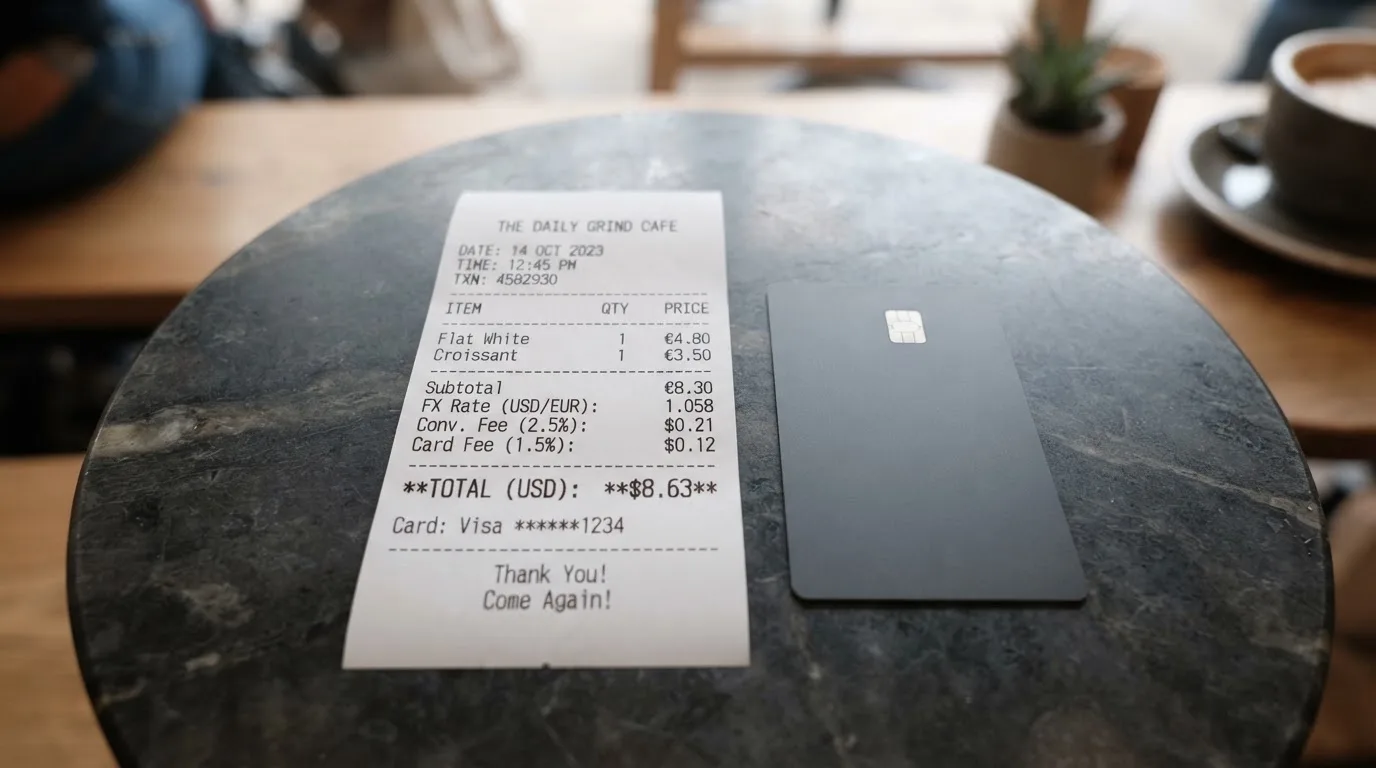
The only meaningful charge is on funding. The first $200 you load onto the card in a calendar month costs 1%, with the cap stated as 2 USDC per month, so on a small balance the real cost is closer to a dollar or two per month. Anything you load above that $200 threshold in the same month is free. The Bridge cardholder agreement, which is the legal contract behind the card, describes the funding fee as “up to 2%”, which is a wider range than the marketing pages, and that gap is worth knowing about. In day-to-day practice the 1% / 2 USDC structure is the one users see, but the legal document reserves room for higher charges in some cases.
There is also a $1 inactivity fee, charged after 30 days in which you have not loaded the card, and a 1% card-deletion fee if you choose to close the card with a balance still on it: the remainder is returned to your Airtm account, minus that 1%. ATM withdrawals are not available at all, so there is no ATM fee to worry about, and there is no cashback at the point of sale.
Costs
| Fee or limit | Amount |
|---|---|
| Issuance | $0 |
| Monthly fee | $0 |
| Annual fee | $0 |
| Top-up fee | 1% on the first $200 per calendar month, capped at 2 USDC; 0% above $200 |
| Foreign exchange fee | 0% |
| Per-purchase fee | None |
| Inactivity fee | $1 after 30 days without a load |
| Card deletion fee | 1% of remaining balance |
| ATM withdrawals | Not available |
| Cashback | None |
| Daily spending limit | $2,000 |
| Per-transaction limit | $2,000 |
| Monthly limit | Not separately stated; follows your Airtm account withdrawal limits |
| Card currency | USD only |
To put a number on everyday use, three examples help.
Buying a $50 subscription from a US merchant in dollars costs nothing beyond the $50 itself. The card is denominated in USD and the merchant settles in USD, so there is no FX margin and no top-up fee if you loaded more than $200 in the calendar month, or roughly $0.50 if you are still inside the 1% band.
Buying something for €80 on a European site means the card is charged in dollars at Visa’s exchange rate, and the issuer adds nothing on top, so the FX fee is 0%. The only cost is the funding fee at the moment you topped the card up, not at the moment of payment. This is the part of the cost structure that quietly outperforms most prepaid cards.
Cancelling the card with $120 still on it returns $118.80 to your Airtm account, with the $1.20 representing the 1% deletion fee. There is no fee from Lead Bank for closure itself, but the deletion fee on the way out is the closest thing the card has to a hidden charge.
How to top up: Top up
Top-up is the part of the flow where Airtm behaves differently from most cards. The card itself is only ever funded from your Airtm balance, and that balance is held in USDC. When you make a purchase, the stablecoin in the Platform Provider account is sold and the equivalent in fiat US dollars is loaded onto the card in real time, which is why there is no separate “load the card” button the way a standard prepaid card has.
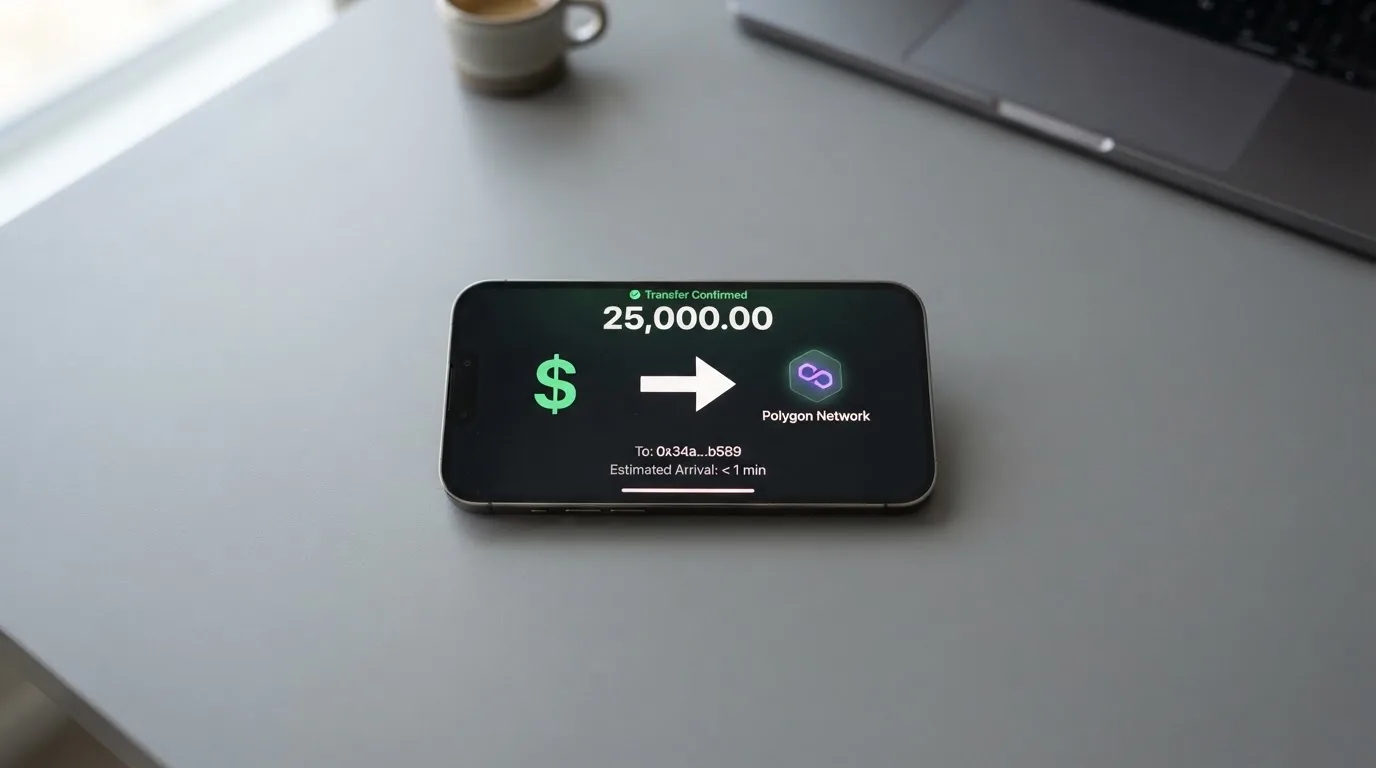
The Airtm wallet, which sits one step before the card, accepts more than 500 funding methods. The list includes bank transfers, crypto deposits, mobile wallets, peer-to-peer transfers within the Airtm network, and debit or credit card top-ups via MoonPay. Airtm does not publicly name the blockchains it accepts for direct crypto deposits, which is unusual for a product in this category, and it is one of the first things I would check before sending any non-trivial amount.
For users in the United States the route is narrower: the card can only be loaded through Airtm payouts, with the card set as the default payout method. That is a US-specific constraint that follows from how US Virtual Account users connect their bank rails to Airtm, and it is worth understanding if you are weighing the US version of the card against a Latin American one.
There is no minimum top-up amount stated in the public materials, and no separate top-up fee beyond the 1% / 2 USDC structure already described. Network fees for the underlying crypto conversion, where applicable, are absorbed by Airtm into the spread on the P2P or conversion rate, rather than charged on top. If you ever want to move money back from the card to your Airtm balance, the supported path is to delete the card: the remaining balance minus the 1% deletion fee lands in your Airtm account. Refunds from merchants behave differently: they are credited to the Platform Provider wallet as stablecoins, not back onto the card.
The practical effect of this design is that the card is best understood as a window onto your Airtm balance, not as a separate account you manage. If your Airtm balance is healthy and active, the card works. If your Airtm account runs into verification issues, the card goes with it.
Paying with it every day
For online checkout and in-store contactless via a phone, the card is straightforward. Apple Pay and Google Pay are supported, and tokenisation replaces the card number with a device-specific account number, so the actual PAN is never handed to the merchant. Visa’s 3-D Secure flow, branded Visa Secure, is the identity check used for online payments, and the cardholder agreement refers to the standard 3-D Secure process. The 2FA and freeze controls live inside the Airtm app, and the card can be frozen or deleted from the dashboard.
A few categories are blocked at the issuer level, regardless of where the merchant sits: gambling, firearms, drugs, adult content and services, and financial services businesses. The exact list of MCCs behind those categories is not published, and merchants do not get an explanation at the point of decline, which is a common complaint pattern across crypto cards in general, not just this one.
The app itself scores well in the stores. On the US App Store it sits at 4.8 out of 5 across roughly 5,000 ratings, and on Google Play at 4.5 out of 5 across about 82,000 reviews, as of late October 2026. Those numbers describe the Airtm app broadly, not the card product specifically, but they are the numbers you will see when you download the app to get the card.
What the card does not do is also part of the picture. There is no physical card, no ATM access, no cashback, and no right to stop payment on a card transaction once it has been initiated. If something goes wrong with a merchant, the first step is to deal with the merchant directly; the dispute process at Airtm kicks in only after that. Refunds, when they come, land as stablecoins in the Platform Provider wallet rather than as a credit back onto the card. For unauthorised transactions, the agreement limits your liability to a maximum of $50 if you report within two business days, rising to $500 if you report later, with a 60-day window to raise the issue and an investigation period of up to 10 business days (extendable to 45 days in standard cases and 90 days for new cards or foreign-initiated transactions). Pre-authorisation holds, the temporary reservations some merchants place on a card, can take up to seven business days to release.
For a person whose main use case is paying online subscriptions, buying digital services, or tapping to pay with a phone, the card covers the ground. For a person who needs cash, who travels to places that insist on inserting a card, or who relies on chargeback rights to recover from bad merchants, it is the wrong tool.
What can go wrong
The largest single risk is operational, not technical. The Trustpilot profile shows a TrustScore of 3 out of 5 across roughly 7,000 reviews as of October 2026, and three complaint themes show up again and again across 2025 and 2026: accounts suspended or limited without a clear explanation, with funds held for weeks or months; slow, generic, sometimes non-existent customer support; and P2P marketplace fraud, where a counterparty in Airtm’s peer-to-peer exchange takes the money and Airtm does not reimburse. The card sits on top of that platform, so the same operational risk applies to the balance that funds it.
There is no publicised major hack or shutdown tied to Airtm itself. The closest analogues in the broader category, FTX and WaveCrest, are reminders that card programmes can be wound down by their network or issuer with relatively short notice, but Airtm has not been through that experience. Scheduled maintenance windows, including a six-to-nine-hour UTC window announced for early June 2026, and a 9-hour “Transactions error” incident tracked in early October 2025, suggest that the platform is monitored and that service interruptions are not unusual.
A few structural points add to the risk picture. Funds on the card are custodial: they sit with Lead Bank, the issuer, not with you. Card funds are not FDIC insured, so a bank failure would not return them through the standard deposit insurance route. Two-factor authentication is available on the Airtm account, and you can freeze or delete the card from the dashboard, which gives you a way to limit damage if your account is compromised, but it does not help if Airtm itself restricts the account.
Support is reachable at [email protected], by phone at 833-237-8104, and through the website chat, and the site is available in English, Spanish and Portuguese. Operating hours are not stated, and the recurring complaint is not that there is no support at all, but that the support that exists is slow and tends to send template replies. Airtm Inc. is a Delaware corporation registered with FinCEN as a money services business since 2015, Lead Bank is a Missouri state-chartered bank and an FDIC member, and Bridge Ventures LLC in Delaware is the program manager. The legal structure looks conventional for a US-issued prepaid programme; the experience of dealing with it is what the reviews question.
For a single person, the practical question is how much of your balance you are willing to leave with a custodian whose customer support has a poor public reputation. If the answer is “a small, regular spending amount”, the risk is contained. If the answer is “my monthly income”, the same risk looks very different.
What to take instead
Three cards come up repeatedly when readers compare Airtm. None of them are drop-in replacements, and each one is structured around a different assumption about where you live and what you want to do with your balance.
Cardex
Cardex markets a single crypto card available in 200+ countries, which is a wider claim than Airtm’s country list, and supports VERVE, Visa, Mastercard and UnionPay as networks. The App Store listing is Naira-focused, with the card denominated in Naira, which points to a Nigerian user as the primary audience. Real-time crypto-to-fiat conversion happens at the moment of payment, and the company describes an “AI-Powered Conversion Rate” that scans global exchanges and picks the best rate at the time of spend. No fee percentage is published on the site as of October 2026, and that absence is itself a reason to ask before relying on it. Score: 5.6 out of 10.
TakeCard
TakeCard is a virtual card available immediately, plus a physical card that the help centre describes as “available only to Bolivian users for now”. The card is prepaid, denominated in US dollars, and payments in dollars settle 1:1, while payments in other currencies use Visa’s official rate for the transaction day. The headline cost is USD 5 for a virtual card, USD 20 for issuance and USD 20 for shipping on a physical card, although another article in the same help centre gives a lower figure of USD 10 for the physical in Bolivia, which is a contradiction I would want resolved before paying. A 1% commission applies per purchase, and the card is topped up from a Takenos balance. Starting data, which I have not been able to confirm on a publicly readable page, lists USDC and USDT via Polygon, BNB Chain, Tron or Ethereum as funding routes. Score: 5.5 out of 10.
OkiCard
OkiCard claims 150+ or 200+ countries depending on the page, with no geo-blocking based on passport, and a self-attestation that you are not in a sanctioned jurisdiction. The card is virtual, with a physical version mentioned without detail, on a Visa or Mastercard network, and denominated in USD or EUR. Pricing is unusual: the pricing page lists issuance, monthly and starting prices, with the virtual card starting at $15, and the FAQ mentions a one-time issuance fee, which is internally inconsistent. The load fee is 3%, the transaction fee in dollars is 0%, and “no hidden exchange spreads” is the claim, with the FX fee not stated. Funding accepts USDT on BSC, Ethereum, Tron and Solana, with USDC “soon” and BTC and altcoins “coming soon”. An initial deposit of 100 USDT is required. Score: 6.0 out of 10.
| Card | Score | Card form | Card currency | Key cost | Where it works best |
|---|---|---|---|---|---|
| Airtm | 6.3 | Virtual only | USD | 1% on first $200 monthly top-up, capped at 2 USDC; 0% FX | US and Latin American users with an existing Airtm USDC balance |
| Cardex | 5.6 | Virtual and physical, multi-network | Naira per listing | Not stated | Users in 200+ countries, especially in Nigeria |
| TakeCard | 5.5 | Virtual, physical in Bolivia | USD; 1:1 for USD payments | USD 5 virtual; USD 20 + USD 20 physical; 1% per purchase | Bolivian users wanting a physical card, broader LatAm for virtual |
| OkiCard | 6.0 | Virtual, physical mentioned | USD or EUR | 3% load fee; 0% in-USD transaction | Users prioritising a low per-transaction cost on USD spending |
None of these alternatives solves the underlying problem of custodial risk or weak support. They differ on country coverage, currency, and fee shape, and the right choice depends on which of those differences matters most to you.
Who I would recommend it to
I would recommend the Airtm card to a person who already uses the Airtm platform to hold or move money in USDC, who lives in the United States or in one of the launched Latin American countries, and who needs a cheap way to turn that balance into a Visa number for online and mobile-wallet spending. For that user, the cost profile is hard to beat, the verification path is short, and the lack of a physical card or an ATM is a non-issue because they would not use one anyway.
I would not recommend it as a primary card for someone whose income flows through it, who needs cash, who travels in places that require a physical card, or who cannot afford a multi-week hold on their balance if the platform flags their account. The complaints around held funds and slow support are not a one-off: they are a pattern, and they are the reason Reliability and Everyday Use each sit at 5 out of 10.
If you are new to crypto cards and choosing a first one, the Airtm card is a reasonable place to start small, see how the KYC and top-up flow feel, and decide whether the operational risk is acceptable for your situation. If you are choosing a card for serious, ongoing spending, the same operational record is what you would be choosing to depend on.
The conditions described are current as of October 28, 2026 and were checked against Airtm’s public pages, the Bridge cardholder agreement, the Airtm app-store listings, and Trustpilot, with third-party figures marked as unofficial where the card’s own materials do not confirm them.
Frequently asked questions
What is the Airtm card?
The Airtm card is a virtual Visa prepaid debit card that draws on your Airtm balance in USDC. There is no physical card and no separate account to manage: when you make a purchase, stablecoins in the Platform Provider account are sold and the equivalent in fiat US dollars is loaded onto the card in real time.
Is Airtm a bank?
No. Airtm Inc. is a Delaware corporation registered with FinCEN as a money services business since 2015, and the card is issued by Lead Bank, a Missouri state-chartered bank and FDIC member. Airtm acts as the platform and Bridge Ventures LLC acts as the program manager, but the funds on the card are held by Lead Bank, not insured by the FDIC, and you do not have a bank account with Airtm in the ordinary sense.
Who owns Airtm?
Airtm Inc. is the named platform provider, incorporated in Delaware, with an address in Dover. Airtm has been a FinCEN-registered money services business since 2015. Information about individual owners, investors or parent companies is not laid out in the public materials I checked.
Is the Airtm card available in my country?
The card is available wherever the Airtm platform is available, which currently means verified residence in 15 or more countries starting with the United States and Argentina, with Bolivia, Venezuela, Colombia, Ecuador and the Dominican Republic named as next up. Airtm is not available in Belarus, Cuba, Iran, Myanmar, North Korea, Sudan, Syria, Russia, the Donetsk, Luhansk and Crimea regions of Ukraine, and certain US states including New York.
How do I get the Airtm card?
You complete the Special Features KYC inside the Airtm app, which accepts an official ID with your name, address, date of birth and government ID number, and you must be 18 or older. Once that is done, you open the card page in the app, follow the on-screen steps, and the card is approved within a few minutes to two business days.
Does the Airtm card require KYC?
Yes. The card sits behind the Special Features KYC tier, which is separate from the standard Airtm account verification. If you have already completed the Special Features KYC for another Airtm feature, you do not have to repeat it. Card funds are not FDIC insured.
How do I top up the Airtm card?
You cannot load the card directly from a bank or a card. You top up from your Airtm balance in USDC. Your Airtm balance itself accepts more than 500 funding methods, including bank transfers, crypto deposits, mobile wallets, P2P transfers within Airtm, and card top-ups via MoonPay. For US users, the card can only be loaded through Airtm payouts, with the card set as the default payout method.
How do I add the Airtm card to Apple Wallet or Google Pay?
Apple Pay and Google Pay are both supported. After approval, the card details appear inside the Airtm app, and the standard “Add to Wallet” or “Add to Google Pay” flow tokenises the card onto your phone. The tokenised number, not the underlying PAN, is what is shared with the merchant at the point of sale.
Where can I use the Airtm card?
Anywhere Visa is accepted online, and anywhere contactless Visa is accepted through Apple Pay or Google Pay on a phone. The card is denominated in US dollars, and the foreign-exchange fee on international transactions is 0%. A small list of merchant categories is blocked at issuer level, including gambling, firearms, drugs, adult content, and financial services businesses.
Is the Airtm card safe?
It is as safe as a custodial prepaid card tends to be. Funds sit with Lead Bank and are not FDIC insured, the card is virtual only, two-factor authentication is available on the Airtm account, and the card can be frozen or deleted from the dashboard. The recurring risk in user reviews is not theft but operational: accounts being limited, funds being held, and customer support being slow.
How virtual cards work – cryptocardsexplained.com
Content created by the «cryptocardsexplained.com» team