
A prepaid crypto card with no passport check — and no bank behind it
 Available in US
Libermall is a crypto payment card built around Telegram rather than a bank app. You fund a balance, most easily with USDT on the TRON network or with roubles, and spend that balance like a prepaid card through a virtual card you get in seconds or a plastic one posted to most of the world. The pitch is simple: no passport, no selfie, no monthly fee. My score for it is 7.1 out of 10, and the reasons are split between what it does unusually well and what it simply does not publish.
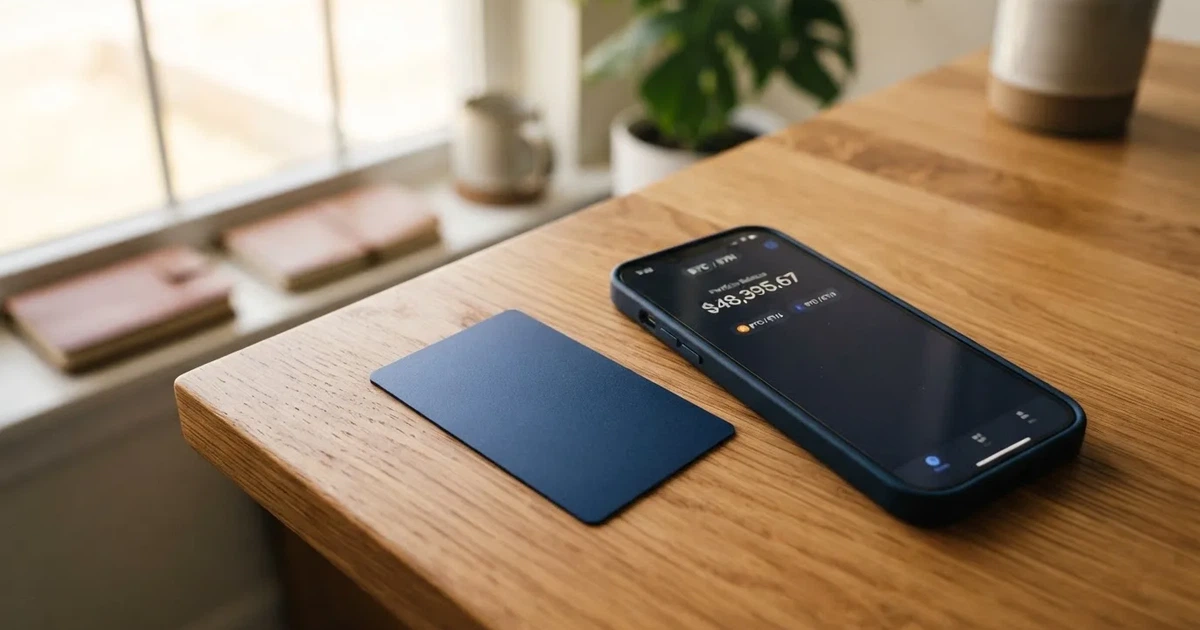
Who is this for? If you live somewhere a normal bank card is difficult to open, spend most of your money inside Telegram, and hold stablecoins rather than a salary, the low-friction entry is a real advantage. If you want a card with a named issuing bank, published FX fees, a phone number you can call, or clear dispute rules, this is not the card for you — the company itself says it is “not a bank”, and the issuer behind the plastic is never named.
Conditions on this page are current as of October 28, 2026.
The score in full
Here is how the total breaks down, criterion by criterion, with the reasoning behind each mark.
| Criterion | Mark | Why |
|---|---|---|
| Who can get it | 8 / 10 | Claims “180+ countries”, plastic ships worldwide except the USA, with restrictions on “sanctioned categories and countries” |
| Cost | 7 / 10 | Issue $10 one-off, Premium $135 per issue, Apple/Google Pay card $10 or $15, no subscription; top-up USDT TRC-20 0%, TON 0.5% |
| Top-up options | 7 / 10 | USDT on TRON (TRC-20), USDT via TON Connect, roubles by card and SBP, Telegram Stars; no USDC |
| Reliability and complaints | 6 / 10 | Libermall LLC in Cheyenne, Wyoming, issuer not named, “not a bank”; no complaints found |
| Everyday use | 7 / 10 | Virtual card instantly and plastic later; Apple Pay and Google Pay only on a separate verified card; ATM terms not disclosed |
| Total | 7.1 / 10 | A low-friction card with real gaps in published detail |
The strengths are concentrated in access and cost. The weaknesses are concentrated in disclosure: an unnamed issuer, no published ATM or FX terms, and a company that has not been heard of widely enough for most reviewers to have filed complaints about it either way.
Will they give you the card
The short answer is yes, for a very wide range of people — Libermall claims “180+ countries” and says the plastic card ships worldwide except the USA. That is a wider reach than most cards in this category, and it is the single strongest thing about the offer.
There are two caveats to hold onto. First, the page mentions restrictions on “sanctioned categories and countries” without naming Russia or Belarus. I cannot tell you from what is published which specific restrictions apply or to whom, so if your country is one you have a feeling might be affected, the only way to know is to ask them. Second, whether you qualify by citizenship or by residence is not stated, and that distinction matters more than people expect — sanctions screening and issuer risk policy are often applied to citizenship and country of birth as well as to your address.
How to get it
You can get a card without a passport and without a selfie. Virtual cards are issued in the app instantly, and there are four of them to choose from:
- Libermall_EUR — the euro card, for subscriptions and EUR spending.
- Libermall_PAY — the travel card, marked “Popular” on their site.
- Libermall_PREMIUM — the high-limit card, available on request.
- Libermall_USA — tied to a US bank, and the one that supports Apple Pay.
Both virtual and plastic versions exist. If you want the physical object, it ships worldwide except the USA; delivery time, delivery cost and replacement cost are not stated, so do not plan around a specific date arriving.
Verification is tiered rather than binary. The basic no-KYC virtual card is limited to internet payments only. Full KYC raises the Standard plan’s monthly turnover to $100k, and the Premium tier is offered on request. What full KYC actually requires — which documents, whether proof of address is needed, how age is verified — is not stated, and neither is how long processing takes or what happens if you are turned down. Some products with higher limits may require KYC as well.
| Tier | What you get | Limits |
|---|---|---|
| No-KYC virtual | Internet payments only | Standard deposit ceiling applies |
| Standard (after full KYC) | Virtual and plastic | Up to $5,000 per deposit, up to $100k monthly turnover |
| Premium (on request) | High-limit card | Up to $20,000 per transaction, no monthly cap |
Fees: what a Libermall card really costs
Stated costs are low, and one of them is genuinely free. But the list of numbers below is the whole list — and it has holes.
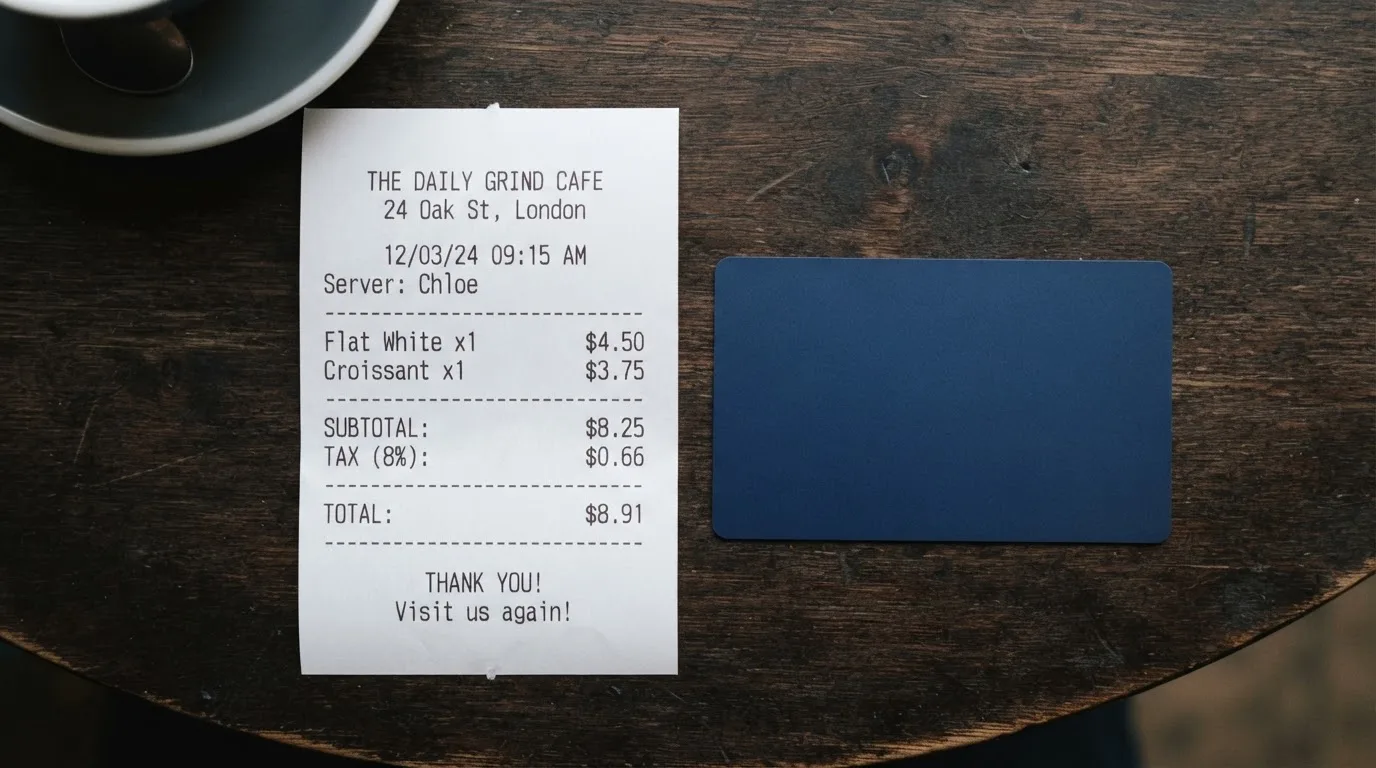
| Fee or limit | Amount |
|---|---|
| Card issue (Standard) | $10 one-off |
| Premium plan | $135 per issue |
| Apple/Google Pay card | $10 in one section, $15 in the FAQ — inconsistent |
| Subscription or monthly charges | None — “no subscription or monthly charges” |
| Top-up, USDT on TRC-20 | 0% |
| Top-up, USDT via TON Connect | 0.5% spread |
| Currency conversion (FX) fee | Not stated |
| ATM withdrawal | Not stated |
| Per-deposit limit, Standard | Up to $5,000 |
| Monthly turnover, Standard after full KYC | Up to $100k |
| Per-transaction limit, Premium | Up to $20,000, no monthly cap |
Note that two figures contradict each other. The Apple/Google Pay card appears as $10 in one place on their site and $15 in the FAQ. That is a small thing on its own, but it is a useful signal: where the site is inconsistent about a price, treat the price as unsettled.
Now let us run three ordinary payments through that table, because that is where the missing FX line starts to matter.
Buying coffee. You spend from a balance already converted to dollars. There is no top-up fee if you funded by USDT on TRC-20, so the cost is just your purchase amount. The total is clear.
A subscription. If your balance is denominated in euros on the Libermall_EUR card, conversion happens if you spend in a different currency. The FX fee is not stated, so you will need to check the final amount in your app before you confirm.
An ATM withdrawal abroad. There is nothing published. I am not going to guess at a percentage, and you should not either: assume the worst plausible reading until they tell you. Withdrawal terms are simply not stated.
A euro card exists (Libermall_EUR); the currency of the other cards is not stated, so on Libermall_PAY, Libermall_PREMIUM and Libermall_USA you are paying in a currency the provider does not name.
Also worth knowing: network fees for a deposit are charged by the blockchain, not by Libermall. If you send USDT on Tron, the chain’s own bandwidth and energy pricing applies, often burning TRX. That is a separate cost from the 0% the card advertises.
How to top up
Topping up is the part Libermall has thought about most, and it is the part I like best. There are four documented routes:
- USDT on TRON (TRC-20) — 0%.
- USDT via TON Connect — 0.5% spread.
- Roubles by card and SBP — fees not stated.
- Telegram Stars — fees not stated.
USDC is not supported at all, which is a real limitation if your stablecoin of choice is Circle’s. It also interacts with a fact about the wider market: Circle stopped supporting USDC on Tron in February 2024, so “USDC over TRC20” is not a native option anywhere in the ecosystem, not just here.
Getting the network right matters more than the fee. A deposit sent on a network the provider does not support, or to an address belonging to another network, can be lost or need manual support recovery with no guarantee — blockchain transfers are simply irreversible. Send a test amount first. The per-deposit ceiling on Standard is $5,000; the minimum, and who pays the network fee, are not stated.
Withdrawals from the balance back out are not stated at all. So if you top up and then want your money back the other way, you are working from silence.
Paying with it every day
Day-to-day spending works roughly the way a prepaid card works: you load a balance and the card spends only that, so it cannot overdraw. There is a virtual card immediately and plastic later.
Apple Pay and Google Pay are the catch. They require the dedicated verified card, and the $10 anonymous card cannot be added to a mobile wallet at all. You add the verified card by scanning a QR code from the app. If wallet use is how you picture paying — tap-to-pay on the phone — then budget for the separate card and its own charge.
Some merchant categories are blocked, but the only category named is “sanctioned categories”, which is unnamed. So you have no published list of which shops, subscriptions or services will refuse the card.
| The good parts | The gaps |
|---|---|
| Virtual card in seconds, no passport or selfie | Apple Pay and Google Pay need a separate verified card |
| No subscription or monthly charge | Blocked merchant categories are unnamed |
| Up to 10% cashback credited to the balance | Cashback conditions not stated |
| Telegram bot, plus Android and web apps | Store ratings not read; withdrawal terms not stated |
| Rouble funding by card and SBP | Card currency not stated for three of four cards |
The cashback is worth a moment’s attention. Up to 10%, credited to the balance — but the conditions under which you earn it are not stated. Treat it as a possibility, not a number to plan a budget around.
Interaction is Telegram-shaped: a Telegram bot is the front door, with an Android app and a web app linked from it. Support runs through Telegram too — @YouLibermallbot and @LibermallSupport, with access restoration “usually within 24 hours” and no published hours. Dispute handling is not stated.
What can go wrong
The core risk here is custody. The balance is tied to your Telegram account, which means Libermall holds it. With a custodial wallet the provider holds the credentials and you must trust the provider completely; anyone who obtains the seed phrase can restore the wallet and spend its funds, and crypto transfers are typically irreversible with no built-in recovery. The company says sensitive data is encrypted and card details are not stored in plain text, and it is Libermall LLC in Cheyenne, Wyoming that holds the funds. Two-factor authentication and a card-freeze function are not stated.
That counterparty risk is not hypothetical in this category. Mt. Gox reported about US$350 million stolen in 2011–2014, Coincheck about US$400 million in 2018, and the Ronin Network US$625 million in 2022. Stablecoins are not censorship-proof either — Tether says it disables tokens in wallets on the OFAC sanctions list and has frozen funds tied to illicit activity.
Then there is the layer between you and the money. Visa and Mastercard do not issue crypto cards to consumers; they license issuers and can suspend a programme. There is precedent on both sides: Visa terminated its global agreements with FTX on 13 November 2022 and the FTX US debit card was wound down, and Visa suspended WaveCrest in Europe in 2018, closing all WaveCrest-issued Visa programmes. Libermall says it issues “via licensed payment partners under Visa and Mastercard programmes” without naming them. Programme closures typically give notice, then stop spending and loading, then ask users to withdraw remaining balances.
Payment friction is the quieter risk. Merchants can look up the BIN and see which institution and country issued a card, and may apply extra scrutiny if the issuer country differs from your billing address — which is why a card issued in one country can look foreign to a shop in another. Some merchants decline prepaid or foreign BINs for exactly that reason. Address Verification Service is mainly offered in the US, Canada and the UK and is generally unavailable for foreign-issued cards, which can cause declines. A declined authorisation may leave a hold that stays for several days, typically up to 7. Under 3-D Secure, liability for a fraudulent online payment can shift toward you.
On charges and reversals: a chargeback is a refund ordered by the issuer, with reason codes for fraud, duplicate billing or goods not received. US debit card reversal rights come from Regulation E and credit card rights from Regulation Z, but prepaid-card coverage varies and should not be assumed. I am not giving tax or legal advice here — one general point only, because it affects whether this is cheap: in the US the IRS treats digital assets as property, so exchanging them for goods or services generally produces a taxable gain or loss measured in local currency at the transaction date.
On complaints and reliability: I found no complaints about this card. That is a genuinely neutral finding, not a certificate of quality. It is also unexplained by anything negative on record. The company is “not a bank”, the issuer is unnamed, and no news or complaint detail is stated.
What to take instead
Two things people often want from a crypto card are a mobile wallet and a wide coin list. Here is how the alternatives compare.
| Libermall | Ape Wallet | MaxSwap | AnoCard | |
|---|---|---|---|---|
| Score | 7.1 / 10 | 5.5 / 10 | 5.2 / 10 | 5.9 / 10 |
| Who can get it | “180+ countries”, plastic worldwide except USA | No country list; works “wherever Visa is accepted”; Russian focus | “no … geographical restrictions” | Not stated |
| Card | Virtual and plastic, four types, plus NFC card for Apple/Google Pay | Virtual Visa: service card and Apple/Google Pay card | Virtual only, Mastercard | Virtual cards (VCC) from several BINs |
| Issuance | $10 one-off; Premium $135 | Not stated (promo codes change price) | $50 with $25 first deposit required; total issuance listed 77.125 USD | Varies by BIN, shown before payment |
| Fees | 0% USDT TRC-20; 0.5% TON; FX not stated | No amounts; “fee and total are shown before confirming”; no fees on transfers to users by Telegram username | Top-up 4.5% + $1; transaction $0.25 + 0.4% | Not published; shown before payment |
| Funding | USDT TRC-20, USDT via TON Connect, roubles by card/SBP, Telegram Stars | Wallet balance in USDT | Crypto, 24 listed coins | Route depends on asset; SOL, BTC, USDT, USDC, ETH and more |
| Rewards | Up to 10% cashback, conditions not stated | No cashback; two-level referral programme | Not stated | No cashback; $5 per referred card, 0.25% of referred top-ups |
Reading that table, the honest summary is this. Ape Wallet is closer in spirit to Libermall — Telegram-native, USDT-funded — and more open about showing you a fee before you confirm, but its price changes with promo codes and it says nothing about limits. MaxSwap lists the most coins by a wide margin and publishes its percentages, which is refreshing, but its costs are plainly higher and the card is virtual only. AnoCard is the least transparent of the four: its site was down when checked, and both its creation fee and top-up route depend on the BIN and are only visible in a separate dashboard. If your priority is knowing the number in advance, MaxSwap and Ape Wallet are the two that tell you most; if your priority is getting in with no documents, Libermall still leads.
Who I would recommend it to
I would recommend Libermall to someone who is already inside Telegram, holds USDT or roubles, and has stopped trying to open ordinary bank cards. The combination that matters is the 0% TRC-20 top-up, instant virtual issuance with no passport, and no monthly charge — for that person, this is one of the less annoying options available, and I rate it 7.1 out of 10 for exactly that reason.
I would not recommend it to you if any of these apply: you want a named bank behind the card; you need to know what an ATM withdrawal or a currency conversion costs; you need Apple Pay or Google Pay without buying a second card; you hold USDC; or you need to withdraw the balance back to a bank account, because that is not stated at all.
The check I would do first, before anything else: ask support in Telegram what the FX fee is, what an ATM withdrawal costs, and who the issuing partner is. Those three answers decide whether this is a card you can run daily or one you keep as a backup. If they answer plainly, it is worth having. If they do not, the 7.1 still holds, but for a narrower life than the marketing implies.
Frequently asked questions
What is the Libermall card?
Libermall is a prepaid crypto payment card that lives inside Telegram. You top up a balance, most easily with USDT on the TRON (TRC-20) network or with roubles through a bank card or SBP, then spend that balance with a virtual card issued in the app or a plastic one delivered by post. It is run by Libermall LLC in Cheyenne, Wyoming, and the company states plainly that it is not a bank.
Is Libermall a bank, and who owns it?
No — Libermall says itself that it is “not a bank”. The operator is Libermall LLC, registered in Cheyenne, Wyoming, USA. Cards are issued “via licensed payment partners under Visa and Mastercard programmes”, but those partners are never named, so you cannot look up the institution that actually holds your balance. That is the single most important thing to understand before loading money.
Do I need KYC to get a Libermall card?
Not for the basic virtual card — “no passport, no selfie”. That card is limited to internet payments only. Full KYC raises the Standard plan’s monthly turnover to $100k, and the Premium tier with up to $20,000 per transaction is available on request. Which documents KYC requires, how long it takes, and what the rejection rate is are all not stated.
How much does a Libermall card cost?
A Standard card costs $10 as a one-off issue fee, and the Premium plan is $135 per issue. There are no subscription or monthly charges. The dedicated Apple/Google Pay card is listed as $10 in one section of the site and $15 in the FAQ, which is an inconsistency worth noting. ATM and FX fees are not stated at all.
What does it cost to top up and pay?
Topping up with USDT on TRON (TRC-20) costs 0%, and USDT via TON Connect costs a 0.5% spread. Rouble top-ups by card or SBP have no published fees. Network fees for the deposit itself are charged by the blockchain, not by Libermall. The cost of paying is where the transparency ends: the FX fee is simply not stated.
Which stablecoins and networks can I use?
USDT is supported, either on TRON (TRC-20) directly or through TON Connect, and Telegram Stars work too, as do roubles by card and SBP. USDC is not supported. This is not only a Libermall choice: Circle stopped supporting USDC on Tron in February 2024, so USDC over TRC20 is not a native option anywhere.
Can I use the card in Apple Pay and Google Pay?
Yes, but not with the free virtual card. Apple Pay and Google Pay require the dedicated verified NFC card, and the $10 anonymous card cannot be added to a mobile wallet at all. You add the verified card by scanning a QR code shown in the app. That verified card carries its own separate issue charge.
Is Libermall safe?
The balance is custodial — it is tied to your Telegram account and held by the provider — so you are trusting Libermall LLC with the money, the same way you would trust any custodian. They state that sensitive data is encrypted and card details are not stored in plain text, but two-factor authentication and a card-freeze feature are not stated. I found no complaints about this card, which is neutral rather than reassuring.
What happens if the card is declined or I want to dispute a payment?
A declined authorisation can leave a hold on your funds that stays for several days, typically up to 7. The card network’s own protection schemes are only partly available: US debit card reversal rights come from Regulation E and credit card rights from Regulation Z, but prepaid-card coverage varies and should not be assumed. Libermall’s own dispute procedure is not stated, which is a genuine gap.
Can I withdraw money from Libermall back to my bank?
That is not stated, and I would not assume it works easily. The published top-up routes run in one direction — into the balance — and there is no documented withdrawal path. Before you load anything you would want back out, ask support in Telegram how and at what cost funds leave the balance, because silence on that point is not the same as a yes.
How virtual cards work – cryptocardsexplained.com
Content created by the «cryptocardsexplained.com» team