
A virtual Visa paid in USDT, with a price tag that's mostly favourable but a few rough edges you should see before you sign up
 Available in US
MEXC, the cryptocurrency exchange, has been pushing a payment card that lets you spend the USDT sitting on the exchange at a shop checkout or through Apple Pay. The product is the MEXC Global Card, a virtual Visa Platinum launched on 31 August 2026, alongside a quieter MEXC Card (APAC) for a few Asian-Pacific markets. If you are weighing the card as a way to turn your stablecoin balance into something you can actually pay with, this review walks through who MEXC will let in, what the card really costs, how the top-up flow works, and what can go wrong before you hand over your details.
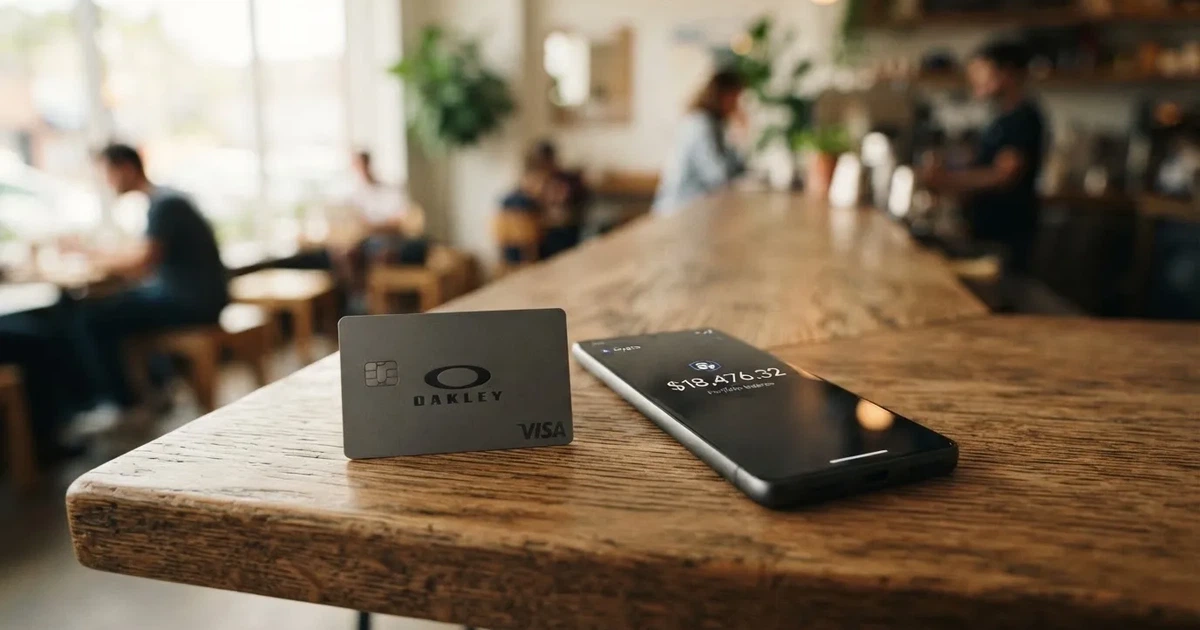
The conditions in this review are current as of October 28, 2026.
Verdict
MEXC earns 5.6 out of 10 in this review. That is a middling score, and it falls out of a few specific trade-offs rather than a single fatal flaw. On the upside, the Global Card has no annual fee, no top-up fee, no inactivity fee, and 0% on the crypto conversion side, with the Visa FX rate applied without a MEXC markup. On the downside, the card is virtual only, USDT is the only top-up currency, the issuer and safeguarding arrangement are not stated on the card’s own pages, and the wider MEXC exchange sits on Hong Kong’s SFC suspicious-platforms alert list with a Trustpilot record dominated by one-star reviews about frozen withdrawals and unreachable support.
The card is a reasonable fit if you are a USDT holder in an eligible Asian or emerging-market country who wants to spend stablecoins at point-of-sale or through Apple Pay or Google Pay, and you are comfortable leaving the balance with the exchange rather than with a licensed e-money institution. It is a poor fit if you need a physical card, an ATM, a non-USDT top-up, or the protection of a clearly named issuer with segregated customer funds.
| Criterion | Mark | Why it scores that way |
|---|---|---|
| Who can get it | 8 / 10 | Most countries can apply, with a blacklist of about 69 jurisdictions; eligibility tracks proof-of-address country, not citizenship |
| Cost | 7 / 10 | No annual or top-up fee, 0% crypto conversion, Visa rate with no MEXC markup, but a 1% spending fee from 1 October 2026 |
| Top-up options | 4 / 10 | USDT only, transferred to a Fiat account then onto the card; the underlying networks are not named |
| Reliability and complaints | 3 / 10 | The issuer is not named, the balance sits with the exchange, and the exchange has heavy one-star feedback and a regulator alert |
| Everyday use | 4 / 10 | Virtual Visa Platinum with Apple Pay and Google Pay, but no physical card and no ATM |
| Total | 5.6 / 10 | A workable USDT-spending tool, with the usual exchange-custody risks attached |
Who will MEXC give the card to
MEXC positions the Global Card as a worldwide product, but the application page is gated by the country on your proof of address. The page itself lists a short headline (“The Philippines, Taiwan, Thailand…”) and a Details link for the full list, which I could not read end to end. Unofficial catalogues disagree on the size of that list: DefiLlama counts the card in around 110 countries, while SpendNode describes coverage across Southeast Asia, Latin America, Africa, the Caribbean, the Gulf, Central Asia, Japan, South Korea, New Zealand and Israel. Both treat those numbers as unofficial.
What is clearer is the blacklist. As of August 2026, the application’s excluded territories include the United States, China, India, Indonesia, Turkey and Russia, with about 69 countries and territories in total on the closed list. Philippines, Taiwan, Vietnam and Thailand are not on that blacklist, which is why the application page calls them out first. The list is described as one that changes, so the country you can apply from today may not be the country you can apply from in six months.
The KYC step is the part that decides who actually gets through. MEXC requires its Advanced KYC before you can apply, which means a government ID plus a face verification, and the proof of address has to be from an eligible country. The exact minimum age, the documents accepted as proof of address, and the formal reasons MEXC might reject an applicant are not stated on the public card pages. Citizenship is not the rule, in other words, residence (as evidenced by the address document) is.
If you live in a country that is not on the closed list and your address document matches it, you can apply. If you live in one of the 69 excluded territories, the application will not proceed regardless of what other documents you hold.
How to get the MEXC card
The signup path is short but every step is mandatory. You start by completing Advanced KYC on the exchange, then you apply on the My MEXC Card page, then you transfer USDT to your Fiat account and finally fund the card from that balance. There is no separate card-only onboarding, so the card inherits the exchange’s identity checks in full.
The card product itself is a virtual Visa Platinum in its Global form, denominated in USD. No physical card is on offer; the card page says physical cards are “not yet available”. Because the product is virtual, there is no shipping step and no delivery address to think about, which is also why no one can tell you how long a plastic card would take to arrive.
Two things to note before you click through. First, Advanced KYC is the only verification level that opens the card application, and it asks for a government ID and a face check; income proof is not part of the flow. Second, the MEXC name on the application page is the only brand you will see at this point. The card page does not name the licensed bank or e-money institution that actually issues the Visa, and the public card materials do not state a safeguarding arrangement for the spending balance. That gap matters for the risk section further down, but it is worth flagging here so you go in with your eyes open.
What the MEXC card really costs
The cost picture is mostly favourable, with one charge that lands in October 2026. The headline is that the Global Card has no annual fee, no top-up fee, no inactivity fee, and no termination fee. Issuance is listed at USD 20 but is being waived for a limited time as of August 2026, so most people applying in the next while should see a 0 USD price. The crypto-to-fiat conversion is 0%, and the FX rate applied to non-USD purchases is the standard Visa rate with no MEXC markup.
The one number that should change how you use the card is the 1% transaction fee that applies from 1 October 2026. Between the 31 August launch and 30 September 2026 that fee is waived, so during the launch window a 100 USD purchase deducted 100 USDT. After 1 October 2026 the same 100 USD purchase will deduct 101 USDT, and the fee is built into the deduction rather than charged separately.
| Fee or limit | Global Card | APAC Card |
|---|---|---|
| Issuance | USD 20 (waived for a limited time) | 0 |
| Annual fee | 0 | 0 |
| Top-up fee | 0 | 0 |
| Crypto conversion | 0% | 1% |
| FX markup on Visa rate | 0% (Visa rate) | 1% on non-USD purchases |
| Spending fee | 1% from 1 October 2026 | 0% |
| ATM withdrawal | Not applicable (virtual only) | Not applicable (virtual only) |
| Single transaction limit | 80,000 USD | 50,000 USD |
| Daily spend cap | 1,000,000 USD | 50,000 USD |
| Monthly transactions | 2,500 | Not stated |
| Annual transactions | 25,000 | 1,040 |
To make those numbers feel less abstract, three everyday payments:
- A 50 USD café bill in your local currency, paid with USDT on the card. MEXC converts USDT at 0%, Visa converts the local currency at the Visa rate with no MEXC markup, and the 1% spending fee adds 0.50 USD. Total deduction from your USDT: about 50.50 USDT. During the September 2026 launch window that 0.50 USDT is dropped.
- A 30 EUR online subscription, paid in euros. The 0% crypto conversion still applies; Visa’s own euro conversion rate is used; the 1% spending fee adds 0.30 EUR. Total deduction: about 30.30 EUR worth of USDT, depending on the EUR/USD rate that day. MEXC does not add its own spread on top of Visa.
- A 200 USDT card top-up. Free on the MEXC side. The underlying on-chain network fee (gas) is paid by you to the blockchain, not to MEXC, and what that costs depends on which network you send USDT on.
The APAC Card reads differently. It is the older product for selected Asia-Pacific markets, with no spending fee, but a 1% crypto conversion and an extra 1% on top of the Visa rate for non-USD purchases. For someone who spends only in USD and only tops up in USDT, the APAC product is cheaper at the till; for someone who buys in other currencies, the Global Card with its waived issuance and no FX markup tends to come out ahead once the 1% spending fee is paid.
One thing the page is quiet on is a separate monthly or annual fee, the kind you sometimes see on metal or premium tiers. MEXC does not publish a monthly fee, and there is no metal tier; the three pricing bands here are Standard, Premier and Elite, and those change cashback rather than the cost of holding the card.
How to top up the MEXC card
Top-up is the part of the flow that is genuinely under-documented. The mechanics are clear: you transfer USDT to your MEXC Fiat account, then push it from the Fiat account onto the card on the My MEXC Card page. MEXC does not charge for that move, and a single top-up can be as small as 1 USDT and as large as 1,000,000 USDT on the Global Card, per the support guide. An older MEXC post cites a 100 USDT minimum, which conflicts with the 1 USDT number; the support guide is the more recent of the two and is the one to trust.
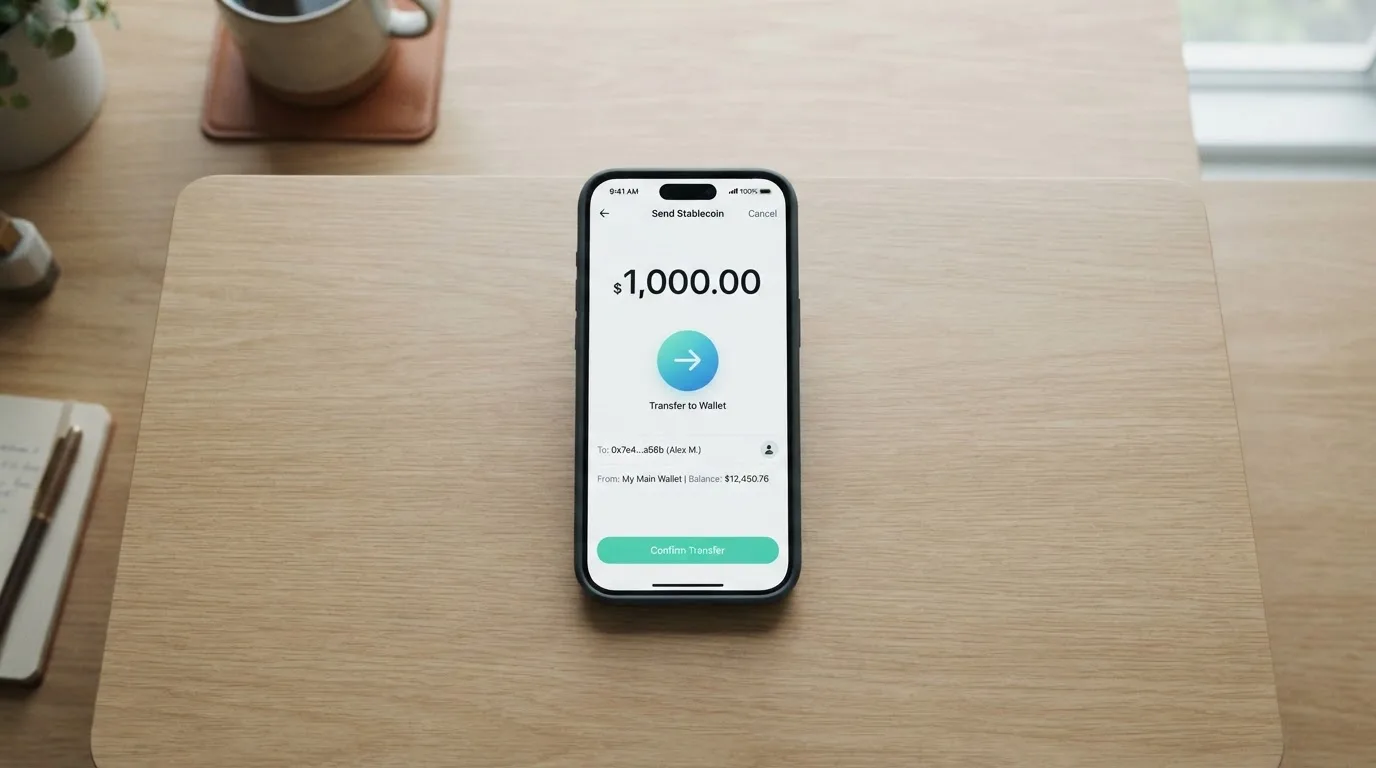
What is not stated is the network. MEXC does not say on the card page whether you should send USDT over Ethereum (ERC-20), Tron (TRC-20), Solana, Polygon or any other chain, and that matters more than it usually does because sending USDT to the wrong network is one of the most common ways people permanently lose stablecoins. If you already have USDT on MEXC in your exchange wallet, the top-up is internal and the network question does not apply; if you are funding from an external wallet, you will need to confirm the network MEXC expects before you send.
A few other limits are worth noting up front:
- USDT is the only top-up currency. There is no BTC, ETH or USDC funding path, no bank transfer, no IBAN and no card-to-card funding.
- The Fiat account is a MEXC-internal account, not a bank account. Moving money off the card back to your exchange balance is described in the help materials but the exact closure and refund mechanics are not stated on the card page.
- Cashback is paid in USDT by the 15th of the next month, so the wallet you top up is the wallet that will receive the rewards.
Paying with the MEXC card every day
Day-to-day use is short on features and long on the basics. The Global Card works at any merchant that takes Visa online, in app or at the till, and it can be added to Apple Pay and Google Pay; the APAC Card supports Google Pay only. There is no physical card to hand over at a restaurant, no contactless tap on a terminal, and no ATM withdrawal, because the product is virtual and the help pages describe ATM use as not applicable to virtual cards.
Cashback is the one feature MEXC leans on. It runs on the M-Score loyalty tier and is paid in USDT by the 15th of the following month:
- Standard: 4% cashback, capped at 100 USDT per month.
- Premier (M-Score 600-799): 6% cashback, capped at 300 USDT per month.
- Elite (M-Score 800+): 10% cashback, capped at 800 USDT per month.
Referral rewards sit alongside the cashback: 20 USDT to the referrer and 10 USDT to the new cardholder, applied through the standard referral programme. MEXC does not publish a list of blocked merchant categories on the card page, so it is hard to know in advance which MCCs the card will or will not work at; if a payment is declined, it is the merchant’s BIN lookup, the issuer’s risk rules or a 3-D Secure challenge that did not complete, not a MEXC-published exclusion list.
If a charge is wrong, the dispute process is the same as for a regular Visa. You contact the merchant first, then MEXC Customer Service with a reason and supporting evidence. The windows are 90 days for duplicate charges and 120 days for suspected fraud, goods not received or goods not as described. Filing a dispute is free; if the dispute is rejected for incomplete evidence, a review fee may apply. Refunds usually clear in one to seven days, travel-related refunds up to 30 days, and MEXC charges USD 0.50 per refund only when the refund rate on the account is “excessively high”. Cashback earned on a refunded purchase is clawed back from the next payout.
3-D Secure is on by default, with a one-time code sent by email (valid for four minutes) or generated in the MEXC app for in-app confirmation. Repeated failed payments can trigger a risk review, and a risk review can end with the card being terminated.
What can go wrong with the MEXC card
The product-level risks are mostly familiar crypto-card risks, but the company-level risks are specific to MEXC and worth reading carefully.
The card balance sits with the exchange. The card page does not name the issuing bank or e-money institution, and it does not state a safeguarding arrangement for the funds you load. Unofficial reviewers (SpendNode, 2026) say the same thing: the reviewed documents do not identify an issuer or a safeguarding structure, and the spending balance is held by the exchange itself. With a regulated e-money issuer in the EU or the UK, customer funds are typically segregated or insured; with the MEXC card, you are trusting the exchange with the balance until you spend it.
The exchange has a difficult public record. FinTelegram reported a 1.8/5 Trustpilot score for the broader MEXC brand, with the bulk of reviews at one star. The Trustpilot page itself has since removed fake reviews and now shows a “breach of our guidelines” notice rather than a usable score, but the 1,368 reviews on the page are still 88% one-star as of 20 October 2026. The themes are the ones you would expect: accounts flagged as “risk” without reasons, withdrawals frozen for months, generic support replies, hard account deletion, and a USD 0.50 fee on a declined Apple Pay transaction in at least one user report. None of this is about the card specifically; it is the platform the card runs on.
MEXC has been on a regulator alert list. FinTelegram says MEXC appeared on the Hong Kong Securities and Futures Commission’s alert list of suspicious platforms. The exchange is not licensed in Hong Kong, and a presence on that list is a public warning rather than a criminal finding, but it is the kind of flag a careful cardholder will want to weigh.
Third-party catalogues disagree on the product. DefiLlama describes the card as a Visa available in 110 countries, while CryptoCardHub says it is a Mastercard in EUR, in an inner test in February 2026. The official page is for a Visa in USD; the divergence is a reminder that the unofficial card market catalogues are not always reliable.
Freeze, support and replacements. If the card is lost or compromised, you freeze it from Card Management and then contact Customer Service for a replacement. Customer Service is reached by support ticket from the platform; MEXC also runs help-center and learn pages, including a Russian-language version. Live chat, support hours, and the card-specific response time are not stated on the pages I checked. If a payment fails repeatedly the card can be terminated by MEXC’s risk team without a published escalation route.
Program-level risk is real for any crypto card. Crypto cards have been shut down before. In November 2022 Visa terminated its global agreements with FTX after FTX’s collapse, and the WaveCrest programmes were wound down across Europe in 2018. MEXC has not had either of those events, but the precedent is what a card programme closure looks like: a notice period, then spending stops, then balances are returned over a set window. The Global Card is too new for that risk to be priced, but it is a category-level risk that does not go away.
What to take instead of the MEXC card
Three cards appear regularly in the same corner of the market as MEXC, and a quick comparison helps frame the trade-offs. None of these is “the same product” as the MEXC card; they are alternatives for someone who is happy to pay with stablecoins but wants different combinations of cost, custody and geography.
| Card | Score | Card form | Top-up currencies | Crypto conversion | Headline fees | Cashback |
|---|---|---|---|---|---|---|
| MEXC Global Card | 5.6 / 10 | Virtual Visa Platinum | USDT | 0% | 0% issuance (waived), 1% spending from 1 Oct 2026 | 4-10% USDT by M-Score |
| MSX | 6.4 / 10 | Not stated officially | Not stated | Not stated | Not stated | Not stated |
| Bybit Card | 6.0 / 10 | Virtual and physical, Mastercard or Visa by region | BTC, ETH, XRP, USDT, USDC, GRAM | 0.5-0.9% | 0.9% crypto conversion, 0-2% FX, 5 USD VIP physical issuance | 2-10% USDT by tier |
| Pionex | 4.8 / 10 | Virtual Visa (most regions) or virtual Mastercard (Belarus) | USDT | 0% on Visa, up to 3.5% on Mastercard | 1% transaction fee on Visa; 0.5 USDT per failed payment after the first | 1% on local-currency and general USD purchases |
The MSX card is the next step up on score, but the public materials I could read do not state country eligibility, card form, fees or rewards clearly enough to recommend it on detail. If you can read the product page yourself and you live in an MSX-supported country, it is worth a look.
Bybit Card is the more interesting alternative. It is a real card programme with virtual and physical cards in multiple regions (Argentina, AIFC/Kazakhstan, Georgia, Australia, Mexico, Brazil, Peru, Asia Pacific), supports a wider basket of top-up cryptos, and runs a six-tier cashback ladder from 2% to 10%. The cost is heavier than MEXC’s: a 0.9% crypto conversion on most regions, a 2% FX fee on the Australian and Asia-Pacific programmes, and a USD 29.99 issuance fee for a physical card in several regions. For someone who spends in mixed currencies and wants a physical card, that extra cost is the price of admission.
Pionex is the lighter option. USDT-only, virtual cards only, with 1% cashback and 5% APY on the card USDT balance. The Mastercard variant carries a transaction fee of “up to 3.5%”, which makes the Visa variant the only one worth a second look; the Visa costs 1% per transaction but no FX markup and no crypto conversion fee. It is the closest in spirit to the MEXC card, and it lands at a lower score mainly because of the smaller rewards and the narrower product range.
Who I would recommend the MEXC card to
The honest answer is “a specific person, in a specific situation”. The MEXC Global Card is worth setting up if all of the following are true:
- You already keep USDT on MEXC and would rather not move it to another exchange to spend it.
- You live in a country on the eligible list (Philippines, Taiwan, Vietnam, Thailand and most of the rest of Asia, Latin America, Africa and the Gulf, but not the US, China, India, Indonesia, Turkey, Russia or the other excluded territories).
- You are happy to pay with a phone (Apple Pay or Google Pay) and do not need a physical card or an ATM.
- You mostly spend in USD, so the 1% FX markup on the APAC Card does not matter, and you can stomach the 1% spending fee on the Global Card from 1 October 2026.
- You understand that the balance on the card is held by the exchange, not by a separately licensed and safeguarded issuer, and you are comfortable with that level of counterparty risk for the size of the balance you load.
If any of those points does not hold, the card will start to feel like the wrong tool. A US resident, a Russian resident, an Indian resident or a Turkish resident cannot apply. Someone who needs to draw cash at an ATM cannot use this card. Someone whose spending is mostly in euros or pounds will pay Visa’s spread on every transaction. Someone who is uncomfortable with the exchange’s Trustpilot record and the SFC alert will rightly want a card backed by a clearly named issuer with segregated customer funds. Bybit Card is the more defensible pick for that person; Pionex is the simpler one; MSX is the one to read the small print on.
Two things I would check first, before applying:
- The current country list. MEXC’s blacklist is described as one that changes. The Details link on the application page is the source of truth on the day you apply; DefiLlama and SpendNode are useful as a second opinion, not as a guarantee.
- The current fees. Issuance is being waived for a limited time, the 1% spending fee is being waived until 30 September 2026, and the 1% spending fee is the one that will define what the card actually costs you in steady state. If either of those has changed by the time you read this, the calculus in the cost section above will need a fresh pass.
And one thing I would not do: do not load more USDT onto the card than you are prepared to leave with MEXC for as long as you are not spending it. The card balance is not segregated, it is not insured in the way a bank deposit is, and the exchange that holds it has had a difficult public record. Keep the working balance on the card, keep the rest in a wallet you control, and reassess the arrangement every time you top up.
Frequently asked questions
What is the MEXC card?
The MEXC card is a virtual Visa Platinum (Global Card) and a quieter regional virtual card (APAC Card) issued in connection with the MEXC cryptocurrency exchange. It is denominated in USD, holds a balance funded in USDT, and can be added to Apple Pay and Google Pay for contactless and online payments. The Global Card launched on 31 August 2026.
How does the MEXC card work?
You top up the card by transferring USDT from your MEXC exchange balance to a MEXC Fiat account, then funding the card from that Fiat account on the My MEXC Card page. When you pay, MEXC converts USDT to USD at 0%, Visa handles the rest, and the 1% spending fee (from 1 October 2026) is deducted from your USDT balance. There is no physical card and no ATM use on the virtual products.
Is MEXC a bank?
No. MEXC is a cryptocurrency exchange, and the MEXC card runs on top of the exchange account rather than a separately licensed bank or e-money institution. The card page does not name the licensed entity that issues the Visa, and the spending balance is held by the exchange, which is a different arrangement from a regulated e-money product with segregated customer funds.
Who owns MEXC?
The card pages do not state who owns MEXC, and the issuer of the Visa is also not named in the materials I could read. Unofficial sources describe the card as a programme managed by MEXC with no public safeguarding arrangement; treat that as a third-party reading rather than a confirmed fact from MEXC.
Is the MEXC card available in my country?
It depends on which country is on your proof of address. The application blacklist includes the United States, China, India, Indonesia, Turkey, Russia and other countries and territories; if your address is in one of those, the application will not proceed. If you are in the Philippines, Taiwan, Vietnam, Thailand, most of the rest of Asia, Latin America, Africa, the Gulf, Central Asia, Japan, South Korea, New Zealand or Israel, you are likely eligible, but confirm with the Details link on the application page on the day you apply, because the list is described as one that can change.
Can I use the MEXC card outside the country that issued it?
The card is a Visa, so any merchant that takes Visa will accept the card at the till or online, including abroad. That said, the issuer country on the BIN may look “foreign” to a merchant in another country, and some merchants decline prepaid or foreign-BIN cards, so a small number of foreign merchants may reject the transaction. The card works with Apple Pay and Google Pay globally, which usually side-steps BIN-based declines.
How do I apply for the MEXC card?
Complete Advanced KYC on the exchange (government ID plus face verification, with a proof of address from an eligible country), then open the My MEXC Card page and apply. Once approved, transfer USDT to your Fiat account and push the balance onto the card. There is no physical card delivery to wait for, because the product is virtual.
Does the MEXC card require KYC?
Yes. Advanced KYC is required before you can apply for the card, and that means a government ID and a face check, with the address document coming from an eligible country. Income proof is not part of the card flow. The card pages do not state a minimum age, so treat the exchange’s standard adult-customer rules as the working assumption.
How do I top up the MEXC card?
From your MEXC exchange balance, send USDT to your Fiat account, then fund the card from the Fiat account on the My MEXC Card page. A single top-up can be 1 to 1,000,000 USDT, and there is no top-up fee. The card page does not name the network, so if you are funding from an external wallet, confirm the network MEXC expects before you send.
How do I add the MEXC card to Apple Wallet?
In the MEXC app, open the My MEXC Card page, choose the card and select Add to Apple Wallet. Apple Pay replaces the card number with a device-specific token stored in the Secure Element, so the real card number is never shared with merchants. Each payment then uses a one-time dynamic security code. Google Pay works the same way for the Global Card; the APAC Card supports Google Pay only.
Is the MEXC card safe?
It is a Visa with 3-D Secure, instant freeze in Card Management, and tokenised mobile wallet support, which is the standard toolkit. The unresolved question is the one about the underlying balance, which sits with the exchange rather than with a separately licensed issuer under a published safeguarding arrangement, and the exchange has had a difficult public record and a Hong Kong SFC alert. Treat the card as a spending tool, not a savings account, and keep only the balance you are about to spend on it.
How do I delete my MEXC account?
Account deletion is handled at the exchange level rather than the card level, and the support pages describe the process as difficult in user reports (some users describe hard account deletion and frozen balances). If you no longer want the card, freeze it in Card Management, spend or withdraw the remaining USDT, and then follow the account-closure steps in MEXC Customer Service. Termination fee is 0, but the path to closure is not described in detail on the card page.
How exchange cards work – cryptocardsexplained.com
Content created by the «cryptocardsexplained.com» team