
A Visa that draws straight from a self-custody wallet, with some rough edges worth knowing about
 Available in US
The pitch behind the Oobit card is unusual for this category. Instead of asking you to load fiat onto a card, Oobit lets a Visa payment pull funds from your own self-custody wallet at the moment of purchase, with a built-in balance and an in-app wallet as alternatives. That self-custody angle is what most people who pick Oobit are buying into, and it is also the lens I used while going through the card’s terms and the user reports around it.
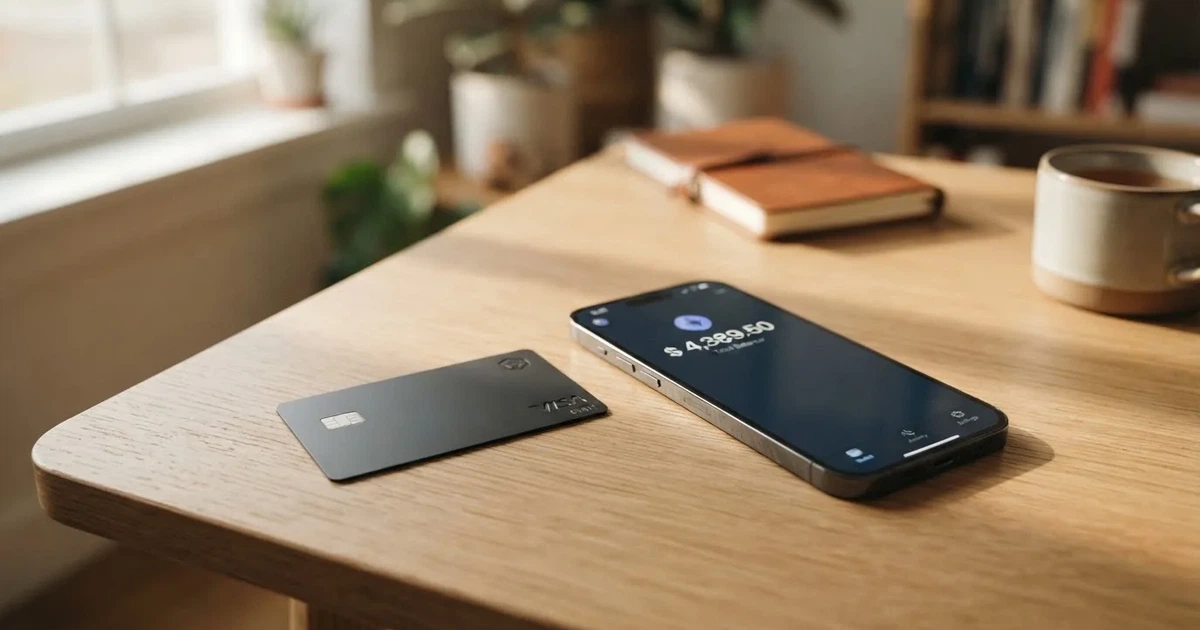
What follows is a working review of the Oobit card based on the card’s public pages and recent user reports. It is written for anyone weighing this card against an ordinary bank card, an account from a major exchange, or one of the other crypto cards on the market. I walk through who can get it, what the everyday experience is like, and where the experience stumbles.
The conditions and figures below are current as of October 28, 2026.
Verdict
Oobit earns a 6.8 out of 10 in my scoring. That is a middle-of-the-pack number for a crypto card, and the breakdown tells you where the card wins and where it loses. The everyday spend mechanics and the breadth of supported countries are genuine strengths. The unresolved complaints, the inconsistency between two official limit pages, and the missing name of the card issuer keep it from a higher mark.
| Criterion | Mark | Why |
|---|---|---|
| Who can get it | 7 / 10 | 75+ countries, including much of Europe, the Americas, and parts of Asia, the Middle East, Africa and Oceania; Turkey, UAE, Russia and Belarus are not supported |
| Cost | 7 / 10 | No issuance or monthly fee; 1% on card purchases (minimum $0.25), 2.5% at ATMs (minimum $0.25), 0.95% on in-app swaps |
| Top-up options | 7 / 10 | USDT, Bitcoin, Ethereum and other stablecoins; connects to MetaMask, Phantom, Trust Wallet or Base, though networks are not stated |
| Reliability and complaints | 5 / 10 | The card issuer is not named; Trustpilot is 3.8 out of 5 from 495 reviews, with recurring themes of held funds, blocked cards and slow support |
| Everyday use | 8 / 10 | Virtual Visa, Apple Pay and Google Wallet, ATM withdrawals up to $250; a physical card is not described in the official material |
If you are a self-custody user who already keeps crypto in MetaMask or a similar wallet and wants to pay without first loading a balance, Oobit is a credible option. If you are looking for a tightly regulated card with a named issuer, a strong dispute process and a US bank behind it, you are likely to be happier with a different product.
Who can get the Oobit card
Oobit says the card is available in 75+ countries, with a regional breakdown of roughly 43 in Europe, 10 in Asia and the Middle East, 17 in the Americas, 3 in Africa and 2 in Oceania. The page also lists the United Kingdom, Germany and Spain among the supported European countries. The three African countries are Kenya, South Africa and Tanzania. Oceania covers two territories, although the specific ones are not named in the published list I worked from.
The omissions matter. Turkey and the United Arab Emirates are both on the “not supported” side, even though they are common crypto hubs. Armenia is not listed either. Russia and Belarus appear on the “Not supported in” list. If you are reading this from one of those countries, Oobit is simply not on the table for you, and the card’s broad-sounding 75-country figure does not change that.
Oobit has also made some recent moves. A December 2025 secondary report describes a US launch in partnership with Bakkt Financial Solutions I, LLC, covering all 50 states. A November 2025 headline points to expansion into South Africa. I could not find a 2026 licence announcement to update either item. The Oobit entry in the US is reportedly run through that Bakkt partnership, while outside the US the card is described as operating “through multiple entities globally” with “licensed partners depending on your location” — which is the kind of language that, in plain terms, means the card issuer is not named on the public pages.
For a wider framing of how country rules affect this kind of card, it helps to know that nationality is normally screened separately from residence, because sanctions screening and issuer policy often run on citizenship and country of birth as well as the country you live in. If you are a citizen of a country the card does not list, that can matter even if your current address is somewhere supported.
How to get the Oobit card
The first step is downloading the Oobit app on iOS or Android, creating an account and going through identity verification. The app itself is well-reviewed: the App Store listing shows around 4.8 stars from more than 22,000 ratings, and Google Play shows a comparable 4.7 to 4.8 stars across 25,000-plus ratings. The US App Store listing I checked directly on 20 October 2026 read 4.5 from 134 ratings, iPhone only, and required iOS 15.4 or later. There is a noticeable gap between that US slice and the global figures, which is a small but real inconsistency worth knowing.
Identity verification is mandatory. You will be asked for a passport or driver’s licence, and sometimes a proof of address. Bank transfers in particular need a one-time proof of address before the first payout. Most accounts are verified in minutes, but some take up to 24 hours. When verification fails, it is usually because a document is expired, unclear or mismatched; the answer in that case is to resubmit in the app.
Once you are verified, you request a card in the app. The card sits in “Pending” status until activation. Oobit describes a “Visa Platinum card” that runs over the Visa network and settles in local currency. The public pages do not draw a clean line between a physical card and a virtual one, but the mechanics described — request in app, then add to Apple Pay, Google Wallet or a smart watch — are the working pattern of a virtual card. A physical card, its delivery time and any replacement cost are not stated in the public material. What is stated is that a card left unused for 90 days is cancelled, and a new one can be requested.
I should flag two things that are not stated clearly on the public pages, because they matter when you are about to hand over documents. The first is what specific KYC checks Oobit runs: whether they include sanctions screening, a politically exposed person check and source-of-funds questions, is not spelled out. The second is the card issuer. Oobit Technologies runs the programme through licensed partners, but those partners are not named on the public page, so you are signing up to a card whose bank you cannot identify from the marketing alone. For a regulated market, the issuer name is normally front and centre. Its absence here is a yellow flag rather than a red one, but it is the kind of thing worth noticing.
Oobit card fees and what they actually cost
The headline is straightforward: Oobit does not charge an issuance or monthly fee, and account creation and holding the card are free. The cost story is in the per-transaction fees and the FX you eat when the merchant’s currency is not your card’s currency.
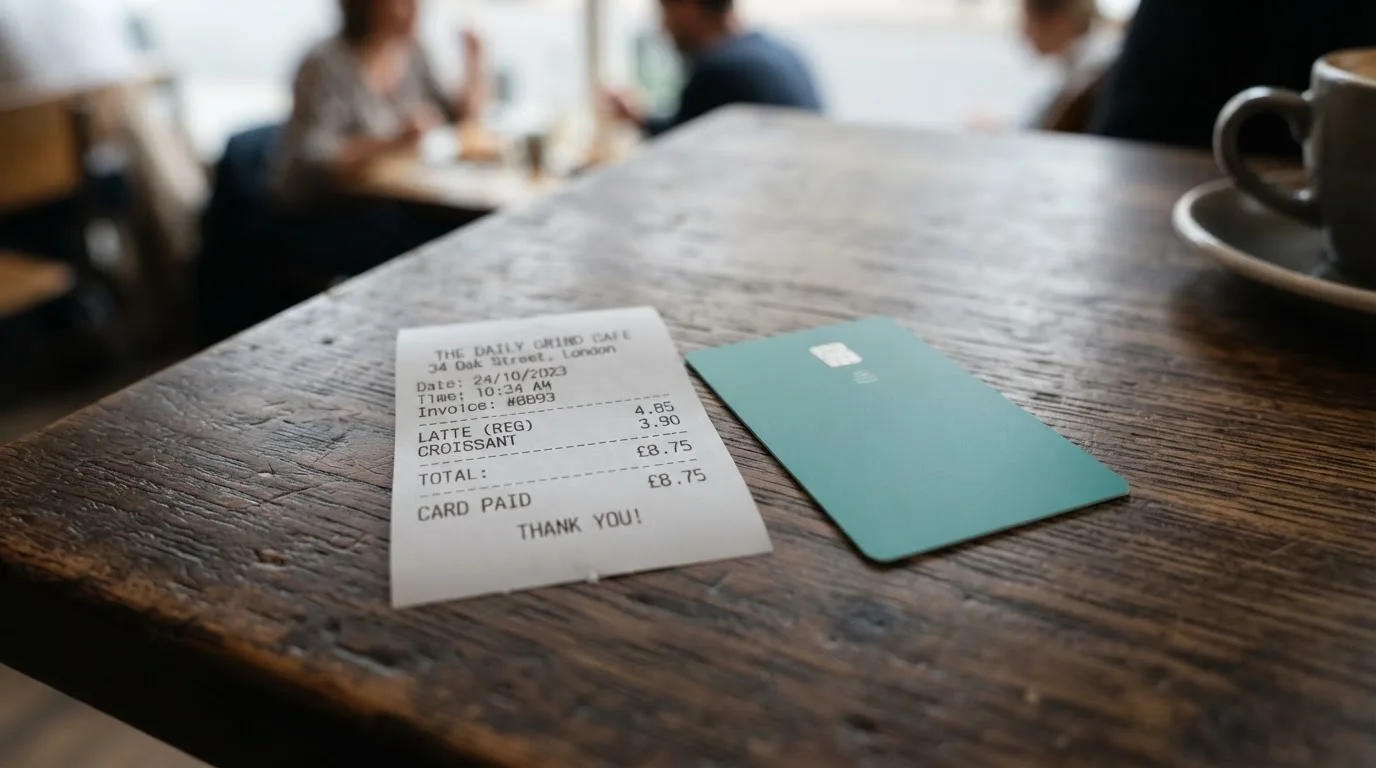
Here is the published fee schedule in one place:
| Fee or limit | Value |
|---|---|
| Card issuance | Free |
| Monthly / annual fee | Free |
| Card purchase | 1% (minimum $0.25) |
| ATM withdrawal | 2.5% (minimum $0.25), plus any operator fee |
| In-app swap | 0.95% (3% when receiving OOB) |
| Card purchase limit | $1 to $2,000 per purchase, up to $25,000 per rolling 24 hours (FAQ says up to $10,000 per day) |
| ATM limit | Up to $250 per withdrawal, 3 attempts per 24 hours |
| Swap range | $5 to $10,000 |
| Brazil card payment | 1% (no minimum) plus IOF and FX charges |
Two caveats are worth carrying with you from this table. The first is the inconsistency on the daily card limit: the main card page says $25,000 per rolling 24 hours, while the FAQ says up to $10,000 per day. Both are official, and they do not match. The second is that the FX fee on non-USD card payments is not stated as a separate line item. A Trustpilot reviewer from 24 August 2026 put the number at around 7% on non-USD payments; that is a user figure, not an Oobit-confirmed one. In Brazil, Oobit is explicit: 1% on card payments, plus IOF and FX. Outside Brazil, the same components apply but the FX number is not put on the page.
To make those fees feel less abstract, here are three everyday situations and what they cost.
You buy a $50 coffee with the card. Oobit charges 1% with a $0.25 minimum, so the fee is $0.50. The 0.5% extra over the minimum is the card’s real cost on a small purchase. On a $10 coffee, the minimum kicks in, and the effective rate climbs to 2.5%.
You take out $200 from an ATM. The 2.5% fee is $5, and the ATM operator may add its own charge on top of that. The cap here is $250 per withdrawal, so a $300 cash need is two trips to the machine, two lots of fees, and possibly two lots of operator charges.
You spend a week in Europe and pay in euros from a USDC balance. The card payment fee is 1% on the converted amount. The FX component — what Visa and the issuer charge for converting dollars to euros — is not broken out on the public page. If the user report of around 7% on non-USD payments is anywhere close, that is a 7% drag on every euro transaction, and the 1% on top is the smaller part of the cost.
There is no separate paid tier. Reward levels are tied to a 90-day rolling spend, starting at 1x points at Level 1 ($0), 2x at Level 2 ($250), 3x at Level 3 ($500), 4x at Level 4 ($1,000) and 5x at Level 5 ($1,500). Points convert at 1,000 points = $1. The headline “10% cashback anywhere” comes from paying with the OOB token, with a 5% rate on standard stablecoin payments capped at $200 of eligible spend; the OOB rate is capped at $5,000 of eligible spend. The 90-day reset means a heavy month does not lock in your tier forever, but it also means a quiet month pushes you back down.
How to top up the Oobit card
There are two ways to fund a payment, and they behave differently.
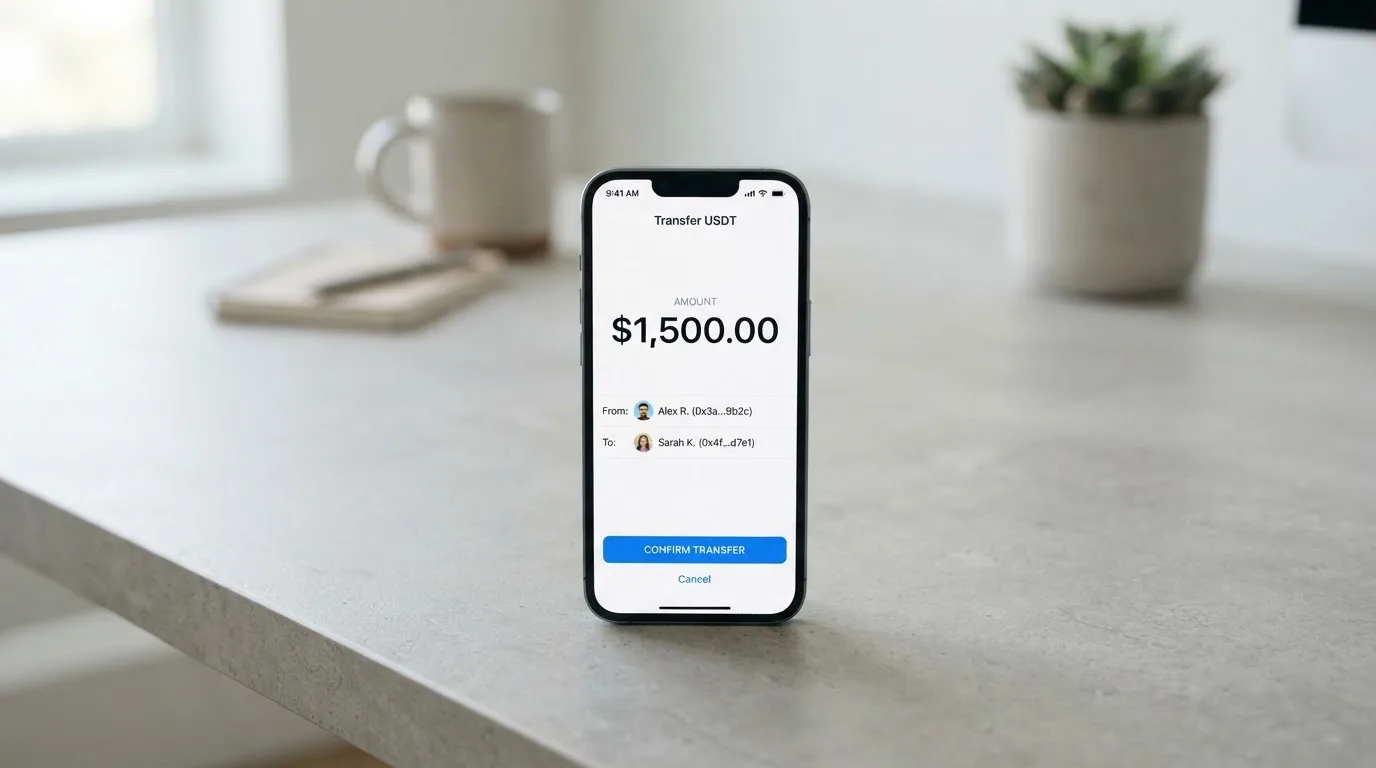
The first is the self-custody route, which is the one Oobit promotes. You connect an external wallet — MetaMask, Phantom, Trust Wallet or Base — and at the moment you tap to pay, the card pulls the equivalent value from that wallet through Oobit’s DePay layer. Your crypto stays where it is until you authorise the payment. This is genuinely different from the usual “top up, then spend” pattern, and it is the most defensible reason to pick Oobit over a custodial card.
The second is the in-app balance. You deposit crypto into the Oobit wallet — the minimum is $0.10 — and the card spends from that balance. You can also buy crypto through Transak, with limits shown at checkout. Swaps between assets inside the app cost 0.95% (3% if you swap into OOB).
A few things to know before you send anything.
The published list of supported coins mentions USDT, Bitcoin, Ethereum and other stablecoins. The networks on which those tokens are accepted are not stated on the public pages. That is a meaningful gap, because sending USDT on the wrong network is one of the most common ways people lose crypto in this category. Treat the network choice as a thing to confirm with support before you send, not a thing to assume.
Stablecoin transfers and network fees are paid by the user, not by Oobit, and the network fee is shown before you confirm. On Ethereum, ERC-20 USDT gas must be paid in ETH — a wallet that has USDT but no ETH cannot send. On Tron, the network uses bandwidth and energy, often burning TRX; and USDC is no longer natively issued on Tron after Circle stopped supporting it in February 2024, so any “USDC over TRC20” you see in the wild is not the official Circle token.
Fiat top-up fees, if you go that route, are not stated. The crypto withdrawal range is $1 to $50,000 per withdrawal (a $5 minimum applies to US residents), with a per-asset daily limit that is not specified. Bank transfers go up to $50,000 per transfer with a €10 / £10 / $10 minimum; the bank-transfer fee itself is not specified, and failed bank transfers are auto-refunded to the balance.
A useful way to think about top-up: when you use the self-custody route, you are paying the network fee at confirmation; when you use the in-app balance, you are paying the swap spread (0.95%) and a second network fee when you withdraw. The card’s 1% on purchases is the third layer. The card itself is not expensive; the cost is the stack of small fees around it.
Paying with the Oobit card day to day
The day-to-day experience is where Oobit is at its best. The card is a Visa, which means it is accepted anywhere Visa is taken, including online checkouts, in-store terminals, and contactless readers. It adds to Apple Pay and Google Wallet, and to smart watches, so the contactless experience at a café or a supermarket is the same one a normal Visa customer has.
Rewards are paid on card purchases: 1x points from Level 1 (no minimum spend) and 5x points on card purchases as a category bonus, in the published material. The 10% cashback figure is conditional on holding and using OOB. Payout asset and the precise caps are not stated in the help centre pages I worked from. If rewards are a major reason you are choosing a card, that lack of detail is worth noting.
The app is well-rated, but the US slice of the App Store sits at 4.5 from 134 ratings, which is meaningfully lower than the 4.8 from 22,000-plus global ratings. I would not read too much into a 134-rating sample, but I would also not assume the global average is what a US user will see.
There is no formal card dispute process described in the help centre. If a payment is declined, the guidance is to check the in-app notification and retry. If a merchant charges more than the amount first approved, the extra can leave your balance in the red and pause the card. Crypto payments are not reversible on the blockchain, so the protections that come with a US bank-issued debit card — formal dispute rights under Regulation E for debit, and Regulation Z for credit — are not the framework this card sits inside. Prepaid-card coverage varies and should not be assumed.
A handful of practical points to know before you tap.
3-D Secure is the protocol that adds a one-time check to online card payments. Visa’s version is Visa Secure, and your bank — or in this case, the licensed partner behind the card — can ask you to confirm with a code or a biometric. The card will sometimes throw a 3-D Secure challenge the first time you use it with a new merchant, and that is normal.
Some merchants screen the card’s BIN — the first six or eight digits that identify the issuer. They can see what kind of card it is and what country it was issued in. If the issuer country and your billing address do not match, the merchant may decline the transaction, especially in the US, Canada and the UK where Address Verification Service is common. The result is a perfectly good card being rejected at checkout for reasons that have nothing to do with your balance.
A hold can stay on your balance for up to seven days after a declined or pending transaction. The card cannot overdraw in the pre-loaded balance model, but the hold can make the balance look smaller than it is for a few days, which is easy to misread as a fee.
What can go wrong with the Oobit card
The risks fall into four buckets: operational complaints, regulatory opacity, technical failure modes, and the standard self-custody risks that come with any wallet you control.
On operational complaints, Trustpilot shows 3.8 out of 5 from 495 reviews as of 20 October 2026, and there is no recent history of Oobit asking for reviews, which makes the sample easier to read. The negative themes cluster around held or missing funds between July and September 2026, an unresolved Amazon refund from October 2026, slow or unresponsive support over the same months, card suspension or account block in July and September 2026, and a feeling of opaque fees in August 2026. Oobit replies to 100% of negative reviews, often with a templated response, and a small number of one-star reviews tell a more specific story: a deposit from another wallet that never arrived in April 2026, high fees on USDC-to-EURC conversions and on withdrawals in March 2026, a delayed USDC-to-BTC conversion in March 2025, and a Litecoin transaction in February 2025 that Oobit said was waiting on network conditions. I did not find Reddit threads giving a different picture.
On regulatory opacity, the card issuer is not named on the public pages. Oobit Technologies operates the programme “through multiple entities globally” and uses “licensed partners depending on your location.” In the US, crypto services run “in partnership with Bakkt Financial Solutions I, LLC.” In Europe, the card is described as a Visa Platinum, but the issuing bank or e-money institution is not on the page. For a regulated product, that is an unusual amount of ambiguity, and it is a thing a careful reader should ask support to clarify before they put meaningful funds in.
On technical failure modes, the published material flags a few. Card pages cite a 175M merchant figure and a 150M figure elsewhere; both are Visa’s global acceptance number rather than Oobit’s, but the inconsistency on a marketing page does not build confidence. The published daily card limit is $25,000 on one page and $10,000 on the FAQ; the two are official and do not match. A merchant charging more than the amount first approved can leave a negative balance and a paused card, which is the kind of edge case the help centre covers in a sentence.
The standard self-custody risks apply. If you connect MetaMask or another wallet, your seed phrase — typically 12 to 24 words — is the unencrypted form of your private key, and anyone with it can take the funds. Crypto transfers are irreversible, so a transaction to the wrong address, or a clipboard-hijacker swapping the address you copied, ends the conversation. Tether has frozen USDT tied to OFAC-sanctioned wallets, which means even a stablecoin is not censorship-proof. Custodial platforms have a long history of failure: Mt. Gox (around $350 million lost between 2011 and 2014), Coincheck (around $400 million in 2018) and the Ronin Network (around $625 million in 2022). Oobit itself is not a custodian in the self-custody flow, but the in-app balance is, and the broader history is a useful frame.
A final risk worth naming is the programme-closure risk. Visa terminated its global agreements with FTX on 13 November 2022, and the FTX US debit card was wound down by its issuer. In 2018, WaveCrest, a Visa card issuer that supplied several crypto card brands, was suspended by Visa in Europe, closing every programme it had issued. Programmes do shut down. When they do, the pattern is a notice period, then a stop on new loads, then a stop on spending, then a window to withdraw your balance. That is not a reason to avoid this category, but it is a reason to keep balances on the card low and to read the closure terms before you load it up.
What to take instead
If the Oobit card is not quite the right fit, here is how three alternatives stack up against it on the points that tend to matter most.
| Card | Score | Card type | Issuance | Spend fee | FX fee | Top-up | Cashback |
|---|---|---|---|---|---|---|---|
| Oobit | 6.8 | Visa Platinum, virtual in app | Free | 1% (min $0.25) | Not stated | USDT, BTC, ETH, other stablecoins; MetaMask, Phantom, Trust Wallet, Base | 1x–5x points by 90-day spend; 5% on stablecoin payments, 10% with OOB |
| BloFin Wallet Card | 6.9 | Visa Platinum, virtual or physical | Free | 1% to 0% by VIP tier | Not stated | USDT and USDC on Arbitrum and Base | Reduced spend rate, no cashback |
| Decaf | 6.2 | Visa, virtual or physical | $5 virtual, $10 US physical, $90 rest of world | Not stated for crypto conversion | No Decaf FX fee (Visa rate used) | USDC on Solana and Stellar | Not stated |
| SafePal | 6.2 | Virtual Mastercard | Not stated | Standard top-up 0% | 1% on non-USD settlement | 40+ blockchains, converted to USDC | No cashback; referral commissions up to 40% of top-up fees |
If you want a similar self-custody card with a published VIP ladder and a 0% top-tier spend rate, the BloFin Wallet Card is a close comparison, with USDT and USDC on Arbitrum and Base as the funded tokens. Its country list is not published on the card page, and the starting data lists 35 countries, including the US, Australia, Japan, the UAE, Brazil, Mexico, Malaysia and New Zealand.
If you want a card that does not add an FX fee and is explicit about using Visa’s exchange rate, Decaf is the alternative to look at. It is also the most restricted: Belarus, China, North Korea, India, Iran, Iraq, Israel, Myanmar, Nepal, Russia, Syria, Turkey, Cuba, Ukraine, Venezuela, Vietnam, Nicaragua, Puerto Rico and Nigeria are not issued, and a long list of US states is restricted. The cost is the activation fee: $5 for a virtual card, $10 for a US physical card and $90 for a physical card elsewhere.
If you want a card on Mastercard rather than Visa, SafePal is a virtual Mastercard debit, with top-up across 40+ blockchains and a 0% standard top-up fee. Its country list was not loading when I checked, and FX is 1% on non-USD Mastercard settlement. The cost is the 1% FX on non-USD payments and a spread on swaps, with no cashback.
Who I would recommend the Oobit card to
Oobit is a credible card for a specific reader. If you already keep most of your crypto in MetaMask, Phantom, Trust Wallet or a Base wallet, and you want to spend from that wallet directly without first swapping and loading a balance, Oobit’s DePay flow is the most natural fit among mainstream crypto cards. The country coverage is wide, the card adds cleanly to Apple Pay and Google Wallet, and the fee schedule on the card side is competitive: 1% on purchases and 0.95% on swaps, with no monthly or issuance fees.
Oobit is less convincing if you want a card from a named bank with a clear dispute process, or if you want the FX line on the page rather than buried in a Visa rate. The Trustpilot sample is middling, and the recurring complaint is not “the card does not work” but “the support does not respond quickly when something goes wrong.” If you are the kind of user who plans to keep several thousand dollars on the card at any one time, that gap matters. If you are the kind of user who tops up for the day’s spend and moves the rest back to a wallet, it matters less.
In the EU, MiCA’s rules on e-money tokens applied from 30 June 2024 and the rest, including the crypto-asset service provider rules, from 30 December 2024, with a grandfathering period that runs until 1 July 2026. The card sits inside that regulatory frame, but the issuer is still not on the page. In the US, the December 2025 launch through Bakkt is a step towards a clearer story for US users, but the US App Store rating is materially lower than the global figure, and the smaller sample is a reason to wait for more reviews before relying on it as your main card.
My honest summary: Oobit is a good second card for a self-custody user who understands the trade-offs, and a poor first card for someone who has never held their own keys.
Frequently asked questions
What is the Oobit card?
The Oobit card is a Visa card issued through Oobit’s licensed partners that lets you pay at Visa merchants from a connected self-custody crypto wallet or from an in-app balance. The card is described as a Visa Platinum, it adds to Apple Pay and Google Wallet, and the public pages do not name the issuing bank.
How does the Oobit card work?
The card is funded by your crypto, either by holding an in-app balance or by linking an external wallet such as MetaMask, Phantom, Trust Wallet or Base. At the moment of payment, the card converts the crypto and settles in the merchant’s local currency over the Visa network.
Is Oobit a bank?
No. Oobit is a technology company that operates the card programme through licensed partners, depending on the country. The specific issuing bank or e-money institution is not named on the public pages.
Who owns Oobit?
Oobit Technologies operates the brand and the app, with US crypto services run in partnership with Bakkt Financial Solutions I, LLC. The ownership structure beyond that is not laid out on the public pages.
Is the Oobit card available in my country?
The card is available in 75+ countries, with broad coverage in Europe (around 43 countries, including the UK, Germany and Spain), the Americas (17), Asia and the Middle East (10), Africa (3: Kenya, South Africa and Tanzania) and Oceania (2). Turkey, the UAE, Russia and Belarus are listed as not supported.
How do I apply for the Oobit card?
You download the Oobit app on iOS or Android, create an account, and complete identity verification with a passport or driver’s licence and, in some cases, a proof of address. Once verified, you request the card in the app and activate it.
Does the Oobit card require KYC?
Yes. Identity verification is mandatory before the card becomes active, and bank transfers require a one-time proof of address before the first payout. Most accounts are verified in minutes, but some take up to 24 hours.
How do I top up the Oobit card?
You can either fund the in-app balance with USDT, Bitcoin, Ethereum or other supported stablecoins, or connect a self-custody wallet (MetaMask, Phantom, Trust Wallet or Base) and pay directly from it. The supported networks are not stated on the public pages, so confirm with support before sending.
Is the Oobit card safe?
The self-custody flow keeps funds in your wallet until you authorise a payment, which removes the counterparty risk of a custodial balance. The card can be locked in the app. The card issuer is not named, and the broader category has a history of programme closures, so keeping balances low is the safer pattern.
How do I delete my Oobit account?
You can request account deletion from inside the app or by contacting Oobit support. The help centre does not state how the remaining balance is handled on closure, so move funds out before you start the deletion flow.
How wallet cards work – cryptocardsexplained.com
Content created by the «cryptocardsexplained.com» team