
Virtual crypto cards, no bank behind them
 Available in US
PSTNET is a virtual card product built around crypto balances: you load funds, and the card spends them. On paper it answers a real problem, because ordinary bank cards are not issued to everyone everywhere. But the same structure that makes it open also makes it hard to verify, and I found an unresolved gap where the bank, the licence and the safeguarding rules should be. My score is 5.3 out of 10, and the honest reason for that number is not the fees. It is that the card’s costs are partly documented, partly contradicted, and partly absent, while the complaints concern the two things you would most want to be certain about: getting your money in, and getting it out.
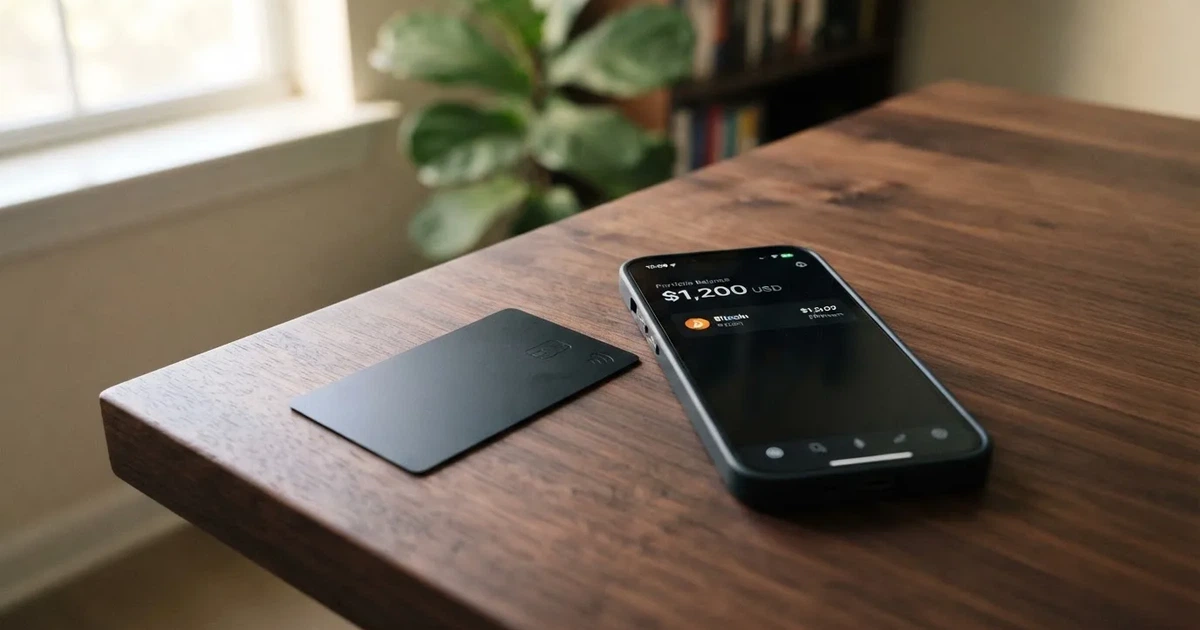
The conditions described here are current as of October 28, 2026.
Verdict: 5.3 out of 10
Let me put the shape of the thing first, because “PSTNET card” covers several products rather than one. There is a consumer-facing virtual card sold under the Ultima name, there is a business line called PST Private built for advertising and media buying, and there are niche cards aimed at specific platforms, including Google Ads and TikTok Ads. Whether you are a good fit depends almost entirely on which of those you actually want. If you are an advertiser or a media buyer who needs many virtual cards, this is the use case the product is built around, and the PST Private line is where its features are. If you are an ordinary person who wants to spend a crypto balance in a shop, you are looking at Ultima, and you are looking at the weakest-numbered criteria on my list.
| Criterion | Score | Why |
|---|---|---|
| Who can get it | 8 / 10 | Wide reach, but no country list is published and the site says solutions may not be available to all customers |
| Cost | 4 / 10 | A starting card price, a conflicting monthly figure, and no official top-up fee |
| Top-up options | 7 / 10 | Instant crypto deposit is the core mechanic; coins and networks are not listed officially |
| Reliability and complaints | 4 / 10 | No named legal entity or licence, and a complaint pattern around withdrawals and suspensions |
| Everyday use | 3 / 10 | Virtual only, several merchant categories closed, no stated details on mobile wallets or plastic |
| Total | 5.3 / 10 | Open reach and a clear niche, weighed against thin disclosure and unresolved complaints |
The reach score is the strongest and it deserves a word. A card that does not ask where you were born, in a world where many cards do, is genuinely valuable, and for someone without access to an ordinary bank account that is not a minor convenience. The reason it is not higher is that “wide open” is not the same as “documented”: the site publishes no country list, so I cannot tell you from the card’s own pages whether your country is served, and at least one 2026 complaint describes a user whose country was no longer supported. Reach without a list is a promise you have to test rather than a fact you can check.
The everyday-use score is where the product shows its real limits. These are virtual cards. That has one large advantage and several costs. The advantage is that issuance is instant and there is no plastic to wait for. The costs are that many shops treat a virtual card differently from a physical one, that mobile wallet support is not described on the pages I read, and that merchant category rules bite hard: the Ultima card’s blocked list covers gambling, dating, money transfers, quasi-cash, fuel and EV charging, freight and trucking, brokerage, and massage, under specific merchant category codes. If any of those is normal for your spending, that is a structural mismatch, not a small inconvenience.
Will They Give You the Card?
Yes, most likely — that is the one part of the picture that looks straightforward. The site states that PST solutions may not be available to all customers, and stops there. No country list is published. An earlier check of the card’s materials described availability worldwide excluding restricted countries, with the United States restricted, and a July 2026 Trustpilot review describes a user whose country was no longer supported. Treat all of that as direction rather than certainty: the wording on the site is the only current, official statement.
So what does “not available to all customers” mean in practice? It means eligibility is decided case by case, somewhere behind the signup form, and you only find out after you have tried. That is a different experience from a card issuer that publishes its country table. If your country is one where mainstream banking is difficult, this is very likely to be the card that will let you try. If your country is well served by ordinary banks and you simply prefer crypto, the openness is a bonus rather than the reason.
One more thing worth knowing before you apply: verification is done by a third party, and that company is named even though the card’s own operator is not. Sign-up runs through full eKYC execution via Sumsub, with automated ID and biometric verification. Identity documents, proof of address, and age requirements are not stated on the pages I read, and neither are any verification tiers. What I can say is that biometric ID checks are involved, so this is not an anonymous product by design, and if you need an anonymous card, this is not it.
How to Get It
The application path is short, which is the one part of the setup I would call easy. You sign up with Google or by email, you complete the eKYC flow with Sumsub, and the card is issued instantly. There is no waiting period and no delivery step, because there is nothing to deliver: every card in the catalogue is virtual. Whether the card number, expiry and security code appear immediately after verification, or after a further activation step, is not something the pages describe, so I would not promise you either way.
The catalogue is where your decision really gets made. Ultima is the general-purpose virtual card in USD and carries 3-D Secure. PST Private is the business line and lists 22 BINs. Then there are platform-specific cards: Google Ads with 12 BINs, TikTok Ads with 3, Advertisement with 15, plus virtual prepaid, virtual debit and Platinum cards. The underlying card network is not stated, which matters more than it sounds, and I will come back to why below.
What is not on the list is anything physical. No plastic card is described, and delivery terms do not apply because there is nothing to ship. If you are the kind of person who needs a card that works in a shop terminal with a physical swipe or insert, or one you can hand over, this is not it. It is a number, a security code, and an expiry date.
Fees and What a Payment Actually Costs
This is the section where I would slow down and read twice, because the card’s own pages give different numbers and the most important fee — what it costs to get money onto the card — is not stated officially at all.

Ultima is advertised with a card price from 7 dollars on the cards page. The Ultima page separately describes issuance and monthly maintenance after the first month at 16 dollars. That is a direct contradiction between two official pages, and I am not going to pick a winner for you. On top of that, a third-party review of Ultima lists 7 dollars monthly maintenance and 99 dollars a year, which is unofficial and not confirmed by the card; it is dated 2022 to 2025, so treat it as a history rather than a price list. PST Private is described as free for the first 100 cards.
| Item | What is stated |
|---|---|
| Card price | Ultima: “from 7$ card price” on the cards page |
| Issuance and monthly maintenance | Ultima page: “$16” issuance and monthly maintenance after the first month |
| Alternative figures | Unofficial: $7 monthly and $99 annual (third-party review, 2022-2025) |
| PST Private entry | First 100 cards free |
| Withdrawal fee | Ultima: 0% |
| Transaction, declined-payment, refund fees | PST Private: 0% |
| Top-up fee | Not stated officially |
| FX fee | Not stated |
| ATM | Not applicable, virtual cards only |
| Card limits | PST Private: unlimited number of issued cards, spends or deposits; other limits not stated |
| Currency | Ultima described as a USD virtual card; others not stated |
So what do the zero figures actually cover? A 0% withdrawal fee and 0% transaction fee sound like the cost of using the card is nothing. They are the fees the card names, on the pages where it names them. They are not the whole cost of a payment, and the two biggest unpriced items sit on either side of the transaction: what it costs to fund the balance, and what it costs to convert currency when you spend.
Let me walk three everyday payments through what I can and cannot price, because that is more useful than the table alone.
Paying for a subscription in USD on a USD card, with the balance already loaded, is the case the zero fees describe best: no transaction fee, no conversion, no FX. If your balance is already in dollars, this is where the product is cheapest and where the 0% figures are most meaningful.
Paying for something priced in a currency other than your card’s dollar balance means an FX conversion, and the FX fee is not stated. The network or the acquiring side may apply a rate you do not control, and on top of that the card does not publish its own margin. This is the single largest unknown in the cost picture, and it is the one you will meet most often if you travel or buy from foreign merchants.
Paying while the balance is still in crypto means a conversion at the moment of spending. The card does not publish the rate, the spread, or the fee for that conversion on the pages I read. A 2% top-up fee appears in a third-party listing based on a 2022 press release and a Chrome extension listing, and that is unofficial and not confirmed by the card — but if it is close to accurate, it is a fixed cost on every top-up, which is the opposite of how a percentage fee that falls on large deposits would behave. That matters if you plan to load once a month versus once a week.
One more cost that is easy to miss: the network fee for the deposit itself. Whatever the card charges or does not charge, the blockchain you send on charges its own gas or bandwidth for the transfer, and that is not the card’s fee and not something it can waive.
How to Top Up
The mechanic is simple and it is the core of the product: an instant crypto deposit into your PSTNET account. The card holds a balance, you load it, and the card spends from it. That is a prepaid model, which is worth understanding as a structural fact rather than a detail — the card can only spend what is already there, so it cannot overdraw, and there is no bank statement to reconcile against and no credit line extending it.
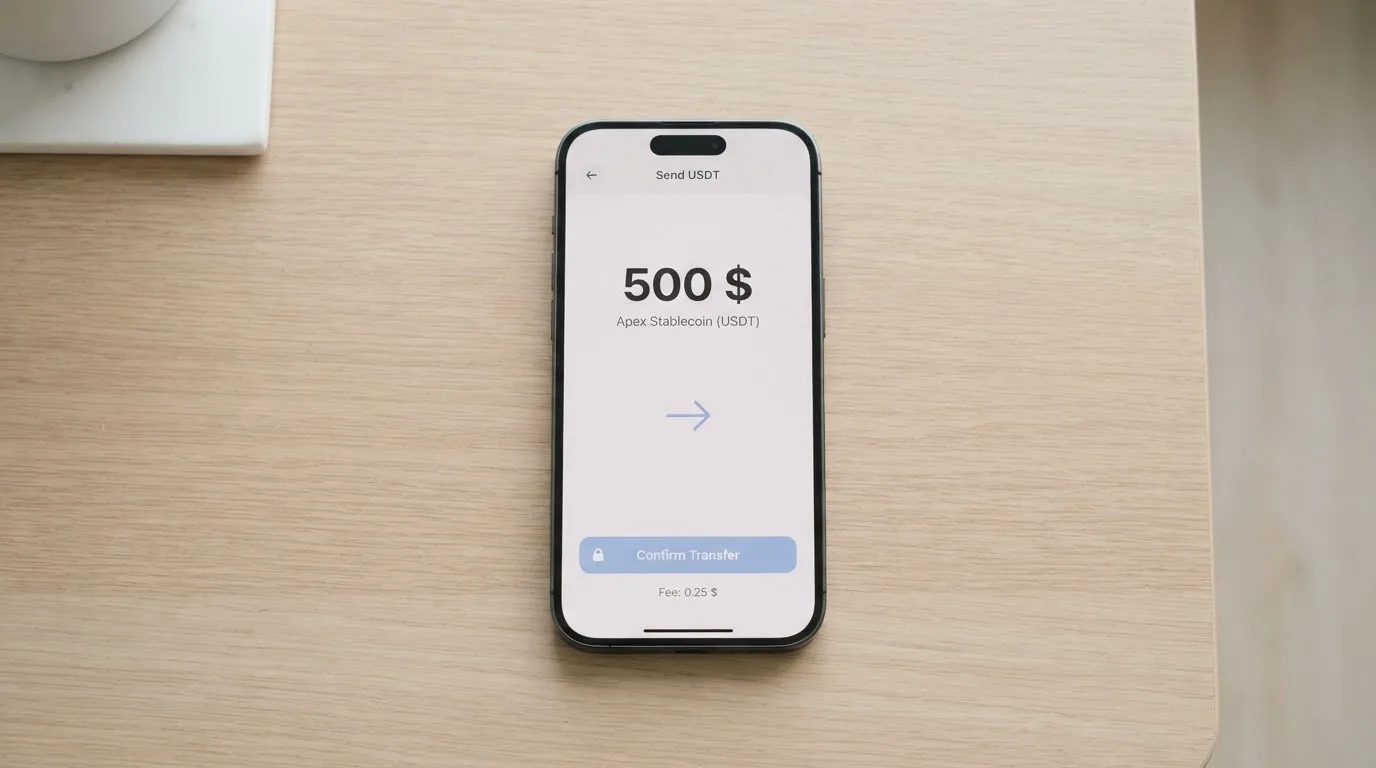
What the official pages do not tell you is which coins and which networks to use. That omission is more consequential than it sounds. A blockchain transfer is irreversible: send funds on a network the provider does not support, or to an address belonging to another network, and the money can be gone, recoverable only through manual support intervention with no guarantee attached. Given a support channel that is not clearly stated, “send on the wrong network” is a genuinely expensive mistake here.
Unofficial listings — a Chrome extension listing and third-party material, none of it confirmed by the card — mention USDT on TRC20 and ERC20 networks, and BTC. Treat that as a starting point to verify inside the product before you send anything, not as a specification. The minimum top-up, who pays the network fee, and whether there are fiat top-up routes at all are not stated officially.
Withdrawal works the same way round: a stated 0% withdrawal fee and, on the PST Private line, express withdrawal. Users report delays of up to 14 days on crypto withdrawals, with the company attributing them to manual processing. What happens to a remaining balance if you close the account is not stated, and given the pattern of complaints about frozen or suspended accounts, that is the sentence in this review I would most like to see answered.
Paying With It Every Day
Assume the card works technically when the balance is there. The questions that decide whether it works are about the merchant’s side, and here the card’s design shows.
The first is 3-D Secure, which the Ultima card has. It adds an identity check to online payments: the issuer assesses the risk and either approves the payment without friction or challenges you with a one-time code or biometric confirmation. It also shifts liability for fraudulent online payments, which cuts both ways in disputes.
The second is that the card network is not stated. This is not pedantry. A card number begins with a 6 or 8 digit issuer identification number that tells any merchant which institution and which country issued it, and when the issuer country differs from the billing address, some merchants apply extra scrutiny, or decline. This is why a card issued in one country can look foreign in another. Combined with the fact that the cards here are prepaid and virtual, you are carrying two of the three signals that make declines more likely. The third signal — a foreign billing address — is likely to apply too, since address verification compares the billing address you type against the issuer’s records and is mainly offered in the US, Canada and the UK.
The third is where you pay. Apple Pay and Google Pay are not stated for these cards, so I would not plan around tapping a phone. There is no mobile app listed at all; the browser extension is the documented route. If you are used to paying with a phone, this is a downgrade, and one that also removes the device-token protections that make phone payments safer than handing over a card number.
The fourth is what is closed. Beyond gambling, dating, transfers, quasi-cash, fuel, freight, brokerage and massage, this is a card that will not pay for a lot of what people spend money on. Merchant category codes are set by the card issuer as policy rather than by law, and the list varies between issuers — so this block list is the one that applies here, and it is long.
The fifth is the payment itself. A declined authorisation can leave a hold on your funds that stays for several days, sometimes up to seven. On a card that spends a fixed balance, a stuck hold is money you cannot use for a week. That is a small rule with an outsized effect on a prepaid product.
There are some upsides. The card says real-time anti-money-laundering monitoring on transactions, and the balance is custodial, which means the provider holds the credentials and you hold no keys. You get 3% cashback on PST Private — though the conditions, the cap, and the currency it is paid in are not stated. Debates and chargeback routes are not described on the pages I read, which for a card spent across borders is a gap rather than a reassurance.
What Can Go Wrong
I found no official incident announcements. What I found was a complaint pattern, and you should weigh it for what it is: individual accounts on a public review site, not verified case files. But the pattern is consistent enough to name.
Trustpilot shows 381 reviews, of which 51 were in the last 12 months, with 5 stars at 67% and 1 star at 25%. The TrustScore itself was withheld by Trustpilot for a guideline breach with fake reviews removed. The site’s own claim is 458 Trustpilot reviews, which does not match the platform’s count. Both numbers are given here as read, and the discrepancy is itself a data point about how carefully to treat either.
The themes, by period: slow crypto withdrawals and deposits from February to April 2026, where the company cites manual processing for withdrawals and know-your-transaction checks for deposits held days to weeks; account and card suspensions between March and July 2026 without clear notice; KYC and country problems over the same months; and declines on some merchants, including Amazon digital and Stripe merchants, between April and June 2026.
Set against that is what is not stated. The legal entity behind PSTNET, its country of incorporation, and its licences are not named on the site. The KYC provider is named — Sumsub — which is unusually specific for a card that does not name its own issuer, and it is worth asking why one vendor is credited and the other is not.
Here is the structural risk underneath the complaints, and it is a category risk rather than a PSTNET-specific one. A card like this depends on three parties: the network that routes the payments and sets the rules, the licensed issuer that actually holds the card programme, and the crypto brand in front, which is often only a programme manager or front end. Networks do not issue crypto cards to consumers themselves; they license issuers, and they can suspend a programme. Visa terminated its global agreements with FTX in November 2022 and the US debit card programme was wound down by its issuer. WaveCrest, a card issuer that supplied several crypto card brands, was suspended by Visa in Europe in 2018, closing every WaveCrest-issued Visa programme. Programme closures follow a pattern: a notice period, then loading and spending stop, then users are asked to withdraw remaining balances. There is a 2026 closure reported by a secondary source — new loads ended 8 July 2026, spending stopped 8 August 2026 — which I saw on one unconfirmed source and cannot verify.
If you hold a custodial balance, you also carry counterparty risk that a self-custody wallet would not: the provider holds the key, so a hack or an insolvency is your loss, and the record of custodial platforms includes Mt. Gox at about US$350 million reported stolen between 2011 and 2014, Coincheck at about US$400 million in 2018, and the Ronin Network at US$625 million in 2022. Stablecoins, which are what most of these balances effectively are, are not risk-free either: TerraUSD collapsed in May 2022 and USDC temporarily lost its peg in March 2023 during the US banking crisis.
The safeguard side: 3-D Secure is there, real-time transaction monitoring is claimed, but a freeze function and two-factor authentication are not stated, and whether customer funds are safeguarded is not stated either. If they are held as e-money, an electronic money institution is required to safeguard customer funds by segregating them or insuring them — and such funds are not bank deposits and may not be covered by a deposit guarantee scheme. But since the licence is not named, I cannot tell you that this rule applies to your balance. Nor can I tell you whether support will explain a suspension; no direct support channel is listed on the pages I read, only Twitter and Telegram updates.
One regulatory note, offered as context and not as advice: in the EU, MiCA took legal effect in June 2023, with rules on asset-referenced and e-money tokens applying from 30 June 2024 and the remaining provisions, including crypto-asset service provider rules, from 30 December 2024. E-money tokens may be issued only by a credit institution or an electronic money institution. The transitional period for providers already operating under national law runs until 1 July 2026 or until they receive or are refused authorisation, whichever comes first, and ESMA maintains an interim register of authorised providers that you can search. A card is regulated separately again, as a payment service, so a crypto card often depends on two licences. In the US, FinCEN guidance treats administrators and exchangers of convertible virtual currency as money transmitters. None of this tells you where PSTNET sits; it tells you what questions to ask.
What to Take Instead
None of these is a clean replacement. Each trades PSTNET’s openness for something it does document.
Cardex, 5.6 out of 10. One crypto card for 200+ countries, with no published country list or exclusions either. It issues on the VERVE, Visa, Mastercard and UnionPay networks, which is far more specific than PSTNET’s silence, and offers virtual and physical cards. Cost is not stated. It converts crypto to fiat at the moment of payment using what it calls an AI-powered conversion rate that scans global exchange rates, but no fee percentage is published. Funding is from USDT, USDC and BTC wallets, networks not stated.
TakeCard, 5.5 out of 10. The most transparent of the three. Countries are not listed in the help articles and the physical card is available only to Bolivian users for now, though the wallet says it can receive payments from any country. The virtual card is available immediately, the physical card is Bolivia-only, and it is a prepaid Visa issued in the United States with a USD balance paid 1:1. Pricing is explicit: virtual card 5 dollars, physical in Bolivia 20 dollars issuance plus 20 dollars shipping, though another article in the same help centre says 10 dollars for physical in Bolivia — conflicting, and worth noting as a pattern. The fee is 1% per purchase, no currency adjustment on USD, and other currencies at the official Visa rate of the transaction day. You top up from the Takenos account.
OkiCard, 6.0 out of 10, and the highest-scoring of the group. It states 150+ countries on some pages and 200+ on others, says there is no geo-blocking based on your passport, and requires users to confirm they are not in a sanctioned jurisdiction. Virtual card, USD or EUR pegged. Its pricing pages also disagree with each other: one says issuance 0 dollars and monthly 0 dollars with a starting price of 15 dollars for the virtual card, while a FAQ mentions a one-time issuance fee. A 100 USDT initial deposit is required. Fees are stated: 3% load, 0% transaction fee in USD, and “no hidden exchange spreads”. Funding is USDT on BSC, Ethereum, Tron and Solana, with USDC “soon” and BTC and altcoins “coming soon”, deposited to a generated address and converted at the moment of spending.
| PSTNET | Cardex | TakeCard | OkiCard | |
|---|---|---|---|---|
| Score | 5.3 / 10 | 5.6 / 10 | 5.5 / 10 | 6.0 / 10 |
| Reach | Worldwide excluding restricted countries per earlier check; no list published | 200+ countries, no exclusions listed | Bolivia for physical; virtual wider, not listed | 150+ or 200+ countries |
| Card | Virtual only | Virtual and physical | Virtual; physical Bolivia only | Virtual |
| Network | Not stated | VERVE, Visa, Mastercard, UnionPay | Visa, issued in the US | Visa/Mastercard, not specified |
| Entry cost | From $7 card price; $16 issuance and monthly after month one on another page | Not stated | $5 virtual; $20 + $20 shipping physical | $0 to $15 depending on page |
| Transaction fee | 0% on Ultima and PST Private | Not stated | 1% per purchase | 0% in USD |
| Load fee | Not stated officially | Not stated | Not stated | 3% |
Who I Would Recommend It To
I would recommend PSTNET to an advertiser or media buyer who needs many virtual cards, because that is the use the product is actually built around and the one where its features line up: unlimited issued cards, private BINs, an API, a Private Manager, cashback and express withdrawal on the PST Private line, with the first 100 cards free. If that is your work, the thinness of the public documentation is a nuisance you can manage; you will be validating networks and BINs yourself anyway.
I would not recommend it as a first card for everyday spending, and my reasons are not ideological. They are that the fee structure is not fully published, the top-up cost is unknown, the legal entity and licence are not named, and the complaint record describes precisely the two operations you depend on most — funding and withdrawal. Compare the effort: OkiCard publishes its load fee and says it has no hidden exchange spreads; TakeCard publishes its purchase commission. Not perfect, but knowable.
What I would do if the openness is your reason for being here, and I offer this as a sequence rather than a recommendation to proceed: read the card’s current terms yourself at signup rather than relying on any review, including this one; confirm the network and BIN situation for the merchants you actually use; send a small test amount first and confirm it arrives before committing real money; work out in advance what you would do if the account were suspended, because the complaint pattern suggests people find out late. And keep the balance small — not because the card is dangerous, but because the fee you cannot see is the one you will pay, and an unknown fee charged on a large balance is exactly the kind of thing that is hard to forgive later.
Frequently asked questions
What is the PSTNET card?
PSTNET is a virtual payment card product that spends a balance you load with crypto. It is not one card but a family: Ultima as the general USD card with 3-D Secure, PST Private as a business line with 22 BINs and an API, plus cards aimed at Google Ads, TikTok Ads and advertising generally. Cards are virtual only, so there is no plastic and no delivery step.
How does the PSTNET card work?
You load a balance, and the card spends from it, much like a prepaid card. The card cannot overdraw because only loaded funds are available. That makes it structurally different from a bank debit card, which asks your bank for money at the moment of purchase. Because the balance is custodial, the provider holds the credentials, so your funds sit with the company rather than in a wallet you control.
Is PSTNET a bank, and who owns it?
On the pages I read, the site does not name a legal entity, a country of incorporation, or any licence. The verification vendor is named — Sumsub, handling eKYC — but the operator is not. Because the licence is not stated, I cannot tell you whether the usual rules for safeguarding customer funds apply to your balance, or whether a deposit guarantee scheme covers it. That gap is the main reason for my low score.
Can I get the card in my country, and can I use it there?
The site says PST solutions may not be available to all customers, and publishes no country list. An earlier check described worldwide availability excluding restricted countries, with the United States restricted, and a July 2026 Trustpilot review describes a user whose country was no longer supported. Use of the card where it is issued, and acceptance abroad, both also depend on the merchant.
How do I apply, and does it require KYC?
You sign up with Google or by email and complete a full eKYC flow with Sumsub, using automated ID and biometric verification, and the card is issued instantly. So yes, identity verification is required and this is not an anonymous product. Documents required, proof of address, age rules and any verification tiers are not stated on the pages I read, so you will find out at the point of signing up.
What does it cost, and is the card free?
Ultima is advertised with a card price from 7 dollars on the cards page, while the Ultima page describes issuance and monthly maintenance after the first month at 16 dollars. PST Private is described as free for the first 100 cards. Ultima lists a 0% withdrawal fee and PST Private lists 0% transaction, declined-payment, refund and withdrawal fees, but the top-up fee and FX fee are not stated officially.
How do I top up, and which coins and networks work?
The documented mechanic is an instant crypto deposit into your PSTNET account, but the official pages list no coins and no networks, and that matters because blockchain transfers are irreversible. Unofficial third-party listings mention USDT on TRC20 and ERC20, and BTC — not confirmed by the card. Verify the supported network inside the product before sending anything, and send a small test amount first.
Where can I use the card, and can I add it to Apple Pay?
Apple Pay and Google Pay are not stated for these cards, and no mobile app is listed, only a browser extension. No physical card is offered, so payment is by number, expiry and security code. Expect some declines: the network is not stated, the cards are virtual and prepaid, and merchants can look up the issuer country in the card number.
Is the PSTNET card safe, and what about complaints?
No official incidents are announced, and I found no unresolved safety failure to report. Trustpilot shows 381 reviews with 5 stars at 67% and 1 star at 25%, though the TrustScore itself was withheld for a guideline breach. Complaint themes in 2026 are slow crypto withdrawals and deposits, account suspensions without clear notice, KYC and country problems, and declines at some merchants.
Is it worth it, and how do I close the account?
For an advertiser who needs many virtual cards it may be worth the documentation gaps; as a first everyday card I would not choose it over options that publish their fees. I found no account deletion or closure terms on the pages I read, and what happens to a remaining balance on closure is not stated. Given the suspension complaints, that is worth asking support directly in writing before you load a balance you intend to keep there.
How virtual cards work – cryptocardsexplained.com
Content created by the «cryptocardsexplained.com» team