
The free virtual card that keeps your crypto in your own wallet
 Available in US
Solid is a financial technology company, not a bank, and what it offers is a virtual Visa card that spends from a balance you control yourself. There is no physical card described anywhere on the public pages, no ATM, and every purchase is a crypto-to-cash conversion in the background. That single design choice explains almost everything about who this card is for and who it will frustrate.
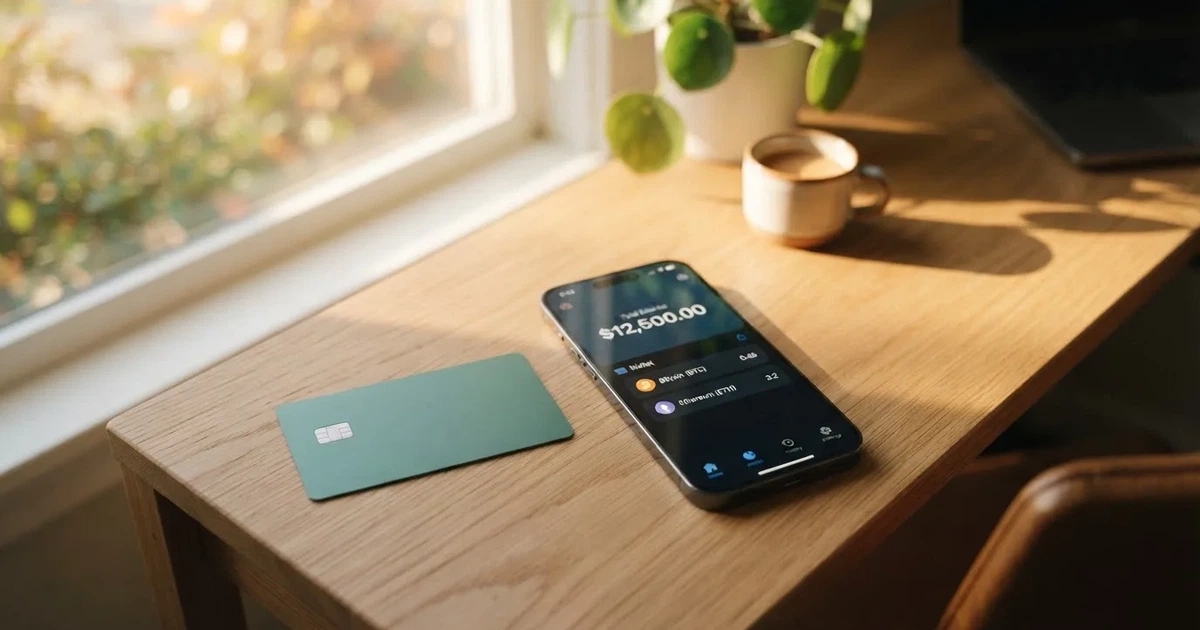
The conditions described here are current as of October 28, 2026.
Verdict: 7.8 out of 10 — a strong fit for self-custody users, a poor fit if you need a card in your hand
I gave Solid a 7.8 out of 10. The card is genuinely attractive on the numbers that matter most to someone without a normal bank account: the card is free, the monthly fee is zero, and topping up costs nothing at any tier. The self-custody design is the real differentiator — your funds stay in your own wallet until the moment of payment, which is the opposite of how most crypto cards work.

Where it falls short is the physical world. Solid describes a virtual card only. That means no ATM access, no tap-to-pay on a card in your pocket, and a layer of friction wherever a merchant wants to see plastic. If you are someone who simply wants a card that behaves like any other card, this is not it.
Here is the breakdown, criterion by criterion.
| Criterion | Mark | Why |
|---|---|---|
| Who can get it | 9 / 10 | Issued in 105 countries across most major world regions; no country list and no excluded countries published |
| Cost | 8 / 10 | Issuance and monthly fee free, top-up 0% at all tiers; not free everywhere — 1.5% on non-USD spend, Virtual Account $10 once |
| Top-up options | 8 / 10 | Dollars and the stablecoins USDC and USDT, by bank transfer or crypto; networks Fuse, Ethereum, Base, others via bridge, $10 minimum |
| Reliability and complaints | 8 / 10 | Issuer Rain or Wirex by country of residence, banking part SSB, Member FDIC; self-custodial storage; no complaints or reviews found |
| Everyday use | 5 / 10 | Virtual Visa only, no physical card described; Apple Pay and Google Pay present; unofficial report says no ATM access |
Who this suits: you already hold crypto, you want to spend it without giving up control of your keys, you are comfortable choosing a network and copying an address, and you mostly pay online or through your phone’s wallet.
Who it does not suit: anyone who needs a physical card, cash withdrawals, a card that works the moment it arrives without a crypto top-up, or a long published list of exactly which countries are allowed.
Will they give you the card?
Yes — for residents of 105 countries across most major world regions. That is the official figure and it is impressive on paper. The catch is that Solid publishes no country list and no list of excluded countries. The official guidance for anyone in an unsupported country is to check the app or join the waitlist.
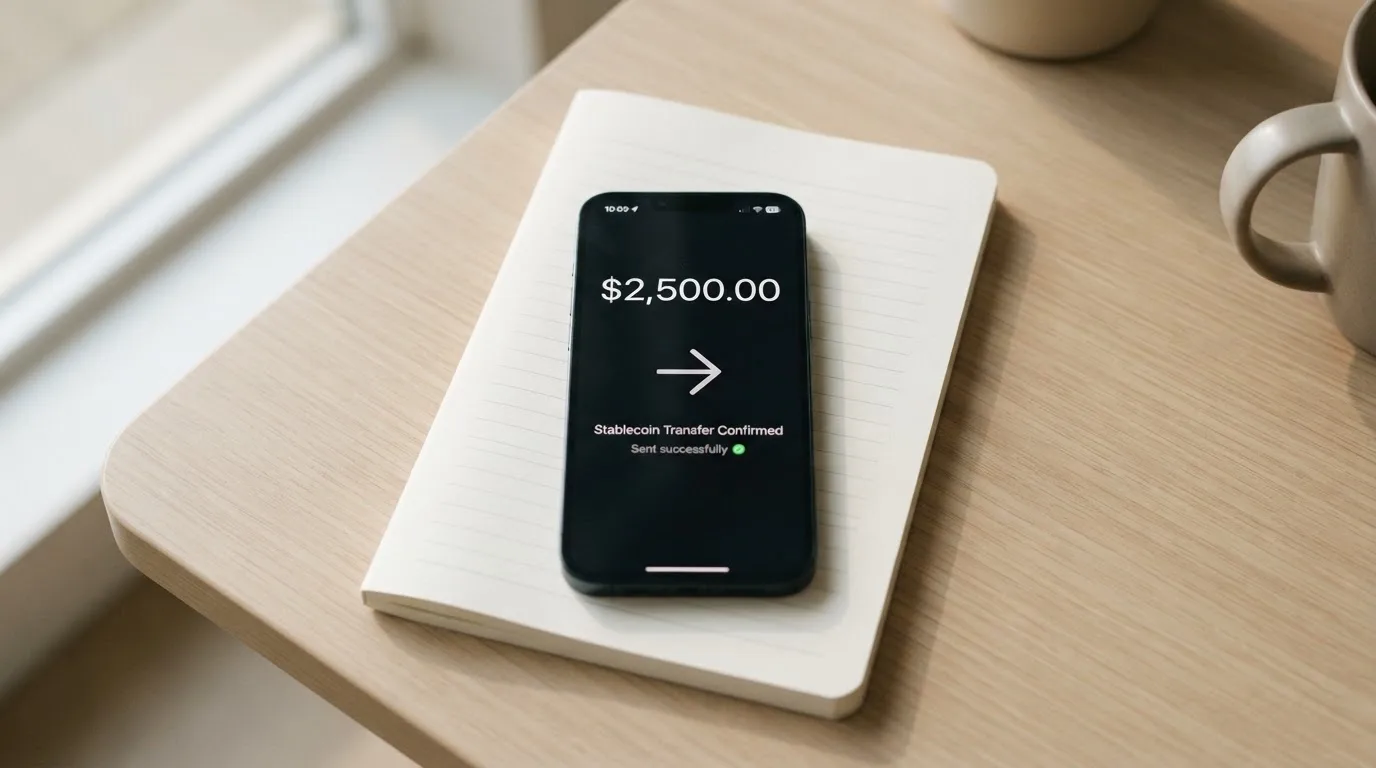
Which entity issues your card depends on your country of residence: either Rain or Wirex. That is the rule — by residence, not citizenship, at least as the pages describe it. An unofficial source, SpendNode in September 2026, says cards cannot be issued to residents of a list of countries including India, Turkey and Russia; that is an affiliate-site claim, not confirmed by Solid, and the list there is not official.
The broader category context matters here. Payment cards carry a six- or eight-digit issuer identification number at the front, and merchants can look it up to see which institution and which country issued the card. If the issuer country does not match your billing address, some merchants apply extra scrutiny. That is one reason a card issued in one country can look foreign to a shop in another, and it is worth bearing in mind even for a widely offered card.
Not stated by Solid: what documents you need, whether proof of address is required, and what your age threshold is. General prepaid and debit cards go to adults, and some issuers set higher limits, but I could not confirm Solid’s own position.
How to get it
Three steps, and they are short. Download the app, complete identity verification, and your free virtual card appears directly in the app. Solid says you can verify your identity in about 2 minutes and the card activates. There is no physical card to wait for, because none is described.
The first purchase needs money on the card. You must deposit at least $10 to fund it. That $10 minimum also applies to crypto deposits.
Identity verification is a single check that takes 2 minutes. Solid does not publish details on which documents or proof of address you need, or what reasons might lead to a rejection. Standard industry practice in the EU usually covers name, address, date of birth, nationality, identity documentation, a sanctions check, the purpose of the relationship, and whether you are a politically exposed person — and if it cannot be completed, rules require the institution to decline or end the relationship. That is the general framework, though not every part of it may apply to this card.
Delivery is not stated, which follows from the card being virtual-only.
What it really costs
The headline is good: the card is free to issue, there is no monthly fee, and topping up is 0% at every tier, Core, Prime and Ultra. Solid also says there are no extra fees. But spending in a currency other than dollars is not free, and that is where most people will meet a real cost.
The card is denominated in USD. Non-USD spending carries a total FX cost of 1.5%, built into the rate itself — 1% from the card provider and 0.5% from Solid. Apple Pay and Google Pay cost 0%. Swaps cost 0.5%, 0.25% or nothing depending on your tier. There is also a one-time $10 to open a Virtual Account.
Here are the costs and limits as Solid states them.
| Fee or limit | What Solid states |
|---|---|
| Card issuance | Free |
| Monthly fee | Free |
| Top-up fee | 0% at all tiers (Core / Prime / Ultra) |
| Virtual Account opening | $10 one time |
| Spending in USD | No fee |
| Spending in non-USD | 1.5% total FX cost built into the rate (1% card provider + 0.5% Solid) |
| Crypto deposit on Fuse | Free |
| Crypto deposit on Ethereum | 0.1% |
| Crypto deposit on other networks | 0.03% bridge fee |
| Minimum crypto deposit | $10 |
| Swaps | 0.5% / 0.25% / free by tier |
| Apple Pay / Google Pay | 0% |
| ATM | Not stated |
| Limits | Based on available balance / collateral; adjustable per transaction, daily, weekly, monthly, yearly or lifetime; single transaction max roughly $750,000; above roughly $250,000 may need extra Visa verification |
Two or three everyday payments, and which fees bite:
- A $40 coffee in your own country, paid from your dollar balance with the card converted at the point of sale. You pay 1.5% on top, roughly 60 cents on $40, because the purchase is non-USD. No other fee applies.
- A $30 subscription in dollars, paid with Apple Pay. Zero in fees. This is the cheapest way to spend on this card.
- A $200 top-up in USDC sent on Ethereum. 0.1% deposit fee, so about 20 cents, plus whatever the network charges for the transfer itself — network fees are the blockchain’s, not Solid’s. On Fuse the same deposit is free.
The ATM line is the honest gap: not stated officially. An unofficial SpendNode report says there is no ATM access, and that follows logically from a virtual-only card, but take it as unofficial.
The limits are unusual in a good way. Rather than a fixed daily or monthly ceiling, Solid sets limits per user based on your balance or collateral, and you can apply for limits per transaction, daily, weekly, monthly, yearly or lifetime, each adjustable. The single-transaction maximum is roughly $750,000, and above roughly $250,000 extra Visa verification may kick in. No fixed daily or monthly figure is published.
The tiers are where it gets more complicated, and this is the part people get wrong. Cashback is paid in USDC and credited 14 days after a transaction settles. Core, which you get automatically on opting in, gives 3% cashback capped at $50 a month, with a 0.5% bank deposit and swap fee. Prime gives 4% capped at $100, 10% on AI, streaming and music, 8% on rides, plus 2% APY on the first $10,000 of savings, a 0.25% fee and priority support — but you unlock it by a $199 a year subscription or by locking 50,000 FUSE for 12 months. Ultra gives 5% capped at $200, 20% on AI, streaming and music, 10% on rides and airlines, plus 3% APY on the first $25,000 and no deposit or swap fee, unlocked by locking 400,000 FUSE for 12 months only. From 12 October 2026 those lock amounts rise to 70,000 FUSE for Prime and 600,000 FUSE for Ultra. There is no metal card at any tier. The homepage summarises this as “up to 5% cashback”.
So the free part is real, but the free part is Core. Prime and Ultra are paid access, in dollars or in locked tokens.
How to top it up
You fund the account with dollars or stablecoins — USDC and USDT are the ones named. You can arrive by bank transfer or by crypto. For fiat, a bank transfer or a Virtual Account (which costs $10 to open, once). For crypto, the deposit networks named are Fuse, Ethereum and Base (EURC), with other networks reachable through a bridge.
The top-up fee is 0% at every tier, and the minimum crypto deposit is $10. The cost of the deposit then depends entirely on the network you pick: free on Fuse, 0.1% on Ethereum, and a 0.03% bridge fee on other networks. Who pays the underlying network fee on a crypto deposit is not stated beyond those deposit percentages — the blockchain’s own gas or bandwidth cost is separate and is charged by the network, not by the card provider.
Two modes are described. Cash mode is the default and spends from your balance. Credit mode is in beta and available on Wirex cards only; it borrows against soUSD.
Withdrawal: the homepage promises “instant withdrawals” of earnings and cash-out to a bank account, with ACH and wire arriving as dollars in the wallet. Withdrawal fees are not stated, and what happens to your balance if you close the card is also not stated.
Two things to keep in mind before you send anything. Network fees on Ethereum are paid in ETH, so a wallet holding USDT but no ETH cannot send. And transfers are generally irreversible — a deposit sent on a network Solid does not support, or to an address belonging to another network, can be lost or need manual support recovery with no guarantee. Send a small test first.
Paying with it every day
Day to day, Solid is a virtual card plus your phone’s wallet. Apple Pay and Google Pay are supported, with what Solid calls one-tap integration on mobile; on the web app you add the card details manually. There are apps on the Apple App Store and Google Play, plus a web app, though the site shows no aggregate rating or count for them.
Where you can use it: anywhere Visa is accepted, since it is a Visa card issued on the Visa Platinum tier, described in a footnote as a Visa credit card issued by Rain. That is a real advantage over narrower networks.
Two gaps in the everyday picture. Blocked merchant categories are not stated; Solid says only that certain categories such as gas stations carry extra safeguards. And the dispute process is not stated either — how to challenge a charge, and how long it takes, is simply not published. What is published is Visa Platinum purchase protection up to USD 10,000, claimed through Visa’s benefits portal. If you are used to a clear chargeback process, this is thinner than you would like.
A broader note on why cards like this get declined, since it will save you a confusing afternoon: some merchants decline prepaid or foreign-issued cards because the issuer lookup reveals the card type and issuer country. Address verification, which compares the numeric parts of your billing address, is mainly offered in the US, Canada and the UK and is generally unavailable for foreign-issued cards, which can cause declines. And a declined authorisation can leave a hold on your funds that stays for several days, typically up to 7.
What can go wrong
Solid is a financial technology company, not a bank. Banking services are provided by SSB, a Member FDIC, so deposits are insured up to $250,000 per depositor per insured bank — but that does not cover the crypto wallet. The card issuer is Rain or Wirex depending on your country, and the governing terms are the Fuse Network LTD Card Terms, in their US Consumer Program and International Consumer Program versions. Licence numbers are not stated.
The security design is the strongest part. Solid describes itself as fully self-custodial — “only you hold the keys” — with passkeys, and funds remain in your non-custodial wallet until used for a transaction. You can freeze and unfreeze the card instantly in the app, and per-user limits are set by Solid. This is a genuine improvement on custodial cards, where a provider holds the credentials and you must trust them completely.
But self-custody moves responsibility to you, and that is the trade. Control of crypto belongs to whoever holds the private key or seed phrase. A seed phrase, typically 12 to 24 words, is an unencrypted form of the private key; anyone who obtains it can restore the wallet and spend its funds. Transfers are typically irreversible and a stolen key has no built-in recovery — the network cannot freeze or return the funds. So with a self-custody-linked card you avoid counterparty risk but carry sole responsibility for key loss, phishing, and clipboard-hijacking malware that swaps copied addresses.
The historical record of custodians is worth keeping in mind when weighing that trade: Mt. Gox (about US$350 million reported stolen, 2011-2014), Coincheck (about US$400 million, 2018) and Ronin Network (US$625 million, 2022). Self-custody is the answer to those failures, but it is not a free answer.
On complaints: no incident or programme change was found on the pages read, and a dedicated search for Solid card complaints turned up no Trustpilot page, no App Store score and no Reddit thread — the results were other brands. Official sources do not state complaints either way. Practically, this means there is no public track record to lean on, in either direction. For a card this new, the absence of complaints is more likely to mean the absence of users than the absence of problems.
Regulation and stability: Prime and Ultra lock amounts change on 12 October 2026, and members who reached a tier before 25 September 2026 keep it with at least 30 days’ notice. Credit mode in beta is Wirex-only. No licence events were found. In the EU, a card is a payment service regulated separately from the crypto side, so a crypto card like this often rests on two licences; under MiCA, e-money tokens may be issued only by a credit institution or an electronic money institution. Card programmes can also end: WaveCrest, a Visa issuer that supplied crypto card brands, was suspended by Visa in Europe in 2018, closing all its Visa programmes, and Visa terminated its global agreements with FTX in November 2022. Closures typically give notice, then stop spending and loading, then ask you to withdraw.
Support: help centre at support.solid.xyz, [email protected], Telegram and X both under SolidYield, plus the Visa Customer Service Center 24/7 by phone or digitally. Core gets standard support; Prime and Ultra get priority.
One last risk, the one nobody mentions: taxes. The IRS treats digital assets as property, so exchanging them for goods or dollars generally produces a taxable gain or loss, measured in local currency at fair market value on the date of the transaction. Each card payment funded from crypto may therefore be a separate disposal. I am not giving tax advice here — but if you spend regularly from a crypto balance, this is worth raising with a professional in your own country.
What to take instead
If you need a physical card or cash, or if you would rather not deal with choosing a blockchain network, the alternatives below are worth a look. None of them scores higher than Solid’s 7.8 — they are here because they solve different problems.
- Whop Cards, 5.2 out of 10. Visa, works anywhere Visa is accepted online and in stores. For consumers: 31 US states (Alabama, Alaska, Arkansas, California, Colorado, Connecticut, Florida, Hawaii, Illinois, Indiana, Iowa, Kansas, Kentucky, Maine, Massachusetts, Michigan, Minnesota, Montana, Nebraska, New Hampshire, New Jersey, New York, North Carolina, Oklahoma, Pennsylvania, South Carolina, Texas, Utah, Virginia, West Virginia, Wyoming); for businesses, 41 states. Unsupported consumer countries include Belarus, China (Mainland), Cuba, Hong Kong, India, Iran, Iraq, Israel, Myanmar, Nepal, Nicaragua, North Korea, Russia, Syria, Turkey, Ukraine, Venezuela and Vietnam; unsupported corporate countries include Russia and Belarus. Basis (citizenship or residence) is not stated. The page says “No extra fees” with no amounts listed, and card type and currency are not stated. You spend from a Whop balance — a pending balance is usable as soon as a payment arrives, standard withdrawals use settled funds — backed by stablecoin collateral from a linked wallet; coins and networks not stated. 5% cashback at select merchants, currently Uber.
- Stella, 6.5 out of 10. Official site does not state countries; its terms bar users under economic sanctions programmes and route US and European users through affiliates. Virtual and physical, Visa, working at “over 40 million VISA merchants globally”. Fees are “described under this User Agreement and/or on the App” — no amounts officially. You deposit crypto into the account, which automatically tops up the card; the in-app wallet is custodial. No card cashback stated — the Earn product is a separate yield.
- UniFi Card, 4.7 out of 10. Not confirmed from official pages. A “Prepaid Debit Visa Card” issued by Lead Bank, with Apple Pay support, spending from a USD balance. Fees “may apply” — not stated. Funding arrives via ACH, wire, SEPA (IBAN) or SPEI (CLABE), or you get paid to a USDC wallet; coins and networks beyond USDC not stated. The listing claims 3% rewards on balances, but card cashback is not stated.
The pattern across all three is worth noting: with every alternative, the fee schedule is either thin or absent, and two of the three cannot tell you from the public page which countries are supported. Solid is unusual in publishing neither a country list but at least stating its numbers plainly.
Who I would recommend it to
I would recommend Solid to someone in this specific position: you already hold USDC or USDT, you want to spend it without handing your keys to anyone, you are comfortable picking a network when you deposit, and you mostly pay online or tap through Apple Pay. The card being free, the monthly fee being zero, and the top-up fee being 0% at every tier make it hard to argue with on cost.
I would not recommend it as a first card, or as a replacement for a card you keep in your wallet. There is no physical version described, no confirmed ATM access, and a dispute process that is not published. If you need to take money out at a cash machine, or hand a card over at a restaurant, this will not serve you.
Two smaller warnings. The 1.5% FX cost on non-USD spending is not trivial if you travel or buy locally — spend from your balance only where the merchant takes dollars, or accept the cost knowingly. And the paid tiers are where people get caught: Prime and Ultra are unlocked by a $199 subscription or by locking large amounts of FUSE for 12 months, with those amounts rising on 12 October 2026. Free is a perfectly good place to start.
Frequently asked questions
What is the Solid card?
Solid is a virtual Visa card that spends from a crypto or dollar balance you hold yourself. You load it from your own wallet — the stablecoins USDC and USDT are named — and the card converts to dollars as you pay. Solid is a financial technology company, not a bank, and the card is described as issued on the Visa Platinum tier, Visa credit, issued by Rain.
Is Solid a bank, and who owns it?
No. Solid describes itself as a financial technology company, not a bank. Banking services come from SSB, a Member FDIC, so deposits are insured up to $250,000 per depositor per insured bank, though that does not cover the crypto wallet. The card issuer is Rain or Wirex depending on your country of residence, under the Fuse Network LTD Card Terms.
How do I get the Solid card?
Download the app from the Apple App Store or Google Play, complete identity verification, and the free virtual card appears in the app — Solid says verification takes 2 minutes. Deposit at least $10 to fund your first purchases. What documents or proof of address are required is not stated on the public pages.
Is the Solid card free?
Yes, in the ways that matter most. Issuance is free, there is no monthly fee, and the top-up fee is 0% at every tier (Core, Prime, Ultra). Two costs to know about: spending in a currency other than USD carries a 1.5% FX cost built into the rate, and opening a Virtual Account costs $10 once.
Does Solid require KYC, and what documents?
Solid requires identity verification as part of getting the card, and describes it as a single check taking about 2 minutes. The documents needed, whether proof of address is required, the age threshold, and the reasons a check might fail are all not stated on the public pages. General EU due diligence rules normally cover name, address, date of birth, nationality, ID documents and a sanctions check.
Can I use the Solid card in my country?
Solid says it issues cards in 105 countries across most major world regions, but publishes no country list and no excluded list. The issuer is assigned by country of residence, so check the app for your country or join the waitlist if it is unsupported. An unofficial source (SpendNode, September 2026) says residents of countries including India, Turkey and Russia cannot be issued cards — that list is not official.
How do I top up the Solid card?
You fund it with dollars or stablecoins, by bank transfer or crypto. For crypto, the networks named are Fuse, Ethereum and Base (EURC), with others reachable via a bridge. The top-up fee is 0% at all tiers and the minimum is $10. Deposit cost depends on network: free on Fuse, 0.1% on Ethereum, 0.03% bridge fee elsewhere, plus the network’s own fee.
Can I add the Solid card to Apple Wallet?
Yes. Solid supports Apple Pay and Google Pay with what it calls one-tap integration on mobile, and Apple Pay and Google Pay cost 0% in fees. On the web app you add the card details manually. The card is virtual-only, so the phone’s wallet is effectively the way you would present it in person.
Is the Solid card safe?
The design is genuinely careful: it is fully self-custodial, so only you hold the keys, funds stay in your non-custodial wallet until used, and you can freeze the card instantly in the app. The trade is that you carry sole responsibility for key loss, phishing and clipboard malware. Banking deposits are FDIC-insured up to $250,000 per depositor, but that does not cover crypto held in your own wallet.
Where can I use the card, and can I withdraw cash?
The card works anywhere Visa is accepted, online and in stores, which is its main practical strength. ATM access is not stated officially; an unofficial SpendNode report says there is no ATM access, which follows from the card being virtual-only. The homepage mentions instant withdrawals of earnings and cash-out to a bank account by ACH and wire, but withdrawal fees are not stated.
How do I close my Solid account, and is it worth it?
Whether it is worth it depends on what you are replacing — it is hard to beat on cost if you already hold stablecoins and want to keep custody. Withdrawal fees and what happens to your balance if you close the card are not stated, so before closing, check the help centre at support.solid.xyz. Also note that spending from a crypto balance can be a taxable disposal in some countries, which is worth raising with a professional.
How app and neobank cards work – cryptocardsexplained.com
Content created by the «cryptocardsexplained.com» team