
A genuinely free virtual card, if crypto already is your everyday balance
 Available in US
The SwissBorg card is not a bank card in the ordinary sense. It is a Mastercard debit card, virtual to begin with, that spends straight from cryptocurrency balances you already hold in the SwissBorg app — no separate card top-up, no fiat balance on the card. In exchange for that model you get no issuance fee, no monthly fee, and a single 0.99% conversion fee on each transaction where crypto is sold for fiat behind the purchase. You give up cash withdrawals, physical plastic, and the option of paying from an ordinary euro, franc or pound balance.
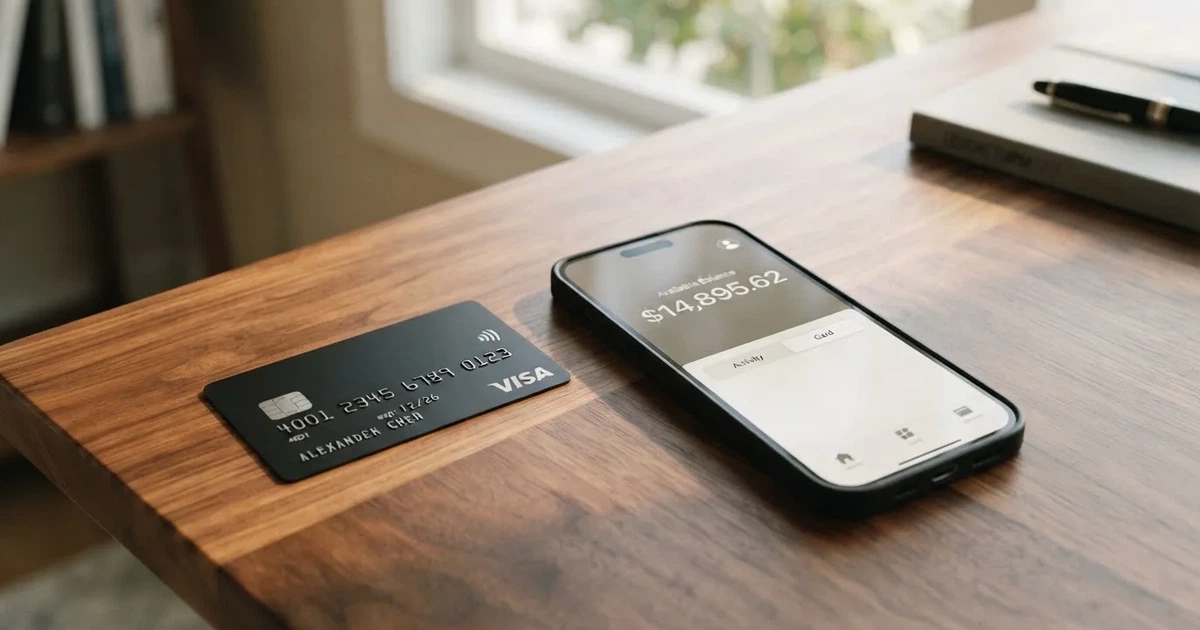
For someone who already lives inside a crypto balance — paid in stablecoins, holding through a cold stretch, spending without touching a main current account — that trade reads well. For everyone else, it is a card that works in a smaller set of places, from a smaller base currency, with a narrower set of things you are allowed to buy.
I scored it 6.2 / 10.
The conditions described here are current as of October 28, 2026.
The score, criterion by criterion
| Criterion | Mark | Why |
|---|---|---|
| Who can get it | 5 / 10 | Residents of the EEA (30 countries), Switzerland and the United Kingdom — one large region, and nothing outside it |
| Cost | 9 / 10 | Issuance and servicing are free; crypto conversion is 0.99% per purchase and there is no separate FX commission; no ATM |
| Top-up options | 6 / 10 | Spends directly from the app’s crypto balance: BTC, ETH, SOL, BORG, USDC, USDG, EUROP, TGBP; USDT and Tron are not named, and fiat on the card does not work |
| Reliability and complaints | 5 / 10 | Issuer UAB Monavate is supervised by the Bank of Lithuania but was fined €270,000 on 2025-11-25; Trustpilot 3.1, with recurring complaints about account freezes and slow support |
| Everyday use | 5 / 10 | Virtual card instantly, Apple Pay and Google Pay present; plastic only planned, no ATM |
The strongest mark is cost, and it is earned honestly: there is no issuance fee, no service or annual fee for the virtual card, and the 0.99% conversion fee is the whole of what you pay to turn crypto into a purchase. The weakest marks are all about reach and friction. One region of eligibility, one payout currency per country, no cash, no plastic yet, and a support record that users describe in ways I could not reconcile with the app’s own store ratings.
Who it suits: EU, Swiss and UK residents who want a free virtual card, already hold crypto, and are content to have every purchase converted at the moment it is made.
Who it does not suit: anyone who needs a physical card, needs cash, pays in a currency other than EUR, CHF or GBP regularly, buys things in the prohibited merchant categories, or lives outside the EEA, Switzerland and the UK. It also does not suit anyone whose current account works reliably and who would rather not hand a crypto platform the ability to freeze their spending.
Who will they give you the card
Eligibility is by residence, and the wording the card uses is plain: “Reside in one of the following countries”. That list is the EEA’s 30 countries — Austria, Belgium, Croatia, Cyprus, Czechia, Denmark, Estonia, Finland, France, Germany, Greece, Iceland, Ireland, Italy, Latvia, Liechtenstein, Lithuania, Luxembourg, Malta, Netherlands, Norway, Poland, Portugal, Romania, Slovakia, Slovenia, Spain, Sweden — plus Switzerland and the United Kingdom. The UK was added late, on 2026-08-27; before that the card’s footprint was continental.
If you are outside those places, there is nothing to work around here, and I would not go looking for a route. The card cannot be used in Russia or Belarus: both appear on the restricted countries list published for the card, which reads “Afghanistan, Belarus, … Russia, …”. The list is not fully enumerated in what I could see, so treat it as the visible part of a longer rule rather than the whole of it.
Note what is being asked of you. Residence, not citizenship. That matters more than it sounds: the card’s own pages filter by where you live, while the wider crypto payment world tends to screen separately on citizenship and country of birth as well, because sanctions checks and issuer risk policy are usually applied to all three. A SwissBorg account that opens on a residence basis is not an exemption from anyone else’s screening.
How to get it
The route is four steps and the last one is immediate. Download the SwissBorg app. Open a personal account and complete KYC Level 2. Tap Card on the Portfolio screen and accept the terms. Choose a primary cryptocurrency — and the virtual card is ready instantly.
That third requirement is the one that does the work. KYC Level 2 means a verified photo ID and a verified proof of address, and you must be at least 18. Those are the base requirements for the card, separate from whatever level your account as a whole sits at.
The platform runs three account levels, and they matter to you mostly because your card spending draws on the same pot. Level 1 carries a EUR 5,000 cumulative deposit and withdrawal limit. Level 2 allows EUR 50,000 in and EUR 1,000,000 out. Level 3 is unlimited. Card spend also counts toward the total account withdrawal limits tied to your KYC level — so a card payment is not a separate budget, it comes out of the same allowance. Processing times for verification and the stated reasons for rejection are not stated publicly; a third-party review site gives the same level figures and says they were last verified on 2026-10-16, but treat those numbers as unofficial and unconfirmed by the card.
What you receive is a virtual Mastercard debit card only. A physical card is planned for a later phase, and the card’s own wording on that is conditional: “Depending on community demand, physical cards may become available with an additional issuance and shipping fee.” Delivery time, cost and replacement cost for physical cards are not stated. So: if your reason for wanting a card is a wallet you can hand over at a bar, that reason is not served today.
Your card’s base currency is set by where you live — EUR for EEA residents, CHF in Switzerland, GBP in the UK — and it cannot be changed after issuance. That is a quiet constraint with a long tail. If you buy in dollars, you will be converted at the Mastercard exchange rate, and you will live with that choice for the life of the card.
What it really costs: Fees and limits in plain sight
The headline is good and it is simple: there is no issuance fee and no service or annual fee for the virtual card. What you pay is the conversion, and only the conversion.

| Item | What the card says |
|---|---|
| Issuance | No issuance fee for the virtual card |
| Monthly or annual fee | No service or annual fees |
| Crypto-to-fiat conversion | 0.99% exchange fee on each card transaction, real-time via SwissBorg Meta-Exchange; a real-time market-liquidity adjustment may also apply |
| FX fee | No additional FX fee from SwissBorg; a transaction in a currency other than the base currency uses the Mastercard exchange rate |
| ATM | Cash withdrawals not initially available; ATM balance checks also not available |
| Spending limits | Daily, monthly and annual spending limits, plus limits on single transactions and on number of transactions per day and per month — exact figures not stated, subject to regulatory requirements and risk assessments, may be adjusted at any time |
Those last two rows are where the card is honest and unhelpful at once. There is a daily cap, a monthly cap, an annual cap, a per-transaction cap and a daily transaction count — and none of the numbers are public. They are “subject to regulatory requirements and risk assessments and may be adjusted at any time”, which means the limit you discover in week one is not contractually the limit you have in month three. Card spend also eats into your KYC-level withdrawal allowance, so a big purchase and a big withdrawal compete.
Now three everyday payments, and which of those fees touch them.
Coffee in Berlin, EUR 4.50. Your base currency is EUR, so no FX conversion is involved on your side. You pay one 0.99% conversion fee on the crypto behind it — that is roughly EUR 0.045 — plus whatever a market-liquidity adjustment adds at that moment. If that morning’s positioning is awkward, the adjustment is the part you cannot predict in advance. This is the cheapest and most ordinary version of using the card.
A £60 online subscription from London. Same thing with a different base currency. No SwissBorg FX fee, no second conversion line. The 0.99% is your conversion cost, and any mismatch between what you expect to pay in pounds and what the merchant charges lands on the Mastercard rate, not on you as a hidden SwissBorg fee.
A $120 purchase from a euro base card. Here a second cost appears, and it is not SwissBorg’s to quote. Your spend is converted from dollars at the Mastercard exchange rate, and then the crypto behind it is converted at 0.99%. Two conversion steps, one of them priced by the network rather than the app.
What you never pay with this card: an ATM fee, because there is no ATM. And a physical card fee, because there is no physical card. Both of those may exist later.
How to Top up
There is no top-up, and this is the single most important thing to understand before you start. The card spends directly from crypto balances held in the SwissBorg app. If the balance is there, the card works; if it is not, there is nothing to load and nothing to load it with.
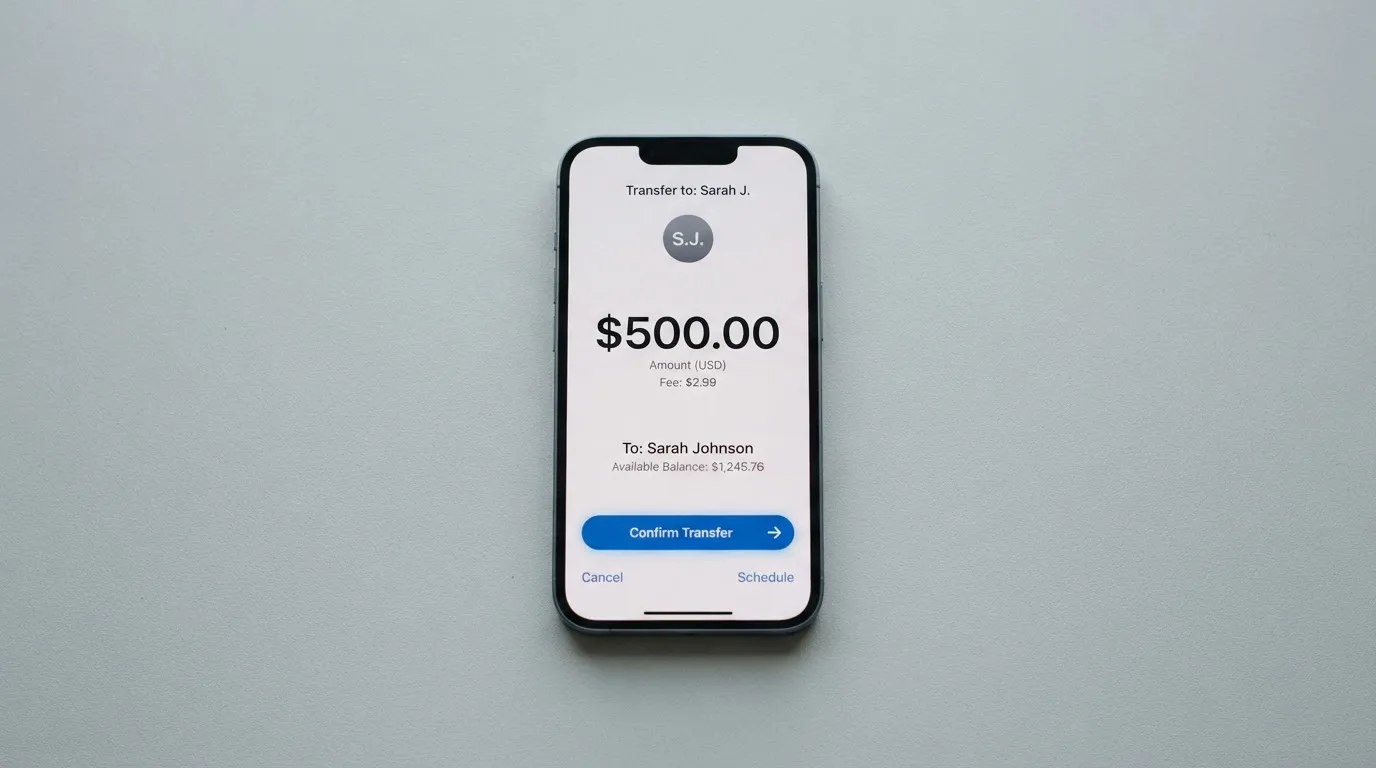
Supported for the card: BTC, ETH, SOL, BORG, USDC, USDG, EUROP and TGBP. USDT and Tron are not named in what the card states. You choose one primary cryptocurrency and can set optional backup currencies — the system picks a backup automatically when the primary balance is insufficient, which is a genuinely useful safety net and the closest thing this card has to overdraft protection.
One thing catches people out. Fiat balances in the app cannot be used for card payments. If you hold euros, francs or pounds inside SwissBorg, that money does not fund the card. Multi-currency fiat balances do exist in the app — EUR, CHF, GBP and others — but they sit on the other side of the wall from card spending.
Getting crypto *into* the app is where the listed fees live, and they differ sharply by route:
| Route | What it costs |
|---|---|
| Crypto deposit | Free; you pay the sending platform’s or network’s gas |
| Bank transfer | Free; your sending bank may charge you |
| Card / Apple Pay / Google Pay deposit | Standard countries (most of the EU) 2.25%–1.5% by rank; International (for example the UK, Switzerland) 4.5%–3.75% by rank; minimum deposit €10 |
| Minimum fee on the above | €5 (Standard, Bronze) or €3 (Silver–Elite) |
Read the last row twice. A card-funded top-up in an international country starts around 4.5% at Standard rank, with a €5 floor. Against a 0.99% conversion fee on spending, funding the card by card is expensive. Funding it with crypto you already hold, or by bank transfer, is free.
And that routes into cashing out. Fiat withdrawal from the app is 0.10% with a per-currency floor and ceiling — EUR min 1.50, max 100; CHF min 5, max 110; GBP min 1.50, max 85. Crypto withdrawal is 0.10% plus real-time network gas. Purchase refunds land in your fiat account in the card’s base currency, not back into crypto, and the original conversion fee is not refunded.
One last thing to know before you ever need it: on account closure, funds held on the card are redeemable for up to 6 years. After 12 months from the end of the agreement a monthly maintenance fee is deducted, and if the agreement ends within 6 months a closure fee may apply. That is a long tail, and it is the price of leaving.
Paying with it every day
The mechanics are short. It is a Mastercard, so it is accepted wherever Mastercard is accepted, and Apple Pay and Google Pay are supported — Apple Pay initially available in Switzerland and France, requiring the latest app version and KYC Level 2. Curve is supported too. Online payments run through 3-D Secure with in-app biometric approval, and you can freeze and unfreeze the card instantly in the app.
Some merchants will not take it. That is not a SwissBorg quirk; it is how prepaid and foreign BINs work. The first six to eight digits of a card number identify the issuer and its country, any merchant can look them up, and if the issuer country differs from the billing address the transaction can attract extra scrutiny. A Lithuanian-issued Mastercard is perfectly normal, and some shops still treat it as unusual.
Certain categories are blocked outright: gambling and betting, adult content and services, cryptocurrency purchases, financial services such as money transfers, illegal goods, cash advances, and certain government services. If part of your spending is any of those, the card is not for that part.
What you get back is cashback in BORG tokens, calculated as a percentage of the exchange fee on each purchase — not of your spend. The rate moves with your Loyalty Rank: Standard 5%, Bronze 15%, Silver 30%, Gold 50%, Platinum 65%, Diamond 80%, Elite 90%. Rungs run from Standard at 0 BORG locked through Bronze (1,000), Silver (3,000), Gold (10,000), Platinum (30,000), Diamond (60,000) and Elite (100,000), and they also raise a yield multiplier from 1x to 2x, open priority Alpha Deals, add governance votes at 10 BORG = 1 vote, and increase referral boosts.
Read the base rate carefully: 5% of the fee, on a 0.99% fee. On EUR 100 of spending that is under fifty cents. Cashback is not guaranteed either — SwissBorg reserves the right to modify, suspend or discontinue it at any time, and rewards are locked for a period under the “Paid to Trade” programme, which launched 2025-09-23.
The apps themselves rate well. On Google Play (en_GB) the rating is 4.6 across roughly 15.2K reviews, read 2026-10-21; the App Store listing for Ireland shows 4.4 from 88 ratings on the same date. The official website footer shows slightly different numbers — Google Play 4.2 and App Store 4.6 — which is the kind of small inconsistency that tells you these ratings move and are captured at different times.
If something goes wrong, the clock is short: contact SwissBorg through the app (Profile > Support) or at [email protected] within 8 weeks of the transaction date. Refunds where the merchant did not specify the exact amount and it exceeded reasonable expectations are processed within 10 business days of the claim or of further information. Liability on unauthorised transactions is limited to EUR 50 if the card is lost, stolen or misappropriated, except in cases of fraud or gross negligence, and you must report without undue delay and no later than 13 months.
What can go wrong
Four things, and I want to be plain about all of them.
The issuer was fined. UAB Monavate, the card issuer, was fined €270,000 with a warning by the Bank of Lithuania on 2025-11-25 for breaches relating to anti-money-laundering, management and reporting obligations. Monavate is authorised by the Bank of Lithuania (authorisation code LB002139901097) to issue electronic money and provide payment services. Being supervised is not a problem; being fined for AML and reporting breaches is a fact about the entity that holds your card programme, and it belongs in the same paragraph as the licence rather than three pages away.
Accounts get frozen, and support takes a long time. Trustpilot shows a TrustScore of 3.1 out of 5 from roughly 1,900 reviews, per third-party aggregation read 2026-09-15 — not the card’s own figure, so treat the number as unofficial. The themes inside it are consistent enough to name: account restrictions and freezes without clear explanation or warning, sometimes after a deposit, sometimes taking weeks to resolve; tickets unanswered for days or weeks after a first response; and card, Apple Pay or Google Pay deposits subject to mandatory security holding periods that lock funds the user cannot reach or withdraw. Those reports run through 2025–2026 across Trustpilot, Reddit and Google Play reviews. Note the tension with the store ratings above: the app scores well on the store and badly on the complaint page. Both can be true, and for a card where money is involved, I would weight the complaints page more heavily.
Your money is custodial, and not deposit-guaranteed. Funds are held in the SwissBorg wallet, not in your own. The card issuer Monavate follows Electronic Money Regulations 2011 for safeguarding, and funds on the card are not protected by the Financial Services Compensation Scheme. That is the standard consequence of e-money rather than a red flag on its own — but it means “custodial” is doing real work in this sentence, and there is no deposit guarantee behind it. The wider category has a record here: Mt. Gox, Coincheck and Ronin Network are all instances of custodial platforms failing badly. On a card that spends crypto, your attack surface is the platform, not just the card.
No one is watching for cash, plastic, or your second currency. No ATM. No physical card. A base currency fixed at issuance. Limits that can move without notice. Cash advances and several merchant categories blocked. If your spending depends on any of these, you will find out at the till.
The company’s own structure is worth knowing, because the card brand and the issuer are not the same legal entity. The app is owned by SBorg SA, at Rue du Grand-Chêne 8, 1003 Lausanne, Switzerland. BlockNodes SAS (29 rue Blanche, 75009 Paris, France) holds MiCA authorisation number A2026-011 from France’s AMF — granted around March 2026 on an approximate timeline. The card issuer is UAB Monavate in Lithuania. So “SwissBorg” is the front you see; Monavate is the licensed institution behind it; BlockNodes holds the crypto authorisation. The virtual card launched 2026-02-25 in a phased rollout to the EEA (29 countries at that point) and Switzerland, and a Mastercard partnership was announced 2026-02-18. If you want to check a licence yourself rather than take mine, ESMA keeps an interim register of authorised crypto-asset service providers — that is the place, and it is a public register.
One practical note on safety: 3-D Secure shifts liability for fraudulent online payments, and critics argue it can shift toward the cardholder rather than the bank. 3-D Secure is a good control, not a promise that a disputed payment will go your way.
What to take instead
I scored the alternatives I looked at, and none of them is a clean win either. Here they are side by side on what each one actually states.
| Whop Cards | Stella | UniFi Card | SwissBorg | |
|---|---|---|---|---|
| My score | 5.2 / 10 | 6.5 / 10 | 4.7 / 10 | 6.2 / 10 |
| Network | Visa | Visa, virtual and physical | Prepaid debit Visa, issued by Lead Bank | Mastercard |
| Who it is for | Consumers in 31 US states; businesses in 41 | Countries not stated; terms bar users under economic sanctions programmes and route US and European users through affiliates | Not confirmed from official pages; app routes to the Philippines, Mexico, eurozone, with release notes mentioning Colombia, Brazil and UK | EEA (30 countries), Switzerland, United Kingdom |
| Funding | Whop balance; stablecoin collateral from a linked wallet; coins and networks not stated | Crypto deposit into a custodial in-app wallet that tops the card automatically | ACH, wire, SEPA (IBAN) or SPEI (CLABE); USDC wallet; other coins not stated on the listing | Crypto balance in the app: BTC, ETH, SOL, BORG, USDC, USDG, EUROP, TGBP |
| Stated fees | “No extra fees” listed | Not stated officially | Not stated (“Fees may apply”) | Free issuance and servicing; 0.99% conversion per transaction |
| Cashback | 5% at select merchants, currently Uber | None stated on the card page | “3% rewards on balances” claimed; card cashback not stated | BORG cashback, 5%–90% of the fee by rank |
Three observations. First, SwissBorg is the only one of the four whose fees I can actually quote. Stella’s fees are “described under this User Agreement and/or on the App” and not stated on the pages I could see; UniFi says fees may apply and points you elsewhere. Absence of a published fee is not absence of a fee, and you should price that uncertainty into any comparison.
Second, the Whop and Stella country stories are thinner or stranger than SwissBorg’s. Whop lists an unsupported set for consumers that includes Russia, Belarus, Ukraine, Turkey, India, Hong Kong, China (Mainland), Vietnam, Venezuela and others, and does not state whether eligibility runs on citizenship or residence. Stella does not state countries at all and routes US and European users through affiliates — an arrangement worth reading twice.
Third, UniFi reads more like a remittance product with a card attached than a spending card, and its eligibility is not confirmed from official pages.
If SwissBorg is not right for you, the honest comparison is usually not another crypto card. It is an ordinary debit card on an account you can actually withdraw from, plus keeping your crypto where it is.
Who I would recommend it to
I would recommend it to three people, and to almost nobody else.
The crypto-native spender in the EU, Switzerland or the UK. You get paid in stablecoins, you would rather not convert into a bank account to buy groceries, and you do not mind that every purchase converts at 0.99%. For you this is close to ideal: free to hold, free to issue, Apple Pay and Google Pay from day one, and a card that draws on balances you already control the movement of.
The traveller or contractor who needs a second, disposable spending line. Instant issuance, instant freeze, no monthly fee. If a payment goes wrong you freeze the card in the app and nothing else changes. Read the limits section as unfixed, though, and keep the daily figure small until you have seen it behave.
The BORG holder. If you are already locking BORG, the ranks move cashback from 5% to 90% of the fee, the yield multiplier from 1x to 2x, and you get Alpha Deals access and votes. This is where the card’s economics are best.
I would not recommend it to anyone who needs a physical card, needs cash, needs a currency other than EUR, CHF or GBP, has any spending in the blocked categories, lives outside the three regions, or has already been burned by an account freeze and would rather not owe a crypto platform the ability to repeat one. I would also hesitate if your current bank works. A free card is a genuinely good instrument, but so is a functioning account you can withdraw from at 11pm.
One structural point worth keeping: a card is a payment service regulated separately from the crypto side. Under MiCA — the EU’s markets-in-crypto-assets regulation, which took legal effect in June 2023, with rules on stablecoins applying from 30 June 2024 and the remaining provider provisions from 30 December 2024 — e-money tokens may only be issued by a credit institution or an electronic money institution, while the card itself lives under e-money and payment-services law. So a card like this depends on two licences. Ask which entity you are actually contracting with: for SwissBorg that is Monavate for the card, with BlockNodes holding MiCA authorisation A2026-011 for the crypto side.
Frequently asked questions
What is SwissBorg card?
It is a Mastercard debit card, virtual at launch, that spends directly from cryptocurrency balances held in the SwissBorg app. You do not load it with money. Supported holdings are BTC, ETH, SOL, BORG, USDC, USDG, EUROP and TGBP, with automatic backup currencies if your primary runs short. Its base currency is EUR, CHF or GBP depending on where you live, and it cannot be changed after issuance.
How does SwissBorg card work?
Every purchase converts crypto to fiat in real time through the SwissBorg Meta-Exchange, at a 0.99% exchange fee plus any market-liquidity adjustment at that moment. You pick a primary cryptocurrency and optional backups, and the system switches automatically when the primary balance is too small. Fiat balances inside the app cannot pay for card purchases, which is the detail people miss most often.
Is SwissBorg a bank?
No. The app is operated by SBorg SA in Lausanne, Switzerland. The card itself is issued by UAB Monavate, an electronic money institution in Lithuania authorised by the Bank of Lithuania, with authorisation code LB002139901097. BlockNodes SAS of Paris holds MiCA authorisation A2026-011 from France’s AMF. Electronic money is safeguarded but is not a bank deposit.
Who owns SwissBorg?
Three entities are involved and it helps to keep them apart: SBorg SA at Rue du Grand-Chêne 8, 1003 Lausanne runs the app; UAB Monavate, incorporated in Lithuania, issues the card; and BlockNodes SAS at 29 rue Blanche, 75009 Paris holds the MiCA authorisation. SwissBorg is the brand and the app you interact with; Monavate is the licensed card issuer behind it.
Is SwissBorg card available in my country?
It goes to residents of the EEA’s 30 countries, Switzerland and the United Kingdom, and eligibility is decided by residence rather than nationality. The UK joined on 2026-08-27. The card cannot be used in Russia or Belarus, both of which sit on its restricted countries list. If you are elsewhere in the world, there is no version of this card available to you.
Does SwissBorg card require KYC?
Yes, KYC Level 2, meaning a verified photo ID and a verified proof of address, and you must be 18 or over. The platform’s account levels run from EUR 5,000 cumulative limits at Level 1 to EUR 50,000 in and EUR 1,000,000 out at Level 2 to unlimited at Level 3. Card spending also counts toward those account withdrawal limits.
Is SwissBorg card free?
Yes, and genuinely so. There is no issuance fee and no service or annual fee for the virtual card. What you pay is 0.99% per transaction to convert crypto, plus any real-time market-liquidity adjustment, and the Mastercard exchange rate if you spend outside your base currency. There is no ATM, so no withdrawal fees either.
Can I get cash from a SwissBorg card?
No. Cash withdrawals at ATMs are not initially available, and ATM balance checks are not available either; the card says the feature might be considered in a future iteration. There is also no physical card yet — one is planned, conditionally, with an additional issuance and shipping fee whose amounts are not stated.
Is SwissBorg card safe?
Reasonable precautions are in place: 3-D Secure with biometric approval, instant freeze and unfreeze, and spending controls. But funds are custodial and funds on the card are not protected by the Financial Services Compensation Scheme. The issuer, UAB Monavate, was fined €270,000 by the Bank of Lithuania on 2025-11-25 for AML, management and reporting breaches, and user reports through 2025–2026 repeatedly describe account freezes and slow support.
How do I close my account and get my money out?
Fiat withdrawal from the app costs 0.10% with per-currency floors and ceilings — EUR min 1.50, max 100; CHF min 5, max 110; GBP min 1.50, max 85. Crypto withdrawal is 0.10% plus network gas. On account closure, funds held on the card stay redeemable for up to 6 years, with a monthly maintenance fee deducted after 12 months from the end of the agreement, and a closure fee may apply if you leave within 6 months.
How app and neobank cards work – cryptocardsexplained.com
Content created by the «cryptocardsexplained.com» team