
A non-custodial Visa Debit for EU residents holding TON and USDC, with fee figures you will have to find yourself
 Available in US
Tonhub is not a bank, and it does not pretend to be one. It is a crypto wallet app with a Visa Debit card attached to it: your money stays in your own wallet, the card spends from a balance you load first, and the whole thing is aimed at people already holding TON or USDC who want to spend that balance at ordinary shops. That is a genuinely narrow product with a genuinely narrow fit. For an EU resident, aged 18 or over, who already lives on-chain and wants a card that draws down their own crypto rather than a custodial exchange balance, it does one thing and does it in a way that keeps the keys where they belong. For anyone looking for a cheap, predictable everyday debit card, or for someone who cannot pass identity verification, it is the wrong card — and the fee page will not help you decide, because it does not publish amounts.
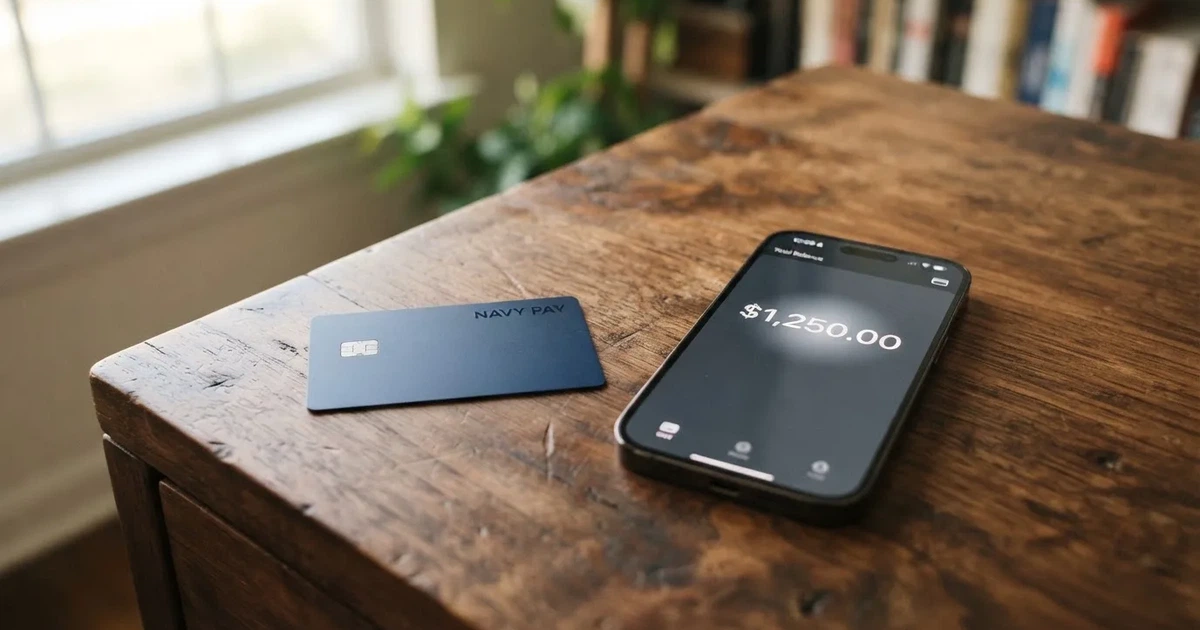
The conditions described here are current as of October 28, 2026.
The verdict: 5.3 out of 10
My score for the Tonhub card is 5.3 out of 10. That is a middling number, and it is not a verdict on the technology — the architecture here is more careful than most. It is a verdict on how little the card’s own pages tell you. Every one of the marks below comes from what the card states about itself, cross-checked against third-party reporting where I could find it, and the pattern is consistent: the safety design is good, the disclosure is thin.
The card is built for EU residents spending TON and USDC. If that is you, the non-custodial design alone puts it ahead of most cards in its class. If you are anywhere else, or you hold a different coin, or you want a card that also earns something back, keep reading — there are better-matched options further down.
| Criterion | Mark | Why |
|---|---|---|
| Who can get it | 5 / 10 | Needs age 18+ and EU residence; “25+” countries cited as a usage statistic |
| Cost | 7 / 10 | Officially not disclosed; unofficial: 1.5% transaction fee |
| Top-up options | 5 / 10 | TON and USDC shown, a user review mentions USDT; SEPA and SWIFT bank transfers offered |
| Reliability and complaints | 4 / 10 | Operator and issuer not named, smart contracts audited by Trail of Bits; Trustpilot 3.2 from one review: report of lengthy chargeback dispute process, money not returned |
| Everyday use | 5 / 10 | Virtual Visa Debit after verification only; unofficial: Apple Pay and Google Pay supported; ATM not disclosed |
That cost mark of 7 out of 10 is doing a lot of work, and you should understand why before you read it as an endorsement. It is a high mark for a card that tells you nothing about its own prices. In this category, an undisclosed fee is not neutral — it is an unknown you will discover at the till, or on your statement, or when you try to send money back. The one figure floating around in third-party sources is a 1.5% transaction fee, which is plausible but unconfirmed by the card itself. I would rather give a card credit for the absence of a bad surprise than penalise it twice.
Who will give you the card
Eligibility is narrow and stated plainly: you need to be 18 or older and resident in the EU. The card’s page also cites “25+” countries as a usage statistic, but that figure describes where people appear to be using it, not who is eligible. Do not read the two as the same thing — plenty of readers do, and it is the single most common misunderstanding here.
Beyond those two conditions, the public pages say very little. They do not state whether citizenship matters separately from residence, they do not list excluded countries, and they do not name a single country in Europe that would be refused. That is thinner than you would want from a product whose compliance obligations are real, but it is also not a red flag on its own — plenty of licensed firms publish the conditions only after you start an application.
One thing that is genuinely useful: the card is described as non-custodial, which means your crypto never leaves your own wallet. Tonhub draws from your balance and debits it; it does not hold your coins for you. That single design choice removes the largest category of risk in this space — the exchange-wallet bankruptcy scenario — and it is why the card is worth a look at all despite the thin disclosure.
The eligibility picture in short
- Age: 18+.
- Residence: EU resident required.
- Citizenship: not stated as a separate condition on the public pages.
- Countries cited as usage: “25+” — a statistic, not an eligibility list.
- Currency held: TON and USDC are shown on the card page.
How to get it
The application runs through the Tonhub app and starts with identity verification — the app asks you to “Verify Your identity” before anything else. A virtual Visa Debit is issued once verification is complete. The card’s public pages do not state which documents are required, whether proof of address is needed, how long verification takes, or what causes a rejection. I would plan for that uncertainty rather than be surprised by it.
There is no mention of a physical card. Not “coming soon” — simply not mentioned. If you were picturing something in the post, adjust the picture: what is on offer is a virtual card, which means it lives in a wallet on your phone and, from the card’s own pages, is the only form of the card described. Delivery countries, delivery time and delivery cost are therefore not applicable rather than unknown — there is nothing being delivered.
For anyone adding it to a phone wallet: Apple Pay is mentioned, but only inside a user review quoted on the page, not in the card’s own feature list. Apple Pay and Google Pay support both appear in third-party reporting from November 2024, unconfirmed by the card. Treat mobile wallet support as likely rather than documented.
The sequence to expect, then: download the app, add your wallet, tap the Tonhub Card banner, complete identity verification, receive a virtual Visa Debit. The app is the control surface for the whole thing — setup and day-to-day management both live there.
Fees and what a payment actually costs you: what it really costs
Here is the honest answer: the card does not publish its prices. There is a “Fees & Conditions” section on the site, but no amounts were captured from it. No issuance fee, no monthly fee, no conversion percentage, no foreign-exchange fee, no ATM fee. All of it is not stated. The one number you can find anywhere is a 1.5% transaction fee, which comes from a third-party source (Forklog, November 2024, with the same figure appearing in a company profile on Dealroom) — unofficial, and not confirmed by the card.

I want to be careful how I present that, because a single third-party figure is easy to mistake for a fact. It is not. It is a report, from outside the card, about a number the card itself has not put its name to. It may be accurate; it may be out of date; it may cover only part of what you pay. Use it as a rough scale, not a quote.
| Fee or limit | What the card says |
|---|---|
| Issuance fee | not stated |
| Monthly fee | not stated |
| Conversion fee | not stated |
| Foreign-exchange fee | not stated |
| ATM / cash withdrawal fee | not stated |
| Daily spending limit | not stated; user-set on-chain spending limits instead |
| Monthly spending limit | not stated; user-set on-chain spending limits instead |
| Unofficial transaction fee | 1.5%, per Forklog (Nov 2024) and a Dealroom company profile — not confirmed by the card |
A few details about the shape of the costs, even without amounts. TON and USDC are the currencies shown on the page, and the card’s own currency, whether it holds multi-currency balances, and what it charges when you spend outside the euro are all not stated. There are no tiers — no list, no tiers, a single card is implied. And on limits, there is something better than a published cap: you can “set custom spending limits directly on-chain”, which is a genuine advantage over cards that impose fixed daily and monthly ceilings. What it costs to raise those limits is a different question, and not one the public pages answer.
Three everyday payments, and which fees would apply
Because no amounts are published, the most useful thing I can do is walk you through the mechanics of three ordinary purchases and name which fee lines would touch each one. The numbers, you will have to get from the card.
Buying coffee. If your balance is already loaded in the currency you are spending, this is the simplest case: you pay the merchant’s price plus whatever conversion applies. Whether the card converts at the moment of purchase or holds a pre-converted balance is not stated, and that distinction is the difference between paying a conversion fee or not. With a balance already in the right currency, expect the 1.5% figure, unofficial as it is, to be the only line that would touch this purchase — if it applies at all.
Paying for something priced in dollars while your balance is in euros or stablecoins. Here a second, unnamed cost can appear: the foreign-exchange rate the card applies. Cards typically add either a percentage on top of the network’s rate or a fixed markup, and some pass the network rate through with no addition at all. The card does not say which it does here, nor what its own currency is. This is the purchase where an undisclosed fee hurts most, because the base rate is moving anyway and you have no idea what you are paying on top of it.
Withdrawing cash from an ATM. The ATM fee itself is not stated, and neither is whether the card works in ATMs at all. The second cost is the card’s own charge, also not stated. If you take cash out frequently this is the payment style to interrogate hardest before you commit, because ATM withdrawals typically stack an issuer fee on top of the ATM operator’s own charge.
The pattern across all three is the same: the mechanics are understandable, the amounts are absent. Before you rely on this card, go and read the Fees & Conditions section yourself and write the numbers down. If you cannot find them, treat that as information.
Top up: how to put money in
Topping up is the step the card is clearest about, and the model is worth understanding before you start.
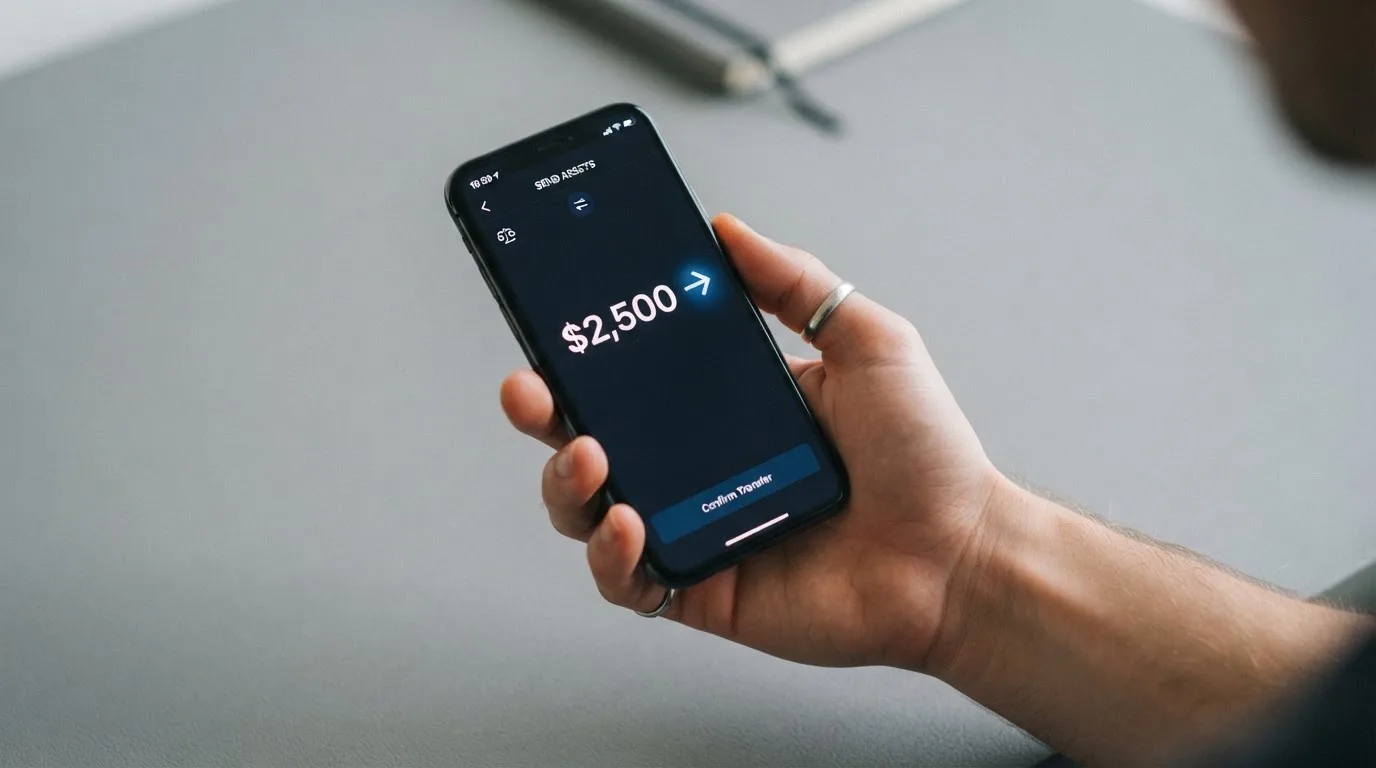
Tonhub pre-funds the payment and debits your balance afterwards — once the network and the merchant have confirmed. Your balance must be topped up before you can pay, and if your balance is insufficient, the payment is declined. That is the “pre-loaded balance” model, and it has one large advantage over a normal debit card: the card cannot overdraw. You are spending money you have already loaded, so there is no debt, no interest, and no surprise on a statement.
On the top-up side itself, the page shows TON and USDC. A user review mentions paying with USDT, which is a different thing from the card being funded with USDT, so do not take it as confirmation. For people who would rather not convert crypto at all, the card offers SEPA and SWIFT bank transfers, which is a real option if you want to move ordinary money onto the card. Fiat top-up fees and minimums are not stated.
One practical warning that belongs here rather than buried later. Blockchain transfers are irreversible. A deposit sent on the wrong network, or to an address belonging to a different network, can be lost outright or need manual support recovery with no guarantee of success. This is a property of the technology, not a fault of the card, and it is why you check the network and the address before you confirm anything. The same applies to the card’s non-custodial design: because your funds stay in your own wallet, you are the one who holds the keys, and that cuts both ways.
There is also a feature I would want to know about before I needed it: an “Emergency Withdrawal” that lets designated heirs retrieve card-linked funds on-chain. It is a genuinely thoughtful answer to the “what happens to my money if something happens to me” problem, and it is rare. Withdrawal fees and how closure is handled are not stated.
Paying with it every day
The everyday experience is: manage the card in the Tonhub app, spend from a balance you have loaded, and let the network and merchant do their part. The app is the control surface — setup is adding your wallet and tapping the Tonhub Card banner, and day-to-day running is the same app.
Two features make daily use workable. Custom on-chain spending limits mean you decide how much the card can go, per period, rather than accepting a published cap. And the anti-fraud and AML monitoring watches every transaction, blocking suspicious activity automatically. In this category that is worth having: card fraud is the reason tokenised wallets and instant freeze exist, and having a per-transaction screen in place is a meaningful protection. Whether there is an in-app freeze control, and whether there is any insurance, is not stated.
What is not disclosed is as important as what is. Apple Pay appears only in a user review on the page; third-party reporting from November 2024 lists Apple Pay and Google Pay as supported — both unofficial, neither confirmed by the card. Google Pay, blocked merchant categories, and cash withdrawals are all not stated. There are no rewards mentioned — no cashback, no rebates, no tier programme — which makes Tonhub unusual among the cards in this category, several of which do offer a spend-rate discount in place of cashback.
On refunds and failures, the card is more forthcoming: “refunds are issued only for legitimate, verified transactions”, and failed or declined payments leave your funds untouched. That second part is a direct benefit of the pre-funding design — if a purchase does not go through, your balance stays whole. Chargeback time frames are not stated, and given what the complaint record shows, that omission matters.
What can go wrong
The most serious thing I found is also the least dramatic: the card does not name the entity that operates it or the institution that issues the card. The brand is Tonhub, which also references “Holders”, and the smart contracts were audited by Trail of Bits, which is a real and reputable firm. But a card has an issuer behind it — a bank or an e-money institution licensed to issue under Visa’s licence — and this page does not name it. For a product that asks you to link your own wallet, knowing which institution stands behind the card programme is not a detail.
Then there is the complaint record, which is thin but pointed. On Trustpilot, the card sits at 3.2 out of 5 from a single review, read on 20 October 2026. That one review, dated 18 February 2026, reports that it took nearly two months to submit card chargeback disputes — filed in early December 2025, won in January 2026, money still not returned by mid-February. It also reports slow copy-paste support answers, and extra AML video-call checks despite prior verification.
I want to be even-handed about this. One review is one review, and I found no recurring pattern and no Reddit thread corroborating it — a thin complaint record, not a bad one. But a two-month dispute timeline is exactly the number a person living outside the eurozone, paying with a card whose support answers are automated, needs to know. And extra identity checks after verification are the kind of thing that costs someone who is not in the EU their access, since eligibility is residence-based.
The security design, by contrast, is the strongest part of the card. It is non-custodial, keys stay with you, Ledger hardware wallet support is there, smart contracts are audited by Trail of Bits, you set your own spending limits, and every transaction is monitored with suspicious activity blocked automatically. This is a shortlist-worthy security posture — the failure mode is not a hack, it is an undisclosed fee or an unreachable support desk.
Finally, the timeline. The card launched on 8 November 2024 per third-party reporting, initially for EU residents, with expansion to other regions planned in 2025 — a plan I found no confirmation of, and no 2026 news at all. That gap matters less than it might for a young product, but it does mean you are looking at a card whose growth beyond its founding region is promised rather than demonstrated.
The risk picture, sorted by how much it should worry you
| Risk | How serious | What you know |
|---|---|---|
| Undisclosed fees | High | No amounts published anywhere official; one unofficial 1.5% figure |
| Unnamed issuer and operator | High | Neither named on the page; smart contracts audited by Trail of Bits |
| Dispute and support speed | Medium-high | One Trustpilot review reports ~2 months to file disputes, money not returned |
| Repeat identity checks | Medium | One review reports extra AML video calls after verification |
| Loss of funds through user error | Medium | Non-custodial and irreversible by design; you hold the keys |
| Smart contract or exchange failure | Low | Non-custodial, audited contracts, no third-party balance held |
What to take instead
If any of the above is a problem for you, there are three cards I would look at instead. Each scores higher than Tonhub overall, and each makes a different trade.
BloFin Wallet Card — score 6.9 / 10. The strongest of the three on paper, and the most transparent about money. Activation, annual, issuance and dormancy fees are $0.00 each, and cancellation is free. Its spend fee is “1% or lower” by VIP tier, running from 1.00% at VIP 0 down to 0.00% at VIP 5, charged at payment. You top up with USDT and USDC on Arbitrum and Base. Two caveats: the country list is not published on the card page (the app asks you to “select your country or region”), though the starting data lists 35 countries including the US, Australia, Japan, the UAE, Brazil, Mexico, Malaysia and New Zealand, and whether the test is citizenship or residence is not stated. It is a Visa Platinum card, and it has no cashback or rebates at all — a reduced spend rate instead.
Decaf — score 6.2 / 10. The cheapest to start and the only one that publishes an FX policy. Activation costs $5 worldwide for a virtual card, $10 (US only) or $90 (rest of the world) for the physical card, which comes with tracked delivery, and there is no annual or monthly fee. On FX, the card states plainly that it adds no fee — “the FX is the one Visa offers”. It also publishes a long restricted list: not issued in Belarus, China, North Korea, India, Iran, Iraq, Israel, Myanmar, Nepal, Russia, Syria, Turkey, Cuba, Ukraine, Venezuela, Vietnam, Nicaragua, Puerto Rico, Nigeria, and restricted US states include Arizona, Delaware, Georgia, Idaho, Louisiana, Maryland, Montana, Ohio, Oregon, Rhode Island, Washington and Wisconsin. Whether those rules apply by citizenship or by residence is not stated, which is worth asking about directly.
SafePal — score 6.2 / 10. The broadest top-up story of the three. It accepts crypto from 40+ blockchains, converts to USDC (default) or fiat, and settles on Arbitrum. There are no account creation or management fees, though the card issuance fee is not stated. Its costs: standard top-up fee 0%, a 1% FX fee on Mastercard non-USD settlement, 1 USD/EUR/CHF or 7 CNH for refund processing, and swaps that include an unquantified spread — though elsewhere its bank page says crypto top-up can be “as low as 0.4%” on the top tier. No cashback; instead, referral commissions of up to 40% of referred top-up fees and tier privileges tied to deposits, referrals and staking. Its eligibility is the vaguest: “citizens of supported regions who live in supported areas”, and the regions list on its site was empty when I looked.
| Tonhub | BloFin | Decaf | SafePal | |
|---|---|---|---|---|
| Score | 5.3 / 10 | 6.9 / 10 | 6.2 / 10 | 6.2 / 10 |
| Entry cost | not stated | $0.00 | $5 virtual / $10–$90 physical | issuance fee not stated |
| Ongoing fee | 1.5% unofficial, unconfirmed | 1% or lower by VIP tier | none stated | 0% top-up, 1% FX on non-USD |
| FX | not stated | not stated | none added, Visa’s rate | 1% on Mastercard non-USD |
| Top-up | TON, USDC, SEPA/SWIFT | USDT, USDC on Arbitrum, Base | card, bank transfer, USDC | 40+ blockchains, to USDC or fiat |
| Card form | virtual Visa Debit | Visa Platinum, form not stated | virtual or physical Visa | virtual Mastercard |
| Cashback | none stated | none, reduced rate instead | not stated | none |
The honest summary of this table: Tonhub is the only one of the four where the fees are a mystery. Every alternative publishes at least its entry cost. That is not a reason to reject Tonhub — its non-custodial design is a real advantage none of the others can claim in quite the same way — but it is a reason to go in with your eyes open and a written note of what you were quoted.
Who I would recommend it to
I would recommend the Tonhub card to a specific person, and I would steer everyone else away from it.
Recommend it if you are 18 or over and live in the EU; you already hold TON or USDC, or you are comfortable holding stablecoins; you have a hardware wallet or otherwise take key security seriously; you want your crypto to stay in your own wallet and not sit on an exchange; and you mostly spend in one currency and want control over your own spending limits. If your money is already on-chain and you are tired of trusting a platform with it, this card is doing something real and doing it with audited contracts.
Do not recommend it if you need to know what a payment costs before you make it; you are outside the EU; you are sensitive to a support process where one person reports a two-month dispute timeline; you want cashback or any reward; you need a physical card; you need to withdraw cash regularly; or you simply want an ordinary debit card with published prices. In every one of those cases, one of the three alternatives above fits you better and tells you more upfront.
My actual advice, if you are considering Tonhub: go and read the Fees & Conditions page yourself and find out what the charges are before you commit anything. That single page is the difference between a 5.3 and what could be a considerably better score. Everything else about this card — the non-custodial design, the on-chain limits, the emergency withdrawal, the audited contracts — is sound. The disclosure is the weak point, and it is fixable by the card, not by you.
Frequently asked questions
What is the Tonhub card?
The Tonhub card is a Visa Debit attached to a crypto wallet app rather than a bank account. It is non-custodial: your crypto stays in your own wallet, and the card spends from a balance you load in advance. Tonhub pre-funds each payment and debits your balance once the network and merchant confirm, declining the purchase if the balance is short. The card’s public pages describe only a virtual card, issued after identity verification.
How does the Tonhub card work?
You load a balance, then pay as you would with any Visa Debit. Because the balance is pre-funded, the card cannot overdraw and failed or declined payments leave your funds untouched. The catch is that the balance must be topped up before each purchase cycle, and any conversion between crypto and the currency you spend happens on the way. The card does not state its own currency or whether it holds multi-currency balances, so that step is worth checking yourself.
Is Tonhub a bank?
No, and the card does not present itself as one. It is a crypto brand with a card programme attached, and it does not name the operating entity or the issuing institution on its page. In this category the issuer behind the brand is usually a bank or electronic money institution licensed to issue cards, but here that name is not stated, which is a real gap when you are deciding whether to trust it with a spending card.
Who owns Tonhub?
The brand is Tonhub, and the page also references “Holders”, with a Help Center at help.holders.io. Smart contracts were audited by Trail of Bits, which is a reputable firm. But the legal entity behind the brand and the institution that issues the card are not named on the public pages, so if you need that for your own decision, you will have to ask them directly.
Is the Tonhub card available in my country?
Eligibility as stated is being 18 or older and resident in the EU. The page cites “25+” countries, but that is a usage statistic, not an eligibility list, and it is easy to misread. Citizenship is not stated as a separate condition, nor is any list of excluded European countries. If you live outside the EU, the answer from what is published is no.
Does the Tonhub card require KYC?
Yes. Sign-up begins with identity verification — the app asks you to “verify your identity” — and the virtual card is issued only after it is completed. The public pages do not state which documents are needed, whether proof of address is required, how long it takes, or what causes a rejection. One user also reported extra AML video-call checks after already verifying, so expect verification not to be a single step.
How do I top up the Tonhub card?
Your balance must be topped up before you pay, and the card page shows TON and USDC, with SEPA and SWIFT bank transfers also offered if you would rather move ordinary money. A user review mentions paying with USDT, but that is not confirmation the card is funded with it. Fiat top-up fees and minimums are not stated, and remember blockchain transfers are irreversible — a deposit on the wrong network can be lost.
What does it cost to use the Tonhub card?
The card does not publish its fees. Issuance, monthly, conversion, foreign-exchange and ATM charges are all not stated on the public pages, though a “Fees & Conditions” section exists. The only figure available is a 1.5% transaction fee from third-party sources (Forklog, November 2024, and a Dealroom company profile) — unofficial and unconfirmed by the card. Read the fees section yourself before you commit.
Is the Tonhub card safe?
The security design is the strongest part of it: it is non-custodial, your keys stay with you, Ledger hardware wallets are supported, smart contracts were audited by Trail of Bits, you can set spending limits directly on-chain, and every transaction is screened with suspicious activity blocked automatically. In-app freeze and insurance are not stated. The weaker areas are commercial rather than technical — undisclosed fees, an unnamed issuer, and one reported two-month dispute timeline.
Is the Tonhub card worth it?
It is worth it if your money is already on-chain, you live in the EU, and what you want most is to stop trusting an exchange with your balance. It is not worth it if you need published prices, a physical card, cashback, reliable cash withdrawals, or fast support. At 5.3 out of 10 it sits mid-pack — the architecture is better than the disclosure, and the disclosure is what you are paying for.
How wallet cards work – cryptocardsexplained.com
Content created by the «cryptocardsexplained.com» team