
A prepaid card you buy with crypto, without the paperwork
 Available in US
If you are reading this because an ordinary bank card is proving difficult to get — no fixed address on paper, no local credit history, a country of origin that makes a bank nervous — then a prepaid card bought with crypto is exactly the kind of thing you have probably already been looking at. Trocador is one name in that space. I went through its public pages and the reports around it, and I want to be straight with you: this is a card I could recommend to a narrow kind of person, and only after you understand exactly what you are buying.
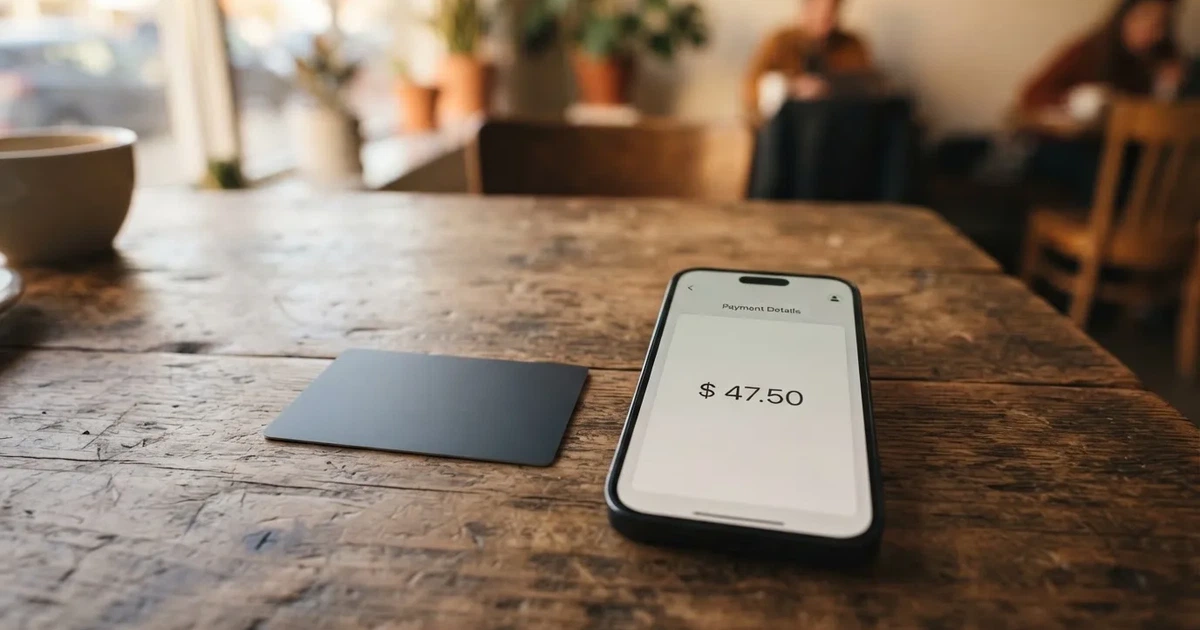
My overall mark is 5.4 out of 10. That is a middling score, not a rejection, and the reason is not that the card is bad at what it does. It is that the card’s own public pages leave out nearly everything you would need to decide, and the things you have to go on instead are third-party reports. On top of that, the fee picture, where it is visible at all, is the weakest part of the offer. Let me take you through it section by section so you can judge for yourself rather than take my word.
The conditions described below are current as of October 28, 2026.
The verdict: who this card is for
I rate Trocador 5.4 / 10. Break it down the way I did, criterion by criterion:
| Criterion | Mark | Why |
|---|---|---|
| Who can get it | 8 / 10 | Country access is broad; restrictions vary by which provider issues your card. |
| Cost | 3 / 10 | The card’s own pages do not disclose fees; the figures people quote come from third parties and are not trivial. |
| Top-up options | 7 / 10 | You buy the card with crypto, and there is a wide choice of coins to pay with. |
| Reliability and complaints | 5 / 10 | The operator and issuing partners are named in outside data, but the issuing bank is not, and reports about one partner are not flattering. |
| Everyday use | 4 / 10 | Mobile wallets usually work, but there are real gaps: no ATMs, no top-up after purchase, no plastic in the usual sense. |
| Total | 5.4 / 10 | A workable tool for a specific person, with sharp edges and thin official information. |
Who suits it? Someone privacy-minded who already holds crypto, has decided they want a prepaid card rather than a bank account, and does not need a card for recurring subscriptions, travel with lots of small purchases, or anywhere that insists on 3-D Secure. The model — you convert once, the card spends a fixed balance, that balance runs down — is simple and it works. If your plan is “turn some crypto into everyday spending money without opening anything that asks for my documents”, it does that job.
Who it does not suit? Anyone who treats a prepaid crypto card as their primary way of running a life. You cannot rely on it for a hotel, a car hire desk, a subscription that rejects prepaid cards, or an online payment that requires a one-time code. You cannot top it up when it runs low. And if the fee figures are what they are reported to be, spending the balance repeatedly is the expensive way to do it. If you want a card that behaves like a normal bank card, this is not it.
Will they give you the card?
Yes — in a large number of countries, and the limits here are more generous than most cards in this category.
The one thing the card states plainly is that country restrictions vary by the provider — meaning the company that actually issues your card sets the rules, not one central desk. That is a structural feature, and it has a practical consequence: the answer to “is Trocador available in my country?” depends on which of several issuing partners handles your application. You may be fine even if a friend with the same coin was refused, and the reverse.
Beyond that, unofficial figures — from third-party sites, not from Trocador’s own pages and not confirmed by the card — put availability at 164 countries, with 11 closed, and note that the Reward and MyPrepaidCenter variants are US-only. Take those numbers as orientation, not as a promise: if you are outside the US and were hoping for a Reward or MyPrepaidCenter card, plan on a different provider. The right move is to look at which provider is actually assigned to your country and read their terms, because that is where the restriction will live.
I should say plainly, once, what this means: the card’s public pages do not publish a clean country list or a list of exclusions. Anyone who tells you there is one definitive answer is going beyond what is written down.
How to get it
The process is short, and short is its own kind of information. You buy a prepaid Mastercard or Visa over the web, from one of several providers. There is no app — it is a web purchase. In return you get a prepaid card, not a credit card and not a current account.
What the pages do not tell you, and what you will have to ask about directly: whether identity checks are required is not stated officially, and what level of identification is needed is not stated either. This matters more than it might sound, and I will come back to it in the risks section, because a card that skips KYC is a card whose provider carries more risk and whose users inherit some of it.
Delivery and how long it takes is also not stated officially. Whether you receive a virtual card immediately or a physical one by post, and how many days either takes, is not written down. If you need a card for something with a deadline, ask this question before you commit, not after.
So the honest summary of signup: you can buy one, it is prepaid, it is Mastercard or Visa, you pay with crypto, there is no app. Everything else — documents, delivery, time — you should confirm with them directly before you rely on it.
Fees: what it really costs
This is the section I would ask you to slow down on, because it is where Trocador is weakest and where the official record is thinnest.

Straight to it: the card does not state its fees. Its price, its fee schedule, its ATM policy, its limits, its tiers, and its handling of currency conversion are all not stated officially. Everything below is either from the card’s own description of how it works, or from unofficial third-party figures that the card has not confirmed.
The costs table, built from what is available:
| Fee or limit | What is available |
|---|---|
| Issuance / purchase price | Not stated officially |
| Monthly fee | Not stated officially |
| Conversion fee | Not stated officially; unofficial: 3% of the nominal plus $2 (Trocador); Obsidian $0.60 per purchase and $5 per month after the second month |
| Non-USD payment fee | Not stated officially; unofficial: 2.75% on payments not in USD |
| FX / currency handling | Not stated officially |
| ATM withdrawal | Not stated officially; unofficial reports say there are no ATMs |
| Daily limit | Not stated officially |
| Monthly limit | Not stated officially |
| Tiers | Not stated |
Read that table again and notice how much of it is empty. That is not me being cautious; that is the state of the public information. You are being asked, in effect, to buy a financial product whose price list you cannot see.
Now let me make it concrete with the way you would actually use it — three ordinary payments, and which fees would bite.
A coffee. Say the card cost you 3% of the nominal plus $2 to buy, and you spend it in the currency of the country you are in. On a small purchase, the $2 component is a large share of the amount. If the unofficial 2.75% applies to anything not in USD, and you are not in a dollar country, there is a second charge on top. Small everyday payments are where a fixed fee hurts most.
A weekly shop. Here the percentage matters more than the fixed part, and here the conversion cost is the thing to understand. You converted once, at purchase, into a fixed-value balance. After that, are you paying a further conversion fee at the till? The card’s own description of spending a pre-loaded balance implies no second crypto conversion, but it does not say in plain words what happens to the currency if you spend dollars in a euro country. That gap is exactly where the unofficial 2.75% figure sits.
A payment in dollars while your balance is not. This is the case the unofficial fee describes most directly: a 2.75% charge on payments not in USD. If most of your life is in a non-dollar currency, and that figure is right, this card is quietly expensive to use repeatedly — because the balance you loaded once does not earn back a currency conversion.
Two or three things follow, and they are the practical heart of this review. First, if the unofficial numbers are accurate, this is not a card to spend and top up repeatedly; it is closer to a card you fund once, for one stretch of spending. Second, the Obsidian figures are structured completely differently from the Trocador ones — $0.60 per purchase and then $5 a month after the second month. Same word “card,” different cost shape entirely, which is another reason the official silence matters. Third, I am not going to convert any of these into a monthly cost for you or guess at which partner handles your country, because the parts I would need are exactly the parts nobody has published.
One more practical cost that is not the card’s fault but is yours: on-chain network fees for your deposit are charged by the blockchain, not by Trocador. If you pay with a coin on a busy network, the network fee comes out of what you send. And if you send on the wrong network, blockchain transfers are irreversible — the network cannot freeze or return the funds.
Top up: how the money gets in
There is one thing to understand clearly here, and once you understand it, top-up stops being a question: the card is not topped up. It is bought.
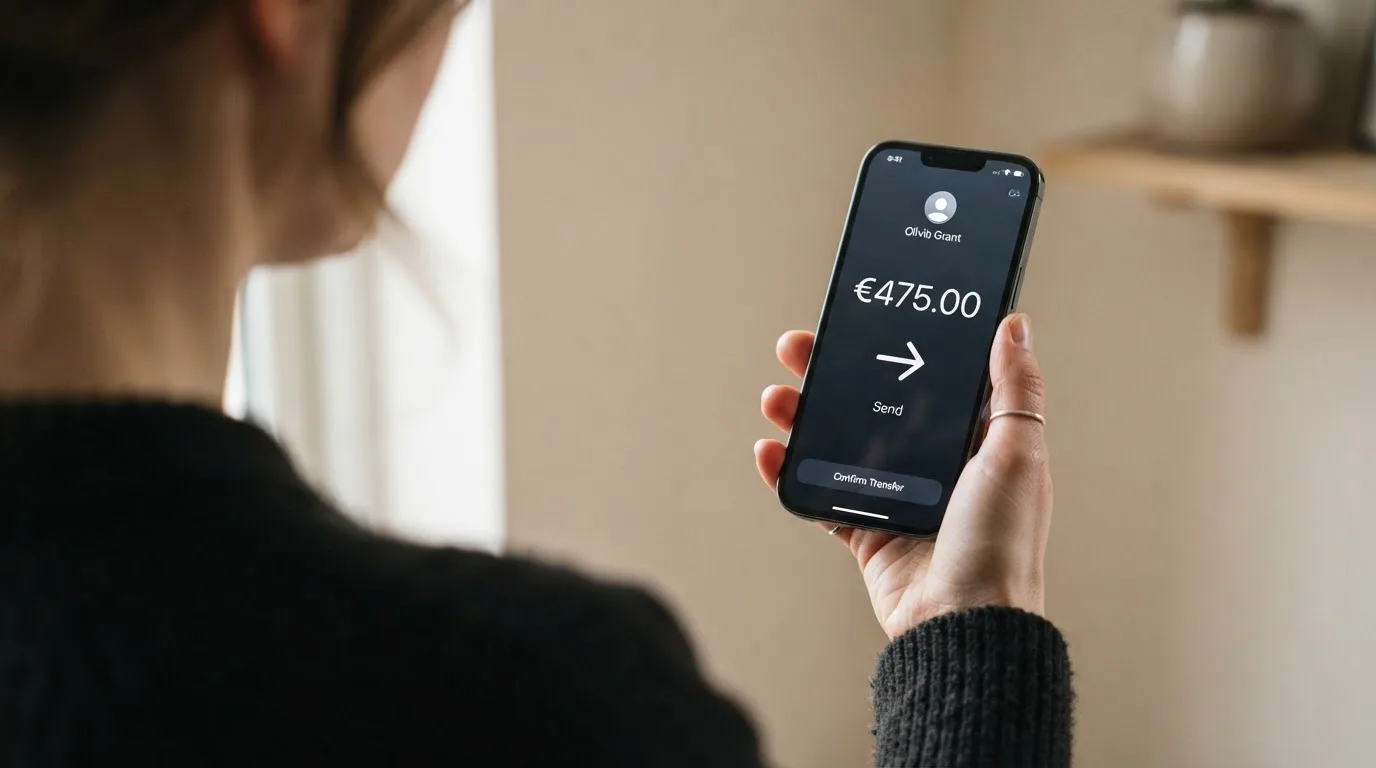
You convert your crypto once, at the moment of purchase, into a fixed-value card balance. That is the whole model. The card spends that balance and, when it is spent, it is gone. This is different from most cards in the category, where you hold a wallet and load it as you go. There is no reloading here in the ordinary sense.
What you can pay with: according to the card’s own starting data, BTC, XMR, LTC, stablecoins, and others via AnonPay. I want to be straight with you that the exact coin list is not confirmed. Unofficial sources describe a broad choice and specifically mention Monero, and warn that a conversion fee may apply — but treat that as a third-party account, not as a promise from the card.
“LTC” in that list deserves a moment’s thought. Litecoin has long had a reputation for being the coin of last resort for people who want payment rails and minimal traceable history, and it is included in a privacy-minded card’s own coin list. That is not an accusation of anything; it is context about who this card is built for.
So the practical sequence is: you hold crypto, you send it to the address for the right network, it converts once, you receive a prepaid balance, and you spend that balance until it is gone. If the balance runs out mid-month, you buy a new card. That is the design, and for a one-off or occasional spending need it is genuinely convenient.
Two things to keep in mind. First, withdrawing money from the card is not stated officially — if you expected to reverse the process and get crypto back out, ask before you buy. Second, the network you send on must be one the provider supports. Blockchain transfers are irreversible, so a deposit sent on an unsupported network, or to an address belonging to a different network, can be lost or need manual recovery with no guarantee. Get the network right the first time.
Paying with it every day
Everyday use is where this card scores lowest for me, and it is worth being concrete about where it stops working.
What works: Samsung Pay, Google Pay and Apple Pay “usually” work. That word “usually” is the card’s own, and it is doing a lot of work. Contactless and in-app mobile payments are the main way you would use a card like this, and having the number tokenised in your phone’s wallet is a real convenience. The general safeguards people expect are largely in place by default here: mobile-wallet tokenisation replaces your card number with a device-specific number in the phone’s secure element, never on Apple’s servers, and each payment carries a one-time dynamic code.
Where it does not work: it is not accepted where 3-D Secure is required, and not where gift or prepaid cards are refused. This is the single most important limitation for you to hold on to. Three-D Secure is the identity check on online payments — the issuer assesses risk, then either approves silently or challenges you with a one-time code or biometric. Mastercard’s version is called Identity Check, Visa’s is Visa Secure. Any online payment that demands that challenge is a payment this card cannot complete. In practice, that removes a slice of the online world you might take for granted.
Some other things you will notice in daily use. Merchant category codes matter more than people expect: many issuers block gambling (MCC 7995) on specific cards by policy rather than by law, and the blocked list varies by issuer. Address verification can cause declines — it compares the numeric parts of the billing address you type against issuer records, is mainly offered in the US, Canada and the UK, and is generally unavailable for foreign-issued cards. And a card issued in one country can simply look “foreign” to a shop in another, because the merchant can look up the issuing country and the issuer from the first digits of the card number and apply extra scrutiny. Some merchants decline prepaid or foreign-issued cards for exactly that reason. None of this is Trocador-specific, but it is what “prepaid, foreign-issued card” tends to mean at the till.
Finally, there is no ATM function (unofficial), no top-up after purchase, and no plastic in the usual sense (unofficial). No rewards or cashback are stated officially, and there is no app — everything is done on the web. If you need cash, you will need another route entirely.
What can go wrong
This is the section I would not skip, and I have split it into the specific things about this card and the general risks that apply to any card in this category.
Who is behind it. The card is operated by Reta Development Assets LLC (from the starting data). Cards are delivered by Reward, MyPrepaidCenter and Obsidian. The issuing institution is not named (per CryptoCardHub). Licences are not stated. When you cannot name the bank that stands behind your card, you are relying on a chain of programme managers rather than on a regulated institution you can name — and that is a real difference in who stands behind you if something goes wrong.
The reports about one partner are not good. I found no official incident on Trocador’s own pages. What I did find is a user report describing MyPrepaidCenter cards with activation problems, billing-address validation failures, declines, locked access and slow support (undated, per CryptoCardHub, August 2026). Note the shape of it: activation and address validation are the two steps where a prepaid card most often gets stuck. If you are assigned a MyPrepaidCenter card, this is the warning to read twice. MyPre prepaidCenter’s profile is described as weak (CryptoCardHub, August 2026). Separately, Reward and MyPrepaidCenter are, per the unofficial line, US-only.
The exchange side of the business. Trocador is primarily an exchange, and that is where the reviews are: on Trustpilot, Trocador (mostly as an exchange service) scores 4.8/5 from 267 reviews (read 2026-10-21). That is a good number, and it is worth saying so plainly rather than only presenting the bad news. Alongside it, user reports describe delayed swaps via partner exchanges (June–July 2026), long AML/KYC holds (March–May 2026), and the tone of support (September 2026). The last one matters most for you, because support tone is what you will feel if a card payment goes wrong.
Identity checks are the quiet risk. Whether Trocador requires KYC is not stated officially, and the level is not stated. Here is why that is not a technicality. KYC rules require regulated businesses to verify customers and assess risk under anti-money-laundering law, including ongoing monitoring and reporting of suspicious activity. In the EU, due diligence covers name, address, date of birth, nationality and identity documentation, a sanctions check, the purpose of the relationship, and whether you are a politically exposed person. In the US, the customer identification programme requires name, date of birth, address and an identification number. If due diligence cannot be completed, EU rules require the institution to refrain from the transaction, or to end the relationship — which is why accounts get closed or frozen pending documents. Nationality is screened separately from residence, because sanctions screening and issuer risk policy often apply to citizenship and country of birth, not just your address. So: a card that does not state its KYC position may be lighter on paperwork — or it may simply be telling you less, and what surfaces at payment time instead of at signup. That is not a legal opinion, it is the practical shape of the risk.
The general risks of holding crypto for a card. If you buy the card with crypto, you are exposed to the crypto side for the moment your money is in flight. Custodial platforms have a real record of failures: Mt. Gox (about US$350 million reported stolen, 2011–2014), Coincheck (about US$400 million, 2018), Ronin Network (US$625 million, 2022). Blockchain transfers are irreversible. Stablecoins, while they aim to be stable, are not necessarily so — TerraUSD collapsed in May 2022, and USDC temporarily lost its peg in March 2023. And a stablecoin issuer can freeze funds: Tether says it disables tokens on wallets on the OFAC sanctions list and has frozen funds tied to illicit activity. None of that is a reason to avoid crypto cards. It is a reason to convert in small steps rather than all at once, and to send only what you can afford to lose while a transfer is in flight.
A note on standing. A prepaid card’s protection is not the same as a bank’s. US debit card reversal rights come from Regulation E and credit card rights from Regulation Z, but prepaid-card coverage varies and should not be assumed. Under 3-D Secure, liability for a fraudulent online payment can shift — from the merchant to your bank, or, per critics, to you. Declined authorisations can leave a hold on your funds that stays for several days, typically up to 7. If a card payment goes wrong for you, what remedy you have is genuinely less certain than it would be with a bank card, and I would not want you to find that out at the till.
What to take instead
If Trocador’s thin official information and fixed-balance model are not what you want, these are three cards I looked at in the same category, with their own scores:
| Card | Score | Card type | Cost | Fees | Top-up |
|---|---|---|---|---|---|
| Trocador | 5.4 / 10 | Prepaid Mastercard or Visa, several providers | Not stated officially | Not stated officially; unofficial 3% + $2, Obsidian $0.60/purchase and $5/month after month two, 2.75% non-USD | Buy with crypto (BTC, XMR, LTC, stablecoins, others via AnonPay); exact list not confirmed |
| Cardex | 5.6 / 10 | Debit crypto card on VERVE, VISA, Mastercard, UnionPay; virtual and physical; card currency Naira | Not stated | Real-time crypto-to-fiat conversion at payment, no percentage stated | USDT, USDC and BTC wallets; networks not stated |
| TakeCard | 5.5 / 10 | Virtual card (immediate) and physical (Bolivia only); Visa; issued in the US; prepaid; USD | Virtual USD 5; physical (Bolivia) USD 20 + USD 20 shipping (another article says USD 10 — conflicting); no monthly fee stated | 1% per purchase; USD 1:1, other currencies at Visa’s rate of the day | Top up from the Takenos account; coins not named (starting data says USDC/USDT via Polygon, BNB Chain, Tron or Ethereum — not verified) |
| OkiCard | 6.0 / 10 | Virtual card; physical mentioned without detail; network Visa/Mastercard unspecified; USD/EUR pegged | Issuance $0, monthly $0, starting price $15 virtual; FAQ mentions a one-time issuance fee — pages disagree; initial deposit 100 USDT | Load fee 3%; transaction fee (USD) 0%; no hidden exchange spreads; FX fee not stated | USDT on BSC, Ethereum, Tron, Solana; USDC “soon”; BTC and altcoins “coming soon” |
A few things stand out if you read across the rows.
OkiCard scores highest here (6.0) and is the one whose fees it actually publishes: issuance and monthly fee of $0, a 3% load fee, 0% transaction fee in USD, and a stated absence of hidden exchange spreads. It states “150+ countries” (some pages say “200+”), says there is no geo-blocking based on your passport, and asks you to confirm you are not in a sanctioned jurisdiction. The networks are named too — USDT on BSC (BEP-20), Ethereum (ERC-20), Tron (TRC-20), Solana (SPL). Its honest weakness is that its own pages disagree with each other about the issuance fee, and that its coin support is partly “soon”.
TakeCard is the most transparent about its price and the most restricted about who gets one. It states USD 5 for a virtual card, USD 20 plus USD 20 shipping for the physical card in Bolivia, 1% per purchase, USD payments at 1:1 — but the physical card is, in its own words, “available only to Bolivian users for now”, even though the wallet can receive payments from any country. It is prepaid, issued in the United States, Visa, USD.
Cardex is the odd one out. It is a debit card rather than a prepaid one, across VERVE, VISA, Mastercard and UnionPay, and its selling point is conversion at the moment of payment with what it calls an “AI-Powered Conversion Rate” that scans global exchange rates and picks the best one — but no fee percentage is stated, and its App Store listing is Naira-focused.
And a general point that outranks all four. Visa and Mastercard do not issue crypto cards to consumers themselves; they license issuers, and they can suspend a programme. Visa said it had “terminated our global agreements with FTX” in November 2022, and the FTX US debit card programme was wound down by its issuer. WaveCrest, a Visa issuer that supplied crypto card brands, was suspended by Visa in Europe in 2018, closing all its Visa programmes. Programme closures typically follow a pattern: a notice period, then loading and spending stop, then you are asked to withdraw what is left. So whatever you choose, keep the card as one tool rather than the place your money lives, and draw down anything you are not actively spending.
Who I would recommend it to
Having gone through all of it, here is my honest recommendation.
I would recommend Trocador to a privacy-minded user who already holds crypto, wants a prepaid card rather than a bank account, and is spending from it as a one-off or occasional thing — perhaps a stay, a stretch of expenses, a period away from home. Someone who buys with Monero or another coin of that character, converts once, gets a fixed balance, spends it down, and does not mind that the fee schedule is invisible and that online payments requiring a one-time code simply will not work. If your plan is “turn crypto into everyday spending money without opening anything under my own name”, that plan is what this card is, and it is competently built for it.
I would not recommend it as your main card, and I would not recommend it to you at all if any of the following are true of you: you need to pay online anywhere that uses 3-D Secure; you need cash from ATMs; you need to top the card up when it runs low rather than buy a new one; you need a named issuing bank you can point to; you want to see the fee schedule before you commit; or you need chargeback protection you can rely on. In each of those cases you want a different product, and I would look first at the alternatives above — particularly the one that publishes its fees.
And one last check before you buy, whichever card you choose: confirm with the provider, in writing, the things this card does not publish. What are the fees? Which provider issues my card, and which country rules apply to it? What are the daily and monthly limits? Is there ATM withdrawal, and is there a way to withdraw or top up after purchase? What is the delivery time? Is KYC required, and at what level? Those six questions are worth more than any review, including mine, because they come from the party that is actually obliged to answer you.
Frequently asked questions
What is the Trocador card?
It is a prepaid Mastercard or Visa, bought with crypto, that spends a fixed-value balance rather than drawing on a bank account. You convert once at purchase, and the card spends that balance until it runs out. Cards come through several providers — Reward, MyPrepaidCenter and Obsidian — under Reta Development Assets LLC, and the issuing bank is not named. Think of it as a spending envelope filled with crypto, not a current account.
How does the Trocador card work?
You pick a card, pay for it in crypto, and receive a prepaid card that spends a pre-loaded balance. Because it draws on stored value rather than a linked bank account, it cannot overdraw. Mobile wallets — Apple Pay, Google Pay and Samsung Pay — usually work for contactless and in-app payments, but the card is not accepted where 3-D Secure is required or where prepaid cards are refused.
Is Trocador a bank?
No, not as far as its public pages show. It is operated by Reta Development Assets LLC, with cards delivered by third-party providers, and the issuing institution is not named. Licences are not stated. It is best understood as a card programme manager or front-end rather than a bank, which is a normal arrangement in this category but means you should know who you are actually relying on.
Who owns Trocador, and is it safe?
Ownership is attributed to Reta Development Assets LLC, with licences not stated. On the exchange side, which is mainly what Trocador is known for, Trustpilot shows 4.8/5 from 267 reviews. Against that, user reports describe activation and address-validation problems with MyPrepaidCenter cards, declines and slow support, and long AML/KYC holds. I would treat it as ordinary-risk and fund it in small steps.
Does Trocador require KYC, and who can get it?
Whether identity checks are required is not stated officially, nor is the level of identification. What is stated is that country restrictions vary by provider. Unofficial sources put availability at 164 countries with 11 closed, and say the Reward and MyPrepaidCenter cards are US-only. Because KYC position is unpublished, ask the provider directly before you rely on the card.
How do I top up the card, and can I withdraw?
You do not top it up — you buy it. The crypto is converted once, at purchase, into a fixed-value balance, and the card spends that down. There is no reload in the usual sense. Whether you can withdraw money back out is not stated officially, so if reversing the process matters to you, confirm it before you buy.
Is the card free, and what do I actually pay?
The card does not state its fees officially — not the purchase price, not a monthly fee, not conversion, not limits. Unofficial figures describe a 3% commission on the nominal plus $2 for Trocador, and for Obsidian $0.60 per purchase plus $5 per month after the second month, with 2.75% on payments not in USD. On-chain network fees also apply and are charged by the blockchain, not the card.
Can I add it to Apple Wallet, and where can I use it?
Apple Pay, Google Pay and Samsung Pay usually work, with the card number replaced by a device-specific token in the phone’s secure element. It works best for contactless and in-app payments. It fails where 3-D Secure is required, at merchants that refuse prepaid or foreign-issued cards, and for address verification, which is mainly a US, Canada and UK system.
What can go wrong that I have not thought of?
Declined payments, and the account freeze that follows. If due diligence cannot be completed, EU rules require the institution to refuse the transaction or end the relationship, which is why accounts are frozen pending documents. Declined authorisations can also leave a hold for up to 7 days. And if you send crypto on the wrong network, the transfer is irreversible and the network cannot return the funds.
Is it worth it compared with a normal crypto card?
For spending a crypto balance occasionally, yes. For daily life, no — the fixed-balance model with no reload and no ATM, plus the invisible fee schedule, makes it a poor substitute for a bank card. Cards like OkiCard publish their fees more clearly, and cards like Cardex convert at the moment of payment. I would pick the one that matches how often you actually spend, not the one with the widest coin list.
How virtual cards work – cryptocardsexplained.com
Content created by the «cryptocardsexplained.com» team