
A proper bank card for crypto balances, priced like private banking
 Available in US
The Xapo Bank card is not a prepaid novelty and it is not a crypto exchange voucher. It is a Visa-branded debit card issued by a regulated bank in Gibraltar, and the money behind it is ordinary money: dollars, pounds, euros and Bitcoin held in a Xapo Account, with a metal, standard or virtual card spending that balance directly. For people who already hold dollars and Bitcoin and want one card that does both without a crypto exchange sitting in the middle of every purchase, the mechanics are good. Spreads on Bitcoin spending are described as competitive, there are no FX fees, and the metal card is free to order.
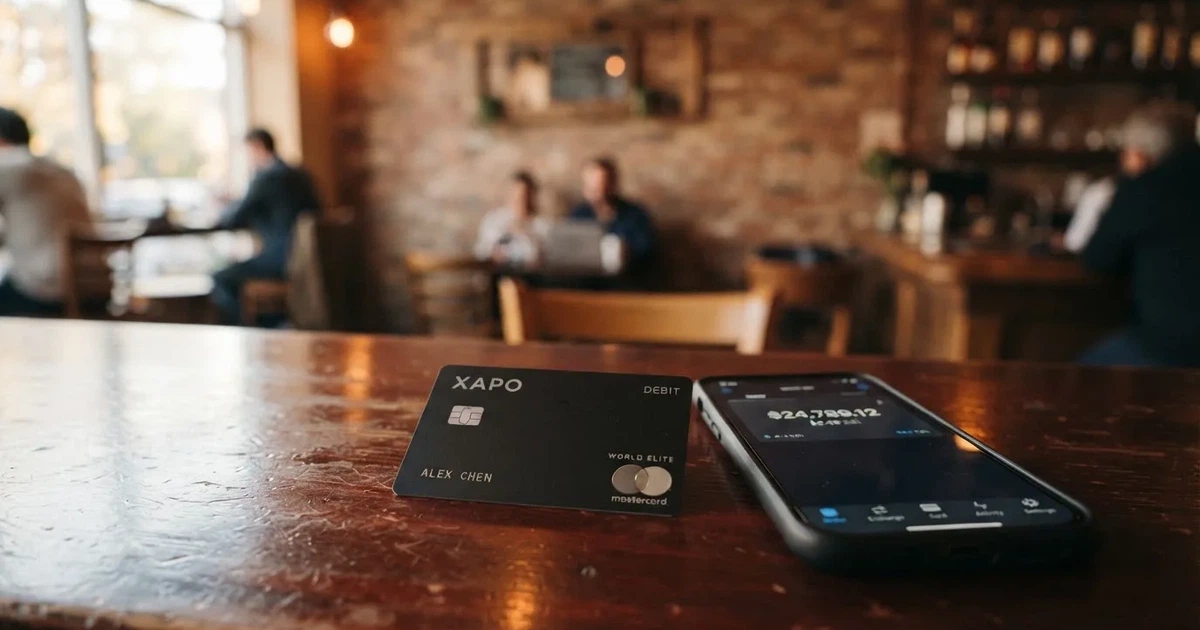
The problem is the price of entry. Membership is USD 1,000 a year, refundable in full within 30 days. That single number decides most of this review. Anyone spending a few thousand dollars a month on a travel card, or anyone who wants a first card to try, is being asked to commit to four figures a year for the privilege — a fee closer to a premium brokerage account than to a payment card. Add to that a Trustpilot score of 3.9 from 1,141 reviews with 31% one-star, and the recurring theme of frozen accounts and long compliance checks, and you have a card that is technically strong and emotionally unsettling in equal measure.
The conditions described below are current as of October 28, 2026.
Who it suits: premium banking clients who already hold USD, EUR and Bitcoin, hold meaningful balances, travel or spend across currencies, and can absorb the annual membership in exchange for metal card, wide ATM access and no FX markup. Who it does not suit: anyone price-sensitive, anyone whose banking is already smooth, and anyone who plans to move a large crypto balance onto the platform without reading the deposit guarantee terms closely.
| Criterion | Mark | Why |
|---|---|---|
| Who can get it | 7 / 10 | The official country list is not stated; unofficial sources say 50 countries, with 28 restricted including the United States |
| Cost | 2 / 10 | USD 1,000 membership a year with a 30-day refund; metal card free, “no FX fees and no hidden markups”, but 2% on ATM withdrawals above USD 100 a month |
| Top-up options | 6 / 10 | Spends the account balance; USDC and USDT auto-converted to USD, SWIFT, ACH, SEPA, Faster Payments, Bitcoin over Lightning |
| Reliability and complaints | 7 / 10 | Gibraltar FSC credit institution, Permission No. 23171; USD deposits covered up to GBP 120,000; but Trustpilot 3.9/5 with 31% one-star, freezes and slow reviews |
| Everyday use | 8 / 10 | Metal, standard and virtual debit cards, ATMs in 100+ countries; Apple Pay and Google Pay not disclosed |
| Total | 5.8 / 10 | A capable card behind a very expensive door |
Will they give you the card?
Short answer: probably, if you are an adult in a supported country with a Xapo Account, but you will not find a definitive answer on the card’s own pages, and that is itself a problem.
The published terms are titled “Cards Issued Outside Europe Region”. They do not state a country list. They do not state whether eligibility runs on citizenship or on residence — a distinction that matters more than it sounds, because sanctions screening and issuer risk policy are commonly applied to citizenship and country of birth as well as to address. The terms do say Xapo may refuse a card at its discretion, and that previously suspended users cannot order.
What circulates outside those pages is a picture of 50 listed countries, including the United Kingdom, Canada, Germany, Japan and Singapore, with 28 restricted countries and jurisdictions including the United States, Russia and Ukraine. Treat all of that as unofficial and not confirmed by the card: it comes from third-party comparison sites, and one of them says something different again, claiming coverage of over 100 countries while excluding US residents and US passport holders. If your country is not named on Xapo’s own site, you are in the position of applying and hoping, which I would not recommend at this price.
There are two more reasons a refusal can arrive from a direction you do not expect. The first is sanctions: if screening does not come out clean, EU-style due diligence rules require the institution to stop rather than proceed, and an application can stall for months instead of failing fast. The second is the discretionary clause — a bank can decline a well-documented applicant and say nothing further.
How to get it
The path is: open a Xapo Account first, complete verification, then order a card against that account. The card is not standalone.
Verification is the part worth preparing for. You need a valid passport or national ID, personal details that confirm both identity and residence, and a real-time photo or short video taken in the app. Age 18 is the stated minimum. The terms do not specify which documents count as proof of address, do not describe tiers, do not give a processing time, and do not list rejection reasons — so you are entering a process with no published service level.
Membership includes metal, standard and virtual debit cards. The premium metal card is described as complimentary, free to order, and the virtual card is what you would use for online subscriptions and anything you do not want a physical piece of plastic attached to.
Delivery is only to the verified address. You can give an alternative address, but you do so at your own risk and it is not guaranteed. Countries, delivery time and delivery cost are not stated. Unofficial sources say physical delivery timing varies by region, that an emergency replacement costs $100 plus address-dependent shipping, and that the first replacement per calendar year is free; the official line I can confirm is narrower — an additional replacement card within a calendar year costs USD 25, and other lost, stolen or damaged re-issues carry fees that “may apply”, with the amounts sitting in a Fees Information Sheet I have not read. If you travel, that sheet is worth reading before you need it.
Non-European cards carry Visa terms, though the network is not named on the Transact page.
What it really costs: fees and limits
The honest summary is: one enormous fixed charge, and then almost nothing per purchase. That is an unusual shape for a payment card, and it is why this card feels less like a card and more like a membership with a card attached.

| Fee or limit | What the card states |
|---|---|
| Membership | USD 1,000 per year, full refund within 30 days |
| Metal card issuance | Currently free to order |
| Additional replacement card in a calendar year | USD 25 |
| Other lost, stolen or damaged re-issue | Fees “may apply”; amounts in the Fees Information Sheet |
| Foreign exchange | “No FX fees and no hidden markups” |
| Bitcoin spending | “No fees and competitive spreads” |
| ATM | 2% of the withdrawal amount above USD 100 per month; the first USD 100 a month is free; ATM operator fees may apply |
| ATM reach | 100+ countries |
| Default spending and withdrawal limits | Exist, adjustable in the app, amounts not stated (“high spending limits”) |
| Some merchant categories | Blocked; recurring pre-authorised payments, self-service petrol pumps and cash-like transactions may be declined |
Three everyday payments, walked through, because the fee design only becomes clear when you see it applied.
Coffee at a local café, $6, paid in dollars in a country that uses euros. The card converts at the stated rate with no FX fee and no hidden markup. Decline the merchant’s offer to charge you in their own currency — that dynamic currency conversion is where the markup reappears, in the merchant’s favour. This is the case the card is built for, and it is genuinely clean.
A taxi ride paid from your Bitcoin balance. The card describes Bitcoin spending as having no fees and competitive spreads. What “competitive” means numerically is not written down anywhere I could find, and that absence matters: you are agreeing to a spread without knowing its size. If the spread is not to your taste, pay the same taxi from your USD balance instead, where the rate is a bank rate.
Two cash withdrawals in a month, one for $60 and one for $250. The first $100 of the month is free, so the $60 costs you nothing beyond any operator fee. The $250 attracts 2% of the withdrawal amount, which is $5, and that is on top of whatever the ATM operator charges. Above $100 a month this becomes one of the more expensive cash-withdrawal arrangements on the market, and it is the single clearest reason not to treat this as a travel cash card.
One more cost the card does not quantify: default limits are adjustable in the app but the amounts are not stated. Unofficial figures put in-store and online spending at $50,000 per day, ATM withdrawals at $2,000 per day, with much larger temporary purchases by case-by-case approval. I could not confirm those, so do not plan around them.
How to top it up
The card spends the Xapo Account balance and nothing else. There is no separate card balance to load, which is a simpler mental model than most cards in this category, and it means your top-up decision is really a decision about where to hold money.
The routes the card names:
- Stablecoins — USDC and USDT deposits are automatically converted to USD.
- SWIFT and ACH for USD; Faster Payments for GBP; SEPA for EUR. The top-up page also names RTP and FedACH alongside SWIFT and ACH for dollars.
- Bitcoin over Lightning.
Deposit fees and minimum top-up amounts are not stated, so the cost of moving money in is not something I can quantify for you. On-chain network fees are charged by the blockchain rather than by the card, and they are separate from anything Xapo takes.
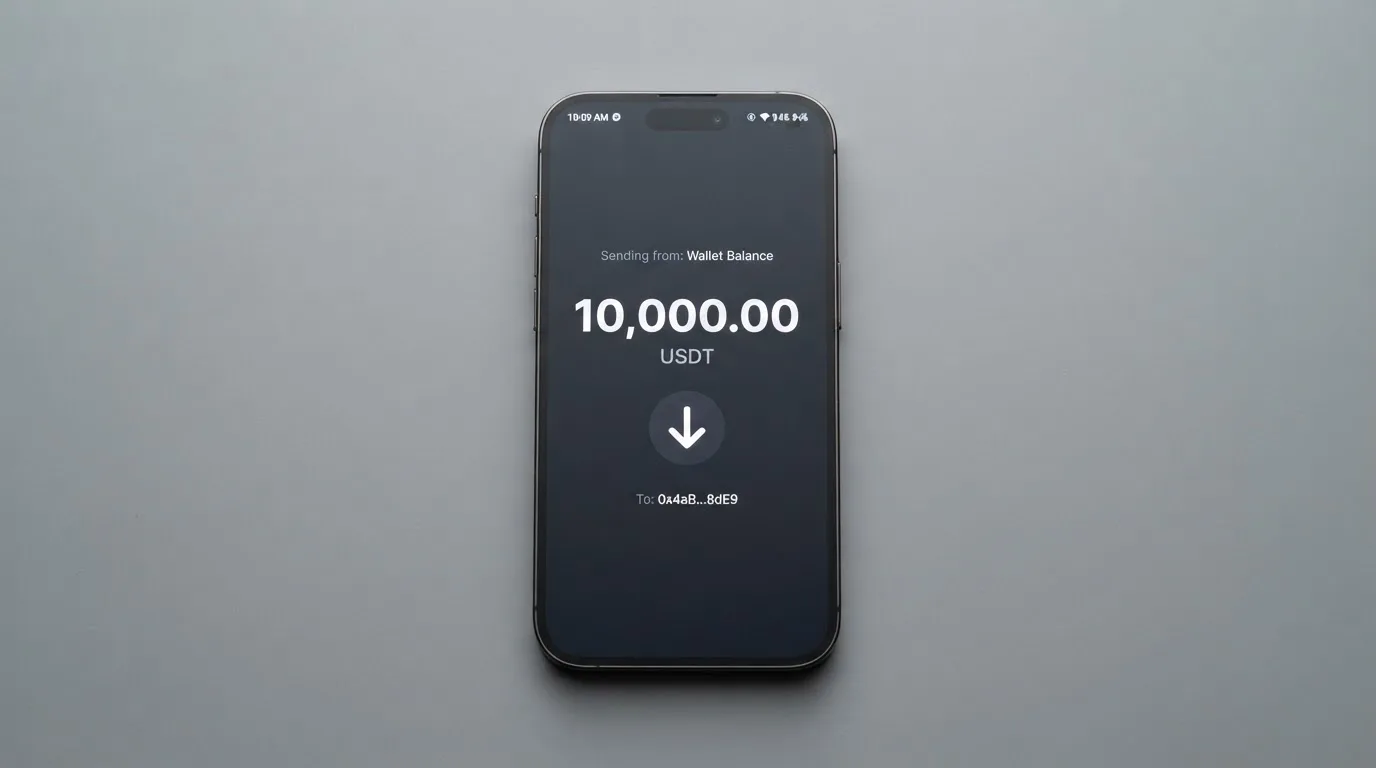
Two warnings about stablecoin deposits. The first is network: a transfer sent on a chain Xapo does not support, or to an address belonging to a different network, can be lost or need manual recovery with no guarantee, because blockchain transfers cannot be reversed. Circle stopped supporting USDC on Tron in February 2024, so “USDC over TRC20” is not a native option — but USDT still exists on Tron and many people hold it there. Sending it expecting it to arrive is a mistake I have seen explained more often than I would like. Second, and less obvious: a stablecoin is not a bank deposit. They can and have depegged — TerraUSD collapsed in May 2022, USDC briefly lost its peg in March 2023 — and Tether states it disables tokens in wallets on the OFAC sanctions list, so these assets are not censorship-proof either.
Getting money back out works through SWIFT, ACH, Faster Payments, SEPA and Lightning, with fee amounts not stated. Closing your account cancels the card; the card can be cancelled separately. What happens to a remaining balance on closure is not stated, and Xapo may end the agreement on two months’ written notice — which is a reasonable notice period, but worth knowing before you deposit something you might want in a hurry.
Paying with it every day
This is where the card scores best. Three formats — metal, standard and virtual — ATMs in 100+ countries, and a single iOS/Android app running 24/7 that handles freezing and unfreezing the card, adjusting limits and managing balances.
The card draws from USD or Bitcoin balance per payment, and a payment in a currency you do not hold is converted and debited from your balance. Apple Pay and Google Pay support is not disclosed — not refused, simply not stated, so I cannot tell you whether you can add the card to your phone wallet, and if that matters to you it is worth asking before you commit.
Some merchant categories are blocked by MCC code, and the actual list is not published on the page, which means gambling-adjacent purchases or anything else near a restricted category may simply fail at the till. Self-service petrol pumps are a known soft spot for foreign-issued cards, because they often cannot complete a 3-D Secure check.
As for rewards, there is no general cashback. From 1 July 2026 the everyday cashback was replaced by targeted campaigns, the first being 3% in Bitcoin on rideshare and taxi spending between 1 July and 31 October, requiring an active Metal Card. That is a genuinely attractive rate, but it is a summer promotion, it covers selected spending only, and it will not be there next year. Whether the card suits you should not depend on it.
On refunds and disputes: refunds usually take up to ten business days, and if you paid in a currency Xapo does not support, the refund is converted at the payment system’s rate with Xapo disclaiming responsibility for the loss. The terms give no dispute or chargeback timeframes at all — no stated window, no process. For a card charging $1,000 a year, that silence is the weakest part of the paperwork.
What can go wrong
The regulatory position is solid. Xapo Bank is incorporated in Gibraltar, Company No. 111928, 2 Irish Town, GX11 1AA, regulated by the Gibraltar Financial Services Commission as a credit institution under Permission No. 23171 (with Xapo VASP Limited separately registered as a DLT provider, Permission No. 26061). USD deposits are covered by the Gibraltar Deposit Guarantee Scheme up to the USD equivalent of GBP 120,000. Listed certifications are PCI DSS, SOC 2 Type II and SOC 3. That is a real bank, properly supervised, not an offshore shell.
Now the part that should inform your decision. Trustpilot shows Xapo Bank at 3.9 out of 5 from 1,141 reviews, with 31% one-star. The themes cluster: account freezes and closures reported around November 2025, July 2026 and August 2026; users unable to withdraw or close their account in August 2026, and one report of the $1,000 annual fee not being refunded that same July; slow compliance reviews, one reportedly taking seven weeks between June and August 2026; complaints about high fees from June to September 2026; and templated support responses in June and September 2026. Support does draw praise in the other direction — that is why the score is 3.9 and not 2.0. On Reddit’s r/CryptoHelp in 2025 one user describes an identity verification problem unresolved for over three years with unresponsive support. I found no official record of a specific incident.
There is also a smaller, older data point: a 2014 backlash over the previous Xapo debit card’s fee schedule, where Xapo blamed its issuer and promised reimbursement. It is historical and concerns a different product, but the shape of it — a fee dispute with a partner — has a way of recurring.
The balance sheet risk sits here too. This is a custodial bank: Bitcoin held in the Xapo Account is held by the provider, not by you, so you need to trust them with the private keys. Deposit guarantee covers USD up to the GBP 120,000 equivalent and explicitly does not cover Bitcoin or crypto. And the standard history of custodians is not encouraging — Mt. Gox, Coincheck and the Ronin Network all lost very large sums.
A note on who can actually get help: there is a dedicated Relationship Manager, an in-app support channel and a complaint page. For a $1,000-a-year product, having a named human is a genuine advantage over the category.
And the operational risks that follow from any prepaid-style balance:
- A declined authorisation can leave a hold on your funds for several days, typically up to seven.
- Blocking is issuer policy, not law, and the list changes.
- Where a chargeback is refused, prepaid-card protection varies by jurisdiction and should not be assumed.
Fees compared with the alternatives
If the $1,000 is the sticking point, it is worth seeing what else exists — and being honest that none of the alternatives is clearly better, they are just differently shaped.
| Xapo Bank | Whop Cards | Stella | UniFi Card | |
|---|---|---|---|---|
| Score | 5.8 / 10 | 5.2 / 10 | 6.5 / 10 | 4.7 / 10 |
| Who | Country list not stated officially; unofficial sources say 50 listed, 28 restricted including the US | 31 US states for consumers, 41 for businesses; listed unsupported countries include China, India, Iran, Russia, Turkey, Ukraine | Countries not stated; terms bar users under economic sanctions and route US and European users through affiliates | Not confirmed from official pages; App Store lists send routes to the Philippines, Mexico, eurozone, and release notes mention Colombia, Brazil, UK |
| Card | Metal, standard and virtual debit | Visa; virtual and physical type and currency not stated | Visa, virtual and physical | Prepaid debit Visa, issued by Lead Bank |
| Fees | Membership USD 1,000 a year, refundable in 30 days; no FX fees | “No extra fees”; no amounts listed | Not stated; fees described in the User Agreement or app | “Fees may apply” |
| Funding | Account balance; USDC/USDT auto-converted; SWIFT, ACH, SEPA, Faster Payments, Lightning | Whop balance, backed by stablecoin collateral from a linked wallet; coins and networks not stated | Deposit crypto, which automatically tops up the card | ACH, wire, SEPA (IBAN), SPEI (CLABE); USDC wallet |
| Rewards | No general cashback; 3% Bitcoin on taxi/rideshare, 1 July to 31 October 2026, Metal Card required | 5% cashback at select merchants, currently Uber | None stated on the card page; separate yield product | “3% rewards on balances” claimed; card cashback not stated |
| Card currency | USD, GBP, EUR plus Bitcoin balances | Not stated | Not stated | USD |
What the table makes obvious: nobody in this category publishes the number you actually want. Whop says “no extra fees” and lists no amounts. Stella states none. UniFi says fees may apply and points you at a website. Xapo Bank at least names its price, and names it out loud — which is, in a strange way, to its credit. And Xapo is the only one of the four with a bank licence behind it, a deposit guarantee scheme, and Bitcoin in the same account as the dollars.
The comparison also shows where Xapo is weakest: it is the only one of the four asking for four figures a year, and the only one with an official card network named for non-European cards only in passing.
What I would take instead
Nothing here replaces Xapo Bank cleanly. Stella scores 6.5 and is a custodial card where depositing crypto tops up the card automatically — simpler, and no headline membership fee disclosed — but its fees are not stated officially, its country position is not stated, and it routes US and European users through affiliates, which adds a layer between you and the entity holding your money.
Whop Cards are narrow by design: 31 US states for consumers, unsupported in countries including China, India, Turkey and Ukraine, spending from a Whop balance, with 5% cashback at selected merchants. Fine inside the US, irrelevant outside it.
UniFi Card is a prepaid Visa from Lead Bank, reachable in the Philippines, Mexico, the eurozone and, per release notes, Colombia, Brazil and the UK, with ACH, wire, SEPA and SPEI funding. No amounts stated for fees or limits, and no meaningful reward.
So the honest comparison is: if you are in a US state and want merchant cashback, Whop is more interesting. If you want the simplest crypto-to-card flow and a lower score for cost clarity is acceptable, Stella is worth a look. If you are a payments person living in several currencies, Xapo’s cost structure — no FX fees, free metal card, real banking licence — is the best of the four, provided you genuinely need premium-level banking.
Who I would recommend it to
Two groups, and only two.
Premium banking clients holding USD, EUR and Bitcoin. If that is your actual situation — meaningful balances in more than one currency, a Bitcoin position you want spendable without a separate conversion step, and a travel pattern that makes no-FX spending worth $1,000 — this card does what it says, and the metal card and Relationship Manager are real rather than cosmetic.
Anyone who can absorb the fee as an insurance premium against access problems. If the reason you are here is that ordinary cards have been refused, closed or frozen on you, then a regulated Gibraltar bank with published complaint routes and a real relationship manager is worth a great deal more than the fee looks like. That is the strongest case for the card, and it is not a financial case at all.
I would not recommend it to anyone whose card spending is under roughly $10,000 a month. The membership alone is 10% of that. I would not recommend it to anyone who plans to hold Bitcoin rather than spend it, since only the dollar side has deposit guarantee. And I would not recommend it to anyone in a country not named on Xapo’s own pages — do not pay $1,000 to find out.
Frequently asked questions
What is the Xapo Bank card?
It is a Visa-branded debit card issued by Xapo Bank, a Gibraltar-incorporated bank regulated by the Gibraltar Financial Services Commission as a credit institution. It spends the balance of a Xapo Account, which can hold dollars, pounds, euros and Bitcoin. Three formats come with membership: metal, standard and virtual. It is not a prepaid voucher in the usual sense — it draws on a bank account balance, converted as needed.
Is Xapo Bank actually a bank?
Yes, and this is the part that distinguishes it from most cards in this category. Xapo Bank is incorporated in Gibraltar, Company No. 111928, and holds Gibraltar Financial Services Commission permission as a credit institution, No. 23171. USD deposits are covered by the Gibraltar Deposit Guarantee Scheme up to the USD equivalent of GBP 120,000. Bitcoin held in the account is not covered by that scheme.
How much does the Xapo Bank card cost?
Membership is USD 1,000 per year, with a full refund within 30 days of payment. The metal card is currently free to order. An additional replacement card within a calendar year is USD 25, and other re-issues for loss, theft or damage carry fees the terms only describe as “may apply”. Spending itself carries no FX fee and no hidden markup; cash withdrawals cost 2% above USD 100 a month.
Is the card free?
No. The metal card is free to order, which is not the same as the card being free. The membership fee of USD 1,000 a year is the real cost of the product, and it is the number to weigh. Everything after that — spending in dollars, spending in other currencies, spending Bitcoin — is cheap by card standards.
Do I need KYC to get the card?
Yes. You must be at least 18, hold a valid passport or national ID, provide personal details confirming identity and residence, and submit a real-time photo or short video in the app. The terms do not state which documents count as proof of address, how long processing takes, or what the rejection reasons are. A Xapo Account must be open before the card can be ordered against it.
Which countries can use the card?
The official pages do not state a country list, and they do not say whether the test is citizenship or residence. Unofficial sources — not confirmed by the card — describe 50 listed countries including the UK, Canada, Germany, Japan and Singapore, with 28 restricted countries and jurisdictions including the United States, Russia and Ukraine. Check whether your country appears on Xapo’s own site before paying anything.
Can I add the card to Apple Pay or Google Pay?
The published pages do not say. Apple Pay and Google Pay support is not disclosed, which is not the same as unsupported — but it is also not a confirmation that you can. Since this is one of the most common questions about any card, and the answer is genuinely missing, raise it with support before you commit to a year of membership.
Is Xapo Bank card safe?
The regulatory footing is real: a Gibraltar FSC credit institution, deposit guarantee up to the USD equivalent of GBP 120,000 for dollar deposits, and listed PCI DSS, SOC 2 Type II and SOC 3 certifications. The practical picture is less clean: Trustpilot shows 3.9 from 1,141 reviews with 31% one-star, and reports cluster around account freezes, slow compliance reviews and difficulty withdrawing. Bitcoin held in the account is custodial and uninsured.
How do I top up the card?
The card spends the Xapo Account balance, so you top up the account rather than the card. The routes named are SWIFT and ACH for USD, Faster Payments for GBP, SEPA for EUR, Bitcoin over Lightning, and USDC or USDT deposits which convert automatically to USD. Deposit fees and minimum amounts are not stated. Check the network before sending anything on-chain — a transfer to the wrong network cannot be reversed.
Is the $1,000 membership refundable?
Yes, within 30 days. That refund window is the one genuinely generous term in the pricing, and it gives you a clean way to test the card: pay, try it for a month, and get the money back if it does not fit. Reports of the fee not being refunded do appear among the complaints, so keep your payment record and claim early rather than late if you decide to leave.
How app and neobank cards work – cryptocardsexplained.com
Content created by the «cryptocardsexplained.com» team