
ZERO ID card: a closer look at the no-KYC crypto card before you pay for it
 Available in US
ZERO ID is one of the more unusual crypto cards on the market: it advertises itself as a payment card that “works anywhere in the world,” runs without any identity verification, and is paid for and topped up in cryptocurrency only. That pitch will resonate with anyone who has been turned down by a bank, lives in a country mainstream issuers avoid, or simply does not want to upload personal documents to a fintech they just discovered. But the same features that make the card attractive — no KYC, no named bank issuer, no licence information, support only by email and Telegram — are exactly the features that should make you slow down before you send several hundred USDT to a company you cannot independently verify.

I went through ZERO ID’s own site, the terms linked from it, the marketing pages for each tier, and the third-party reviews that have appeared so far. The picture is mixed. The product itself is straightforward: a virtual card or a metal card that spends from a crypto balance, with tiers ranging from a $25 Virtual plan to a $599 Black card. The things the company does not publish — the issuer, the licence, the FX mark-up, the ATM terms, the dispute process — matter more than what it does publish, and they are the reason I cannot score this card higher than 5 out of 10.
This review walks through who ZERO ID is built for, what it actually costs to obtain and use, how the top-up flow works, what everyday spending looks like, and what can go wrong. If you are weighing it against the alternatives, the comparison section is below. If you just want a quick read on the score and the main trade-offs, jump to the verdict.
Conditions are current as of October 28, 2026.
Verdict: 5.0/10 — useful for a narrow audience, risky for everyone else
The headline score for the ZERO ID card is 5.0 out of 10, broken down by the criteria that matter most for a crypto-funded payment card. The total reflects a real tension: the product is built around features — anonymity, no-KYC access, global reach — that are genuinely hard to find elsewhere, but it pays for those features with opacity around who runs the programme, what the real costs are, and what happens if something goes wrong.
| Criterion | Score | Reason |
|---|---|---|
| Who can get it | 9/10 | “Works anywhere in the world” with no prohibited-country list. |
| Cost | 2/10 | Prices in USDT from $25 to $599, monthly fees exist. |
| Top-up options | 7/10 | Crypto only — USDT, USDC, Bitcoin, Ethereum. |
| Reliability and complaints | 2/10 | No named issuer, no licences, poor reviews. |
| Everyday use | 5/10 | Virtual plus metal cards, Apple Pay/Google Pay. |
| Total | 5.0/10 |
The card suits a narrow reader. If you cannot get a regular bank card, do not want to share documents, only intend to hold a small balance, and treat the funds you load as money you can afford to lose, ZERO ID can function as a payment card and nothing more. If you are planning to load several thousand dollars, expect customer service to recover a problem, want chargeback rights, or need to know which regulator oversees the issuer — the card is not built for you, and the alternatives below will serve you better.
For the rest of the review, I will go through each piece of the card on its own terms.
Who can get the card
ZERO ID’s marketing is direct: the site says the card “works anywhere in the world,” and the terms linked from the site do not name any prohibited countries. There is no country list to check yourself, no excluded-territories footnote, and no application form that asks where you live before letting you proceed to payment. For someone in a country that mainstream issuers quietly avoid, that is the single most appealing sentence on the site.
The other half of the eligibility question is identity. ZERO ID’s whole pitch is built around the absence of identity checks: the homepage says “zero identity verification — no paperwork, no KYC, no documents,” and the terms state that “no KYC is required by ZEROID” for either purchase or top-up. There are no KYC tiers to climb later, no threshold above which a document suddenly becomes necessary. The age requirement is not stated on the pages I could read, which is itself a flag — most regulated issuers publish an 18+ rule plainly.
You should read “no KYC” in the literal sense. It does not mean the company does not know who you are. Your email address is on file, your crypto wallet is on file, your IP address is logged, and the card is shipped to a physical address for the metal tiers. The “no KYC” promise means you are not asked to upload a passport or a proof of address, not that your activity is invisible. Anyone considering the card for a reason that depends on true anonymity should know the difference.
In short: if you are an adult with an email address, a crypto wallet, and — for the metal tiers — a delivery address, the card will be sold to you. The country you live in is not the gate; the regulator the issuer works under is the gate, and ZERO ID does not name one.
How to get it
The signup flow has four steps and no identity checks between them. You register on the site, pick one of the four card tiers (Virtual, Core, Prime or Black), pay the price in cryptocurrency to the wallet address shown at checkout, and then activate the card from the web dashboard. The dashboard is the only “app” — there is no standalone mobile application available, so card management happens in a browser.
What you get depends on the tier. The Virtual card is online only and ships nothing to your door. The Core, Prime and Black tiers are physical metal cards, and the FAQ says delivery takes “7–12 business days” depending on region. The card network is not named in the materials I read — the site refers only to “major card networks” — and the card’s billing currency is not stated, which makes the FX behaviour harder to predict in advance. The replacement cost for a lost or damaged card is not stated either, except that the Black tier comes with “express replacement.”
A few things to know before you check out:
- There is no application stage to be rejected from. If your crypto payment confirms, the card is yours. That also means there is no paper trail to appeal to if the card does not arrive or the activation dashboard does not behave as expected.
- The email addresses on the contact page are personal-looking Gmail addresses ([email protected] and [email protected]), not addresses on the company’s own domain. For a company asking for up to $599 up front, that is unusual.
- Because the issuer is not named, the BIN on the card will not resolve to a bank you can look up. If a merchant or fraud system rejects the card on that basis, there is no issuer hotline to call.
Fees: what it really costs
This is where the review has to be honest about what the public pages do and do not say. ZERO ID lists its prices in USDT, not in fiat, and the numbers jump quickly across tiers. The Terms mention both purchase and monthly maintenance fees, but the company has not published transaction fees, FX mark-ups, ATM fees or a single worked example of what a typical payment costs. So the costs table below combines what is published with what the company has chosen not to publish.
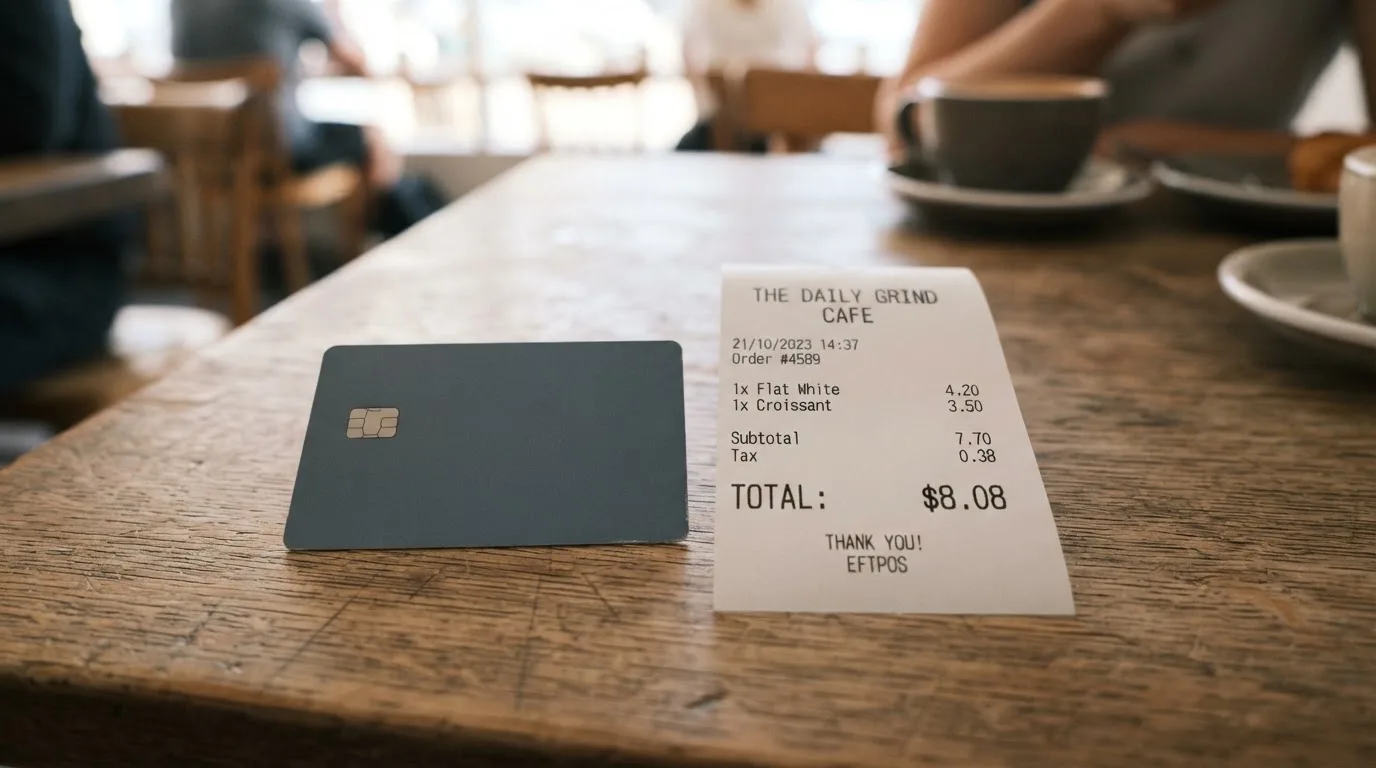
| Fee or limit | Amount / detail |
|---|---|
| Issuance fee | 25 USDT (Virtual) to 599 USDT (Black) |
| Monthly maintenance | Amount not stated |
| Conversion fee | Depends on card tier and issuer policy |
| FX fee | Depends on card tier and issuer policy |
| ATM fee | Not stated |
| Daily/transaction limit | Depends on plan/tier |
The header price is the easy number to compare. The harder number is what you actually pay per transaction. Three everyday examples show why.
You buy a $30 subscription with the Virtual card. The card costs $25 to obtain, the top-up is at least $100 in USDT (the minimum), and the company has not published a per-transaction fee. If the spread between the USDT you load and the dollars the merchant receives — a range typical for crypto-funded cards that do not advertise zero FX — your $30 subscription effectively costs more than $30, on top of the gas you paid to send the USDT in the first place. The card itself has paid for itself only if you keep using it.
You spend $200 at a restaurant abroad in a currency other than the card’s billing currency. If the card settles in USD, the FX margin is the only published number, and there is no published number. If the card instead tops up as a stablecoin balance and converts at the moment of payment, the conversion rate is whatever the issuer chooses, and you will not see the rate in advance. This is exactly the moment the lack of a published FX schedule hurts.
You take $100 out of an ATM. The site does not address ATM use at all, and the Terms mention neither an ATM fee nor an ATM withdrawal limit. You can guess that the issuer charges something, but the only way to know is to try, and trying with $100 is the cheapest way to find out.
A useful comparison point: regulated e-money issuers in the EU are required to publish a single comprehensive fee schedule before you sign up, and to surface the FX margin in real time at the point of sale. ZERO ID does neither, so every cost above the header price is something you discover by spending.
Top up: funding the card
The funding story is short and important. ZERO ID accepts cryptocurrency only: USDT, USDC, Bitcoin and Ethereum. There is no bank transfer, no card top-up, no Apple Pay cash-in, no PayPal, no cash deposit. The networks on which you send those tokens are not specified on the pages I could read, which means you have to check the address format yourself before every transfer. Funds appear “instantly after confirmation,” according to the FAQ, where “confirmation” means blockchain confirmation, not the company’s internal review.
The minimum top-up is the constraint most likely to bite. It is $100 for Virtual and Core, $300 for Prime and $1,000 for Black. If you only want to load $40 to test the card, you cannot — the floor is $100. Crypto transfers are typically irreversible, and a deposit sent on a network the provider does not support, or to an address of another network, can be lost or require manual support recovery with no guarantee. The Terms put the network-fee burden on the user: the user “bears USDT transfer costs,” which on Ethereum at busy times can easily be more than the value of a small test top-up.
Two practical habits are worth forming before your first top-up:
- Send a tiny test amount first, even if the minimum is $100. The minimum is the smallest the platform will credit, not the smallest you can send — and a $5 test on the right network is cheaper than discovering the wrong network with $100.
- Keep the proof of the transaction hash. If the dashboard shows a balance that does not match what you sent, the only thing support will ask for is the hash, and one of the recurring complaints in the third-party reviews is exactly this kind of mismatch with no reply.
Withdrawals are not addressed in the materials I read. The platform describes top-up only; spending is what drains the balance, and there is no described way to move funds back out to your own wallet.
Paying with it every day
The day-to-day experience depends on which tier you chose. All four tiers are described as supporting tap, swipe, insert and “cardless access” — the last of these probably means in-app or online checkout. Apple Pay and Google Pay are mentioned in the marketing, although the support pages do not go into detail. There is no standalone mobile app; the dashboard is a web page, so the “cardless” path is browser-based rather than app-based for everything except the mobile wallets.
Cashback is the clearest differentiator between the tiers. The Virtual and Core cards do not offer cashback. Prime advertises “limited cashback and reward benefits” without giving a number. Black advertises “up to 5% cashback and exclusive reward privileges,” again without naming the merchant categories or any caps. There is no published reward schedule, so the value of upgrading for the cashback alone is hard to verify before you pay.
A few everyday things to expect:
- Online checkout. With no KYC on file, 3-D Secure challenges (the extra verification step some merchants trigger) are unlikely to be satisfiable, because the issuer has no phone number or identity record to send the code to. This can mean declines on merchants that require 3-D Secure.
- Foreign merchants. Because the card network and the issuer country are not published, the BIN may not be familiar to the merchant’s fraud system. Some merchants decline prepaid or foreign-issued BINs by policy, and there is no published BIN range for this card to point the merchant to.
- Holds. Authorisation holds on prepaid cards can tie up your balance for several days (commonly up to seven), and the dashboard’s display of “available balance” may not reflect a pending hold. This is normal for prepaid cards but worth knowing before you assume the balance you see is the balance you can spend.
- Disputes. ZERO ID does not publish a dispute process. There is a separate refund policy page linked from the site, but the material I read does not describe a chargeback workflow, a timeline, or the documentation the cardholder would need to provide. If a merchant takes your money and does not deliver, you would be relying on support rather than a regulated chargeback process.
The Black tier’s “VIP concierge” is the only tier with a service angle aimed at higher-spending users, and the Prime tier adds “priority 24×7” support over the basic 24/7 support that comes with Virtual and Core. The support itself runs through the two Gmail addresses above, and there is no published phone line, live chat, or in-app messaging system. The third-party reviews below describe contact by Telegram, not by a helpdesk product.
What can go wrong
This is the section I wish the company had written first, because the risks here are the most material part of the product.
The company. The legal entity is “ZERO ID, Inc.,” described as “a privately owned subsidiary of Global Fintech Holdings.” It is explicitly “not a bank.” The card issuer is not named — the site refers only to “licensed financial partners” — and no licences, regulators, or jurisdictions are listed. In the EU, an electronic money institution must be authorised in a specific member state and that authorisation must be disclosed; in the US, money-transmission licensing is state-by-state and disclosed on the issuer’s site. ZERO ID publishes neither. That opacity is a feature for the card’s target audience, and a risk for everyone else.
The reviews. The third-party profile that has accumulated the most reviews is on Trustpilot, for a site called app.zeroid.cc (possibly related to the same group; one reviewer notes that negative reviews may belong to zeroid.cards). The TrustScore is 3.1 out of 5 across 7 reviews, with 57% giving the lowest possible score. The themes that come up repeatedly:
- A deposit of 400 USDT was not credited, with no reply from support (July 2026).
- An account was banned after the user asked to withdraw 500 USD; one reviewer says “features stopped working March 31” (April 2026).
- Requests for additional funds before a withdrawal is processed, which is a classic pattern in disputes that turn out badly.
- Contact only by Telegram, with no working email or ticket system (July 2026).
The positive reviews on the same profile say the card works and the support has been helpful for them. That is what makes the picture mixed rather than binary: some users have a working card and a funded balance, others have an uncredited deposit and a closed account. With no regulator to escalate to and no chargeback process described, the outcome depends almost entirely on which side of that split you land on.
The security claims. The site says the platform is “secured by industry leaders,” which is marketing language, not a description of a control. There is no mention of two-factor authentication, instant card freeze, transaction alerts, or fund segregation. The Terms reserve the right to suspend or terminate access “with or without cause,” which is a stronger clause than regulated issuers use. Stablecoins themselves are not censorship-proof at the issuer level — Tether has frozen funds tied to illicit activity, and a custodial platform can do the same with the balance it holds for you.
The wider context. Crypto card programmes have a history of being wound down. Visa terminated its global agreements with FTX in November 2022, and the FTX US debit card was wound down by its issuer shortly after. WaveCrest, a Visa card issuer that supplied several crypto card brands, was suspended by Visa in Europe in 2018, closing every WaveCrest-issued Visa programme overnight. The closures typically give users a notice period, then stop spending and loading, then ask users to withdraw their remaining balances. There is no rule that says a similar closure cannot happen here; the only difference is that with no named issuer, the notice would come from ZERO ID itself and the withdrawal process would be the one described (or not described) in the Terms.
The single biggest risk is the simplest one: the funds you load are held by a company you cannot independently verify, in a jurisdiction that is not disclosed, under terms that allow that company to suspend your access at any time, and the only way to get money back is through a support channel that runs on personal-looking Gmail addresses and Telegram. If you load $100, that is an acceptable gamble. If you load $5,000, the same gamble is no longer acceptable.
What to take instead
The honest answer to “what should I take instead” depends on what you want from the original card. If the appeal is no KYC, the only honest comparison is with other no-KYC or low-KYC crypto cards, and the trade-offs are similar. If the appeal is just “a crypto-funded card that works,” a regulated card from a named issuer is a different product class and a different conversation. Below are three cards I looked at as alternatives; each is closer to ZERO ID on at least one dimension and further away on another.
Cardex — score 5.6/10. Cardex markets itself as one crypto card usable in 200+ countries, with no country list and no exclusions on the page. It supports the Verve, Visa, Mastercard and UnionPay networks, with virtual and physical cards, and the App Store listing frames the product around paying in Naira. The conversion story is the unusual part: Cardex describes an “AI-powered conversion rate” that scans global exchange rates and picks the best one at the moment of payment. That is a marketing claim, not a published rate. Cost, fees, and rewards are not stated. The card is closer to ZERO ID on the no-country-list idea and further away on the network breadth.
TakeCard — score 5.5/10. TakeCard is a Visa prepaid card issued in the United States and billed in USD. The virtual card costs $5, and the physical card is “available only to Bolivian users for now,” priced at $20 for the card plus $20 for shipping according to one article, or $10 according to another in the same help centre. The fee model is the clearest of the three: 1% commission per purchase, USD payments at 1:1, and other currencies at the official Visa rate of the transaction day. The “available only to Bolivian users” restriction on the physical card makes it a poor fit if you live anywhere else, but the virtual card’s published commission makes the cost predictable in a way ZERO ID’s is not.
OkiCard — score 6.0/10. OkiCard describes 150+ countries (some pages say 200+), with no geo-blocking based on passport, and the user confirms they are not in a sanctioned jurisdiction. The card is virtual, with mentions of a physical card and “Visa/Mastercard” as the network. The published pricing is the most concrete: $0 issuance, $0 monthly, starting at $15 for the virtual card, with a $100 USDT initial deposit. Fees are 3% on load, 0% on USD transactions, and “no hidden exchange spreads” — although the FX fee itself is not stated. Funding is USDT on BSC, Ethereum, Tron and Solana, with USDC “soon” and BTC “coming soon.” The card scores higher than ZERO ID largely because the cost model is published.
| Card | Score | KYC | Networks | Published fees | Country reach |
|---|---|---|---|---|---|
| ZERO ID | 5.0/10 | None | Not stated | Not published | “Anywhere in the world” |
| Cardex | 5.6/10 | Not stated | Verve, Visa, Mastercard, UnionPay | Not published | 200+ countries, no list |
| TakeCard (virtual) | 5.5/10 | Not stated | Visa | 1% per purchase | 9 countries (per starting data, unverified) |
| OkiCard | 6.0/10 | None | Visa/Mastercard | 3% load, 0% USD | 150–200+ countries |
The table is not a recommendation to switch to one of these cards. It is a comparison of what you give up and what you gain. The card you actually want depends on the feature that brought you to ZERO ID in the first place.
Who I would recommend it to
ZERO ID is built for a specific kind of reader, and it works for that reader as long as the reader treats it accordingly.
I would recommend the card to someone who cannot get a regular bank card, has no interest in uploading documents to a fintech, wants to spend a small crypto balance online and in physical stores, is comfortable with Apple Pay or Google Pay as the main interaction, and is willing to load only what they can afford to lose. For that reader, the card is a useful workaround, the $25 Virtual price is a reasonable test, and the absence of KYC is a feature, not a bug. I would not recommend the Prime or Black tiers until the cheaper tiers have proven themselves over a few months of normal use.
I would not recommend the card to someone who plans to load more than a few hundred dollars, who needs a chargeback process they can point to in writing, who expects customer service by phone or live chat, who lives in a country where a regulated e-money or bank-issued card is available to them, or who needs an ATM as part of their normal spending pattern. For all of those readers, a regulated card from a named issuer is the better product, and the alternatives above are closer to that model than ZERO ID is.
The single piece of advice I would give any reader is the same: treat every USDT you load to ZERO ID as cash you are handing to a stranger in a country you have not been told the name of, and act accordingly. If that framing is unacceptable, this is not the card for you.
Frequently asked questions
What is the ZERO ID card?
The ZERO ID card is a payment card that spends from a cryptocurrency balance. It is sold by ZERO ID, Inc. (a subsidiary of Global Fintech Holdings) and is offered as a Virtual card for online use and as metal Core, Prime and Black cards. The company advertises the card as working “anywhere in the world” with no identity verification.
How does the ZERO ID card work?
You register on the site, pick a tier, pay the price in USDT, USDC, Bitcoin or Ethereum, and activate the card from the web dashboard. You then top up the card with the same cryptocurrencies, and the balance is spent at merchants that accept the card network — though the network itself is not named in the public material. Crypto is converted to a spendable balance when you pay.
Is ZERO ID a bank?
No. The site says explicitly that ZERO ID is “not a bank.” It is a programme manager that works with unnamed “licensed financial partners” to issue the card. The issuer’s name, the licences it holds, and the regulator it answers to are not published.
Who owns ZERO ID?
According to the company, ZERO ID is “a privately owned subsidiary of Global Fintech Holdings.” Beyond that, no parent-company details, leadership team, or registered address are published on the site I could read.
How do I get a ZERO ID card?
You register on the ZERO ID site, choose a tier (Virtual, Core, Prime or Black), pay the listed USDT price, and wait for activation. The Virtual card is online only. The metal tiers are shipped, and the FAQ gives “7–12 business days” for delivery depending on region.
Does the ZERO ID card require KYC?
No. The site says “zero identity verification — no paperwork, no KYC, no documents,” and the terms confirm that “no KYC is required by ZEROID” for either purchase or top-up. There are no KYC tiers to climb later.
How do I top up the ZERO ID card?
You send USDT, USDC, Bitcoin or Ethereum from your own wallet to the address shown in your dashboard. The minimum top-up is 100 USDT for Virtual and Core, 300 USDT for Prime and 1,000 USDT for Black. Fiat top-up is not supported. The blockchain network to use is not specified on the pages I read, so check the address format before every transfer.
How do I add the ZERO ID card to Apple Wallet or Google Pay?
The marketing pages mention Apple Pay and Google Pay support, but the support pages I read do not walk through the steps. The usual flow for tokenised cards is to open the wallet app, choose to add a card, and either type the card details or scan them from the dashboard. If the dashboard does not surface that option, contact support — but expect email or Telegram as the channel.
Is the ZERO ID card safe?
It is as safe as the company that runs it, and that company does not publish a security control list, a regulator, or a fund-segregation policy. The Terms allow the company to suspend or terminate access “with or without cause.” Treat the balance you load as funds held by an unverifiable counterparty, and do not load more than you can afford to lose. The third-party reviews on Trustpilot include uncredited deposits and account bans, so the practical risk is not zero.
Is the ZERO ID card worth it?
For a narrow audience — readers who need a no-KYC card, will only load what they can afford to lose, and do not need a chargeback process or named regulator — the $25 Virtual card can be worth trying. For most other readers, a regulated card from a named issuer is the better value, even at a higher entry price, because the published fee schedule and the dispute process are part of what you are paying for.
How virtual cards work – cryptocardsexplained.com
Content created by the «cryptocardsexplained.com» team